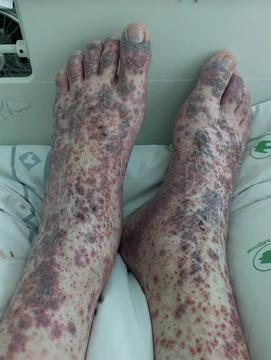
Livedoid vasculopathy
Thrombotic dermal vasculopathy causing painful lower-limb ulcers.

Livedoid vasculopathy (LV) is an uncommon thrombotic dermal vasculopathy characterized by excruciating, recurrent ulcers on the lower limbs. Its characteristic clinical appearance includes livedo racemosa and painful ulceration in the distal regions of the lower extremities, which heal to form porcelain-white, atrophic scars known as Atrophie blanche. The condition has been linked to various hypercoagulable states, including neoplasms, autoimmune connective-tissue diseases, and inherited and acquired thrombophilias.
Quick Facts
- Specialty
- Dermatology
- Symptoms
- Livedoid changes, atrophie blanche, and uclers.
- Risks
- Antiphospholipid antibodies, thrombosis-predisposing genetic disorders, and paraproteinemias.
- Diagnosis
- Histopathology.
- Differential
- Chronic venous disease, peripheral vascular disease, and vasculitis.
- Treatment
- Pain management, wound care, smoking cessation, compression, antiplatelet agent, and anticoagulants.
- Frequency
- 1 in 1,00,000 per year.
Facts from the source article.
Lore & Background
Livedoid vasculopathy presents with recurrent focal non-inflammatory thrombosis of the superficial and mid-dermal venules, particularly on the lower extremities bilaterally, though upper extremity involvement has also been documented. The thrombosis leads to livedo racemosa or, less commonly, livedo reticularis, causing blood and pressure buildup in dermal superficial veins. This reduces oxygen partial pressure in the skin, triggering pruritus with itchy papules and erythematous-violaceous, purpuric plaques, which quickly develop into bleeding vesicles that burst into painful ulcers about 5 mm in diameter. These ulcers eventually combine to form painful, confluent, reticulate, and geometric ulcerations.
Reader's Guide
Livedoid vasculopathy is significant as a chronic, painful condition that can cause functional impairment for decades, with a mean age of onset in the 30s. Its diagnosis requires a combination of history, clinical findings, and histopathological analysis, with skin biopsy showing intraluminal hyaline thrombi and fibrin deposition. The condition is linked to various hypercoagulable states, including autoimmune connective-tissue diseases, cancers, and inherited coagulation abnormalities such as factor V and prothrombin polymorphisms. Treatment focuses on pain relief, ulcer healing, and relapse prevention, with anticoagulants like rivaroxaban and antiplatelet agents as first-line therapies. The condition's legacy lies in its recognition as a thrombotic rather than inflammatory vasculopathy, emphasizing the need for prompt intervention to mitigate discomfort and avert wound formation and complications.
Did You Know?
- Livedoid vasculopathy has an estimated annual incidence of 1:100,000, with women affected at a ratio of 3:1.
- Livedoid vasculopathy may deteriorate during pregnancy, particularly in the third trimester, though fetal compromise has not been documented.
- A skin biopsy for diagnosis should be a deep punch biopsy or excisional biopsy that contains subcutaneous fat.
Frequently Asked Questions
Who is Livedoid vasculopathy?
Livedoid vasculopathy is a rare thrombotic disorder of the small dermal blood vessels that predominantly targets the lower legs. It sits at the intersection of dermatology and vascular medicine and strikes roughly one in a hundred thousand people per year.
What is Livedoid vasculopathy known for?
Its signature 'moves' are intensely painful, recurring ulcers on the feet and distal lower legs, often accompanied by a mottled purple discoloration known as livedo racemosa. The condition is tightly linked to hypercoagulable states, whether inherited, acquired, or driven by malignancy and autoimmune connective-tissue disease.
Why is Livedoid vasculopathy important?
It is clinically significant because the recurrent, excruciating ulcers can severely impair mobility and daily function, and because the presentation often flags an underlying thrombophilia, occult neoplasm, or autoimmune process that warrants further investigation. Early recognition prompts targeted workup that might otherwise be missed.
Who does Livedoid vasculopathy appear in?
The condition shows a marked female predominance, with approximately three affected women for every one affected man. Onset most commonly clusters in a patient's thirties, making it a key consideration for younger adults presenting with unexplained, painful lower-limb ulceration.
More in Vasculitis 1-24
Spotted an error? Know more?
Reader corrections go straight into our review queue. Suggest an edit · How this site is sourced