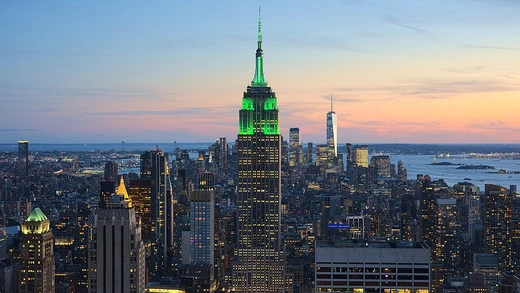
Tampa, Florida
Major Gulf Coast city and county seat of Hillsborough County.

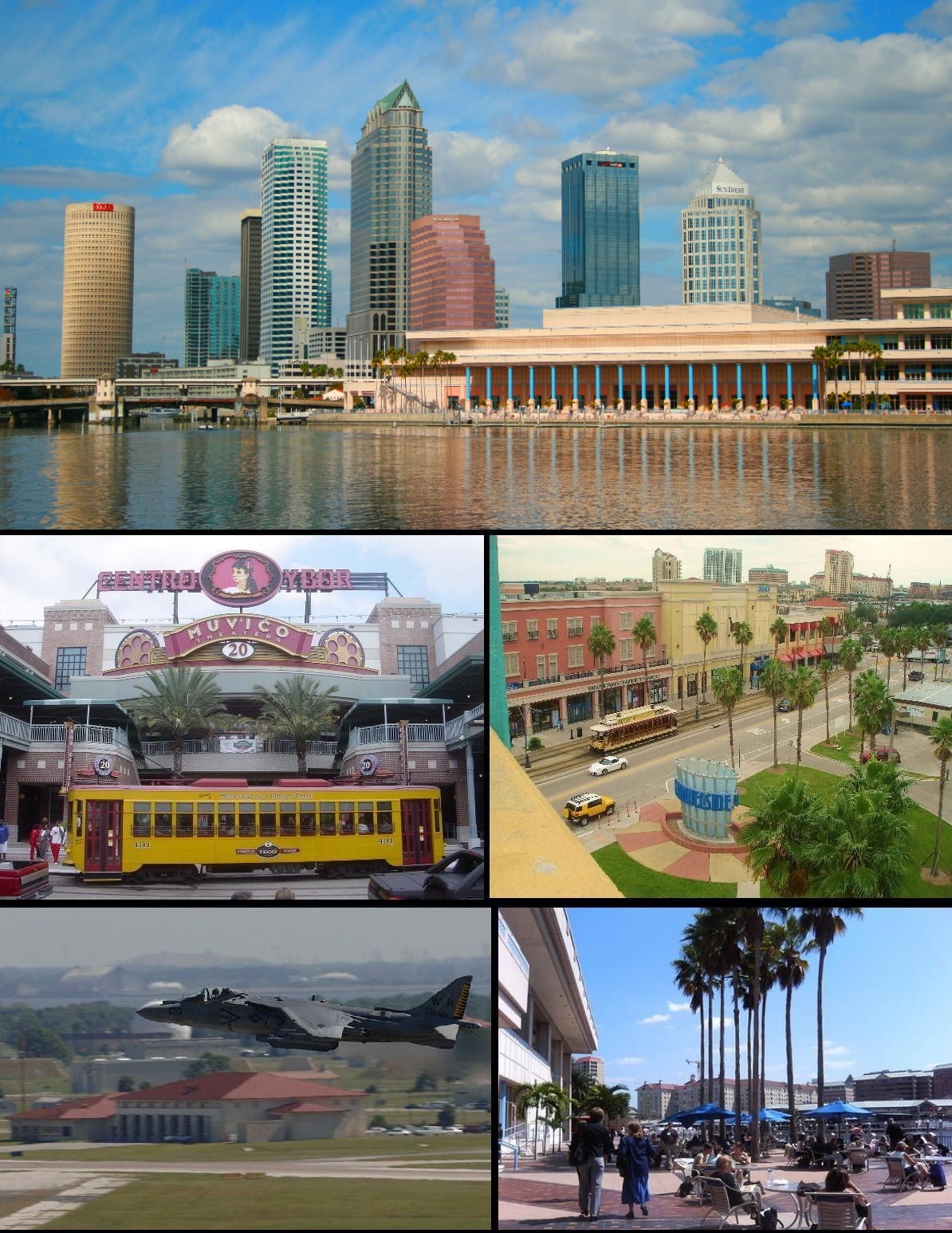
Averette (compilation) · CC BY-SA 3.0
Tampa is a major city on the Gulf Coast of Florida and the county seat of Hillsborough County. It is the third-most-populous city in Florida, with a population of 403,364 at the 2020 census, and the center of the second-largest metropolitan area in the state. The city's origins trace to Fort Brooke, established in 1824, and its growth was spurred by Henry B. Plant's railroad and Vicente Martinez Ybor's cigar factories in the late 19th century.
Quick Facts
- Nicknames
- Cigar City, The Big Guava
- Settlement Type
- City
- Flag Border
- no
- Blank Emblem Type
- Wordmark
Facts from the source article.
Lore & Background
The earliest known instance of the name 'Tampa', in the form 'Tanpa', appears in the memoirs of Hernando de Escalante Fontaneda, a Spanish captive of the Calusa. The name may derive from the Calusa or Timucua language, and its meaning is not known. Early Spanish maps labeled Tampa Bay as 'Bahía de Espíritu Santo' before it became known as 'B. Tampa' by 1576. The settlement of Tampa was formally incorporated in 1849 but remained small until the 1880s, when the arrival of Henry B. Plant's railroad and Vicente Martinez Ybor's cigar factories sparked rapid growth. 'Tampa Town' was reincorporated into the city of Tampa in 1887.
Reader's Guide
Tampa's significance lies in its transformation from a remote frontier outpost into a major economic and cultural hub on Florida's Gulf Coast. The city's port is the largest in the state, contributing over $15 billion in economic impact. Tampa hosts a diverse economy including healthcare, finance, technology, and maritime trade, and is home to Fortune 500 companies such as Crown Holdings and The Mosaic Company. Culturally, the city features the Tampa Museum of Art, Straz Center for the Performing Arts, and the historic Ybor City district, reflecting Cuban and Spanish heritage. Tampa is also the headquarters of United States Central Command at MacDill Air Force Base, described as the most important military HQ after the Pentagon. The city's major league sports teams include the Tampa Bay Buccaneers (NFL), Tampa Bay Lightning (NHL), and Tampa Bay Rays (MLB).
Did You Know?
- The city was originally incorporated as the 'Village of Tampa' in 1849 and reincorporated as a town in 1855.
- Tampa's port is the largest in Florida, responsible for over $15 billion in economic impact.
- People from Tampa are known as 'Tampans', 'Tampanians', or 'Tampeños'.
The Name Before the City
The name that would become Tampa carries a tangled, centuries-old pedigree. The earliest written trace surfaces as "Tanpa" in the memoirs of Hernando de Escalante Fontaneda, a Spaniard held captive by the Calusa for seventeen years who traveled widely through peninsular Florida. He described it as a notable Calusa town north of the main Calusa domain. Archaeologist Jerald Milanich later situated this Tanpa at the mouth of Charlotte Harbor, a placement that fed into a long-running cartographic confusion: the barrier islands hiding both waterways made their identities easy to swap. Spanish maps of the sixteenth and seventeenth centuries alternately called the bay Bahía de Espíritu Santo or B. Tampa, and a 1601 printed map by Antonio de Herrera y Tordesillas fixed "B. Tampa" on paper for the first time. British and Spanish charts of the early 1700s kept trading names, with one 1757 Spanish map even rebranding the bay "San Fernando." The true linguistic root—Calusa, Timucua, or something else—remains unresolved, though a few scholars have loosely compared it to the Creek word "itimpi," meaning "close to" or "nearby." By 1849, when the small community near Fort Brooke was incorporated, it was called "Tampa Town"; by 1855 the name had simply become Tampa.
From Isolated Outpost to Thriving City
Tampa's modern story begins with Fort Brooke, a U.S. Army outpost established in 1824 shortly after America acquired Florida from Spain. The surrounding settlement was formally incorporated in 1849 as "Tampa Town," yet for decades it remained a small, isolated community with little outward momentum. Everything changed in the mid-1880s, when two converging forces transformed the landscape almost overnight. Henry B. Plant brought a railroad that connected the area to national markets, and Vicente Martinez Ybor opened cigar factories that drew waves of Cuban, Italian, and Spanish immigrants to found and staff the new neighborhoods of Ybor City and West Tampa. The combination of rail access and industrial employment jump-started a period of rapid economic and population growth that no one in the quiet 1840s settlement could have predicted. "Tampa Town" was reincorporated as the city of Tampa in 1887, and by the early twentieth century it had already evolved into a prosperous, modern community. The legacy of those immigrant workers endures in the city's cultural fabric and in the very identity its residents still claim.
Economic Engine and Strategic Crossroads
By the twenty-first century, Tampa has grown into a remarkably diversified economic hub. Its sectors span healthcare, finance, insurance, technology, cybersecurity, tourism, construction, professional services, and maritime trade. The port on Tampa Bay stands as the largest in the state and generates more than fifteen billion dollars in economic impact, anchoring the city's role in global shipping. Major employers include Bloomin' Brands, WellCare, and two Fortune 500 companies, Crown Holdings and The Mosaic Company. The Tampa Bay metropolitan area, home to over 3.42 million people, ranks as Florida's second-largest metro and the seventeenth-largest in the United States; the broader Greater Tampa Bay region, which generally encompasses both the Tampa and Sarasota metro areas, pushes past four million residents. Tampa itself, with a 2020 census population of 403,364, is the third-most-populous city in Florida, the thirteenth in the Southeast, and the forty-ninth in the nation. Adding to its strategic weight, MacDill Air Force Base hosts the headquarters of United States Central Command, widely described as the most important military command center after the Pentagon.
Culture, Learning, and the Identity of a Place
Tampa's cultural and intellectual life is anchored by institutions that reflect both its immigrant heritage and its ambitions. The Tampa Museum of Art and the Straz Center for the Performing Arts offer residents and visitors access to visual and performing arts, while the historic Ybor City district preserves the Cuban and Spanish roots of the community that built the city in the late nineteenth century. Education is another pillar: the University of South Florida and the University of Tampa serve as prominent academic institutions. Professional sports give the area a shared identity through the Tampa Bay Buccaneers of the NFL, the Tampa Bay Lightning of the NHL, and the Tampa Bay Rays of MLB. The people themselves carry layered names. "Tampan" was historically the most common moniker, but as it began to be perceived as a potential insult, "Tampanian" gained popularity. Around 1900, the Cuban, Italian, and Spanish newcomers in Ybor City and West Tampa gave rise to "Tampeños" (or "Tampeñas" for women), a term still used today for their descendants and, in some contexts, for all residents of the area regardless of background.
Gallery
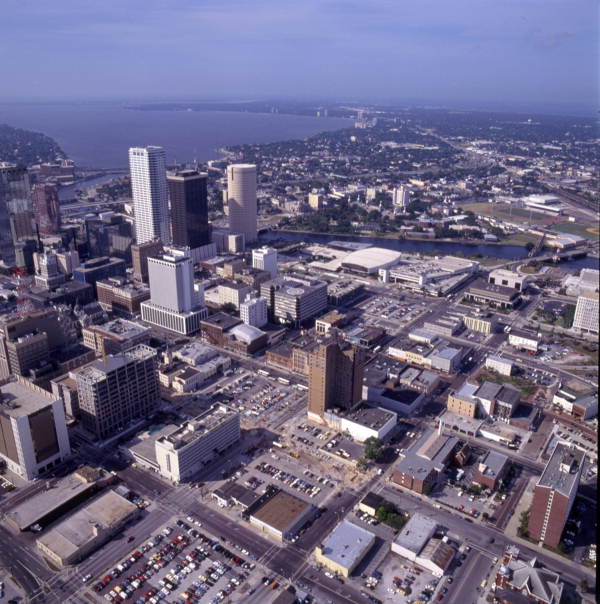
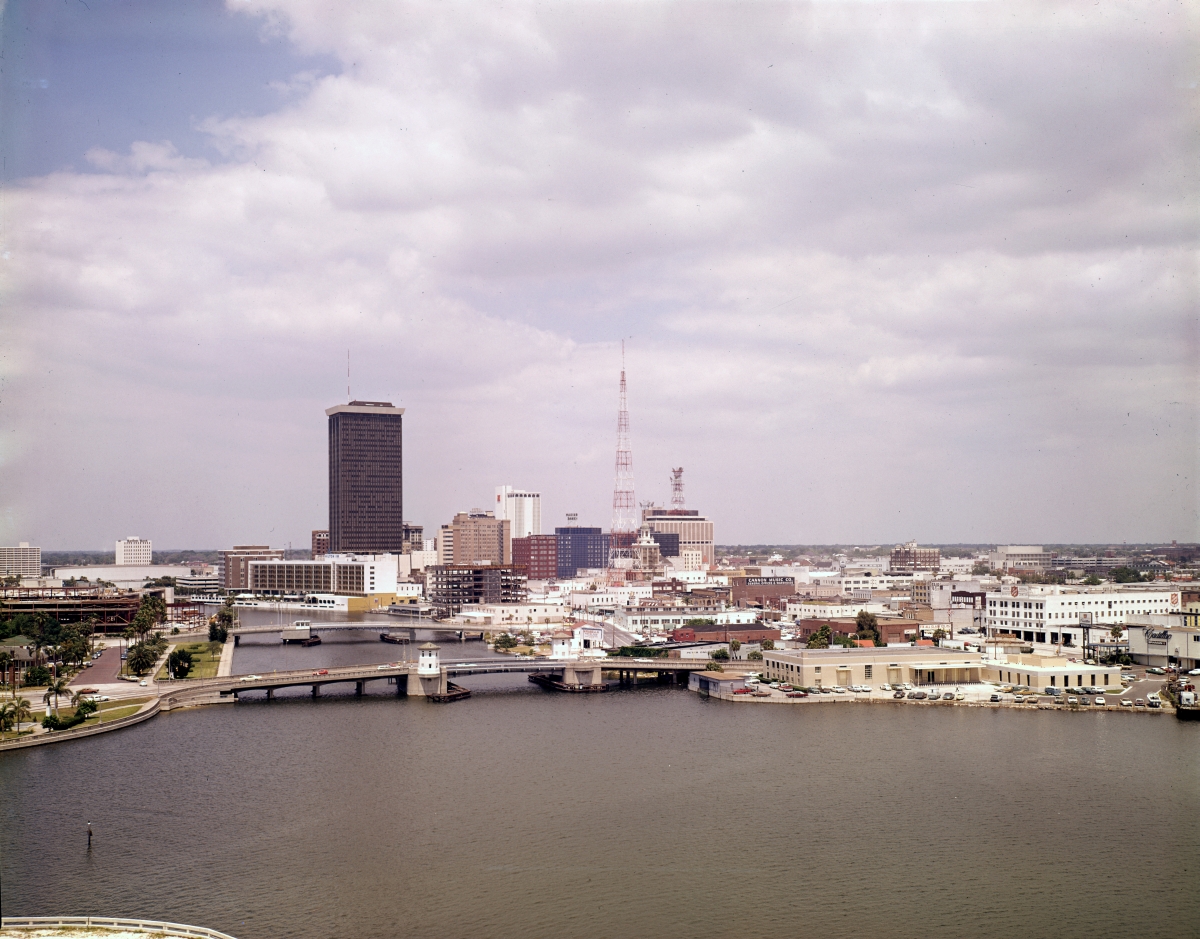
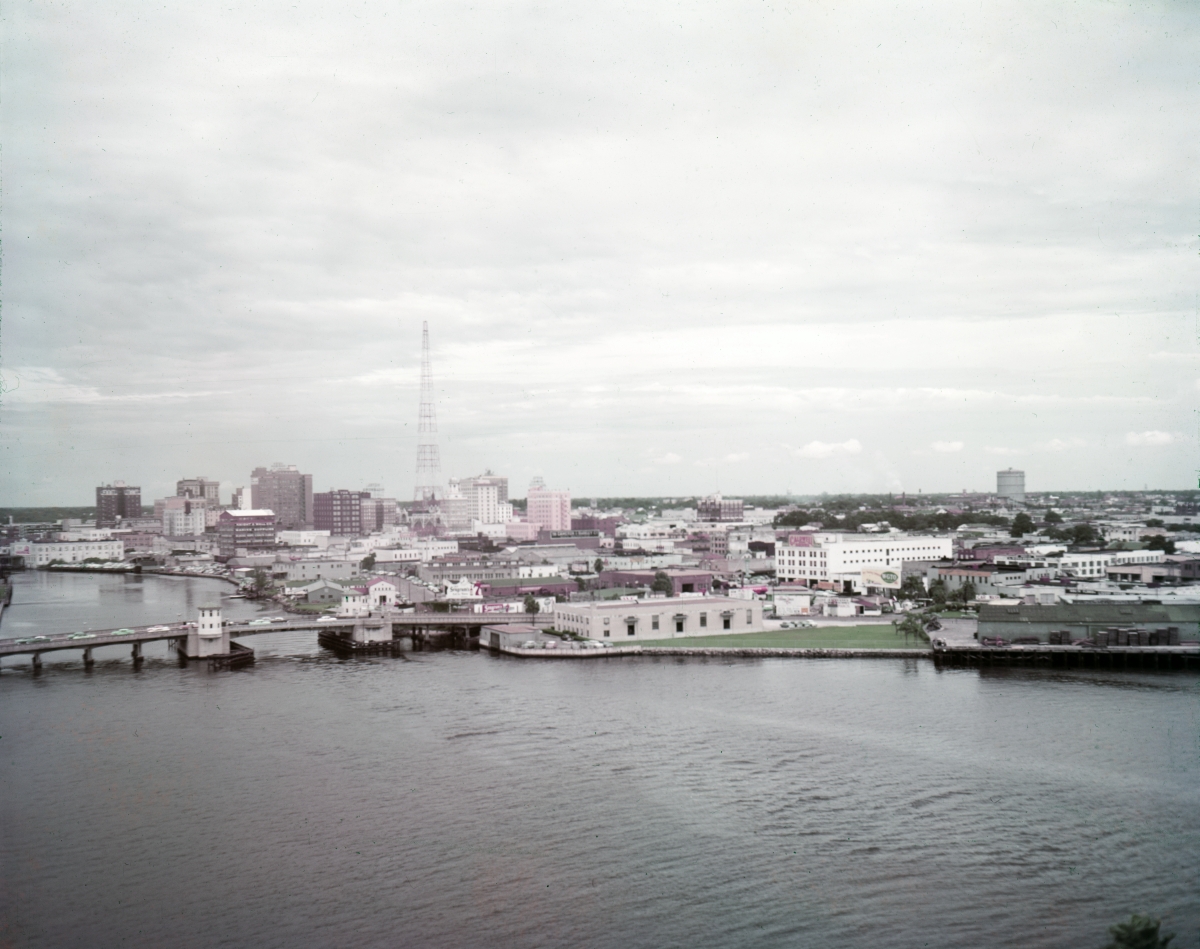
Frequently Asked Questions
Who is Tampa, Florida?
Tampa is a major Gulf Coast city and the county seat of Hillsborough County, standing as Florida's third-largest city with roughly 403,000 residents. It anchors the state's second-largest metropolitan area.
What is Tampa, Florida known for?
Tampa serves as Florida's largest seaport, a key military hub housing MacDill Air Force Base and US Central Command, and a historic industrial district centered on the Ybor City cigar legacy. Its economic engine spans shipping, defense, and tourism.
Why is Tampa, Florida important?
Tampa matters because it pairs the state's largest port and a critical military command center with a late-19th-century industrial heritage shaped by figures like Henry B. Plant and Vicente Martinez Ybor. Its 1824 Fort Brooke origins make it one of Florida's oldest permanent settlements.
What is Tampa, Florida's origin story?
Tampa's roots trace to Fort Brooke in 1824, and it was formally incorporated as the Village of Tampa in 1849. Explosive late-1800s growth driven by Plant's railroad and Ybor's cigar factories turned a small settlement into a regional powerhouse.
More in Us Cities 1-17
Spotted an error? Know more?
Reader corrections go straight into our review queue. Suggest an edit · How this site is sourced