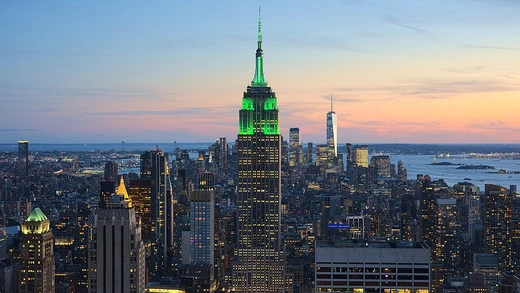
Tallahassee, Florida
Capital of Florida, college town, and historic center of government.

Bill · CC BY-SA 2.0
Tallahassee is the capital city of the U.S. state of Florida and the county seat of Leon County. It became the capital of the Florida Territory in 1824 and is the site of the Florida State Capitol, Supreme Court of Florida, and Florida Governor's Mansion. As a college town, it is home to Florida State University, Florida A&M University, and Tallahassee State College, with a student population exceeding 70,000.
Quick Facts
- Settlement Type
- State capital city
- Flag Alt
- Tallahassee city flag, updated 2020.
- Blank Emblem Type
- Logo
- Motto
- "Florida's Capital City"
- Established Title
- Established
Facts from the source article.
Lore & Background
Indigenous peoples occupied the area for thousands of years. Around 1200, the Mississippian culture built earthwork mounds near Lake Jackson, preserved today in Lake Jackson Archaeological State Park. In the 17th century, the Spanish developed a network of missions in Apalachee territory; the largest, Mission San Luis de Apalachee in Tallahassee, has been partially reconstructed. Hernando de Soto's expedition occupied the Apalachee town of Anhaica (in present-day Tallahassee) over the winter of 1539–40, often cited as the first place Christmas was celebrated in the continental United States.
The name Tallahassee is a Muskogean word often translated as 'old fields' or 'old town,' likely used by Creek migrants from Georgia and Alabama who moved into the region in the late 18th and early 19th centuries. During the First Seminole War, General Andrew Jackson conducted operations in and around Tallahassee. In 1824, the third legislative session of the Florida Territory met there in a crude log building serving as the capitol. During the American Civil War, Tallahassee was the only Confederate state capital east of the Mississippi River not captured by Union forces.
Reader's Guide
Tallahassee's significance lies in its role as the political and administrative center of Florida since 1824, housing the state capitol, supreme court, governor's mansion, and nearly 30 state agency headquarters. It is a recognized regional center for scientific research, home to the National High Magnetic Field Laboratory, and in 2025 received the All-America City Award for the third time. The city's economy is shaped by state government, law firms, lobbying organizations, trade associations, and professional associations including The Florida Bar and the Florida Chamber of Commerce. As a college town with over 70,000 students, it hosts Florida State University, Florida A&M University, and Tallahassee State College. Historically, Tallahassee was in the heart of Florida's Cotton Belt and the center of the slave trade in Florida. It was also active in the civil rights era, notably the Tallahassee bus boycott that began in 1956 after the arrest of two Florida A&M University students.
Indigenous Roots and the Name
Long before European eyes ever set upon this stretch of Florida, human communities thrived here for millennia. Around the year 1200, builders of the sprawling Mississippian culture raised towering earthwork mounds near what is now Lake Jackson, remnants of which still stand within the boundaries of Lake Jackson Archaeological State Park. Centuries later, Spanish missionaries established a network of outposts across Apalachee territory to supply the St. Augustine colony and convert local peoples; the largest of these, Mission San Luis de Apalachee, has since been partially rebuilt by the state. The city's very name, Tallahassee, is a Muskogean term generally rendered as "old fields" or "old town," a label likely coined by Creek migrants from Georgia and Alabama who, in the late eighteenth and early nineteenth centuries, pushed into the region and discovered vast tracts of cleared land left behind by the Apalachee. Those Creek refugees gradually merged into what became the Seminole people of Florida, while the Talimali Band of Apalachee Indians in Louisiana still claim direct descent from the original inhabitants.
The Making of a Capital
When Florida transitioned from Spanish to American control in 1821 under the Adams-Onís Treaty, the question of where to seat the territorial government became urgent. The first legislative council convened in Pensacola in 1822, but delegates from St. Augustine had endured a grueling 59-day water journey to attend. The second session, held in St. Augustine, forced western representatives to slog 28 days around the peninsula. Frustrated by these extremes, the delegates resolved to meet at a midpoint. Two appointed commissioners ultimately chose the site of Tallahassee—then a virtually abandoned Apalachee settlement called Anhaica, left in ruins after Andrew Jackson's forces burned it in 1818. The third legislative session gathered there in 1824 inside a crude log structure that served as the capitol. That same year, the Marquis de Lafayette, the French Revolutionary hero, received a 36-square-mile land grant from Congress that now encompasses large swaths of the modern city. By 1845, a Greek Revival masonry capitol rose in time for statehood, and that "old Capitol" still stands proudly before the high-rise building erected in the 1970s.
Cotton, Conflict, and the Civil War
Tallahassee sat squarely in the heart of Florida's Cotton Belt, with Leon County leading the entire state in cotton output. This agricultural wealth was built on enslaved labor, and the city functioned as the central hub of Florida's slave trade. The dark economic engine shaped the city's pre-war identity as much as its political one. When the Civil War erupted, Tallahassee's strategic position as a capital made it a target, yet it achieved a singular distinction: it was the only Confederate state capital east of the Mississippi River that Union forces never captured, and the only one that was never set ablaze. The closest the war came to the city's core was the Battle of Natural Bridge, a small engagement fought just south of town on March 6, 1865, mere weeks before the conflict ended. The violence surrounding the city's founding was equally stark. During the First Seminole War, General Jackson's troops entered the village of Fowltown in November 1817, burned it to the ground after its chief refused relocation orders, and provoked retaliatory killings. Jackson returned in March 1818 and advanced on the Tallahasse village itself, taking prisoners.
A Living Capital and College Town
Today, with an estimated 205,089 residents in 2024, Tallahassee ranks as Florida's eighth-largest city and serves as the principal urban center of both the Florida Big Bend and the Panhandle region. Its metropolitan area reaches nearly 400,000 people. As the state capital, the city houses the Florida State Capitol, the Supreme Court of Florida, the Governor's Mansion, and the headquarters of roughly thirty state agencies. This concentration of government has cultivated a dense ecosystem of law firms, lobbying shops, trade associations, and professional bodies such as the Florida Bar and the Florida Chamber of Commerce. Yet Tallahassee is equally defined by its academic energy: a student population exceeding 70,000 flows through Florida State University, Florida A&M University, and Tallahassee State College, the latter functioning primarily as a feeder institution for the two universities. The city also anchors a recognized regional research corridor, most notably through the National High Magnetic Field Laboratory. In 2025, the National Civic League honored Tallahassee with its All-America City Award for the third time.
Gallery

Frequently Asked Questions
Who is Tallahassee, Florida?
Tallahassee is the seat of government for the state of Florida, serving as its capital since 1824 and the administrative center of Leon County. With a population of roughly 205,000, it anchors a metro region of nearly 400,000 residents.
What is Tallahassee, Florida known for?
The city houses the Florida State Capitol building, the state's Supreme Court, and the Governor's official residence, making it the nerve center of Florida politics. It also doubles as a major academic hub, hosting Florida State University, Florida A&M University, and Tallahassee State College, which together enroll over 70,000 students.
Why is Tallahassee, Florida important?
It holds the unique distinction of being Florida's only city that serves as both the state capital and a major university town. This blend of political authority and academic energy gives it a cultural and institutional weight that few other mid-sized American cities can match.
What is Tallahassee, Florida's origin story?
The city was designated the capital of the Florida Territory in 1824, a role it has held ever since. From that founding moment, it grew into the political and educational heart of the state, blending early territorial history with modern research and higher education.
More in Us Cities 1-17
Spotted an error? Know more?
Reader corrections go straight into our review queue. Suggest an edit · How this site is sourced