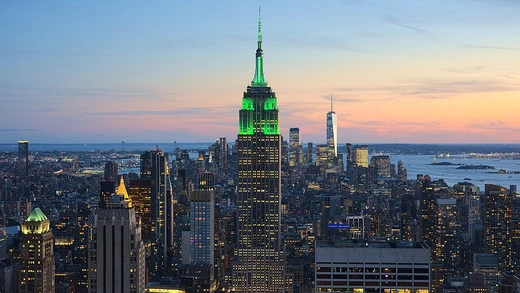
Springfield, Illinois
Capital of Illinois and longtime home of Abraham Lincoln.

Salisburymistake · CC BY-SA 4.0
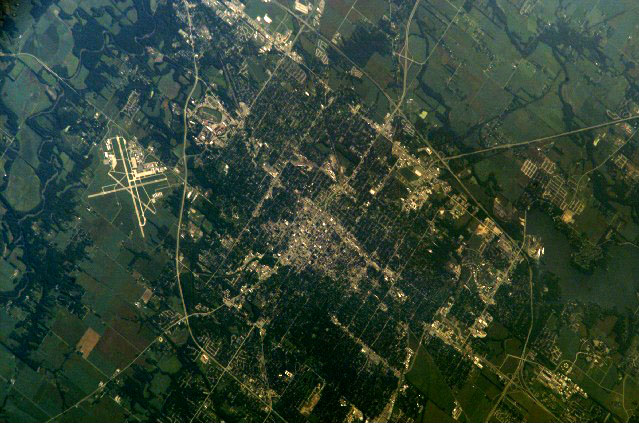
Springfield is the capital of Illinois and the seat of Sangamon County. As of the 2020 census, 114,394 people lived there, ranking it seventh among Illinois cities. Outside the Chicago area, only Rockford has more residents, and Springfield is the largest city in central Illinois. The broader metropolitan area, covering Sangamon and Menard counties, is home to about 208,000 people. The city sits on a plain near the Sangamon River, just north of Lake Springfield, and follows the path of historic Route 66.
European-American settlers arrived in the late 1810s, around the time Illinois became a state. Its most famous resident was Abraham Lincoln, who called Springfield home from 1837 until he left for the presidency in 1861. Thanks largely to Lincoln and other local lawmakers—and the city’s central location—Springfield was chosen as the state capital in 1837.
As the seat of state government, Springfield hosts the Illinois General Assembly, the Illinois Supreme Court, the governor’s office, and the historic Illinois Governor’s Mansion. The economy leans heavily on government agencies and related firms, along with healthcare and medicine. The University of Illinois Springfield sits near Lake Springfield. The city has four distinct seasons, typical for a middle-latitude location. It operates under a mayor–council form of government and administers Capital Township. Public schools are run by District No. 186.
Originally, settlers named the community “Calhoun” after Senator John C. Calhoun of South Carolina. Trappers and fur traders first visited the area along the Sangamon River in 1818. John Kelly built the first cabin in 1821 after finding plentiful deer and game; a stone marker on Jefferson Street, between 1st and College streets, marks that spot. (A second marker at 2nd and Jefferson often gets mistaken for the cabin site but actually marks the first county courthouse, later built on Kelly’s land.) In 1821, Calhoun became the county seat due to its location, fertile soil, and trade opportunities. Settlers from Kentucky, Virginia, and North Carolina followed. By 1832, the town renamed itself Springfield—according to local lore, at the suggestion of John Kelly’s wife, after Spring Creek near “Kelly’s Field.” The exact reasons for the name change are complex, but it was not simply due to Senator Calhoun falling out of favor.
Quick Facts
- Settlement Type
- State capital
- Flag Alt
- Flag
- Seal Alt
- Seal
- Motto
- Home of President Abraham Lincoln
Facts from the source article.
Lore & Background
Settlers originally named this community 'Calhoun', after Senator John C. Calhoun of South Carolina, expressing their cultural ties. The land that Springfield now occupies was visited first by trappers and fur traders who came to the Sangamon River in 1818. The first cabin was built in 1821 by John Kelly, after he discovered that the area was plentiful with deer and other wild game. He built his cabin on a hill, overlooking a creek known eventually as the Town Branch. A stone marker on the north side of Jefferson street, halfway between 1st and College streets, marks the location of this original dwelling. In 1821, Calhoun was designated as the county seat of Sangamon County due to its location, fertile soil, and trading opportunities. By 1832, the town renamed itself Springfield—the reasons were complex and not simply due to Senator Calhoun falling out of favor. According to local lore, the name was suggested by John Kelly’s wife, after Spring Creek near 'Kelly’s Field.'
Reader's Guide
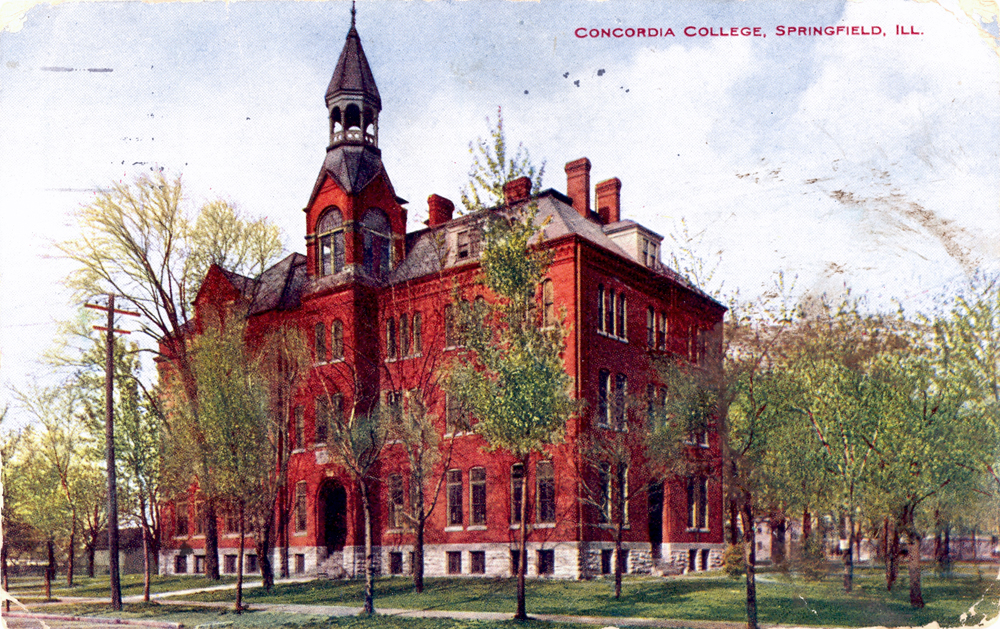
Springfield's significance stems from its role as the state capital of Illinois and its deep association with Abraham Lincoln, who lived there from 1837 until his presidency. The city's designation as the capital in 1839 was largely due to Lincoln and his associates, the 'Long Nine'. As the state capital, the government of Illinois is based in Springfield, including the Illinois General Assembly, the Illinois Supreme Court, the office of the Governor, and the historic Illinois Governor's Mansion. The city's economy is dominated by government agencies and adjacent firms that work with state and county governance, in addition to healthcare and medicine. Major tourist attractions include multiple sites connected with Lincoln, such as the Abraham Lincoln Presidential Library and Museum, the Lincoln Home, the Old State Capitol, the Lincoln-Herndon Law Offices, and the Lincoln Tomb. The University of Illinois Springfield has its campus near Lake Springfield. The city has a mayor–council form of government and governs the Capital Township. Public schools in Springfield are operated by District No. 186. The Lutheran Church–Missouri Synod's Concordia Theological Seminary moved to Springfield in 1874 and operated there during the last half of the 19th century and the first half of the 20th century.
Did You Know?
- Springfield was originally named 'Calhoun' after Senator John C. Calhoun before being renamed in 1832.
- The first cabin in Springfield was built in 1820 by John Kelly.
- Abraham Lincoln lived in Springfield from 1837 until 1861, when he became President.
- The Potawatomi Trail of Death passed through Springfield in 1838.
Lincoln's Twenty-Four Years in Springfield
Abraham Lincoln first arrived in the Springfield area in 1831, though he did not actually settle in the city until 1837. The intervening six years he spent in New Salem, where he began studying law, served in the state militia, and won a seat in the Illinois General Assembly. Once he relocated to Springfield, he remained for 24 years as both a lawyer and a politician, delivering his celebrated Lyceum address and later his farewell address before departing for Washington. His presence became so woven into the city's identity that multiple major attractions now trace his footsteps: the Lincoln Home, the Old State Capitol, the Lincoln-Herndon Law Offices, the Lincoln Tomb, and the Abraham Lincoln Presidential Library and Museum. His influence extended well beyond personal legacy. Together with a group of tall colleagues nicknamed the "Long Nine"—whose combined height reportedly reached 54 feet—he lobbied successfully for Springfield to be designated the state capital in 1839, a decision that reshaped the city's trajectory for generations.
From Calhoun to Springfield: A Town Finds Its Name
The community now known as Springfield began life as a small settlement called Calhoun, a name chosen to honor Senator John C. Calhoun of South Carolina and to signal the settlers' cultural alignment with his political circle. The first cabin appeared in 1820, built by John Kelly on a hill overlooking what would eventually be called the Town Branch creek, after he found the area abundant with deer and other wild game. A stone marker on the north side of Jefferson Street still marks that original dwelling, while a second marker nearby commemorates the site of the first county courthouse. By 1821, Calhoun had been designated the county seat of Sangamon County, drawn by fertile soil and trading potential along the Sangamon River. Yet by 1832, Calhoun had fallen from public favor, and the town renamed itself Springfield—apparently a suggestion from Kelly's wife, inspired by the Spring Creek that wound through what was locally known as Kelly's Field. Migrants from Kentucky, Virginia, and North Carolina continued to arrive, building a small but steadily growing community on the central Illinois plain.
The Machinery of State Government
Springfield's designation as Illinois's capital in 1839 made it the administrative heart of the state, and that role still defines much of daily life. The city houses the Illinois General Assembly, the Illinois Supreme Court, the Governor's office, and the historic Governor's Mansion, all of which anchor a local economy heavily weighted toward government agencies and the private firms that serve state and county governance. Healthcare and medicine round out the economic base alongside public-sector employment. The city operates under a mayor–council form of government and administers the Capital Township, while public education falls under District No. 186. The University of Illinois Springfield maintains a campus near Lake Springfield, adding an academic dimension to the civic landscape. With a 2020 population of 114,394, Springfield ranks as the state's seventh-largest city and the most populous in Central Illinois, while its broader metropolitan area—spanning all of Sangamon and Menard counties—supports roughly 208,000 residents.
Shifting Political Tides and a Restless Population
Springfield's political identity was far from static. In the 1830s and 1840s, the city functioned as a strong Whig enclave in an otherwise Democratic region, with Whig supporters tending to be native-born, professionally or agriculturally employed, and deeply committed to partisan organization. Abraham Lincoln's own career mirrored the Whigs' rise. But waves of European immigration in the 1840s and 1850s reshaped the city's demographics, and these newer residents gravitated toward the Democratic Party, which made greater efforts to connect with and assist them. By the 1860 presidential election, Lincoln could barely carry his own home city. Historian Kenneth J. Winkle's research into 1850s poll books revealed that most of the roughly 8,000 participants across ten elections were short-term residents who voted only once or twice; fewer than one percent participated in all ten. This rapid population turnover, rather than destabilizing local politics, actually amplified the influence of the wealthier, more skilled, longer-term "persistent" voters who remained.
Gallery

Frequently Asked Questions
Who is Springfield, Illinois?
Springfield is the state capital of Illinois and the county seat of Sangamon County. With roughly 114,000 residents, it ranks as the seventh-largest city in the state and the biggest one in central Illinois.
What is Springfield, Illinois's role?
Serving as the capital since 1837, it houses the state legislature, the governor's office, and the Illinois Supreme Court. It is also the longtime hometown of Abraham Lincoln, anchoring its place in American political history.
Why is Springfield, Illinois important?
Beyond hosting state government, it was the home base of one of the most consequential presidents in U.S. history. Its position along historic Route 66 also makes it a well-known stop in American road-travel lore.
Where is Springfield, Illinois located?
The city sits on a flat plain beside the Sangamon River, just north of Lake Springfield. It lies in the heart of central Illinois, well outside the Chicago metropolitan area.
More in Us Cities 1-17
Spotted an error? Know more?
Reader corrections go straight into our review queue. Suggest an edit · How this site is sourced