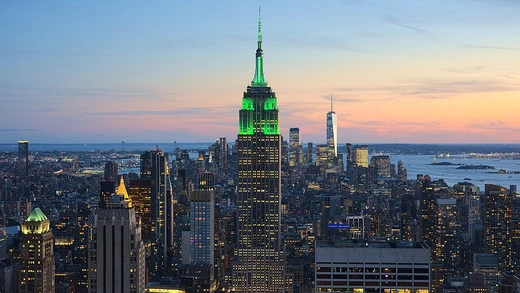
Stockton, California
Inland seaport and logistics hub founded during the California Gold Rush.

Ken Lund · CC BY-SA 2.0
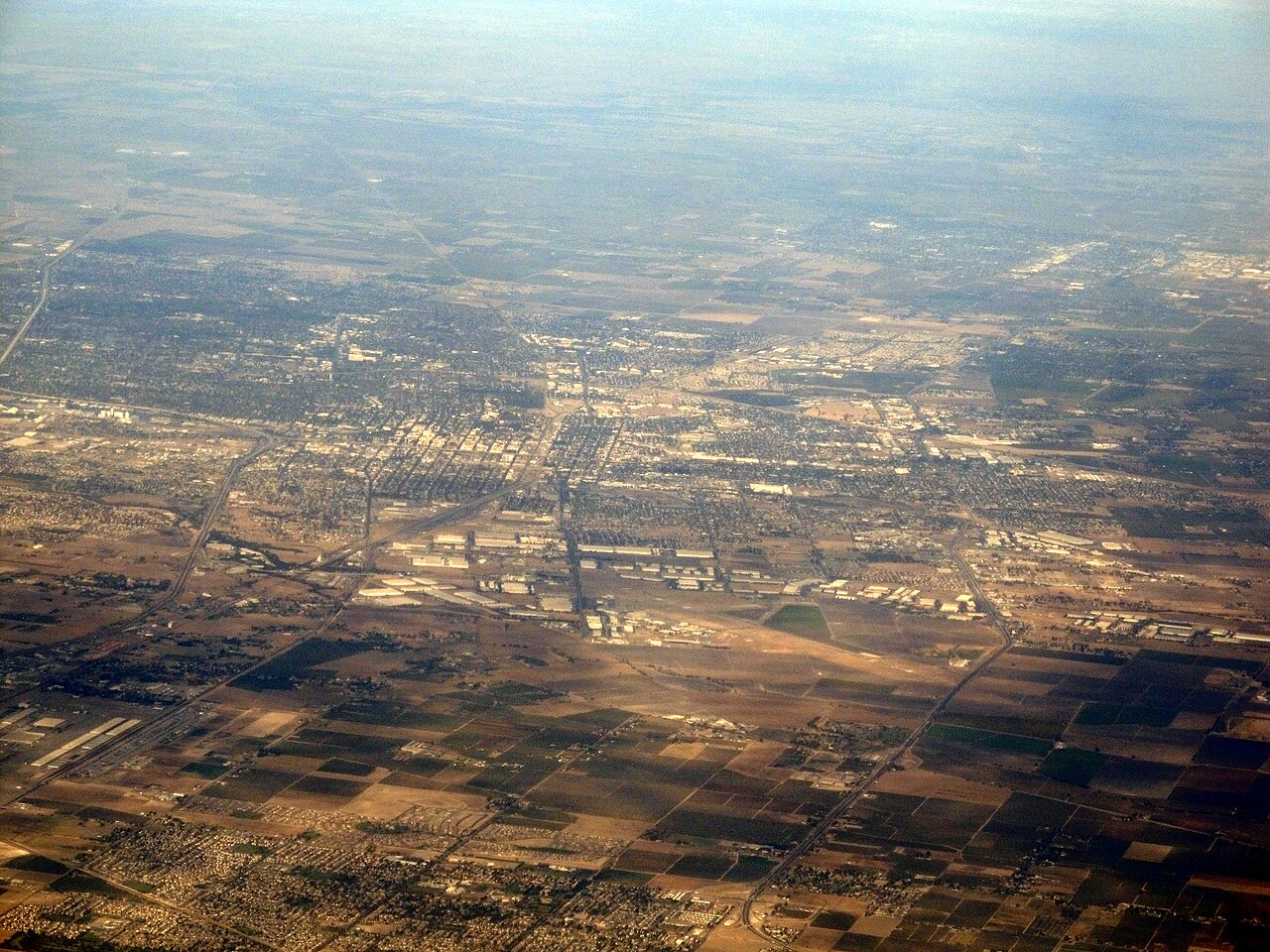
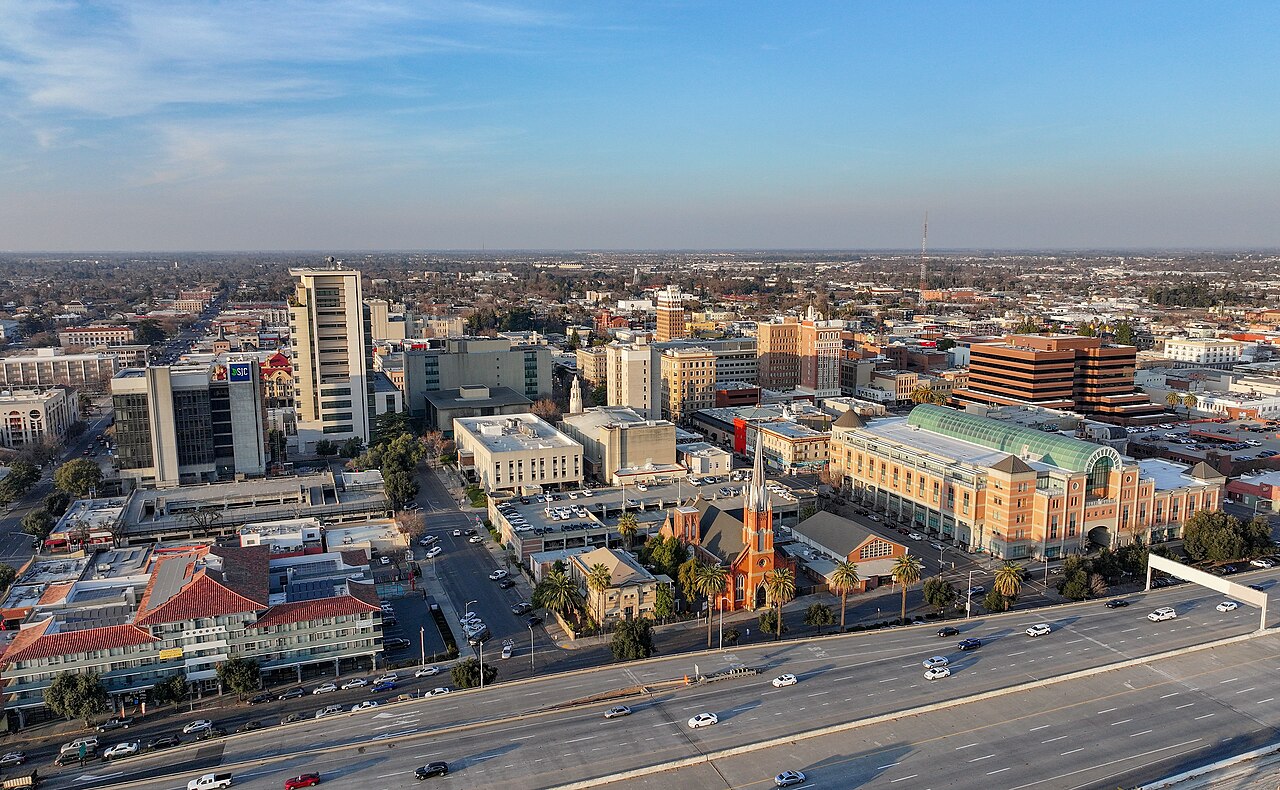
Stockton sits on the San Joaquin River in the northern part of California’s Central Valley, serving as the county seat of San Joaquin County. With 320,804 people counted in the 2020 census, it ranks as the most populous city in the county, the 11th-largest in California, and the 62nd-largest in the United States. The city occupies the southeastern edge of a large inland river delta, which sets it apart from nearby places like Sacramento and the San Francisco Bay Area.
Founded in 1849 during the California Gold Rush, Stockton got its start when Charles Maria Weber bought Rancho Campo de los Franceses, recognizing the value of its position on the San Joaquin River. The city was named after Commodore Robert F. Stockton, a figure from the Mexican-American War. Over time, irrigation systems, railroad links, and the 1933 opening of the Port of Stockton turned the city into a center for logistics and commerce. Key landmarks include the Haggin Museum and the Gurdwara Sahib of Stockton, the first Sikh place of worship built in the United States. The University of the Pacific, founded in 1851 and relocated to Stockton in 1923, is the oldest university in California.
Quick Facts
- Official Name
- Stockton, California
- Settlement Type
- City
- Nicknames
- "Tuleburg", "Mudville", "California's Sunrise Seaport", "Port City", "Asparagus Capital of America".
- Motto
- "Stockton: All American City"
Facts from the source article.
Lore & Background
When Europeans first arrived in the Stockton area, it was settled by the Yatchicumne, a branch of the Northern Valley Yokuts. They built their villages on low mounds to keep their homes above regular floods. The Siskiyou Trail began in the San Francisco Bay Area, a centuries-old Native American footpath that led through the Sacramento Valley over the Cascades and into present-day Oregon. The extensive network of waterways in and around Stockton was fished and navigated by Miwok Indians for centuries. During the California Gold Rush, the San Joaquin River was navigable by ocean-going vessels, making Stockton a natural inland seaport and point of supply and departure for prospective gold-miners. From the mid-19th century onward, Stockton became the region's transportation hub, dealing mainly with agricultural products.
Charles Maria Weber, born Karl David Weber in Germany, immigrated to the United States in 1836. He came overland from Missouri to California with the Bartleson-Bidwell Party in 1841 and began to go by Carlos when he worked for John Sutter. As an alien, Weber could not secure a land grant directly, so he formed a partnership with Guillermo (William) Gulnac, who applied for Rancho Campo de los Franceses. Weber acquired the rancho in 1845. During the Mexican–American War, Weber accepted the position of captain in the Cavalry of the United States, losing trust among his Mexican business partners. He moved to the grant in 1847. At the start of the California Gold Rush in 1848, Europeans and Americans arrived in the area on their way to the goldfields. Weber found selling supplies to gold-seekers more profitable than mining.
Reader's Guide
Stockton's significance lies in its role as a major inland port and transportation hub, particularly during the California Gold Rush and subsequent agricultural development. The city's location at the head of navigation on the San Joaquin River made it a natural supply point for gold miners and later a center for agricultural shipping. The opening of the Port of Stockton in 1933 and the deepening of the Stockton Deepwater Channel improved access to San Francisco Bay, fueling commercial growth. Stockton is also notable for its cultural diversity, reflected in its early Chinese community—by 1880 the third-largest in California—and the establishment of the first Sikh temple in the United States, Gurdwara Sahib Stockton, which opened on October 24, 1912. The city is home to the University of the Pacific, chartered in 1851 and the oldest university in California, located in Stockton since 1923. Benjamin Holt's development of the first workable continuous track tread machine in 1904, tested on Thanksgiving Day, led to the 'Caterpillar' tractor, which was used by British and French armies during World War I to haul heavy guns and supplies. Stockton's legacy includes its contributions to agricultural technology and its role as a multicultural gateway in California's Central Valley.
Did You Know?
- Stockton was the first community in California to have a name not of Spanish or Native American origin.
- The first Sikh house of worship in the United States, Gurdwara Sahib Stockton, opened on October 24, 1912.
- Benjamin Holt successfully tested the first workable continuous track tread machine on Thanksgiving Day, November 24, 1904, in Stockton.
- By 1880, Stockton was home to the third-largest Chinese community in California.
Position Among California's Largest Cities
Stockton holds a place within the roster of the one hundred most populous cities in the state of California, a ranking compiled from population estimates issued by the United States Census Bureau as of July 1, 2025. This positioning situates the city among the state's most significant urban centers, measured strictly by the number of residents living within its official municipal boundaries. The list serves as a snapshot of California's urban hierarchy at a specific moment in time, capturing how population distribution across the state's incorporated municipalities shifts year to year. By appearing on this particular ranking, Stockton is acknowledged as a city of considerable scale within one of the most densely populated states in the nation. The July 1, 2025 cutoff date means the figures reflect the most current federal estimates available, providing a contemporary picture of where the city stands relative to its peers in the state's urban landscape.
The Methodology Behind the Numbers
Understanding Stockton's standing on this list requires attention to how the underlying figures are constructed. The population counts referenced here apply exclusively to the incorporated area of each city—the precise geographic boundary established by municipal charter—rather than to the broader metropolitan region, the contiguous urban area, or the encompassing county. This distinction matters considerably: a city's incorporated population can differ substantially from the total number of people living in its surrounding metro or urban zone. Additionally, the United States Census Bureau and the California Department of Finance employ different statistical methods when estimating population, meaning that the figures published by the state agency will not match those presented in this federal ranking. For anyone researching Stockton's demographic profile, recognizing which agency produced a given number and what geographic scope it covers is essential to accurate interpretation.
A Broader Urban Landscape
Stockton's entry on this list does not exist in isolation; it is one thread in a much larger tapestry of California and national urban data. The ranking connects naturally to several complementary datasets: a comprehensive listing of all cities and towns across the state, a focused inventory of municipalities within the San Francisco Bay Area, a catalog of California's urban areas as distinct from individual city boundaries, and a nationwide ranking of U.S. cities by population. These cross-referenced resources allow a reader to zoom in and out, viewing Stockton both as a node within the Bay Area's network of communities and as a participant in the broader American urban system. Furthermore, demographic breakdowns by race and ethnicity for the largest U.S. municipalities, drawn from 2020 data, offer a complementary lens on the social composition of cities like Stockton, enriching the purely numerical picture provided by the population ranking.
Navigating the Data
For researchers, journalists, or curious residents seeking to place Stockton within California's urban context, this list functions as a structured reference point. The presentation includes a map that visually anchors each city's location, helping readers understand the geographic spread of the state's largest municipalities from the northern border to the southern coast. The inclusion of a references section, though brief, signals that the underlying Census Bureau estimates are traceable to primary federal sources. The cross-reference framework guides readers toward deeper explorations—whether they want to compare Stockton against every other incorporated town in California, examine the specific dynamics of Bay Area cities, or benchmark the city against the entire nation's urban population. Together, these structural elements transform a simple ranking into a navigable entry point for understanding where Stockton fits in the complex geography of American urban life.
Gallery


Frequently Asked Questions
Who is Stockton, California?
Stockton is the county seat of San Joaquin County and the most populous city within that county. It sits along the San Joaquin River in the northern Central Valley of California.
What is Stockton, California known for?
The city operates as an inland seaport and a key logistics hub for the surrounding region. Its location at the southeastern edge of a large river delta gives it a distinct geographic advantage over nearby places like Sacramento.
Why is Stockton, California important?
Born in 1849 during the Gold Rush, Stockton became a critical supply and shipping point for prospectors heading inland. Today it ranks as the 62nd-largest city in the United States and remains a vital node in California's freight and logistics network.
When and how was Stockton, California founded?
The settlement was established in 1849 when Charles Maria Weber purchased Rancho Campo de los Frailes and began developing the area. It grew quickly as a port and staging ground during the California Gold Rush.
More in Us Cities 1-17
Spotted an error? Know more?
Reader corrections go straight into our review queue. Suggest an edit · How this site is sourced