
Heidelberg University
Germany's oldest university, founded in 1386.

Max Adamo · Public domain
Heidelberg University—officially named Ruprecht Karl University of Heidelberg—is a public research institution located in Heidelberg, Baden-Württemberg, Germany. It was established in 1386 at the behest of Pope Urban VI, making it the oldest university in Germany and among the oldest surviving universities in the world. Within the Holy Roman Empire, it was the third such institution founded, following the University of Prague (1347) and the University of Vienna (1365). The university has admitted both men and women since 1900. It holds the status of a German Excellence University, belongs to the U15 group, and was a founding member of both the League of European Research Universities and the Coimbra Group.
The university is organized into twelve faculties and provides undergraduate, graduate, and postdoctoral programs across roughly 100 disciplines. While German is the primary language of instruction, a notable number of graduate programs are taught in English, and some are offered in French. As of 2021, 56 Nobel Prize winners have been associated with the university itself. Academic fields such as modern scientific psychiatry, psychopharmacology, experimental psychology, psychiatric genetics, mathematical statistics, environmental physics, and modern sociology were first introduced as formal disciplines by Heidelberg students or faculty. Each year, approximately 1,000 doctoral degrees are completed, with over a third of doctoral candidates coming from abroad. International students, representing roughly 130 countries, make up more than 20 percent of the total student body.
**History**
**Founding**
The Great Schism of 1378 created the conditions for Heidelberg—then a modest city and the capital of the Electoral Palatinate—to establish its own university. After Pope Gregory XI died in that year, two rival popes were elected: one in Avignon, backed by the French, and another in Rome, supported by the Italians. German secular and religious leaders sided with the Roman pope, which had serious repercussions for German students and teachers in Paris: they lost their financial support and were forced to leave. Recognizing an opportunity, Elector Rupert I began negotiations with the Curia, resulting in a papal bull authorizing the university’s foundation.
Quick Facts
- Native Name
- de · Ruprecht-Karls-Universität Heidelberg
- Latin Name
- Universitas Ruperto-Carola Heidelbergensis
- Motto
- la · Semper apertus (Latin)
- Motto Eng
- Always open
- Established
- 18 October 1386
- Budget
- EUR 764.9 million (2018)
- Rector
- Frauke Melchior
- Chancellor
- Jens Andreas Meinen
- Students
- 28,959 / (SS2024)
- Undergrad
- 10,458
- Postgrad
- 13,410
- Doctoral
- 4,114
Facts from the source article.
Lore & Background
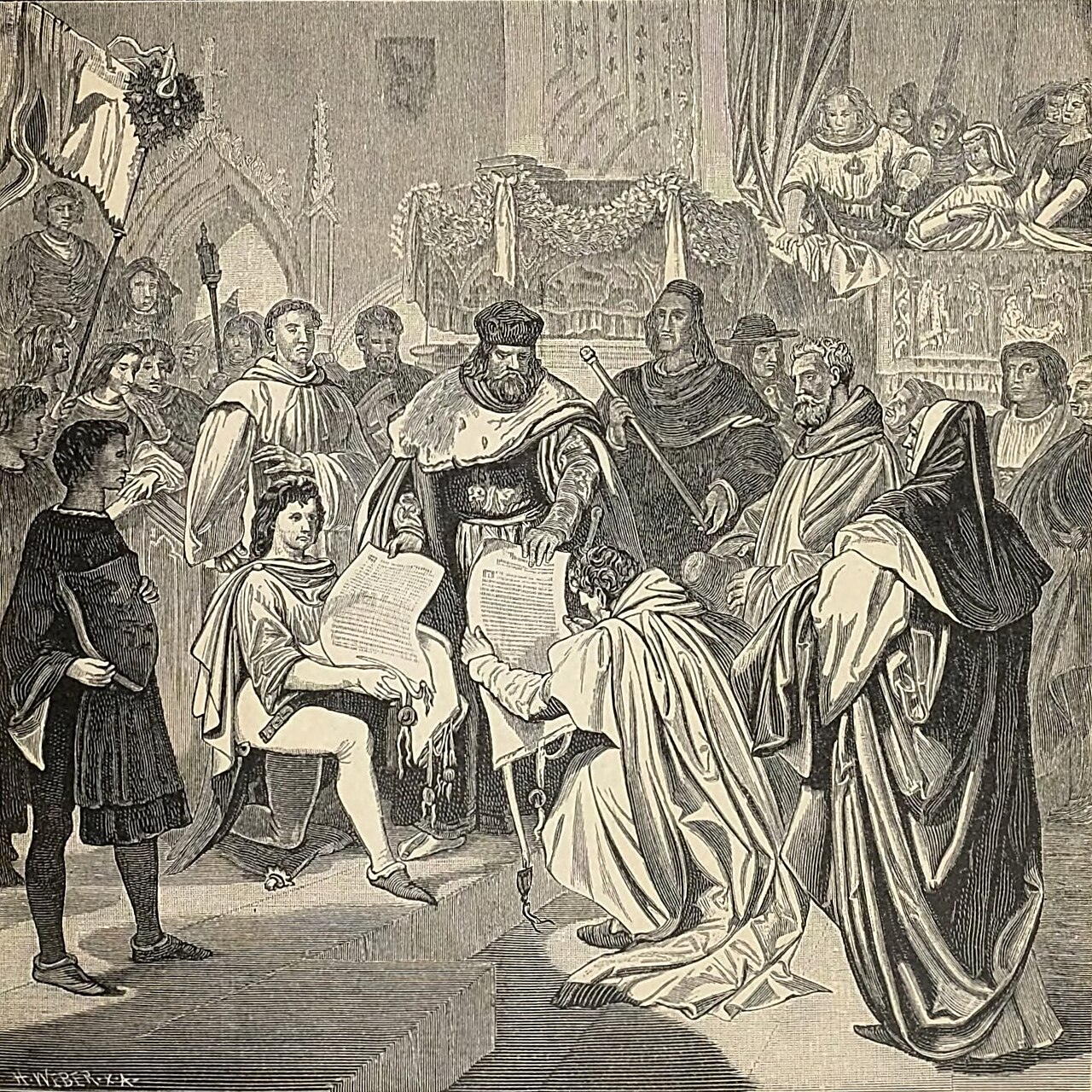
The Great Schism of 1378 made it possible for Heidelberg to gain its own university. After German students and teachers in Paris lost their stipends and had to leave, Rupert I recognized the opportunity and initiated talks with the Curia. On 23 October 1385, Pope Urban VI granted permission to create a studium generale, and the final decision to found the university was taken on 26 June 1386. The university was modelled after the University of Paris and included four faculties: philosophy, theology, jurisprudence, and medicine. The first lecture was held on 19 October 1386, and Marsilius of Inghen was elected first rector. By March 1390, 185 students were enrolled.
Reader's Guide
Heidelberg University holds a central place in European intellectual history as Germany's oldest university and a model for higher education. Its founding during the Great Schism reflects the political and religious dynamics of the late medieval period. The university introduced or advanced numerous scientific disciplines, including modern scientific psychiatry, psychopharmacology, experimental psychology, psychiatric genetics, mathematical statistics, environmental physics, and modern sociology, through its students or faculty. As of 2021, 57 Nobel Prize winners have been affiliated with the city of Heidelberg and 33 with the university itself. The university's history includes periods of humanistic and Calvinist influence, destruction during the Thirty Years' War and by French troops in 1693, and reestablishment as a state-owned institution in 1803 by Karl Friedrich, Grand Duke of Baden. Today, it offers degree programmes in some 100 disciplines, with approximately 1,000 doctorates completed every year and over one third of doctoral students coming from abroad.
Did You Know?
- Heidelberg University was the third university established in the Holy Roman Empire, after Prague (1347) and Vienna (1365).
- The university's first rector was Marsilius of Inghen, elected in November 1386.
- In 1622, the then-world-famous Bibliotheca Palatina was stolen from the University Cathedral and taken to Rome.
- Modern scientific psychiatry, psychopharmacology, experimental psychology, and mathematical statistics were introduced as scientific disciplines by Heidelberg students or faculty.
A Schism-Born Institution
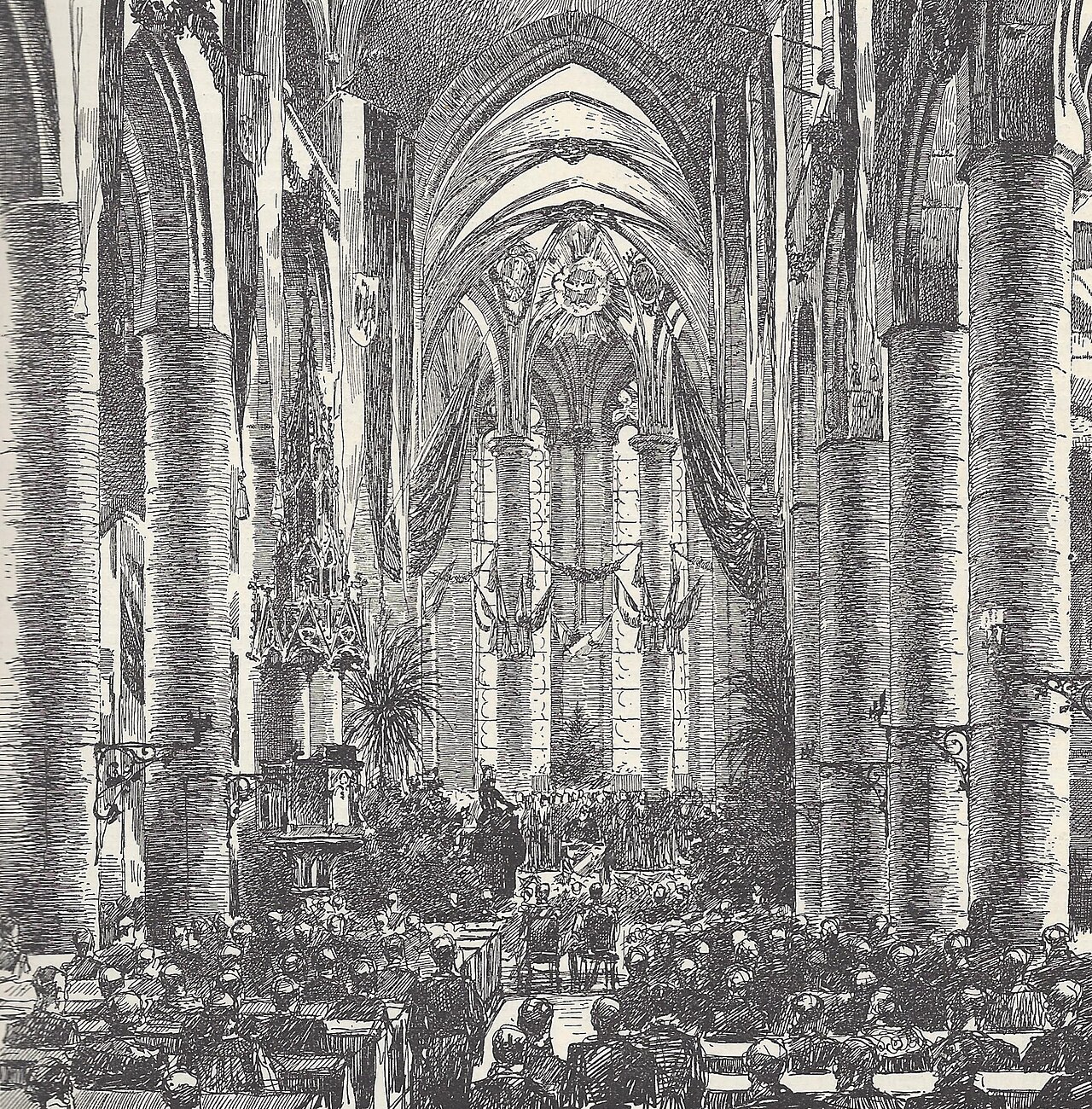
The Great Schism of 1378—when two rival popes claimed the throne, one in Avignon and one in Rome—created an unexpected opening for a small Palatine city. German students and teachers in Paris, who had backed the Roman successor, suddenly lost their stipends and were forced to leave. Elector Rupert I of the Palatinate saw the moment and opened negotiations with the Curia. On October 23, 1385, Pope Urban VI granted permission for a studium generale, and on June 26, 1386, the final founding decision was made. Modeled on the University of Paris, the new institution comprised four faculties: philosophy, theology, jurisprudence, and medicine. A Pontifical High Mass in the Heiliggeistkirche on October 18, 1386, formally established the university, and the very next day the first lecture was delivered. Marsilius of Inghen became the first rector, choosing the seal motto semper apertus—"the book of learning is always open." By March 1390, 185 students were already enrolled.
From Scholasticism to Reformation
The university's early intellectual life was shaped by Marsilius of Inghen's nominalism, known as the via moderna. In 1412, both realism and the teachings of John Wycliffe were banned, but around 1454 the institution adopted a dual-track approach called ambae viae, teaching both nominalism and realism side by side. The late fifteenth century brought a humanistic turn under Chancellor Johann von Dalberg, with luminaries like Rudolph Agricola, Conrad Celtes, Jakob Wimpfeling, and Johann Reuchlin anchoring the older German Humanistic School. Æneas Silvius Piccolomini served as chancellor in his role as provost of Worms and later championed the university as Pope Pius II. The Reformation reshaped Heidelberg's identity profoundly: Martin Luther's April 1518 disputation left a lasting mark, and when the Electorate of the Palatinate embraced the Reformed faith, Elector Otto Henry converted the institution into a Calvinist one. In 1563, members of the divinity school collaborated on the Heidelberg Catechism. Yet the Thirty Years' War devastated the university's fortunes—its famed Bibliotheca Palatina was seized in 1622 and carried to Rome, and King Louis XIV's troops nearly obliterated Heidelberg in 1693.
Prestige and Modern Standing
Today Heidelberg stands among Europe's most distinguished research institutions. It holds German Excellence University status, belongs to the U15 network, and is a founding member of both the League of European Research Universities and the Coimbra Group. The university organizes its academic work across twelve faculties and offers degree programmes at undergraduate, graduate, and postdoctoral levels spanning roughly 100 disciplines. While German remains the primary language of instruction, a significant share of graduate degrees are taught in English, with some also available in French. Since 1899 the institution has been coeducational. Its scholarly pedigree is remarkable: 57 Nobel Prize winners have been affiliated with the city of Heidelberg, and 33 are directly connected to the university itself. Heidelberg scholars and students introduced modern scientific psychiatry, psychopharmacology, experimental psychology, psychiatric genetics, mathematical statistics, environmental physics, and modern sociology as formal scientific disciplines. The university's official names—Ruprecht-Karls-Universität Heidelberg in German and Universitas Ruperto Carola Heidelbergensis in Latin—remind one that it is Germany's oldest university and one of the world's oldest still in operation.
A Global Research Community
Heidelberg's research output is both prolific and deeply international. Approximately 1,000 doctorates are completed each year, and more than one third of doctoral candidates come from outside Germany. Students from some 130 countries make up over 20 percent of the entire student body, giving the campus a genuinely cosmopolitan character. The university's public status in Baden-Württemberg, Germany, and its long history—founded in 1386 as the third university in the Holy Roman Empire after Prague (1347) and Vienna (1365)—provide a stable institutional foundation for this global reach. The breadth of its offerings, from philosophy and theology to medicine and jurisprudence, reflects the four-faculty structure laid down in the original papal charter. The institution's commitment to open inquiry is echoed in its founding rector's seal motto, semper apertus, a reminder that the book of learning is always open. Whether through its membership in elite European research consortia or its record of pioneering new scientific fields, Heidelberg continues to attract scholars who seek to push the boundaries of knowledge across disciplines and borders.
Gallery

Frequently Asked Questions
What is Heidelberg University?
Heidelberg University, officially the Ruprecht Karl University of Heidelberg, is a public research institution based in Heidelberg, Baden-Württemberg, Germany. It holds the distinction of being the oldest university in Germany, having opened its doors in 1386.
Who founded Heidelberg University and under what authority?
Rupert I, Count Palatine of the Rhine, established the school in 1386 using a papal bull granted by Pope Urban VI. It was the third university created within the Holy Roman Empire, trailing Prague (1347) and Vienna (1365).
Why is Heidelberg University considered so significant?
Beyond being Germany's oldest surviving university, it carries the German Excellence University designation and has been linked to 56 Nobel Prize laureates as of 2021. Its nearly 640-year continuous history makes it one of the longest-running academic institutions on the planet.
How diverse is the student body at Heidelberg University?
Learners from roughly 130 countries together account for more than 20 percent of total enrollment, giving the campus a strongly international character. The university has also been open to both men and women since 1900.
What does it mean that Heidelberg University is an 'Excellence University'?
The German Excellence University label is a national recognition that the institution excels in research output and academic quality. It places Heidelberg among a select group of German universities that receive enhanced federal funding and prestige.
More in Universities And Colleges 1-19
Spotted an error? Know more?
Reader corrections go straight into our review queue. Suggest an edit · How this site is sourced