
Ghent University
Public research university founded in 1817 in Ghent, Belgium.

Geert Roels · CC BY-SA 4.0
Ghent University (Universiteit Gent, UGent) is a public research university in Ghent, East Flanders, Belgium. Founded in 1817 by Dutch King William I, it is the second largest Belgian university, with 50,000 students and 9,000 staff. It became the first Dutch-speaking university in Belgium in 1930 and gained major autonomy in 1991, changing its name from Rijksuniversiteit Gent to Universiteit Gent.
Quick Facts
- Native Name
- Universiteit Gent
- Latin Name
- Universitas Gandavensis
- Motto
- Sapere Aude (Latin)
- Motto Eng
- Dare to Think/Durf Denken
- Affiliations
- CESAER / EUA / The Guild / SGroup / ENLIGHT / 3I University Network / 3C Partnership
- City
- Belgium Ghent
- Country
- Belgium
- Students
- +50,000
- Administrative Staff
- 9,000
- Rector
- Petra De Sutter
- Former Names
- State University of Ghent
- Campus
- University town
Facts from the source article.
Lore & Background
Ghent University was established on 9 October 1817 with 190 students and 16 professors, originally teaching in Latin across four faculties: Humanities, Law, Medicine, and Science. After the Belgian Revolution of 1830, the new Belgian state took over administration, and French replaced Latin as the language of instruction. The university contributed to modern organic chemistry through Friedrich August Kekulé's work on benzene and Adolf von Baeyer's research. In 1882, Sidonie Verhelst became the first female student, studying science and pharmacology.
Reader's Guide
Ghent University's significance lies in its role as a pioneering Dutch-language institution in Belgium, achieved after a long linguistic struggle that included a German-installed Flemish university during World War I. It has grown from a small provincial college to a major research university, consistently ranking among the top 100 globally. The university supports key institutions like the Ghent University Library (Boekentoren) and Ghent University Hospital, and maintains international partnerships, including a Global Campus in South Korea. Its history reflects broader Belgian tensions between French and Dutch language communities, and it has been a site of student activism, notably in 1969. In 2024, it faced controversy over severing ties with Israeli universities amid the Gaza War.
Did You Know?
- Ghent University was founded before Belgium itself existed, in 1817, by the Dutch King William I.
- Friedrich August Kekulé unraveled the structure of benzene while at Ghent University.
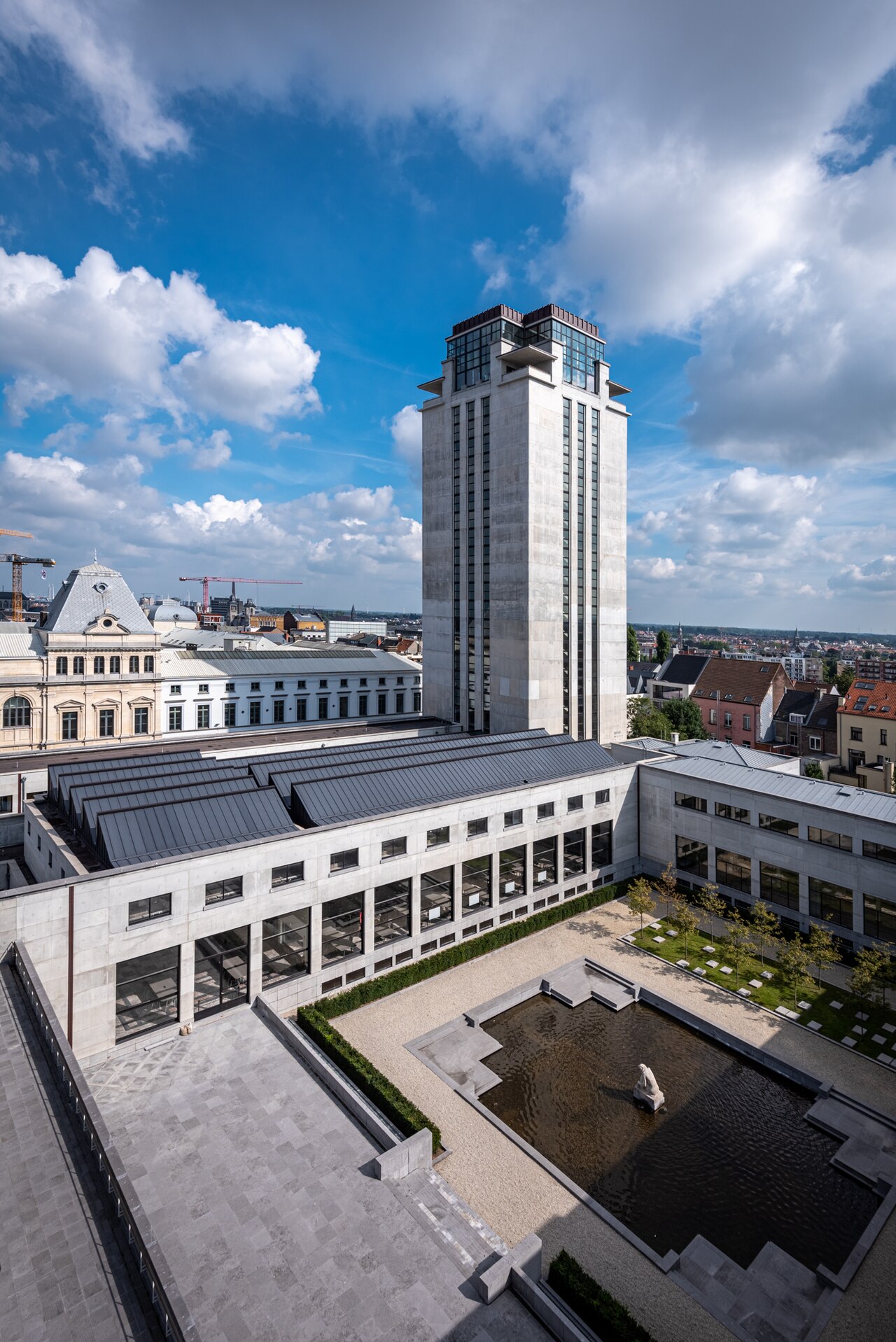
- The university's Boekentoren library contains nearly 3 million volumes, including Papyrus 30.
Origins in a New Kingdom
Ghent University traces its roots to a moment of political reshaping in Europe. When the First French Empire collapsed, the southern provinces fell under Dutch sovereignty, and King William I saw an opportunity to close an academic gap in the region. On 9 October 1817, the university opened its doors with JC van Rotterdam as rector, offering four faculties—Humanities, Law, Medicine, and Science—taught entirely in Latin. The first cohort was modest: 190 students and 16 professors. Yet the institution quickly became a crucible for scientific discovery. Friedrich August Kekulé worked out the structure of benzene at Ghent, and his student Adolf von Baeyer went on to make further contributions to organic chemistry. In 1882, Sidonie Verhelst enrolled as the university's first female student, studying science and pharmacology. Even after the Belgian Revolution of 1830 caused enrollment to dip from a peak of 414 and led to the temporary dissolution of the humanities and science faculties, both were restored by 1835, signaling the university's resilience through political upheaval.
The Language Struggle
The language in which Ghent University conducted its lectures became one of the most contested issues in Belgian academic life. Latin gave way to French after 1835, and for nearly a century the institution operated as a French-medium university. Flemish politician Lodewijk De Raet mounted a successful campaign in 1903 to introduce Dutch-language instruction, with the first Dutch courses appearing in 1906. The issue erupted again during World War I, when German Governor-General Moritz von Bissing exploited the linguistic divide to launch the Flamenpolitik. In 1916, the occupying administration established the Vlaamsche Hoogeschool in Ghent, a Dutch-speaking institution that critics derisively called the Von Bissing University. After the war, it was dissolved, and Ghent University reverted to French as its sole medium. The final breakthrough came in 1930, when the university was definitively established as Dutch-speaking, with August Vermeylen serving as the first rector of a Dutch-language university in Belgium. In 1991, the Flemish Community granted the institution major autonomy, and it shed the name Rijksuniversiteit Gent for Universiteit Gent.
Postwar Expansion and Student Life
The decades following the Second World War transformed Ghent University from a modest institution into one of Belgium's largest. Government policies aimed at democratizing higher education in Flanders during the 1950s and 1960s drove enrollment from over 3,000 students in 1953 to more than 11,500 by 1969. The academic structure expanded in tandem: Applied Sciences joined in 1957, followed by Economics and Veterinary Medicine in 1968, then Psychology, Pedagogy, and Bioengineering in 1969, and Pharmaceutical Sciences shortly after. By the 1990s, the faculty of Politics and Social Sciences rounded out the list at eleven. Student activism also intensified during this era. In the 1960s, demonstrations erupted around the Blandijn site, home to the Faculty of Arts and Philosophy, with the most severe clashes occurring in 1969 in the wake of the broader May 1968 movement. Meanwhile, the university's business education program, originally founded by Andre Vlerick in 1953 as a productivity studies center, evolved into a management school and eventually merged with KU Leuven's MBA program in 1999 to form Vlerick Leuven Gent Management School, later rebranded as Vlerick Business School.
Scale, Research, and Global Footprint
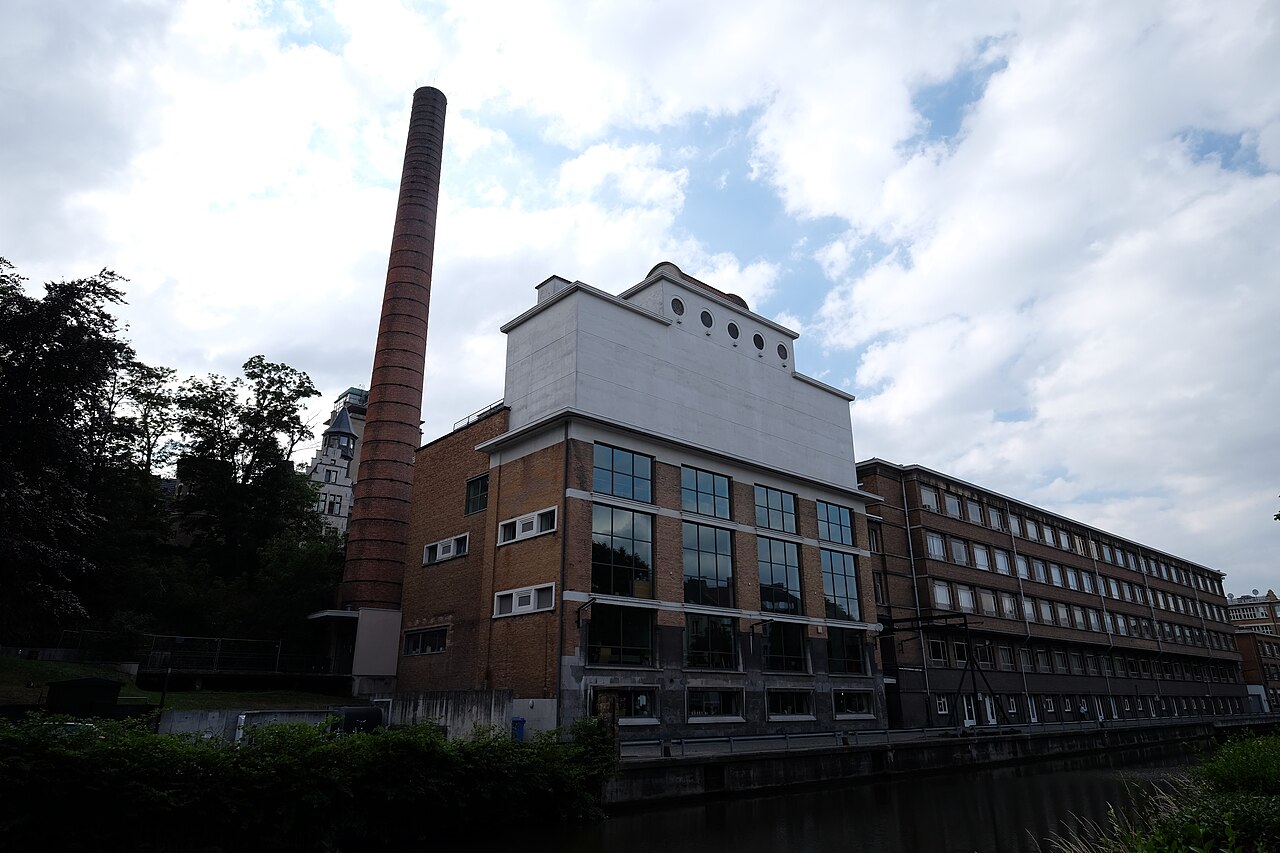
Today, Ghent University stands as the second-largest university in Belgium, enrolling 50,000 students and employing 9,000 staff across eleven faculties and more than 130 individual departments. Its infrastructure extends well beyond the main campus: the university supports the Ghent University Hospital, one of the largest in the country, and the Ghent University Library, which includes the iconic Boekentoren. A science park at Zwijnaarde provides additional research space, while satellite campuses scattered across Flanders and a Global Campus in Songdo, South Korea, extend the institution's geographic reach. The university maintains numerous inter-university partnerships both within and outside Europe. On the research front, Ghent University has been instrumental in developing COinS and Unipept, two significant scientific tools. The institution also remains a parent body of Vlerick Business School, whose professors split their teaching between Ghent and Leuven, and it continues to offer its own MBA programs. This combination of scale, medical and scientific infrastructure, and international partnerships positions UGent as a major force in European academia.
Gallery

Frequently Asked Questions
What is Ghent University?
Ghent University (UGent) is a public research university situated in Ghent, East Flanders, Belgium. It ranks as the second-largest university in the country, enrolling roughly 50,000 students and employing about 9,000 staff members.
Who founded Ghent University and when?
The institution was established in 1817 under the authority of Dutch King William I, who oversaw its creation as part of the broader Dutch educational expansion into the region after the 1815 unification.
What was the 1930 milestone for Ghent University?
In 1930 it became the first university in Belgium to operate entirely in Dutch, a landmark that reshaped Flemish higher education. This shift gave the Dutch-speaking community a dedicated flagship institution for research and teaching.
Why did Ghent University drop the word 'Rijks' from its name in 1991?
When the Belgian state granted the school major institutional autonomy in 1991, it rebranded from 'Rijksuniversiteit Gent' to simply 'Universiteit Gent.' The name change signified its new independent standing within the national university system.
Is Ghent University a private or public institution?
It is a fully public, state-funded research university, meaning its governance and financing come from Belgian public authorities rather than private donors or corporate backers.
More in Universities And Colleges 1-19
Spotted an error? Know more?
Reader corrections go straight into our review queue. Suggest an edit · How this site is sourced