
Fudan University
Public university in Shanghai, founded 1905 by Ma Xiangbo.

中日韩越的汉字 · CC BY-SA 4.0
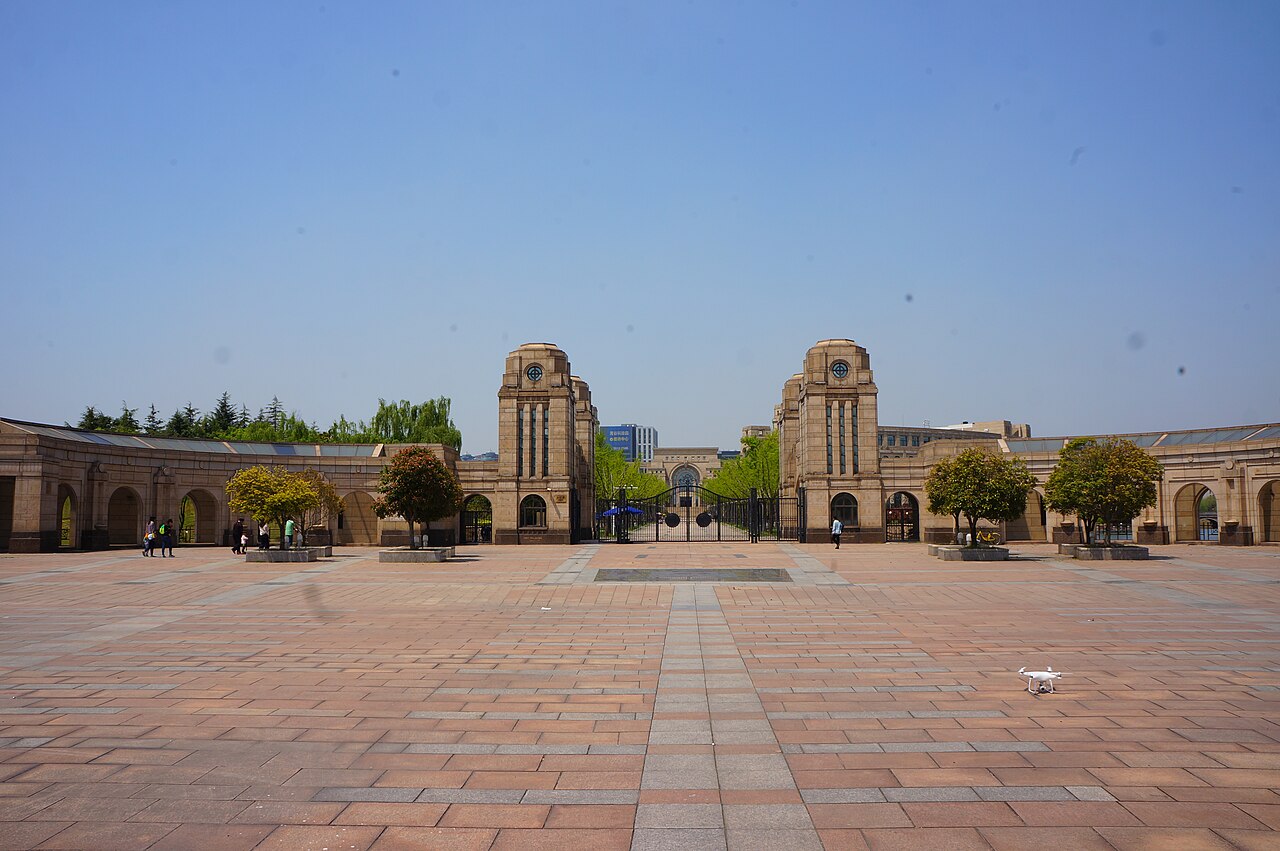
Fudan University (FDU) is a public university in Yangpu, Shanghai, China, affiliated with the Ministry of Education and co-funded with the Shanghai Municipal Government. Founded in 1905 by Chinese Catholic priest Ma Xiangbo as Fudan College, it is a member of the C9 League and part of Project 211, Project 985, and the Double First-Class Construction. The university has evolved from a preparatory school to a national university and now operates four campuses in Shanghai with 17 affiliated hospitals.
Quick Facts
- Former Names
- Fudan Public School (1905) · Fudan College · Private Fudan University (1917–1941) · National Fudan University (1941–1949)
- Motto
- zh-hans · 博学而笃志,切问而近思
- Motto Eng
- Rich in knowledge and tenacious of purposes, inquiring with earnestness and reflecting with self-practice
- Established
- 14 September 1905
- Founders
- Ma Xiangbo
- President
- Jin Li
- Head Label
- Party Secretary
- Head
- Qiu Xin (zh-Hans · 裘新)
- Faculty
- 2,700
- Administrative Staff
- 5,800
- Students
- 31,900
- Undergrad
- 14,100
Facts from the source article.
Lore & Background
Fudan University traces its origins to Fudan College, established in 1905 by Chinese Catholic priest Ma Xiangbo after conflicts at his earlier Aurora College. Initially a preparatory school offering three-year general or specialized education, it became a private university in 1917 with departments including Chinese literature, foreign literature, banking, and civil engineering. In 1921, it adopted an American-styled credit and elective system, and by 1929 it was organized into four faculties: Liberal Arts, Science, Law, and Commerce. During the Second Sino-Japanese War, the university moved to Chongqing in 1937.
Reader's Guide
Fudan University's significance lies in its transformation from a private preparatory school to a national university under the Nationalist government in 1941, and later under the Chinese Communist Party after 1949. During the Mao Zedong era, it was remodeled on the Soviet model, merging arts and science departments from other Shanghai universities to become the city's sole provider of basic science and arts. Teaching halted during the Cultural Revolution. In 2000, it merged with Shanghai Medical University. In 2019, a constitutional change removed 'academic independence and freedom of thought' and added a pledge to follow Communist Party leadership, sparking student protests. The university launched a 1 billion yuan startup fund in 2023 and a cloud-based research platform. In 2024, a controversial Hungarian agreement opened its first overseas campus in Budapest, funded largely by a Chinese loan. Fudan ranks 9th in the Asia Pacific region and 12th globally in the Nature Index Research Leaders 2024, and 11th in the CWTS Leiden Ranking 2024. Notable alumni include Chen Yinke, Chen Wangdao (first translator of The Communist Manifesto into Chinese), and Wang Huning.
Did You Know?
- In 1941, Fudan was transformed from a private university to a national university with government control over major posts.
- In December 2019, Fudan changed its constitution to remove 'academic independence and freedom of thought' and include a pledge to follow Communist Party leadership.
Origins and the Birth of a University (1905–1929)
Fudan University's story begins not with a grand charter but with a Jesuit priest's frustration. Ma Xiangbo, a Chinese member of the Society of Jesus, had previously founded Aurora College, where his order repeatedly clashed with and intervened in student movements. Seeking a fresh start, he established Fudan College in 1905 as a government-funded preparatory school offering three-year programs in general or specialised tracks. The 1911 Revolution reshaped its trajectory: rather than pivoting toward specialised curricula, Fudan doubled down on general education. In 1917 the institution crossed a critical threshold, becoming a private university and launching departments in Chinese literature, foreign literature, banking, business administration, economics, politics, civil engineering, and psychology. A pivotal 1921 reform ended the preparatory model entirely and adopted an American-styled credit and elective system in line with national policy. By 1928 Fudan had registered with the Ministry of Education of the newly formed Nationalist government, and in 1929 it reorganised into four faculties—Liberal Arts, Science, Law, and Commerce—cementing its identity as a full-fledged university.
War, Nationalisation, and the Soviet Reckoning (1937–1976)
Fudan's early decades were repeatedly upended by political upheaval. When the Second Sino-Japanese War erupted in 1937, the university was forced to relocate to Chongqing and did not return to Shanghai until early 1946. Under the Kuomintang government, Fudan had been charged with delivering Western-style education to support China's economic reconstruction. In 1941 the Nationalist government converted Fudan from a private to a national university, giving the state direct control over key posts such as president, provost, and dean. The balance of power shifted dramatically in 1949, when the Shanghai Military Control Commission of the Chinese Communist Party seized the university following the CCP's victory in the civil war. By 1952 a sweeping Soviet-model overhaul of Chinese higher education had reshaped Fudan's identity: departments of arts and science from other institutions were absorbed into it, making Fudan the sole provider of basic science and arts education in Shanghai. The university's mission was recast around transmitting socialist values in service of the CCP's agenda. During the Cultural Revolution, all teaching at Fudan was brought to a complete halt amid political turmoil.
Modern Rebirth and Global Ambitions (2000–2024)
The new millennium brought both consolidation and controversy to Fudan. In 2000 the university merged with Shanghai Medical University—an institution whose roots stretched back to the Fourth National Chungshan University School of Medicine, founded in 1927—creating a far broader Fudan with 17 affiliated hospitals and four Shanghai campuses under a single central administration. In 2023 Fudan announced a 1 billion yuan fund of funds dedicated to startup innovation and launched CFFF, which it describes as China's largest cloud-based scientific research computing platform. Yet the institution's trajectory has not been free of friction. In December 2019 Fudan amended its constitution to remove the phrase "academic independence and freedom of thought" and insert a pledge to follow the Communist Party's leadership, while also requiring that teachers and employees be equipped with Xi Jinping Thought. The change sparked student protests and raised concerns about diminishing academic freedom. On the international stage, 2024 saw the Hungarian government agree to host Fudan's first overseas campus in Budapest, a 540 billion HUF project largely funded by a Chinese loan and built by Chinese firms—a deal that drew sharp criticism from Hungarian education professionals and politicians over economic, academic, and national-security grounds.
A Web of Global Academic Partnerships
Fudan's academic reach extends well beyond Shanghai's borders through an extensive network of international collaborations, particularly in business and management education. Its School of Management has maintained joint MBA programs with MIT Sloan (since 1996, awarding a Fudan degree), BI Norwegian Business School (also since 1996, awarding a BI degree), the University of Hong Kong, and Washington University in St. Louis. A double degree in international management with Bocconi University and Luiss University in Italy has been running since 2005, while a global master's in management partnership with London Business School produces dual degrees. The School of Economics has partnered with Durham University Business School to deliver a Doctor of Business Administration awarded by Durham since 2006, with teaching split between Fudan, Durham, and San Francisco. In a distinctive tripartite arrangement, Fudan, Korea University Business School, and the National University of Singapore have collaborated on the S3 Asia MBA since 2008, with students spending six months at each institution and receiving a dual degree. Beyond business, the Fudan Institute for Global Public Policy maintains strategic academic hubs, including the LSE-Fudan Research Centre for Global Public Policy with the London School of Economics.
Gallery
Frequently Asked Questions
Who is Fudan University?
Fudan University (FDU) is a public research university in Yangpu, Shanghai, governed by the Ministry of Education and co-funded by the Shanghai Municipal Government. It was established in 1905 by Ma Xiangbo, a Chinese Catholic priest, originally as Fudan College before growing into a full national university.
What is Fudan University's backstory?
The institution began in 1905 as a small preparatory school founded by the priest Ma Xiangbo. Over more than a century it expanded through several structural changes until it became the comprehensive national university operating four Shanghai campuses and 17 affiliated hospitals today.
What makes Fudan University elite?
Fudan sits in the C9 League, China's top-tier university consortium, and carries both the Project 985 and Project 211 designations. It also participates in the Double First-Class Construction program, confirming its status as one of the country's premier academic institutions.
Where is Fudan University located and how is it structured?
All four of Fudan's campuses are situated within Shanghai, with the university's main base in the Yangpu district. Beyond its academic buildings, the university runs 17 affiliated hospitals that extend its reach into medical education and care.
Why is Fudan University important to Chinese academia?
As a C9 member and a central player in the 985/211 and Double First-Class initiatives, Fudan helps set the research and policy direction for higher education across China. Its century-long evolution from a modest college into a multi-campus national university makes it a foundational pillar of the country's academic landscape.
More in Universities And Colleges 1-19
Spotted an error? Know more?
Reader corrections go straight into our review queue. Suggest an edit · How this site is sourced