
Free University of Berlin
A public research university founded in West Berlin in 1948, known for its excellence and commitment to academic freedom.

Gunnar Klack · CC BY-SA 4.0
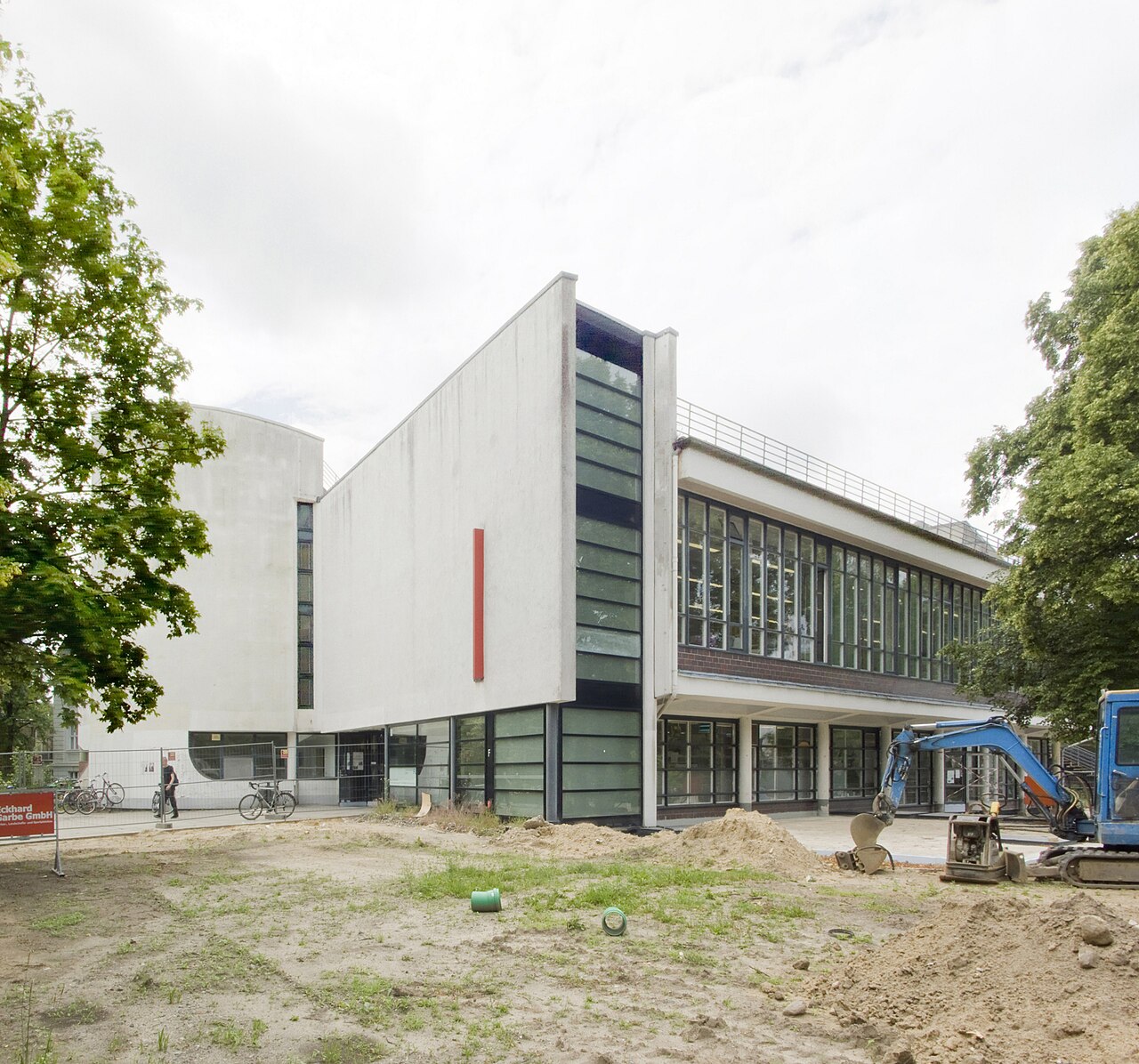
The Free University of Berlin (Freie Universität Berlin, or FU Berlin) is a public research university located in Berlin, Germany. It was established in West Berlin in 1948, during the early Cold War. Its name reflected West Berlin’s position as part of the Western “Free World,” in contrast to Soviet-controlled East Berlin. The main campus is in the Berlin-Dahlem neighborhood, within the Steglitz-Zehlendorf district.
The university is one of thirteen leading German institutions designated a “University of Excellence” under the German Universities Excellence Initiative. It was the first Berlin university to receive this distinction and is one of only six nationwide to be recognized in all three rounds of the Excellence Initiative—in 2006/2007, 2012, and 2019 (most recently as part of the Berlin University Alliance). Five Nobel laureates have been among its faculty and staff. As of 2020, the FU Berlin has produced 18 winners of the Leibniz Prize. According to the Alexander von Humboldt Foundation, it is the most frequently chosen study destination in Germany for leading international scientists and young academics.
The university was founded on 4 December 1948 in West Berlin by faculty and students, with American support. It served as the de facto Western continuation of the University of Berlin (formerly Friedrich Wilhelm University), which had reopened in 1946 in the Soviet sector. In 1949, that original university, on its historic site in East Berlin, was renamed Humboldt University.
In January 1946, the Soviet Military Administration allowed the Friedrich Wilhelm University, located in the Soviet sector, to reopen as the University of Berlin. The institution soon faced growing communist influence and repression, becoming a site of political conflict. Between 1945 and 1948, more than 18 students were beaten, arrested, or persecuted, and some were executed by the Soviet secret police (NKVD). By late 1947, students were demanding a university free from political interference. The protests peaked on 23 April 1948, when about 2,000 students gathered at the Hotel Esplanade after three students were expelled without trial. Later that month, U.S. Army Governor Lucius D. Clay ordered a legal review of forming a new university in West Berlin. On 19 June 1948, a preparatory committee of politicians, professors, staff, and students met and issued a public appeal titled “Request for establishing a free university in Berlin.” The municipal authorities approved the foundation and requested it open for the 1948/49 winter semester. Meanwhile, the student committee in the German Democratic Republic protested, and the GDR officially referred to the new institution as the “so-called free university” until the fall of the Berlin Wall.
The Berlin City Deputies Assembly adopted the university’s by-law on 4 November 1948. Known as the “Berlin model,” it established the university as a statutory corporation not directly subject to the state, governed by a supervisory board of six representatives from the state of Berlin, three from the university, and students. This structure was unique in Germany at the time, giving students much greater influence than before. Over the 1970s, student involvement in committees was gradually reduced to align with the model of other West German universities, ensuring full recognition. The first lectures were held on 15 November 1948 in buildings of the Kaiser Wilhelm Society. The official foundation ceremony took place on 4 December 1948 at the Titania Palace, a film theater with the largest hall in West Berlin. Attendees included scholars, politicians (such as Governing Mayor Ernst Reuter), students, and representatives from American universities like Stanford and Yale. The first elected president was historian Friedrich Meinecke.
By 1949, the Free University had 4,946 students. Until the Berlin Wall was built in 1961, many students came from the Soviet sector, often supported by the senate’s Währungsstipendium. On 26 June 1963, John F. Kennedy was awarded honorary citizenship by the university and gave a ceremonial speech in front of the Henry Ford building, addressing Berlin and Germany’s future under the university’s motto. Among the crowd were West Berlin Mayor Willy Brandt and West German Chancellor Konrad Adenauer. Kennedy’s brother, Robert F. Kennedy, first visited in 1962 and returned in June 1964 to receive an honorary degree from the Department of Philosophy; his speech that day was dedicated to John F. Kennedy, who had been assassinated the previous year. In the late 1960s, the Free University was a major center of the West German student movement of ’68.
Quick Facts
- Native Name
- Freie Universität Berlin
- Motto
- Veritas, Iustitia, Libertas (Latin)
- Motto Lang
- la
- Motto Eng
- Truth, Justice, Liberty
- Established
- 1948-12-04
- Budget
- EUR 648.8 million
- President
- Günter M. Ziegler (2018–present)
- Students
- 38,539 (2022)
- Undergrad
- 22,636 (2021)
- Postgrad
- 9,938 (2021)
- Doctoral
- 3,628 (2021)
- Academic Staff
- 2,851
Facts from the source article.
Lore & Background
The Free University of Berlin was established in West Berlin by faculty members and students on 4 December 1948. With American support, it was founded as the de facto Western continuation of the University of Berlin (before 1945 named the Friedrich Wilhelm University), which had reopened in 1946 in the Soviet sector of Berlin. In 1949, the University of Berlin, on its original site in East Berlin, was renamed the Humboldt University. The university came under increased communist influence and repression, leading to protests. At the end of 1947, students demanded a university free from political influence. The climax of the protests was reached on 23 April 1948. By the end of April, the governor of the United States Army, Lucius D. Clay, issued the order to legally examine the formation of a new university in the western sectors of Berlin. On 19 June 1948, the 'preparatory committee for establishing a free university' met. The Berlin City Deputies Assembly accepted the by-law on 4 November 1948. On 15 November 1948, the first lectures were held. The actual foundation ceremony took place on 4 December 1948 in the Titania Palace. The first elected president was the historian Friedrich Meinecke. In the late 1960s, the Free University of Berlin was one of the main scenes of the West German student movement of '68.
Reader's Guide
The Free University is one of thirteen leading German universities currently designated a 'University of Excellence' according to the German Universities Excellence Initiative. It was the first Berlin university to be awarded this distinction and one of only six universities nationwide to be so recognised in all three consecutive rounds of the Excellence Initiative in 2006/2007, 2012 and 2019, most recently as a member of the Berlin University Alliance. Former and current staff include five Nobel laureates. The FU Berlin has produced a total of 18 winners of the Leibniz Prize up to the year 2020. According to the Alexander von Humboldt Foundation, the university is the most frequently preferred study location in Germany for leading international scientists and young academics. Since 2003, the FU Berlin has been regrouping its research capacities into interdisciplinary research focus areas called clusters. In 2003, the medical institutions of the Free and Humboldt Universities of Berlin merged to create a joint department, the Charité – Universitätsmedizin Berlin. In 2007, the Free University of Berlin dedicated a monument to the founding students who were murdered during the protests. The university presents its Freedom Award to personalities who have made a special contribution toward the cause of freedom.
Did You Know?
- It was the first Berlin university to be awarded the 'University of Excellence' distinction.
- John F. Kennedy was awarded honorary citizen status by the Free University on 26 June 1963.
Cold War Genesis and the Berlin Model
The Free University of Berlin was born from political crisis. In the late 1940s, the University of Berlin in the Soviet sector had become a site of increasing communist repression, with students beaten, arrested, and even executed by the NKVD between 1945 and 1948. The breaking point came in April 1948 when three students were expelled without trial, sparking a protest of roughly 2,000 students at the Hotel Esplanade. U.S. Army Governor Lucius D. Clay then authorized legal steps toward a new institution in the western sectors. On 4 December 1948, the founding ceremony was held in the Titania Palace, a film theatre, with attendees including Governing Mayor Ernst Reuter and representatives from American universities such as Stanford and Yale. The historian Friedrich Meinecke became the first elected president. The university's governance structure, known as the Berlin model, made it a statutory corporation not directly subordinate to the state, with a supervisory board that included student representatives—a degree of student influence unprecedented in Germany at the time. The name itself was a deliberate political statement, anchoring the institution in the Western Free World in opposition to Soviet-controlled East Berlin.
A Track Record of Academic Distinction
The Free University of Berlin has consistently placed itself at the apex of German higher education. It was the first university in Berlin to earn the University of Excellence designation under the national Excellence Initiative, and it stands among only six institutions in the entire country to have secured that recognition in all three consecutive rounds—2006/2007, 2012, and 2019. In the most recent round, it achieved the distinction as part of the Berlin University Alliance. The depth of its research output is reflected in its roster of distinguished scholars: five Nobel laureates have been associated with the university as either current or former staff, and by 2020 it had produced a cumulative total of 18 recipients of the Leibniz Prize, Germany's most prestigious research award. Perhaps most telling of its international draw, the Alexander von Humboldt Foundation identifies FU Berlin as the single most preferred study destination in Germany for leading international scientists and young academics. This sustained excellence, maintained across decades and multiple evaluation cycles, underscores the institution's role as a cornerstone of the German research landscape.
The 1968 Movement and Political Turbulence
In the late 1960s, the Free University became one of the central stages of the West German student movement of 1968, a wave of protest that echoed global unrest. Students at FU rallied around a constellation of grievances: inadequate living and educational standards, the ongoing Vietnam War, the presence of former Nazi Party members in government—most symbolically in the Globke affair—and what they perceived as persistent institutional authoritarianism. The movement took a tragic turn with the assassination of student Benno Ohnesorg and an attempted killing of Rudi Dutschke, events that rapidly escalated protests into violence across West Germany. The university's earlier history of political struggle—its very founding as a response to Soviet repression—gave the 1968 protests a particular resonance. The GDR, meanwhile, had consistently dismissed the institution in official documents as the so-called free university until the fall of the Berlin Wall, underscoring how the FU remained a symbol of ideological division long after its 1948 birth.
American Ties and International Symbolism
From its earliest days, the Free University of Berlin was deeply intertwined with American political and academic life. U.S. Army Governor Lucius D. Clay's 1948 order to examine the formation of a new university in the western sectors was a critical enabling step, and the founding ceremony that December drew representatives from prestigious American institutions including Stanford and Yale. The university's connection to the Kennedy family became a defining chapter of its public life. On 26 June 1963, the very day he delivered his famous Ich bin ein Berliner address at Rathaus Schöneberg, President John F. Kennedy was granted honorary citizenship by FU Berlin and delivered a ceremonial speech before the Henry Ford building, addressing the future of Berlin and Germany. The audience included West Berlin's Governing Mayor Willy Brandt and Chancellor Konrad Adenauer. Two years later, in June 1964, Robert F. Kennedy visited to receive his honorary degree from the Department of Philosophy, dedicating his remarks to his late brother. Before the Wall's construction in 1961, many students from the Soviet sector had attended FU, often supported through a senate-funded scholarship, making the university a rare bridge across the divided city.
Gallery
Frequently Asked Questions
What is the Free University of Berlin?
FU Berlin is a public research university established in West Berlin on 4 December 1948 by its own faculty and student body, backed financially by the United States. It functioned as the de facto Western successor to the historic University of Berlin after the city's division.
Why does the university carry the word 'Free' in its name?
The term 'Freie' was deliberately chosen to mark West Berlin's place within the Western intellectual sphere during the Cold War, setting it apart from the Soviet-aligned institutions in East Berlin.
Where is FU Berlin located?
The main campus sits in the Dahlem neighborhood, which lies within the Steglitz-Zehlendorf district of Berlin, Germany.
What is the 'Berlin model' of university governance?
FU Berlin uses a distinctive governance framework in which students hold a formal, representative voice in institutional decision-making alongside professors and administrative staff, a structure that is unique among German universities.
How does FU Berlin rank academically in Germany?
It was the first university in Berlin to be granted the 'University of Excellence' status and is one of only thirteen German institutions to hold that designation. Five Nobel laureates have been connected to the university over its history.
More in Universities And Colleges 1-19
Spotted an error? Know more?
Reader corrections go straight into our review queue. Suggest an edit · How this site is sourced