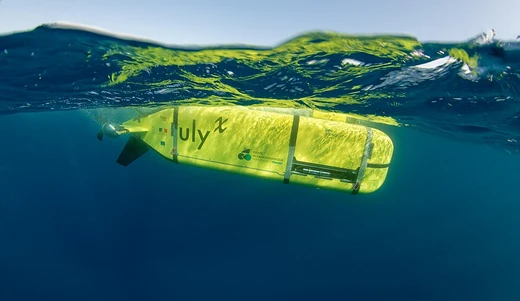
Roboat
Developing the world's first fleet of autonomous urban vessels.

Roboat is a research program focused on developing the world's first fleet of autonomous vessels for urban waterways. Based in Amsterdam, the program aims to create self-driving boats capable of moving people and goods, providing portable infrastructure, and gathering data. It is a project of the Amsterdam Institute for Advanced Metropolitan Solutions (AMS Institute), with research conducted by MIT, Delft University of Technology, and Wageningen University and Research. The program has a budget of €25 million and prototypes are tested in Amsterdam's canals.
- Program duration
- 2016–2021
- Budget
- €25 million
- Lead institutions
- AMS Institute, MIT, Delft University of Technology, Wageningen University and Research
- Prototype length (roboat iii)
- 4 m
- Passenger capacity (roboat iii)
- Up to 5
- First urban autonomous vessels deployed
- Two full-scale units by October 2021
Lore & Background
On 5 October 2018, a shuttle was tested using six-person autonomous boats following a circular route linking Oosterdokskade with the NEMO science centre. This crossing was chosen because building a fixed bridge is impossible there, as it is a through route for high-masted ships. In 2019, the vessels learned how to dock together and organize to support specific tasks. In 2020, the first passenger-capable configuration was completed. Roboat III, measuring 4 meters in length, can carry and adapt to up to 5 passengers. By October 2021, two full-scale units had been deployed, becoming the world's first urban autonomous vessels.
Reader's Guide
Roboat's significance lies in its pioneering role as the first fleet of autonomous vessels designed for an urban environment. The program demonstrated that autonomous boats can operate in a historic canal network, performing tasks such as passenger transport, cargo movement, and temporary bridge-like infrastructure. The 2018 shuttle test proved the feasibility of a waterborne transit link where fixed bridges are impractical due to ship traffic. The 2019 docking capability allowed the boats to form temporary platforms, expanding their utility. The deployment of two full-scale units by October 2021 marked a milestone as the world's first urban autonomous vessels, showing that such technology can be integrated into a living city. The program's legacy includes establishing a model for autonomous water transport in other cities with canals or waterways, and advancing research in autonomous navigation, docking, and fleet coordination. The collaboration between AMS Institute, MIT, Delft University of Technology, and Wageningen University and Research provided a multidisciplinary foundation for the project.
Did You Know?
- The program's budget is €25 million.
- Two full-scale units deployed by October 2021 became the world's first urban autonomous vessels.
More in Underwater and Surface Drones, Part 2 1-24
Spotted an error? Know more?
Reader corrections go straight into our review queue. Suggest an edit · How this site is sourced