Spindle (vehicle)
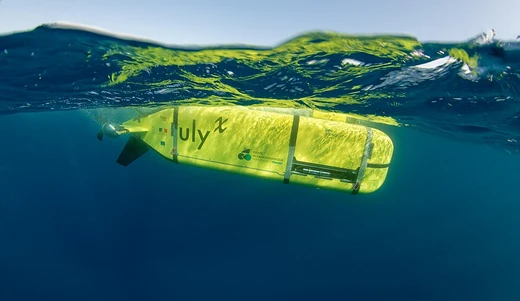
Two-stage autonomous system for sub-glacial lake exploration and sample return.

SPINDLE (Sub-glacial Polar Ice Navigation, Descent, and Lake Exploration) is a two-stage autonomous vehicle system made up of a robotic ice-penetrating carrier, called a cryobot, and a hovering autonomous underwater vehicle (HAUV). The cryobot travels down through an ice body into a subsurface ocean, where it releases the HAUV submersible. That submersible carries out long-range reconnaissance, searches for signs of life, and collects samples. Once its mission is done, the HAUV returns to the cryobot and docks automatically, so data can be sent up and samples brought back to the surface.
The SPINDLE design targets subglacial lakes in Antarctica, such as Lake Vostok and South Pole Lake. It would develop technologies for a Flagship-class mission to the shallow lakes of Jupiter’s moon Europa, the subsurface ocean of Ganymede, or the geyser sources on Europa and Enceladus. The project is funded by NASA and designed at Stone Aerospace under Principal Investigator Bill Stone.
In 2011, NASA awarded Stone Aerospace $4 million for Phase 2 of project VALKYRIE (Very-Deep Autonomous Laser-Powered Kilowatt-Class Yo-Yoing Robotic Ice Explorer). That project built an autonomous cryobot that melts through large amounts of ice. A 5 kW surface power source sends a high-energy laser beam through an optic fiber, producing hot water jets that melt the ice ahead. Some beam energy is converted to electricity by photovoltaic cells to run onboard electronics and jet pumps. Phase 2 tested a scaled-down version of the cryobot in Alaska’s Matanuska Glacier in 2015.
Stone Aerospace is now working on designs that combine a scaled-down HAUV submersible called ARTEMIS (4.3 meters long, 1,270 kg) with VALKYRIE-type technology to create SPINDLE. The goal is a full-scale cryobot that can melt its way to an Antarctic subglacial lake—Lake Vostok—collect samples, and then return to the surface. Unlike VALKYRIE, SPINDLE does not use hot water jets; instead, it beams its laser directly into the ice ahead. The vehicle has a radar integrated with an intelligent algorithm for autonomous scientific sampling and navigation through both ice and water. This phase is seen as a precursor to possible future missions to icy worlds like Europa, Enceladus, or Ganymede, to explore their subsurface liquid oceans, assess habitability, and search for biosignatures.
- Type
- Two-stage autonomous vehicle system (cryobot and HAUV submersible)
- Target environments
- Sub-glacial lakes such as Lake Vostok and South Pole Lake in Antarctica
- Cryobot penetration depth
- 1.5 to 4 km through terrestrial ice sheet
- Hauv exploration radius
- Up to 1 km from the cryobot
- Hauv submersible (artemis) dimensions
- 4.3 m long, 1,270 kg
- Funding agency
- NASA
- Principal investigator
- Bill Stone
Lore & Background
SPINDLE is being designed at Stone Aerospace under the supervision of Principal Investigator Bill Stone, funded by NASA. The project builds on earlier work: in 2011, NASA awarded Stone Aerospace $4 million to fund Phase 2 of project VALKYRIE (Very-Deep Autonomous Laser-Powered Kilowatt-Class Yo-Yoing Robotic Ice Explorer), which created an autonomous cryobot capable of melting through vast amounts of ice. That system used a 5 kW power source on the surface to conduct a high-energy laser beam via optic fiber to produce hot water jets that melt the ice ahead, with some beam energy converted to electricity via photovoltaic cells. Phase 2 of VALKYRIE consisted of testing a scaled-down version of the cryobot in Matanuska Glacier, Alaska in 2015.
Stone Aerospace is now looking at designs integrating a scaled-down version of the HAUV submersible called ARTEMIS (4.3 m long, 1,270 kg) with VALKYRIE-type technology to produce SPINDLE. Unlike VALKYRIE, SPINDLE does not use hot water jets but beams its laser straight into the ice ahead. The vehicle features a radar integrated with an intelligent algorithm for autonomous scientific sampling and navigation through ice and water. The cryobot is bi-directional and vertically controllable both in an ice sheet and following breakthrough into a subglacial water cavity or ocean, and is designed for subsequent return to the surface at a much later date or subsequent season.
The SPINDLE design is targeted at sub-glacial lakes such as Lake Vostok and South Pole Lake in Antarctica. It would develop technologies for a Flagship-class mission to either the shallow lakes of Jupiter's moon Europa, the sub-surface ocean of Ganymede, or the geyser sources on both Europa and Enceladus. If flown to an icy moon, the system would likely deposit radio receiver buoys into the ice from its rear as it descends. Engineers are working on preliminary designs of a compact fission power plant for actual ocean planet missions.
Reader's Guide
SPINDLE represents a significant step toward autonomous exploration of sub-glacial aquatic environments on Earth and potentially on icy moons in the outer solar system. The system's two-stage architecture—a cryobot that melts through ice and deploys a hovering autonomous underwater vehicle (HAUV)—enables long-range reconnaissance, life search, and sample collection in sub-surface oceans. The HAUV's ability to auto-dock with the cryobot for data uplink and sample return addresses a key challenge in extreme environment exploration: retrieving scientific data and physical samples from inaccessible locations.
The project's lineage from VALKYRIE demonstrates a progression in cryobot technology, moving from hot-water-jet melting to direct laser beaming into ice, and integrating radar-based autonomous navigation. SPINDLE's design for 1.5 to 4 km penetration through terrestrial ice sheets and the HAUV's 1 km exploration radius set practical benchmarks for Antarctic subglacial lake missions. The system's bidirectional, vertically controllable cryobot allows for return to the surface, a capability essential for sample return missions.
As a precursor to Flagship-class missions to Europa, Ganymede, or Enceladus, SPINDLE addresses the need for technologies that can penetrate thick ice, navigate unknown sub-surface waters, and return samples. The consideration of a compact fission power plant for actual ocean planet missions underscores the energy demands of such endeavors. SPINDLE's development at Stone Aerospace under NASA funding positions it as a potential pathfinder for future astrobiology missions seeking biosignatures in extraterrestrial oceans.
Did You Know?
- The HAUV submersible used in SPINDLE is a scaled-down version called ARTEMIS, which is 4.3 m long and weighs 1,270 kg.
- SPINDLE does not use hot water jets like its predecessor VALKYRIE; instead, it beams its laser straight into the ice ahead.
From Cave Mapper to Aerospace Firm
Stone Aerospace traces its roots to the early 2000s, when engineer and explorer Bill Stone was working at the National Institute of Standards and Technology. Already well known for his underground and underwater exploration work, Stone had developed technologies to push the boundaries of human exploration. One particularly successful venture was the Wakulla II Project in Wakulla Springs, Florida, where his human-navigated digital wall mapper proved its worth. That success sparked a natural question: could a machine do what a diver could not, venturing into environments too dangerous or inaccessible for humans? After submitting multiple proposals to NASA, Stone received funding in 2003 for the DEPTHX project. Shortly after, his Piedra-Sombra Corporation rebranded as Stone Aerospace and set up shop in Del Valle, a suburb of Austin, Texas. What began as a part-time consulting operation in 1999 had evolved into a dedicated aerospace engineering firm with a clear mission: build autonomous vehicles capable of exploring the most hostile environments on Earth.
The DEPTHX and ENDURANCE Foundation
Before SPINDLE could exist, two predecessor missions laid the groundwork. DEPTHX, a fully autonomous underwater vehicle, was tested over two field seasons in the cenotes of southeast Mexico. It carried scientific sampling equipment and was a collaboration involving Carnegie Mellon University for navigation software, the Southwest Research Institute for the science payload, and researchers from the University of Texas at Austin, the Colorado School of Mines, and NASA Ames. Among its landmark achievements were the discovery of at least three new divisions of bacteria—the first such find credited to a robotic vehicle—and the first application of three-dimensional simultaneous localization and mapping. Building on that success, the DEPTHX vehicle was reconfigured into ENDURANCE, which spent two seasons exploring West Lake Bonney in Antarctica's Dry Valleys. It autonomously collected aqueous chemistry data and produced high-resolution maps of the lake floor and the Taylor Glacier interface. Researchers consider the result one of the most comprehensive three-dimensional biogeochemical maps of any lake on Earth. A 2010 National Geographic Explorer episode highlighted the project's broader ambition: finding life on Jupiter's moon Europa.
VALKYRIE and the Laser-Melting Cryobot
The VALKYRIE project—standing for Very-Deep Autonomous Laser-Powered Kilowatt-Class Yo-Yoing Robotic Ice Explorer—represented a critical leap in Stone Aerospace's capabilities. NASA awarded the firm four million dollars in 2011 to fund Phase 2 of this ambitious cryobot program. The core innovation was a surface-mounted five-kilowatt power source that channeled a high-energy laser beam through optic fiber, generating hot water jets powerful enough to melt through vast thicknesses of ice. A portion of the beam's energy was converted into electricity via photovoltaic cells, which powered the vehicle's onboard electronics and jet pumps. This elegant design meant the robot could bore deep into glacial ice without carrying its own massive power supply. Phase 2 involved field-testing a scaled-down version of the cryobot in Matanuska Glacier, Alaska, in 2015. The successful tests validated the laser-melting approach and provided the engineering foundation that would eventually be integrated into the full-scale SPINDLE vehicle.
SPINDLE: Drilling Toward Lake Vostok and Beyond
SPINDLE is the culmination of more than a decade of iterative development at Stone Aerospace. The vehicle integrates a prototype submersible called ARTEMIS—measuring 4.3 meters in length and weighing 1,270 kilograms—with the VALKYRIE cryobot technology. The full-scale cryobot is designed to melt its way down to an Antarctic subglacial lake, specifically Lake Vostok, collect scientific samples from the water below, and then resurface to the top of the ice. A key feature is a radar system paired with an intelligent algorithm that handles both autonomous scientific sampling and navigation through the combined ice-and-water environment. Stone Aerospace views this phase as a direct precursor to future deep-space missions targeting icy moons, where similar autonomous drilling and sampling challenges would be encountered. The company continues refining these technologies in Del Valle, Texas, with the long-term goal of extending robotic exploration far beyond Earth's frozen lakes.
Frequently Asked Questions
What is Spindle (vehicle)?
Spindle stands for Sub-glacial Polar Ice Navigation, Descent, and Lake Exploration, and it is a two-stage autonomous system built to reach hidden oceans trapped beneath Antarctic ice. The system pairs an ice-boring robotic carrier (the cryobot) with a hovering autonomous underwater vehicle (HAUV) that handles the actual exploration once underwater.
How does Spindle (vehicle) complete a mission?
The cryobot drills 1.5 to 4 kilometers through the ice sheet and releases the HAUV into the sub-glacial lake below. The HAUV then conducts long-range reconnaissance, hunts for biosignatures, and gathers samples before automatically docking back with the cryobot so data can be uplinked and samples returned to the surface.
What are the dimensions and range of Spindle (vehicle)'s submersible?
The HAUV, designated ARTEMIS, is 4.3 meters long and has a mass of 1,270 kg. It can travel up to 1 kilometer away from the cryobot to survey the lake floor and water column.
Where would Spindle (vehicle) be deployed?
Spindle is purpose-built for sub-glacial lakes such as Lake Vostok and South Pole Lake in Antarctica. These are sealed, dark bodies of water sitting beneath kilometers of solid ice, making them inaccessible to conventional submersibles.
Who is behind Spindle (vehicle) and what is its primary goal?
NASA is the funding agency behind the Spindle project. Its core objective is sample return from a sub-glacial environment—finding potential signs of life, collecting physical samples, and bringing them back to the surface for laboratory analysis.
More in Underwater and Surface Drones, Part 2 1-24
Spotted an error? Know more?
Reader corrections go straight into our review queue. Suggest an edit · How this site is sourced