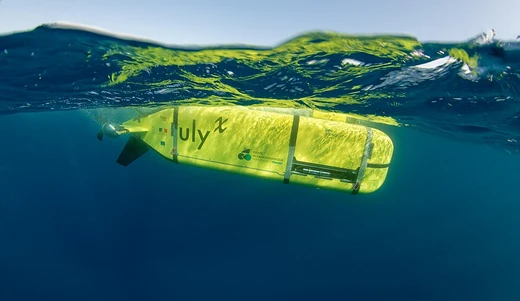
Seafox drone
Expendable mine disposal vehicle in service with eleven navies.

The SeaFox is a German-made unmanned underwater vehicle designed to find and destroy sea mines, including both ground and moored types. Built by Atlas Elektronik, it comes in three versions, one of which is used for training. The orange SeaFox-I is an inspection model equipped with sonar and an inertial navigation system, while the black SeaFox-C combat variant carries a 1.4-kilogram shaped charge warhead. Eleven navies currently use the system.
As an expendable mine disposal vehicle, the SeaFox has low running and replacement costs, keeping its life cycle expenses down. It targets mines that threaten ships and communicates with its mother vessel through a fiber-optic cable. A custom launch and retrieval system allows it to operate from various ships, boats, or even helicopters. Beyond mine disposal, it can handle damage estimation, route surveys, maritime boundary control, intelligence gathering, and harbor surveillance.
In 2001, the Royal Navy leased SeaFox drones for use on HMS *Bangor* and HMS *Blyth* during Operation Telic in Iraq. HMS *Bangor* also deployed them off Libya in 2011. In October 2015, the Naval Surface Weapons Center commissioned Atlas North America to acquire additional SeaFox vehicles.
The SeaFox C operates at depths from 0 to 300 meters and has a range of 1,200 meters, depending on acoustic and current conditions. Its propulsion system consists of four horizontal propellers and one vertical thruster, all battery-powered. Maximum speed is 6 knots. The vehicle can be controlled remotely or set to automatic mode, using radar and sonar to locate mines and obstacles. It features live CCTV feed and a high-intensity searchlight, with data transmitted via a 3,000-meter fiber-optic cable. Launch and retrieval are done with a crane. The shaped charge warhead has proven effective against incendiary devices.
- Operational depth
- 0 to 300 meters
- Range
- 1200 meters depending on acoustic and current conditions
- Maximum speed
- 6 knots
- Warhead
- 1.4 kg shaped charge (SeaFox-C)
- Propulsion
- Four horizontal propellers and one vertical thruster, battery powered
- Fiber-optic cable length
- About 3000 meters
- Versions
- SeaFox-I (inspection), SeaFox-C (combat), and a training version
Lore & Background
The SeaFox is an advanced design of an Expendable Mine Disposal Vehicle (EMDV). It has a low life cycle cost as it has low running and replacement costs. Its main targets are sea mines that pose a danger to vessels. It communicates with the ship via a fiber-optic cable. The SeaFox uses a custom launch and retrieval system, that may be fitted to a variety of ships, boats or even helicopters. It can be used for a range of tasks such as conduct damage estimation, route surveys, maritime boundary control, intelligence and harbor surveillance missions.
In 2001 the Royal Navy leased some SeaFox drones for use on HMS Bangor and HMS Blyth off Iraq as part of Operation Telic. The Bangor also deployed them off Libya in 2011. In October 2015 the Naval Surface Weapons Center (NSWC) commissioned the Atlas North America to get more SeaFox vehicles.
The SeaFox can be controlled with a remote or can be set on automatic and it will use radar and sonar to locate mines and other obstacles that it is tasked with clearing. The SeaFox has live CCTV feed and a high intensity searchlight. The data feed is via a fiber-optic cable that is about 3000 meters long. The SeaFox is launched and retrieved using a crane. The warhead of the SeaFox is a fully shaped charge with demonstrated effectiveness against incendiary devices.
Reader's Guide
The SeaFox represents a notable step in expendable mine disposal technology, offering a low-cost alternative to traditional minehunting methods. Its design emphasizes low running and replacement costs, making it an attractive option for navies seeking to maintain mine countermeasure capabilities without the expense of larger, reusable systems. The vehicle's ability to be launched from a variety of platforms—including ships, boats, and helicopters—increases its operational flexibility. Its deployment by the Royal Navy during Operation Telic off Iraq and later off Libya demonstrates its utility in real-world conflict zones. The system's continued acquisition by the Naval Surface Weapons Center in 2015 indicates ongoing interest from major naval powers. The SeaFox's combination of inspection and combat variants allows for both reconnaissance and neutralization of mines, while its fiber-optic data link provides real-time video and control. The vehicle's operational depth of up to 300 meters and range of 1200 meters cover many shallow-water mine threats. With service in eleven navies, the SeaFox has become a widely adopted solution for mine disposal, balancing effectiveness with affordability.
Did You Know?
- The SeaFox is manufactured by German company Atlas Elektronik.
- The SeaFox-C combat variant carries a 1.4 kg shaped charge warhead.
- The SeaFox communicates with the ship via a fiber-optic cable about 3000 meters long.
- The Royal Navy leased SeaFox drones for use off Iraq in 2001 as part of Operation Telic.
Design Philosophy and Variant Configuration
The SeaFox is an unmanned underwater vehicle developed by the German defense firm Atlas Elektronik, purpose-built to identify and neutralize both seabed and moored naval mines. The platform exists in three distinct configurations, one of which serves purely as a training tool for crews. The two operational variants are visually and functionally differentiated: the SeaFox-I, finished in a distinctive orange livery and designated for inspection duties, carries sonar equipment alongside an Inertial Navigation System to orient itself beneath the waves. Its counterpart, the SeaFox-C, is painted black and designated for combat operations. Beyond the sensing suite shared with the inspection model, the combat round adds a 1.4-kilogram shaped charge warhead capable of destroying a mine at close range. The system's proven effectiveness and modular design have led to adoption by eleven different navies worldwide, making it one of the more widely fielded expendable mine-disposal platforms in modern maritime forces.
Underwater Performance and Control Architecture
Operating between the surface and a maximum depth of 300 meters, the SeaFox-C is engineered to work within the depth band where most naval mines are deployed. Its effective working range extends to roughly 1,200 meters from the parent vessel, though actual reach varies with local acoustic conditions and ocean currents. Propulsion is entirely battery-driven, relying on a combination of four horizontal propellers and a single vertical thruster to maneuver the vehicle in three dimensions. Top speed reaches six knots, sufficient for the close-in mine-clearing tasks it performs. Operators can pilot the drone manually from the ship or switch it to an autonomous mode, in which onboard radar and sonar systems independently detect mines and other obstacles. A live CCTV feed and a high-intensity searchlight provide visual confirmation, while all data travels back through a fiber-optic cable approximately 3,000 meters in length. Launch and recovery are handled by a crane system, keeping the process simple and compatible with a variety of host platforms.
Combat Deployments and Procurement Milestones
The SeaFox first saw operational use in 2001, when the Royal Navy leased a number of the drones for deployment aboard HMS Bangor and HMS Blyth during Operation Telic in the waters off Iraq. The Bangor would later carry the system again in 2011, this time supporting operations off the coast of Libya. These early British deployments demonstrated the platform's practical value in real-world mine-threat environments and helped build the operational track record that attracted further international interest. On the American side, the Naval Surface Weapons Center took a formal step in October 2015 by commissioning Atlas North America to procure additional SeaFox vehicles, signaling the U.S. Navy's growing confidence in the German-built system. Today the platform is reported to be in active service with eleven navies, a testament to its reliability and the trust that frontline operators place in an expendable vehicle to do a job that, if performed by crewed divers, would carry far greater risk to human life.
Mission Flexibility and Economic Rationale
The SeaFox is conceived as an advanced evolution of the Expendable Mine Disposal Vehicle concept, and its economic design philosophy is central to its appeal. Because the vehicle is expendable, both running costs and replacement costs remain low, giving operators a significantly reduced life-cycle burden compared with crewed mine-removal operations. The platform communicates with its host ship through a fiber-optic cable, and its custom launch-and-retrieval system can be adapted to a wide range of platforms, from large surface vessels and smaller boats to helicopters. While its primary mission remains the detection and destruction of sea mines that threaten shipping lanes, the SeaFox is equally suited to a broader portfolio of tasks: conducting damage estimation after an incident, performing route surveys, supporting maritime boundary control, gathering intelligence, and carrying out harbor surveillance. The combat variant's fully shaped charge warhead has demonstrated effectiveness not only against conventional mines but also against incendiary devices, broadening the tactical scenarios in which the system can be employed.
Frequently Asked Questions
What is the SeaFox drone?
The SeaFox is a German-built expendable underwater vehicle manufactured by Atlas Elektronik, purpose-built to locate and neutralize sea mines. It lets navies clear minefields without risking crewed vessels or divers in hazardous waters.
What are the SeaFox drone's main capabilities?
It can operate from the surface down to 300 meters, travel up to 1,200 meters from its launch point, and reach a top speed of 6 knots. Propulsion is handled by four horizontal propellers plus a vertical thruster, all powered by onboard batteries.
What's the difference between the SeaFox-I and SeaFox-C variants?
The orange SeaFox-I is a non-combat inspection model fitted with sonar and an inertial navigation system for surveying minefields. The black SeaFox-C is the combat version, carrying a 1.4-kilogram shaped-charge warhead to actually destroy the mines it finds.
How is the SeaFox drone controlled and tethered?
It is guided from the surface via a fiber-optic cable roughly 3,000 meters long, which carries both command signals and real-time sensor data. That cable length effectively caps how far the vehicle can work from its parent ship.
Why is the SeaFox drone considered important in naval mine countermeasures?
Because it is expendable, navies can deploy it at very low running and replacement cost, keeping overall life-cycle expenses far below those of crewed minehunters. Eleven navies around the world have adopted the system, reflecting its proven value in protecting shipping lanes and harbors.
More in Underwater and Surface Drones, Part 2 1-24
Spotted an error? Know more?
Reader corrections go straight into our review queue. Suggest an edit · How this site is sourced