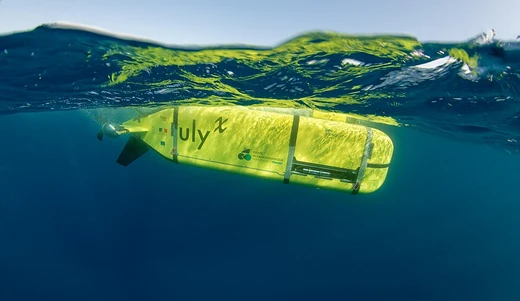
Hammerhead USV-T
Remote-controlled high-speed target drone for naval training.

The Hammerhead USV-T is an unmanned, remote-controlled surface vessel built for naval target practice. It is manufactured by Meggitt Training Systems alongside A. F. Theriault & Son Ltd and roughly eighty other suppliers that provide the boat’s internal components and accessories. The craft is designed to mimic the fast inshore attack boats often used in swarms by forces in volatile regions. Because it requires no crew, it is more cost-effective and does not need many of the features a manned vessel of its type would normally carry. Its primary role is to test a ship’s defenses or serve as a target or target-towing vehicle.
The 50th unit was built in Canada by A. F. Theriault & Son Ltd in January 2010. In July 2025, the Royal Canadian Navy used the USV-Ts during live-fire drills in Exercise Trident Fury 2025 to simulate kamikaze drone attacks. During the Cobra Gold 2026 exercises in March 2026, the drones were employed to train partner nations in countering maritime drones.
In 2010, Meggitt achieved a world first by demonstrating to the international naval community the ability to control sixteen Hammerheads simultaneously for seven hours, showcasing many of the craft’s useful features and equipment. Since that year, over 190 units have been sold to Canada, the United Kingdom, South Africa, the United States, and Germany. Meggitt Training Systems has recently been ranked second among Canada’s leading defense companies.
The hull measures 17 feet in length and weighs 900 kilograms. It is powered by a 3.0-liter four-cylinder engine that can reach speeds of up to 40 knots. Fuel capacity is 189 liters, and endurance extends to 24 hours at speeds below 20 knots. The Hammerhead can be fitted with smoke, flags, strobe lights, naval navigational lights, flares, forward-looking infrared signatures, radar, and forward-looking video. All equipment is managed by a Universal Target Control System operating on a single half-duplex frequency, allowing communication with up to sixteen vehicles at once. A single operator can guide and control four Hammerhead boats simultaneously, and the craft can also be pre-programmed.
- Length
- 17 ft
- Weight
- 900 kg
- Engine
- 3.0L four cylinder
- Top speed
- 40 kn
- Fuel capacity
- 189 liters
- Endurance
- up to twenty-four hours at speeds below 20 kn
- Units sold since 2010
- over 190
Lore & Background
The Hammerhead USV-T was developed to serve as a realistic target for naval tactical training scenarios at sea. In January 2010, the 50th USV-T was made in Canada by A.F. Theriault & Son Ltd. In July 2025, the Royal Canadian Navy used the USV-Ts during live-fire drills under Exercise Trident Fury 2025 in simulating kamikaze drone attacks. In March 2026 during the Cobra Gold 2026 exercises, the drones were used to train partner nations in neutralizing maritime drones.
The boat is equipped with a 3.0L four cylinder engine capable of propelling it up to 40 kn at sea. It can be equipped with smoke, flags, strobe lights, naval navigational lights, flares, and forward looking IR signatures, radar and forward looking video. The equipment is controlled by a UTCS (Universal Target Control System) at a single data half-duplex frequency, allowing communication with up to sixteen vehicles concurrently. One person can guide and control four Hammerhead boats simultaneously, and the craft can also be pre-programmed.
Reader's Guide
The Hammerhead USV-T holds significance as a cost-effective, unmanned alternative to manned target vessels for naval training. Its design replicates the fast inshore attack crafts used in swarms in unstable regions, allowing navies to test ship defenses and conduct target tow operations without risking personnel. In 2010, Meggitt achieved a world first by successfully demonstrating to the International Naval Community the ability to control sixteen Hammerheads for a period of seven hours, showcasing the system's multi-vehicle coordination capability. Since 2010, over 190 units have been sold to Canada, the United Kingdom, South Africa, the United States, and Germany. Meggitt Training Systems has recently been ranked second among Canada’s leading defense companies. The craft's legacy includes its use in major exercises such as Trident Fury 2025 and Cobra Gold 2026, where it trained forces in countering maritime drone threats. Its UTCS system, capable of controlling up to sixteen vehicles on a single frequency, and the ability for one operator to manage four boats, underscore its efficiency in simulating swarm attacks.
Did You Know?
- The Hammerhead USV-T is built by Meggitt Training Systems in cooperation with A. F. Theriault & Son Ltd and about eighty other companies.
- In July 2025, the Royal Canadian Navy used USV-Ts during Exercise Trident Fury 2025 to simulate kamikaze drone attacks.
Frequently Asked Questions
What is the Hammerhead USV-T?
It is a crewless, remotely piloted surface boat built specifically as a moving target for naval gunnery and defense exercises. At just 17 feet long and 900 kg, it is a compact high-speed platform rather than a full-sized warship.
Who manufactures the Hammerhead USV-T?
Meggitt Training Systems leads the build in partnership with A. F. Theriault & Son Ltd, with roughly eighty additional suppliers providing internal components and accessories.
What are the Hammerhead USV-T's top speed and endurance figures?
Its 3.0-liter four-cylinder engine drives the craft to 40 knots, while the 189-liter fuel tank supports up to 24 hours of operation at speeds below 20 knots.
What is the Hammerhead USV-T's primary role?
It acts as a high-speed, unmanned target that lets navies test their defensive systems against something mimicking the small, fast inshore attack boats deployed in swarms by adversaries. Because it carries no crew, it is far cheaper to expend in training than a manned vessel of similar type.
Why is the Hammerhead USV-T significant in naval training?
It fills a critical gap by providing a realistic, low-cost substitute for the fast attack craft modern navies expect to face in contested littoral environments. Its unmanned design means it can be launched and recovered repeatedly without the logistical overhead of a crewed boat.
More in Underwater and Surface Drones, Part 2 1-24
Spotted an error? Know more?
Reader corrections go straight into our review queue. Suggest an edit · How this site is sourced