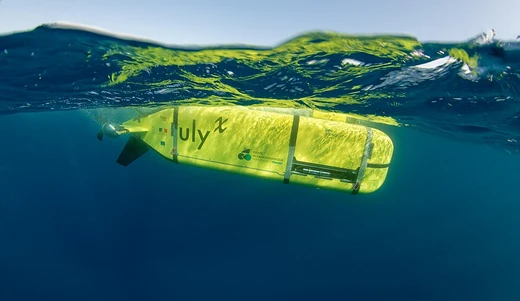
ROV Odysseus 6K
ROV Odysseus 6K is a 6000-meter remotely operated underwater vehicle.

The ROV Odysseus 6K is a remotely operated underwater vehicle designed and operated by Pelagic Research Services of South Wellfleet, Massachusetts. Named for Odysseus, protagonist of the Odyssey, it is rated for a maximum depth of 6000 meters (metre sea water). The vehicle is notable for its role in locating the debris field of the crewed submersible Titan after its catastrophic implosion in June 2023.
Quick Facts
- Infobox Caption
- nodab
- Display Title
- ROV Odysseus 6K
Facts from the source article.
Lore & Background
Pelagic initially purchased the H6500 ROV from Deep Ocean Exploration and Research (DOER Marine) in 2015, marketing it as the Deep Water ROV System with a rated depth of 6500 m. The H6500 was a modular system with a distinctive orange float, measuring 55 in W × 80 in L × 58 in H, with a mass of 2700 lb and a maximum payload of 110 lb. In its basic, untested configuration it was stated to operate to 4000 m, limited by winch capacity. By October 2015, Pelagic had renamed the H6500 to Odysseus. Initial testing of the H6500 configuration failed several functional benchmarks, and Pelagic ceased working with DOER Marine.
Pelagic redesigned and built a new single-body ROV system in collaboration with MPH Engineering, beginning sea trials in 2016. Completed in January 2017, the new Odysseus 6K measured 55+1/2 in W × 93 in L × 83+1/4 in H with a mass of 3128 lb, and its maximum depth was de-rated to 6000 m. The float is now yellow. The updated vehicle includes a welded aluminum frame that can lift more than 4000 lb in its payload tray. Additional updates to equipment and structures have increased the mass to 5500 lb; the yellow float has been retained, and a blue stripe bearing the name Odysseus has been added.
The ROV is launched and recovered using an A-frame crane designed by Hydramec, and is connected to the host through 7500 m of umbilical from Fibron. It is operated from the Odysseus Control Van, a converted 20 ft intermodal container with multiple monitors; optionally, equipment can be brought aboard and operated from an interior room. The vehicle has seven hydraulic thrusters (four horizontal, three vertical) with a maximum power output of 25 hp at the shaft. Multiple payload skids mount to the bottom for specific operations, primarily scientific research, and can include suction and D-samplers. The standard science skid measures 47+3/4 in W × 32 in L × 15 in H; trays can be extended using the onboard hydraulic system for retrieving samples or carrying sensors and equipment.
Reader's Guide
The ROV Odysseus 6K represents a significant evolution from its predecessor, the H6500, which failed initial testing and led Pelagic to abandon the original design. The collaboration with MPH Engineering produced a more capable single-body vehicle that has been used for deep-sea scientific research, including surveying deep-sea coral on the West Florida slope in 2017. Its most notable operation occurred in June 2023, when Odysseus 6K located the debris field left by the catastrophic implosion of the crewed submersible Titan, which had departed from its host ship on June 18. The ROV was later used to recover debris from the wreck of Titan. The vehicle's design emphasizes modularity through payload skids and a welded aluminum frame capable of lifting over 4000 lb, supporting a range of scientific sampling and sensor tasks. Its 6000-meter depth rating and 7500-meter umbilical allow it to operate in the deep ocean, and its control system can be housed either in a containerized van or brought aboard a host vessel. The vehicle's mass has increased over time from 3128 lb to 5500 lb as equipment and structures were updated, while the yellow float and blue stripe have become its visual identifiers.
Did You Know?
- The ROV is named for Odysseus, protagonist of the Odyssey.
- Its maximum rated depth is 6000 m, measured as metre sea water.
- Odysseus 6K found the debris field of the crewed submersible Titan on June 22, 2023.
Frequently Asked Questions
What is the ROV Odysseus 6K?
It is a remotely operated underwater vehicle built for deep-sea exploration, named after the hero of Homer's Odyssey. The "6K" in its name refers to its 6,000-meter depth rating.
Who operates the ROV Odysseus 6K?
The vehicle is designed and run by Pelagic Research Services, a company based in South Wellfleet, Massachusetts.
What is ROV Odysseus 6K most known for?
It gained widespread public attention for helping locate the debris field of the crewed submersible Titan following its implosion in June 2023. That mission thrust the vehicle into the global spotlight.
What are the key technical specs of ROV Odysseus 6K?
The ROV is rated to 6,000 meters of seawater, works with a 7,500-meter umbilical cable, and is propelled by seven hydraulic thrusters (four horizontal, three vertical) producing up to 25 horsepower at the shaft.
Why is the name "Odysseus" significant for this vehicle?
The vehicle takes its name from Odysseus, the long-traveling hero of the ancient Greek epic the Odyssey. The choice evokes the idea of navigating vast, remote, and perilous depths of the ocean.
More in Underwater and Surface Drones, Part 2 1-24
Spotted an error? Know more?
Reader corrections go straight into our review queue. Suggest an edit · How this site is sourced