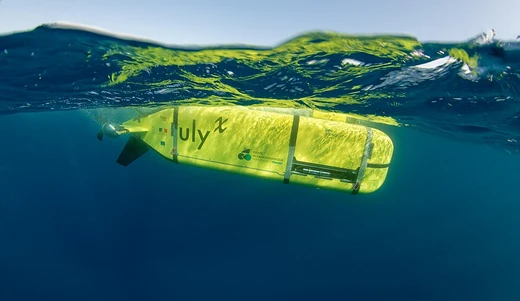
Large unmanned undersea vehicle
Extra-large autonomous underwater vehicles for long-endurance, covert missions.

Large unmanned undersea vehicles, often called LUUVs or XLUUVs, are a type of autonomous underwater vehicle that is much bigger than the usual AUVs, which are mostly used for jobs like surveying or dealing with mines. What sets XLUUVs apart from their smaller counterparts is their ability to run for long stretches and haul heavier loads across huge distances without needing a human at the controls. They are built to work in places that are too risky or tough for crewed submarines.
In terms of design, these vehicles are defined by their size and stamina. There’s no official cutoff for what counts as “extra-large,” but they are generally longer than 10 meters. That extra room lets them carry various payloads, such as sensors, weapons, or other robotic gear. Their long endurance—often lasting months—comes from efficient hull shapes, advanced propulsion systems, and big batteries or fuel cells.
Their main jobs include intelligence, surveillance, and reconnaissance, where they can secretly patrol wide ocean areas and collect data nonstop. They also handle mine countermeasures, finding and disabling underwater mines to keep manned ships safe. In anti-submarine warfare, they serve as persistent listening posts or launch platforms for weapons. For seabed warfare, their long endurance and better stealth than manned systems make them a cost-effective, expendable tool. And because they are large, they can deliver smaller AUVs, sensors, or other gear to remote spots.
Developing XLUUVs is a major focus for navies worldwide, especially as they look to boost their undersea capabilities with autonomous, budget-friendly platforms.
- Minimum length
- over 10 m
- Endurance
- often measured in months
- Primary roles
- intelligence, surveillance, and reconnaissance (ISR); mine countermeasures; anti-submarine warfare (ASW); seabed warfare; payload delivery
Lore & Background
XLUUVs are characterized by their size and endurance. While there is no official standard for what constitutes 'extra-large,' these vehicles are generally over 10 meters in length. This allows them to carry a variety of payloads, including sensors, weapons, or other robotic systems. Their long endurance, often measured in months, is achieved through efficient hull designs, advanced propulsion systems, and large battery or fuel cell power sources.
The primary applications of XLUUVs include intelligence, surveillance, and reconnaissance (ISR), where they can covertly patrol large areas of the ocean, collecting data on a persistent basis. They are also used for mine countermeasures, locating and neutralizing underwater mines while keeping manned vessels out of harm's way. In anti-submarine warfare (ASW), they can act as a persistent listening post or a launch platform for anti-submarine weapons.
Seabed warfare is another key role, with their long endurance and superior stealth compared to manned systems making them a cost-effective expandable tool. Their large size also allows them to deploy smaller AUVs, sensors, or other equipment to remote locations. The development of XLUUVs is a key area of research for navies around the world, particularly as they seek to expand their undersea capabilities with autonomous and cost-effective platforms.
Reader's Guide
The significance of large unmanned undersea vehicles lies in their ability to perform missions that are too dangerous or difficult for manned submarines. By operating autonomously for months at a time, they provide persistent intelligence, surveillance, and reconnaissance over vast ocean areas. Their large size enables them to carry diverse payloads, from sensors and weapons to smaller robotic systems, making them versatile platforms for mine countermeasures, anti-submarine warfare, and seabed warfare. As cost-effective and expandable tools, they reduce risk to human crews while expanding naval capabilities. The development of XLUUVs represents a strategic shift toward autonomous and cost-effective undersea platforms, with navies worldwide investing in this technology to enhance their undersea warfare and reconnaissance capabilities. Their stealth and endurance make them particularly valuable for covert operations and persistent presence in contested waters.
Did You Know?
- Their endurance is often measured in months.
- They are designed to operate in environments too dangerous or difficult for manned submarines.
More in Underwater and Surface Drones, Part 2 1-24
Spotted an error? Know more?
Reader corrections go straight into our review queue. Suggest an edit · How this site is sourced