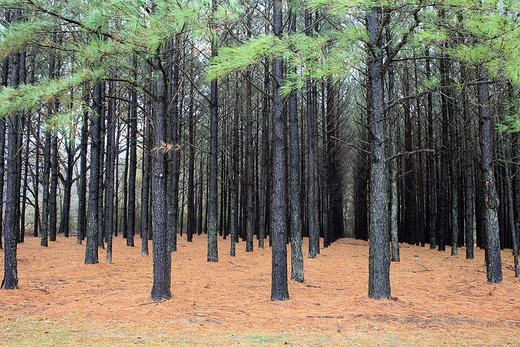
Quercus rubra
A fast-growing, long-lived oak with distinctive striped bark.

Quercus rubra, commonly known as the northern red oak or common red oak, is a deciduous tree native to eastern and central North America. It is a member of the red oak group (Quercus section Lobatae) and is widely cultivated in gardens and parks in Western Europe. The species is noted for its rapid growth, long lifespan, and distinctive bark with shiny stripes running along the ridges of the trunk.
Quick Facts
- Genus
- Quercus
- Parent
- Quercus sect. Lobatae
- Species
- rubra
Facts from the source article.
Lore & Background
Quercus rubra grows straight and tall in forests, reaching up to 28 meters, exceptionally 43 meters, with a trunk diameter of 50–100 centimeters. Open-grown trees develop a stouter trunk up to 2 meters in diameter. The bark features ridges with shiny stripes down the center, a trait shared with other red oaks such as Quercus falcata. Leaves emerge in spring when day length reaches 13 hours, and leaf drop begins when day length falls under 11 hours. Acorns take two growing seasons to mature and are released in early October. The species is monoecious, dichogamous, wind-pollinated, and self-incompatible.
Reader's Guide
Quercus rubra is significant as the most common oak species in the northeastern United States after pin oak. Its wood is pale reddish brown, heavy, hard, and strong, used for furniture, construction, and interior finish. The species has been introduced to Western Europe, where it is cultivated in gardens and parks. It prefers slightly acidic, well-drained soil and grows rapidly under optimal conditions. Northern red oak has faced environmental stresses including canker pathogens (Diplodia corticola), fungal infections (Phytophthora cinnamomi and P. ramorum), oak wilt (Bretziella fagacearum), and insect predation by red oak borer and spongy moths. It has adapted moderate resistance to flooding and heat stress, and its acorns require three months of cold exposure below 4°C to germinate. The species serves as a model organism for studying symbiotic relationships, dispersal, and habituation.
Did You Know?
- Northern red oak is one of several red oaks with shiny stripes running along its bark ridges.
- Its acorns require at least three months of temperatures below 4°C to germinate.
- A living northern red oak 326 years old was noted in 2001.
- The species is self-incompatible and wind-pollinated.
More in Trees And Forest Species 1-24
Spotted an error? Know more?
Reader corrections go straight into our review queue. Suggest an edit · How this site is sourced