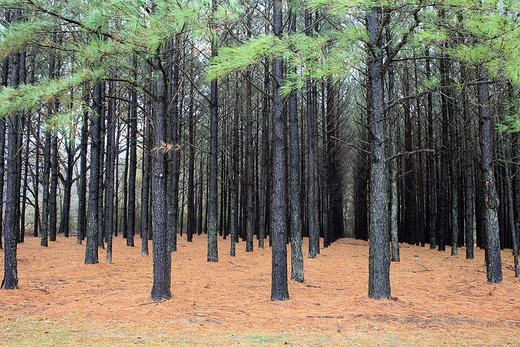
Populus tremula
A deciduous poplar known for trembling leaves and clonal spread.

Dmitry Makeev · CC BY-SA 4.0
Populus tremula goes by many names—aspen, common aspen, Eurasian aspen, European aspen, or quaking aspen—and belongs to the poplar family. It’s native to the cool temperate parts of the Old World. This big deciduous tree can reach 40 meters tall and 10 meters wide, with a trunk over a meter thick. Young trees have smooth, pale greenish-gray bark dotted with dark gray diamond-shaped lenticels; older bark turns dark gray and cracked. In Estonia’s Nigula Nature Reserve, one aspen stands 45.5 meters tall, possibly the tallest in Europe.
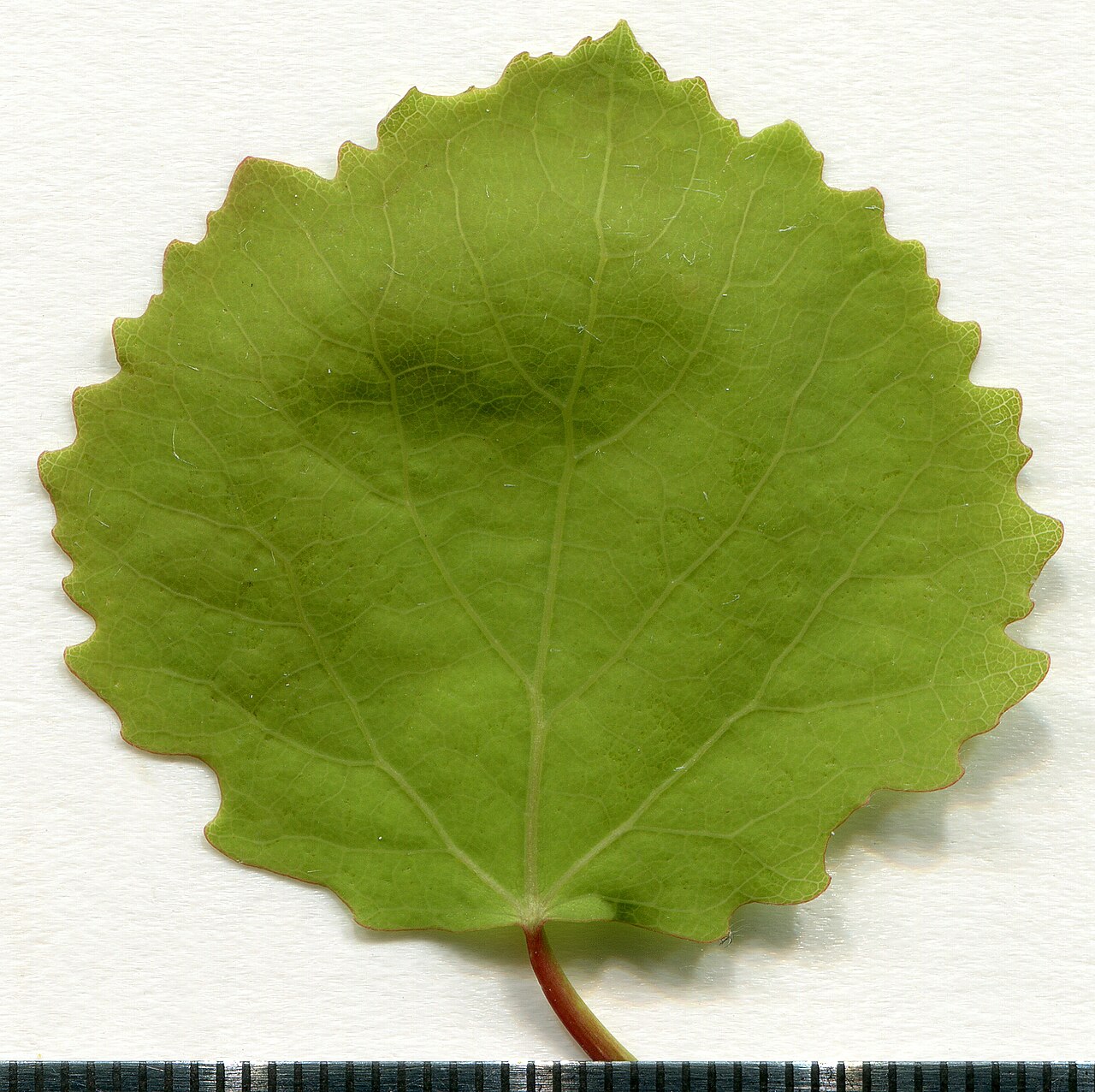
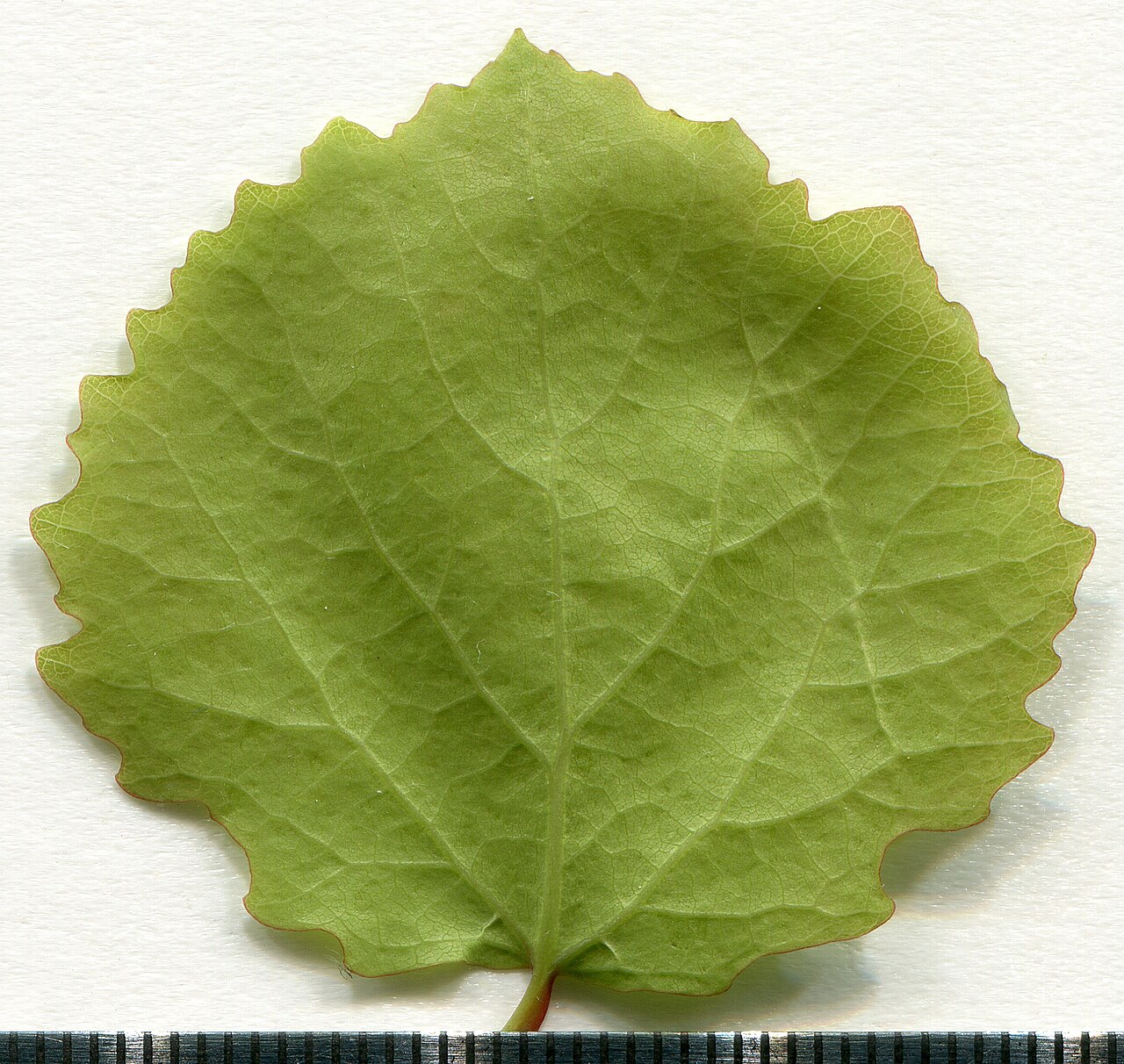
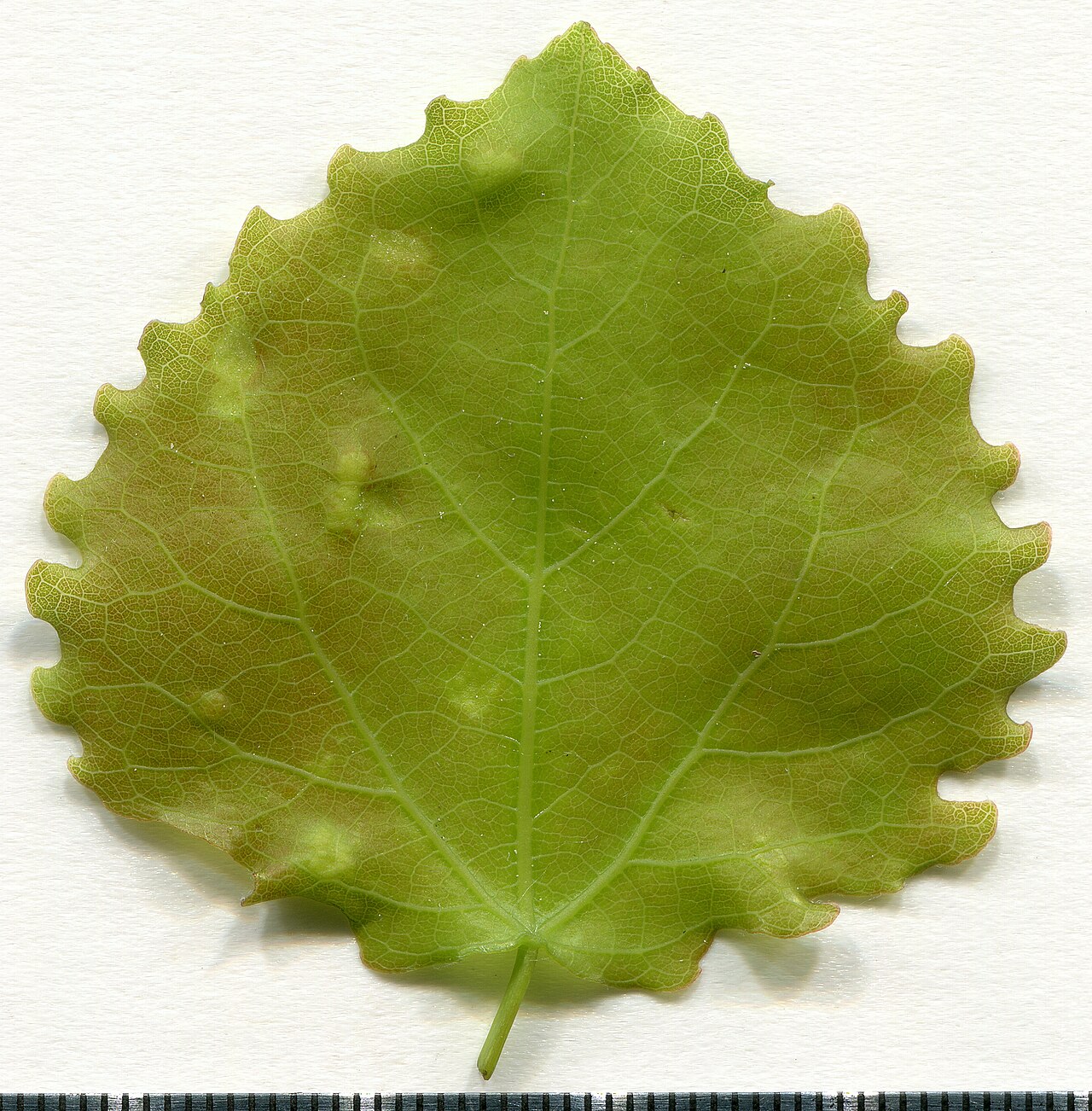
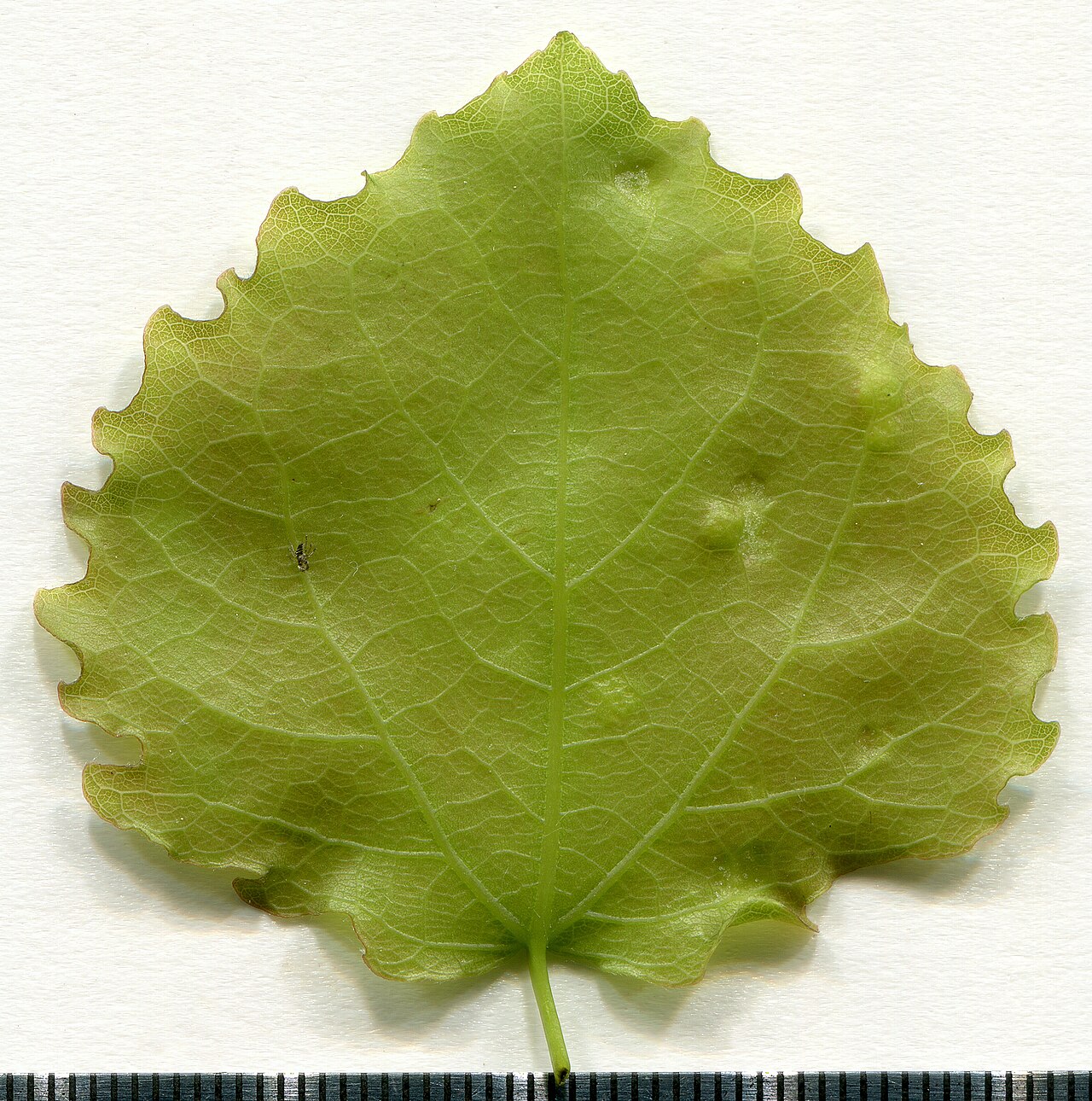
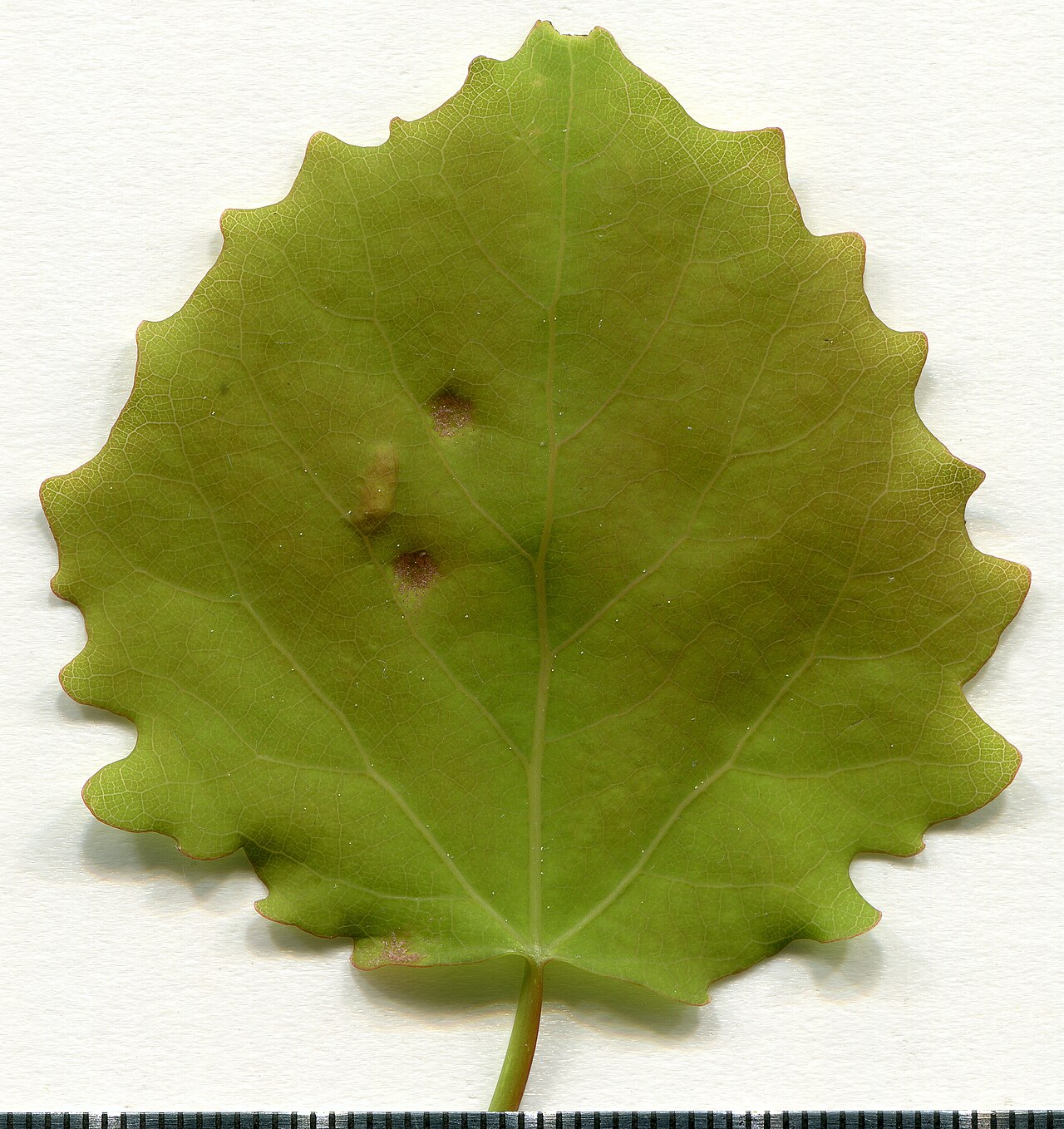
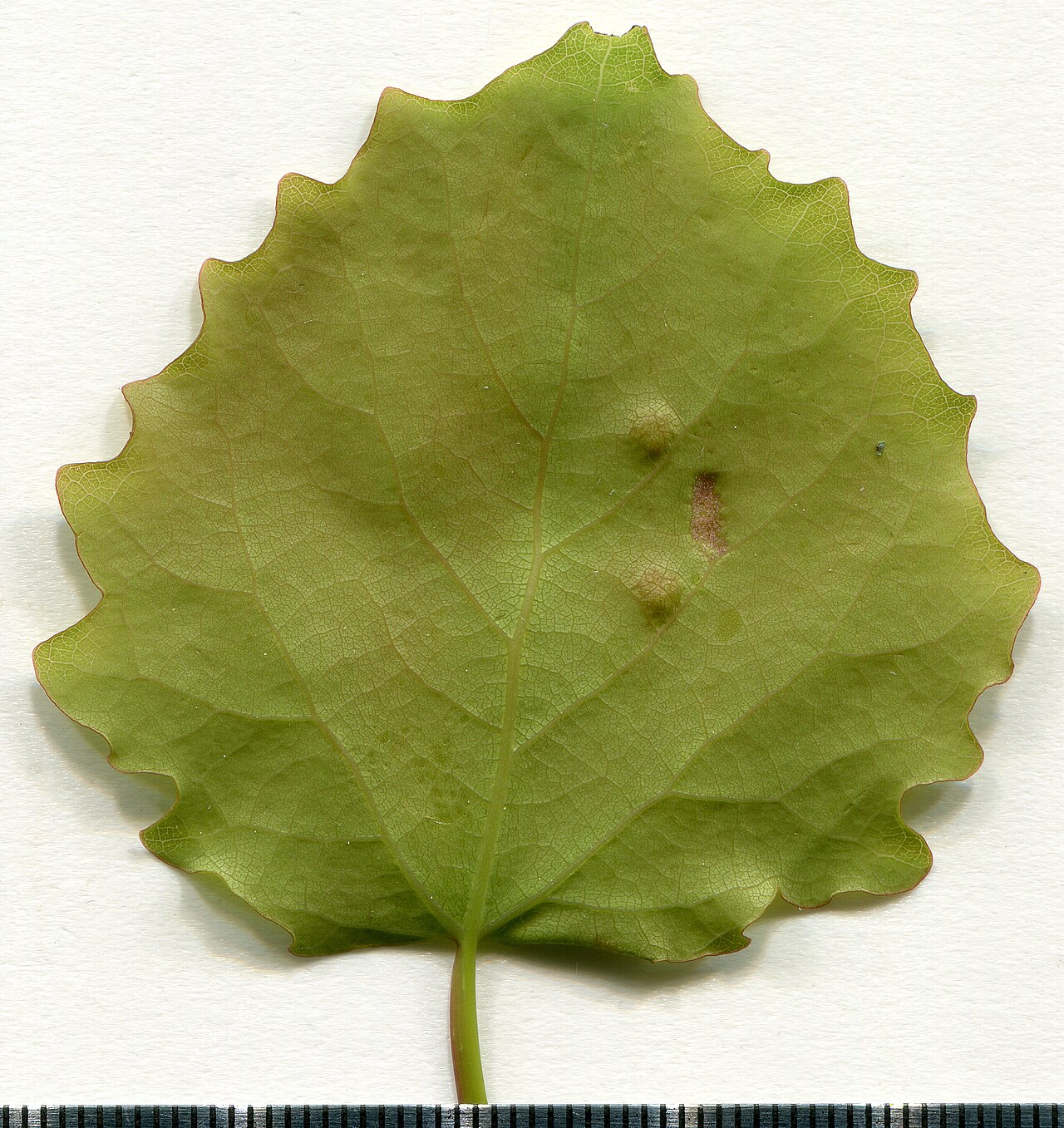
The leaves on mature branches are almost round, slightly wider than long, 2 to 8 centimeters across, with coarse teeth along the edge and a flattened leaf stalk 4 to 8 centimeters long. That flat stalk makes the leaves tremble in the slightest breeze—hence the scientific name and one old nickname, “langues de femmes,” from Gerard’s 17th-century Herball. Seedlings and fast-growing root sprouts have different leaves: heart-shaped to nearly triangular, often much larger (up to 20 centimeters long), with a less flattened stalk. The tree is dioecious, with male and female catkins on separate trees. The male catkins, green and brown, are 5 to 10 centimeters long when shedding pollen; female catkins are green, 2 to 6 centimeters long at pollination, maturing in early summer into 10 to 20 (or up to 80) capsules. Each capsule holds many tiny seeds wrapped in downy fluff that helps them drift on the wind when the capsules split open. You can tell it apart from the very similar North American *Populus tremuloides* by its more coarsely toothed leaves.
Like other aspens, it spreads widely through root sprouts, which can pop up as far as 40 meters from the parent tree, forming large clonal colonies. This makes clearing unwanted trees tough, since new suckers keep sprouting from the extensive root system for years after all surface growth is gone.
The species is native across Europe and Asia, from Iceland and the British Isles east to Kamchatka, north to the Arctic Circle in Scandinavia and northern Russia, and south to central Spain, Turkey, the Tian Shan, North Korea, and northern Japan. It also grows at one spot in northwest Africa, in Algeria. In the southern part of its range, it’s found high in the mountains.
Eurasian aspen needs plenty of water and light and quickly colonizes open areas after fire, clear-cutting, or other damage.
Quick Facts
- Genus
- Populus
- Parent
- Populus sect. Populus
- Species
- tremula
Facts from the source article.
Lore & Background
Populus tremula is a deciduous tree with pale greenish-grey bark that becomes dark grey and fissured on older trees. Its adult leaves are nearly round, 2–8 cm in diameter, with coarsely toothed margins and a flattened petiole that causes them to tremble in slight breezes, inspiring its scientific name and the vernacular name 'langues de femmes' from Gerard's 17th-century Herball. Seedling and sucker leaves are heart-shaped to triangular and often larger, up to 20 cm long.
Reader's Guide
The species is wind-pollinated and dioecious, with male and female catkins on different trees. It spreads extensively by root suckers, forming clonal colonies up to 40 meters from the parent tree, making clearance difficult as suckers may sprout for years after surface growth is removed. It is a water- and light-demanding species that colonizes open areas after fire or clear-cutting, growing rapidly until about age 20, with growth slowing and culminating around age 30; it can reach 200 years old. The wood is light and soft, used for lumber, matches, pulp and paper, plywood, and renewable energy. The species is important for the hornet moth as a larval host and provides habitat for mammals and birds. The cultivar 'Erecta' has gained the Royal Horticultural Society's Award of Garden Merit.
Did You Know?
- The flattened petiole of the leaves causes them to tremble in even slight breezes, giving the tree its scientific name and the vernacular name 'langues de femmes'.
- A 45.5 meter tall aspen in Nigula Nature Reserve, Estonia, may be the tallest specimen in Europe.
- The species can spread by root suckers up to 40 meters from the parent tree, forming extensive clonal colonies.
- Fossils of Populus tremula have been described from early Pliocene age deposits in Turkey.
The Trembling Leaf and Physical Form
The Eurasian aspen is a substantial deciduous tree that can reach heights of 40 metres with a crown spreading to 10 metres and a trunk exceeding one metre in diameter. Its bark tells a story of age: young trunks display a smooth, pale greenish-grey surface dotted with dark diamond-shaped lenticels, while mature specimens develop a rough, dark grey, fissured texture. The tree's most celebrated feature is its adult foliage—nearly round leaves, slightly wider than long, measuring between two and eight centimetres across, with a coarsely toothed edge. Each leaf hangs from a laterally flattened petiole four to eight centimetres long, a structural quirk that causes the blade to flutter and tremble in even the faintest breeze. This distinctive motion gave the species its Latin name and inspired the charming French nickname 'langues de femmes,' recorded in Gerard's seventeenth-century Herball. Interestingly, the leaves on young seedlings and fast-growing sucker stems look quite different: heart-shaped or nearly triangular, sometimes reaching twenty centimetres in length, with a less flattened stalk. In Estonia's Nigula Nature Reserve, a 45.5-metre specimen stands as a possible record-holder for the tallest aspen in Europe.
Range and Ecological Resilience
Populus tremula thrives across cool temperate zones of the Old World, stretching from Iceland and the British Isles eastward to Kamchatka, northward into the Arctic Circle regions of Scandinavia and northern Russia, and southward to central Spain, Turkey, the Tian Shan mountains, North Korea, and northern Japan. A single isolated site in northwest Algeria extends its range into Africa. In the southern reaches of its distribution, the species retreats to high mountain altitudes. Ecologically, aspen is a demanding but tenacious colonizer. It craves both water and light, and it exploits openings created by fire, clear-cutting, or other disturbances with remarkable vigour. When an individual tree is damaged or killed, its shallow lateral roots respond by producing abundant suckers. Growth is rapid until roughly the twentieth year, after which increasing crown competition slows development; the growth curve plateaus around age thirty. Despite this, the species can live to two hundred years. Its hardiness allows it to endure long, cold winters and brief summers, and its unpleasant taste deters fallow deer from browsing. The hornet moth relies on aspen as a larval host, linking the tree to broader insect ecology.
Reproduction and Clonal Spread
Each early spring, before new leaves emerge, the aspen produces wind-pollinated catkins. The species is dioecious, meaning male and female flowers grow on separate trees. Male catkins display a green-and-brown pattern and measure five to ten centimetres when actively shedding pollen. Female catkins are green, two to six centimetres long at pollination, and mature by early summer. Each female catkin bears between ten and twenty capsules—sometimes up to fifty or eighty—each packed with numerous tiny seeds wrapped in downy fluff. When the capsules split open, the fluff catches the wind and carries the seeds far from the parent. The aspen also spreads vegetatively through an extensive root-sucker system. New shoots can emerge up to forty metres from the original tree, creating vast clonal colonies that share a single genetic identity. This aggressive regeneration makes removal particularly challenging: even after all above-ground growth is cleared, the deep root network can keep producing new suckers for several years. The species is easily confused with its North American relative, Populus tremuloides, but the Eurasian form's leaves are more coarsely toothed, providing a reliable distinguishing character.
Human Uses, Hybrids, and Deep Time
The wood of Eurasian aspen is light, soft, and remarkably stable, exhibiting very little shrinkage during drying. These qualities make it suitable for lumber, match production, plywood, and various flake and particle boards. In the pulp and paper industry, aspen fibre is especially prized for writing paper. Its hardiness, rapid growth, and capacity for regeneration also position it as a valuable source of biomass for renewable energy production. Beyond timber, the tree supports a rich web of ecological interactions, providing habitat for numerous insect and fungal species as well as mammals and birds that depend on young forest stands. In cultivation, aspen appears in parks and large gardens; the fastigiate cultivar 'Erecta,' noted for its brilliant yellow autumn foliage, has earned the Royal Horticultural Society's Award of Garden Merit and is colloquially called 'Swedish columnar' in North America. Breeders at forestry research institutes have produced hybrids with other aspens, including Populus tremuloides in Denmark, aiming for improved timber yield and disease resistance. The hybrid with white poplar, grey poplar (Populus × canescens), is widespread across Europe and central Asia. Fossil evidence from the early Pliocene of Kızılcahamam, Turkey, confirms the species' lineage stretches back millions of years.
Gallery
More in Trees And Forest Species 1-24
Spotted an error? Know more?
Reader corrections go straight into our review queue. Suggest an edit · How this site is sourced