Populus
A genus of fast-growing trees including poplars, aspens, and cottonwoods.

Dmitry Makeev · CC BY-SA 4.0
Populus is a genus of more than 60 species of deciduous flowering plants belonging to the willow family, Salicaceae. These trees are native to temperate, subarctic, and mountainous regions across Eurasia, North America, and North Africa, as well as the tropical highlands of East Africa. Depending on the species, they are commonly called poplars, aspens, or cottonwoods. In 2006, the western balsam poplar (Populus trichocarpa) became the first tree to have its entire genome sequenced.
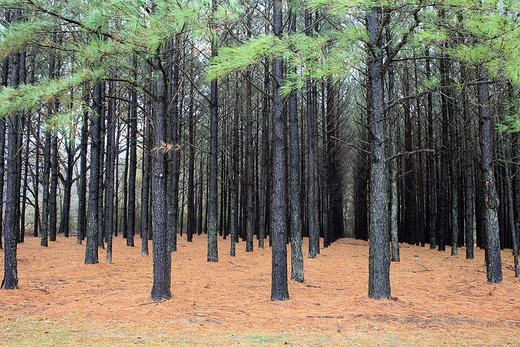
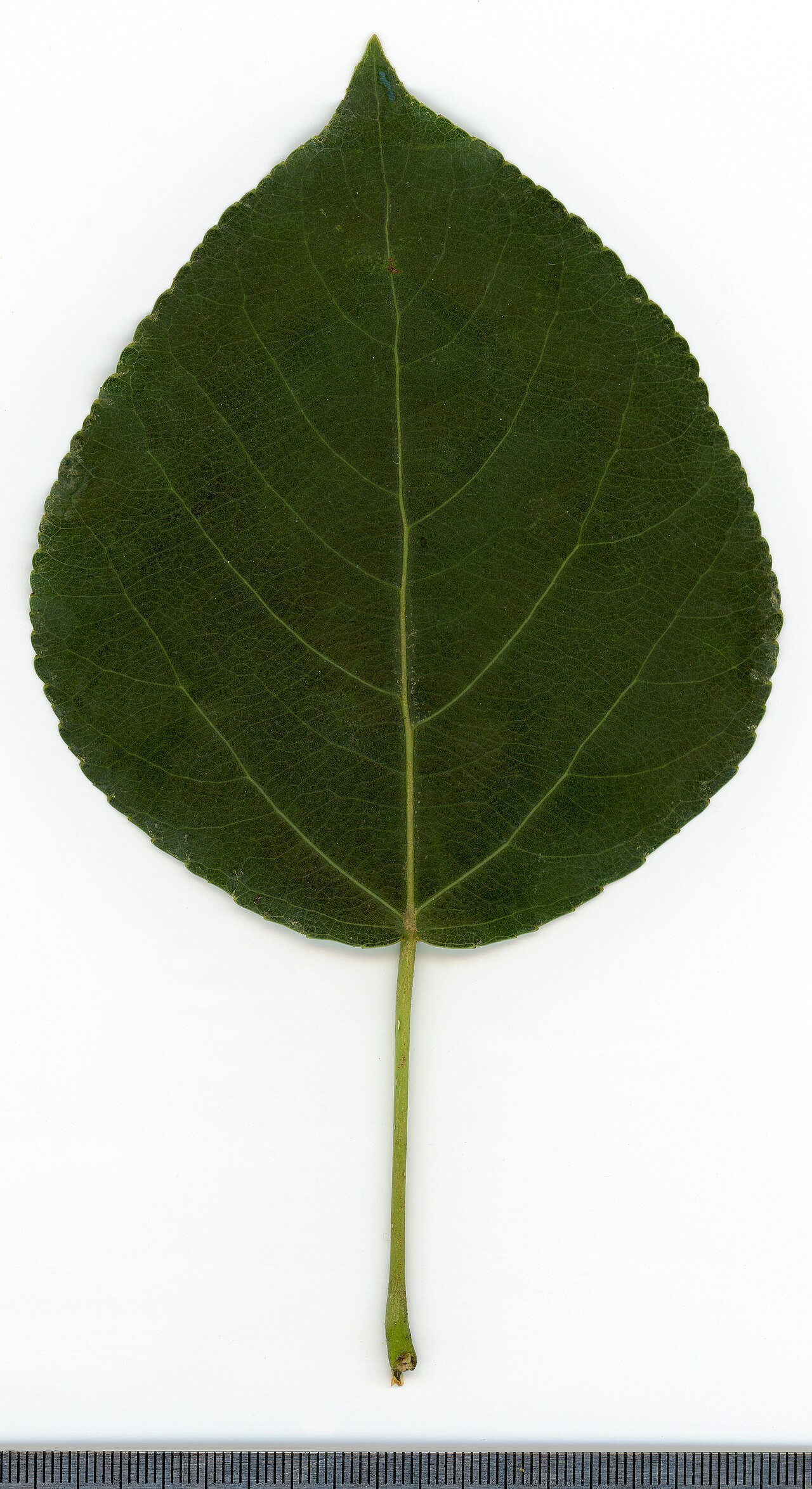
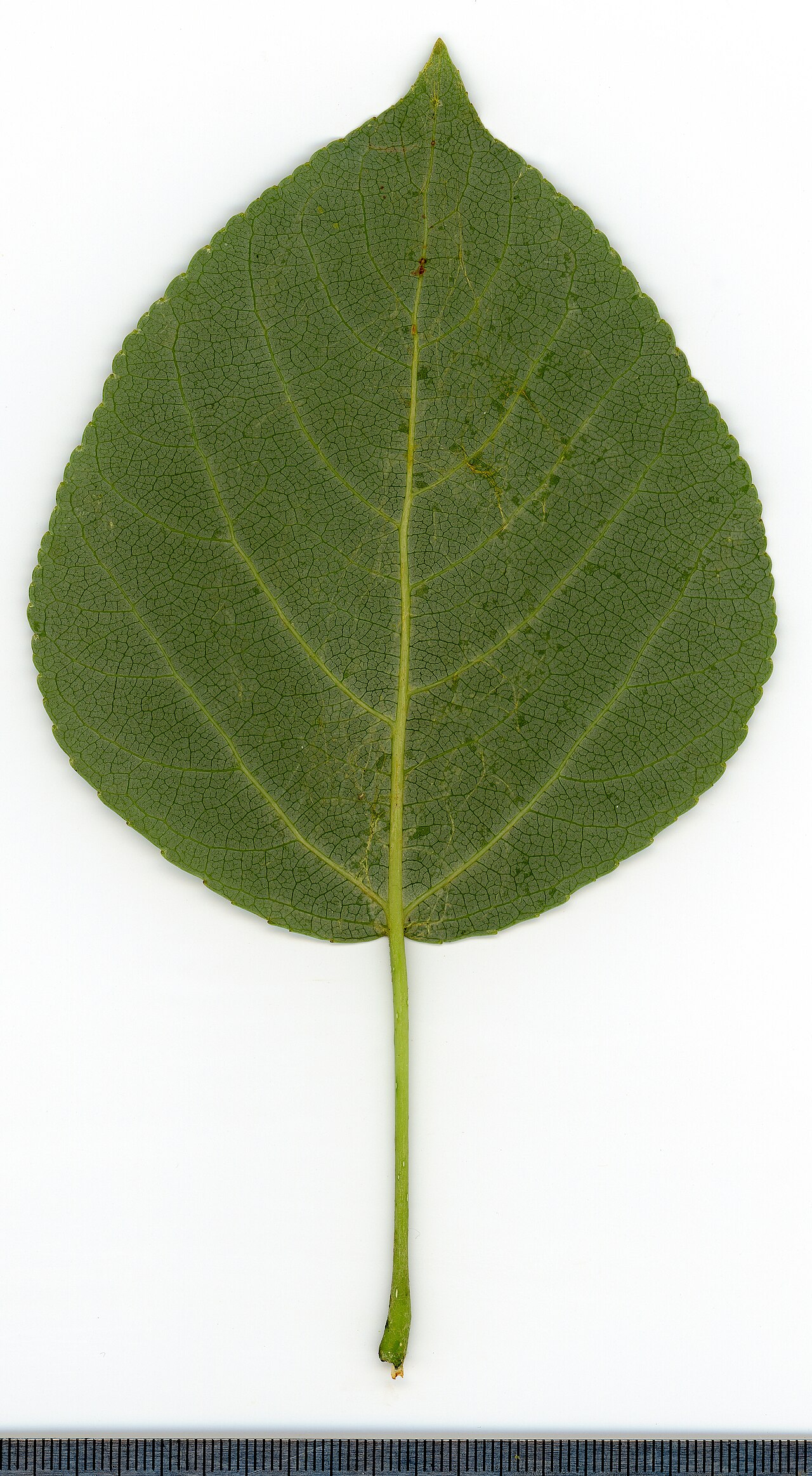
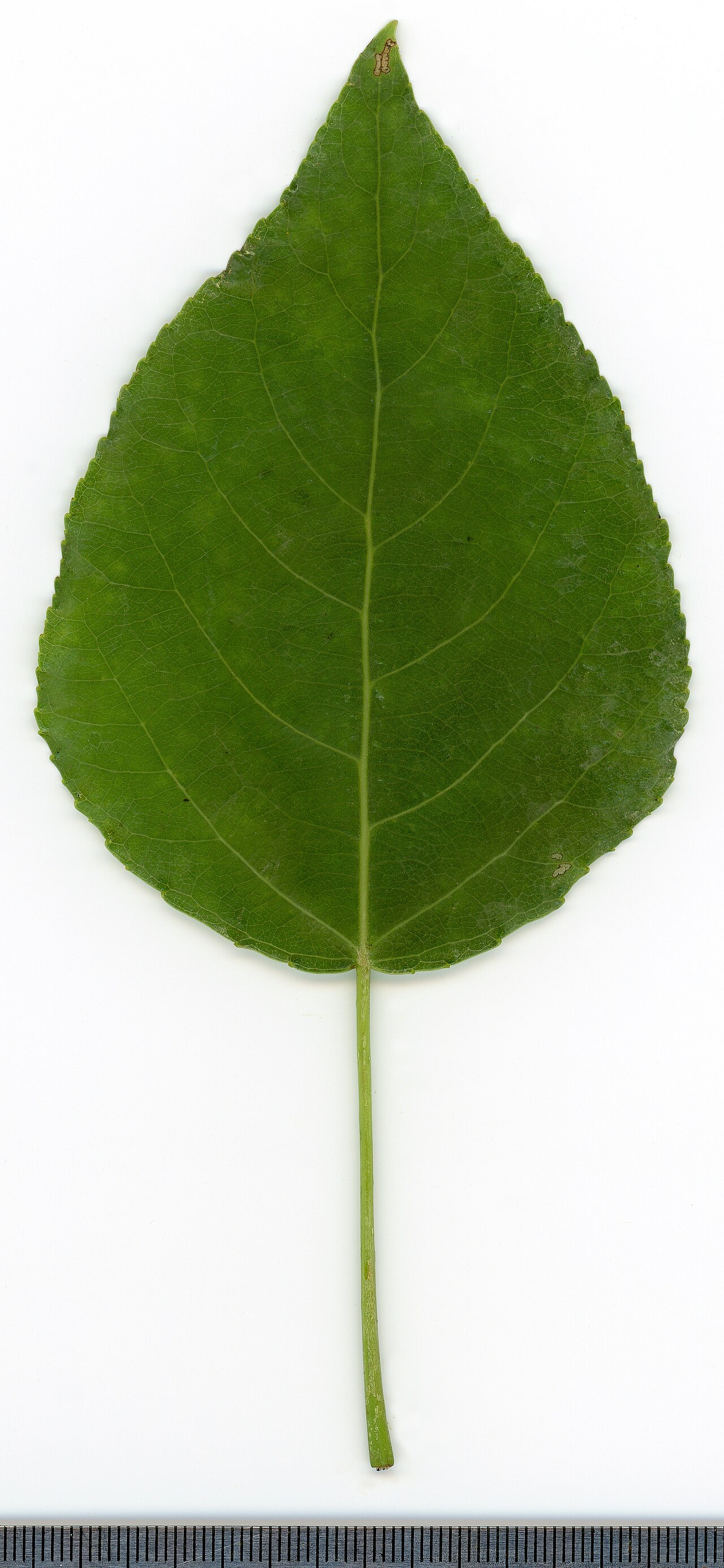
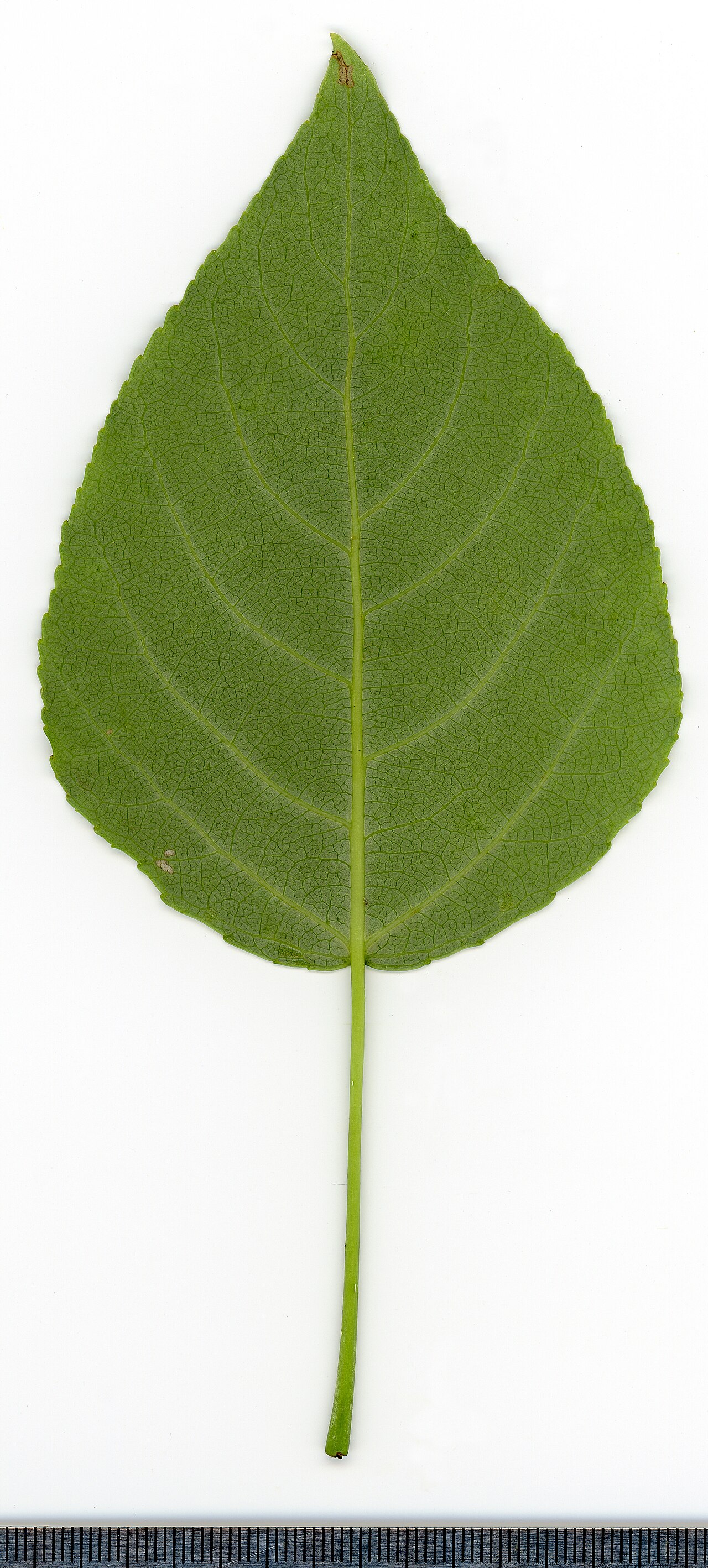
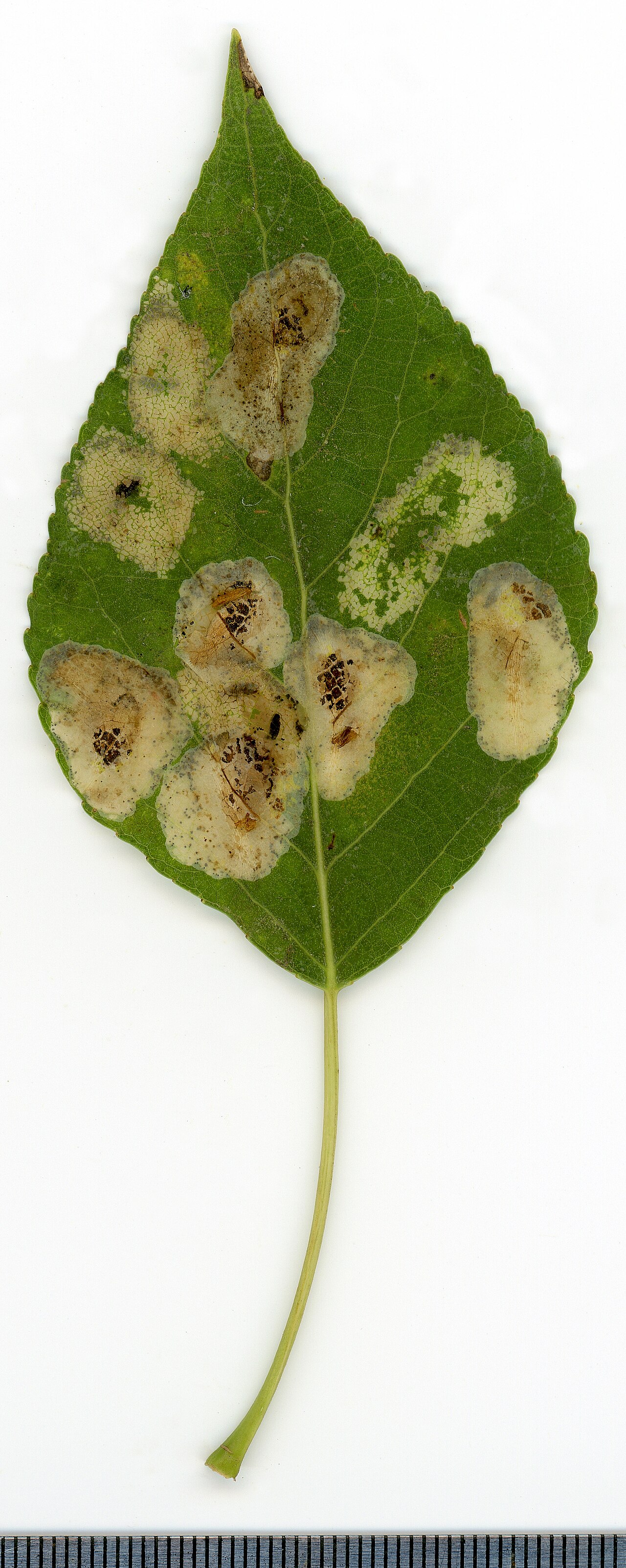
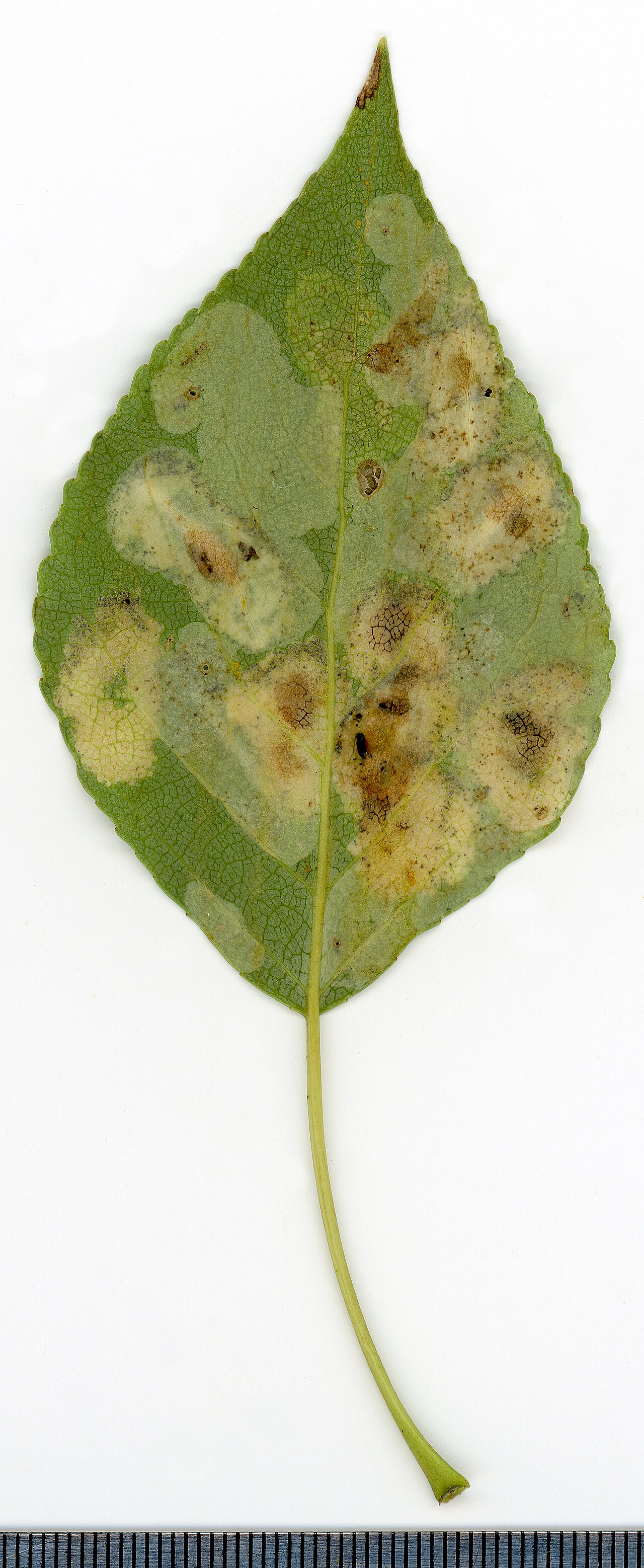
Members of this genus are highly diverse genetically. They range in height from 15 to 50 meters (49–164 feet), with trunks reaching up to 2.5 meters (8 feet) in diameter. On young trees, the bark is smooth and colored white, greenish, or dark grey, often marked with conspicuous lenticels; on older trees, it may remain smooth in some species or become rough and deeply fissured in others. The shoots are stout and, unlike those of related willows, have a terminal bud. Leaves are arranged spirally and vary in shape from triangular to round, rarely lobed, with long petioles. In species from sections Populus and Aigeiros, the petioles are flattened sideways, causing the leaves to flutter easily in a breeze and giving the tree a twinkling appearance. Leaf size varies greatly even on a single tree, with small leaves on side shoots and very large ones on vigorous lead shoots. In autumn, the leaves often turn bright gold or yellow before falling.
The flowers are mostly dioecious (rarely monoecious) and appear in early spring before the leaves. They grow in long, drooping catkins, either stalkless or stalked, from buds formed in the leaf axils of the previous year. Each flower sits in a cup-shaped disk at the base of a scale attached to the catkin's rachis. The scales are obovate, lobed, fringed, membranous, and either hairy or smooth, usually falling off early. Male flowers lack a calyx and corolla, consisting of 4 to 60 stamens inserted on a disk; the filaments are short and pale yellow, while the anthers are oblong, purple or red, introrse, and two-celled, opening lengthwise. Female flowers also lack a calyx and corolla, comprising a single-celled ovary in a cup-shaped disk. The style is short, with two to four variously lobed stigmata and numerous ovules. Pollination is by wind, and the female catkins lengthen considerably between pollination and maturity.
Quick Facts
- Taxon
- Populus
- Type Species
- Populus tremula
- Type Species Authority
- L.
Facts from the source article.
Lore & Background
The genus Populus has traditionally been divided into six sections on the basis of leaf and flower characters. Recent genetic studies have largely supported this, confirming some previously suspected reticulate evolution due to past hybridisation and introgression events between the groups. Some species had differing relationships indicated by their nuclear DNA and chloroplast DNA sequences, a clear indication of likely hybrid origin. Hybridisation continues to be common in the genus, with several hybrids between species in different sections known. There are currently around 25–35 accepted species in the genus.
Some of the most easily identifiable fossils of this genus belong to Populus wilmattae, which come from the Late Paleocene of North America about 58
Reader's Guide
Populus species are significant for their rapid growth, ecological importance, and economic uses. Many poplars are grown as ornamental trees, with numerous cultivars used, and they have the advantage of growing to a very large size at a rapid pace. Almost all poplars take root readily from cuttings or where broken branches lie on the ground, and they often have remarkable suckering abilities, forming huge colonies from a single original tree, such as the famous Pando forest made of thousands of Populus tremuloides clones. Trees with fastigiate branching are particularly popular and widely grown across Europe and southwest Asia. However, like willows, poplars have very vigorous and invasive root systems stretching up to 40 metres from the trees, which can damage foundations and pipes. In India, the poplar is grown commercially by farmers, mainly in the Punjab region, and is most commonly used to make plywood. The western balsam poplar (P. trichocarpa) was the first tree to have its full DNA code determined by DNA sequencing in 2006, marking a milestone in plant genomics. The genus also provides important habitat and food for wildlife, including Lepidoptera larvae and the aspen oyster mushroom.
Did You Know?
- Some Populus fossils from the Cretaceous have been found in Tibet and Heilongjiang, China.
- The famous Pando forest is made of thousands of Populus tremuloides clones from a single original tree.
The Trembling Canopy
Populus tremula is a substantial deciduous tree that can tower to 40 metres in height while spreading roughly 10 metres across, its trunk swelling past a metre in diameter. Young specimens wear a smooth, pale greenish-grey bark studded with dark grey diamond-shaped lenticels, while mature trunks darken and fissure with age. The tree's most celebrated feature is its leaf: nearly round, slightly wider than long, and edged with coarse teeth, each blade hangs from a laterally flattened petiole measuring four to eight centimetres. That flattened stem lets even the faintest breeze set the leaf fluttering, a trait that earned the species its scientific epithet and the charming 17th-century nickname "langues de femmes" in John Gerard's Herball. Seedling and sucker leaves tell a different story—heart-shaped or triangular and up to 20 centimetres long, with a less flattened stalk. In early spring, wind-pollinated catkins appear before any new foliage: male catkins, green and brown, reach five to ten centimetres, while the smaller green female catkins mature into ten to twenty capsules bristling with downy seed fluff. In Estonia's Nigula Nature Reserve, a 45.5-metre specimen may stand as the tallest aspen in all of Europe.
Clonal Pioneers of the Boreal Edge
Few trees match the Eurasian aspen for tenacity. As a water- and light-demanding pioneer, it surges into openings left by fire, clear-cutting, or other disturbance, sending abundant root suckers from its shallow lateral roots. Those suckers can emerge up to 40 metres from the parent tree, knitting together vast clonal colonies that make clearing an area a multi-year battle—new shoots keep sprouting long after every visible stem has been felled. Growth is rapid until roughly age twenty, when crowding among competing stems slows the pace; by about thirty years the tree has essentially reached its growth ceiling, yet individual aspens can persist for two centuries. The species thrives in long, cold winters and short summers, stretching its range from Iceland and the British Isles eastward to Kamchatka, north into the Arctic Circle in Scandinavia and northern Russia, and south to central Spain, Turkey, the Tian Shan, North Korea, and northern Japan, with a single outpost in Algeria. Fallow deer largely leave it alone thanks to its unpalatable taste, and the hornet moth depends on it as a larval host. Fossils from the early Pliocene of Kızılcahamam, Turkey, confirm the genus has been part of the landscape for millions of years.
From Forest to Page
The wood of Populus tremula is light, soft, and remarkably stable, shrinking very little as it dries—qualities that make it a workhorse across multiple industries. Sawyers value it for general lumber and the small, uniform sticks of match production, while the pulp and paper sector prizes it especially for writing paper, where its fibre structure yields a smooth, consistent sheet. It also feeds into plywood, flake board, and particle board manufacturing. Beyond the workshop, the tree's hardiness and capacity for rapid regeneration position it as a meaningful contributor to renewable-energy wood supply, where fast-growing, low-maintenance biomass is essential. Ecologically, the aspen supports a rich web of life: numerous insect and fungal species depend on it, and its young-forest habitat provides shelter and foraging grounds for several mammal and bird species that specifically require early-successional woodland. In short, a single stand of trembling aspen simultaneously serves as a timber resource, an energy crop, and a living ecosystem, making its conservation and sustainable management a matter of both economic and biological importance.
Cultivation, Hybrids, and a Deep Past
Beyond its wild range, Populus tremula has found a place in parks and large gardens across temperate regions. Its most celebrated cultivated form is the fastigiate cultivar 'Erecta,' which grows in a tight column and puts on a brilliant yellow display each autumn; the Royal Horticultural Society has recognised it with an Award of Garden Merit, and in Canada and the United States it is colloquially called "Swedish columnar." Breeding programmes have also produced important hybrids. The cross with white poplar (Populus alba) yields grey poplar, P. × canescens, now widely distributed across Europe and central Asia. Forestry research institutes, including one in Denmark, have bred crosses such as P. tremula × P. tremuloides in pursuit of superior timber yield and disease resistance. The species' deep history extends far beyond living memory: fossils identified from the early Pliocene flora of the Kızılcahamam district in Turkey demonstrate that close relatives of today's aspen were already shaping temperate landscapes millions of years ago, anchoring the genus in a geological narrative that stretches back to a world very different from our own.
Gallery
More in Trees And Forest Species 1-24
Spotted an error? Know more?
Reader corrections go straight into our review queue. Suggest an edit · How this site is sourced