Liriodendron
Genus of two large deciduous trees with tulip-shaped flowers.

Christian Pirkl · CC BY-SA 3.0 at
Liriodendron is a genus in the magnolia family made up of two species of large, deciduous trees. They are commonly called tulip trees because their showy flowers look a bit like tulips. Other names include tulip poplar, yellow poplar, canoewood, saddle-leaf tree, and white wood, though they are not related to true poplars. The two living species are *Liriodendron tulipifera*, which grows in eastern North America, and *Liriodendron chinense*, native to China and Vietnam. Both can become enormous; the North American species can reach about 58.5 meters (192 feet) tall. The American species is widely planted in gardens, while the Chinese species is becoming more common in cultivation, and hybrids between the two have been created. Several extinct species are also known from fossils.
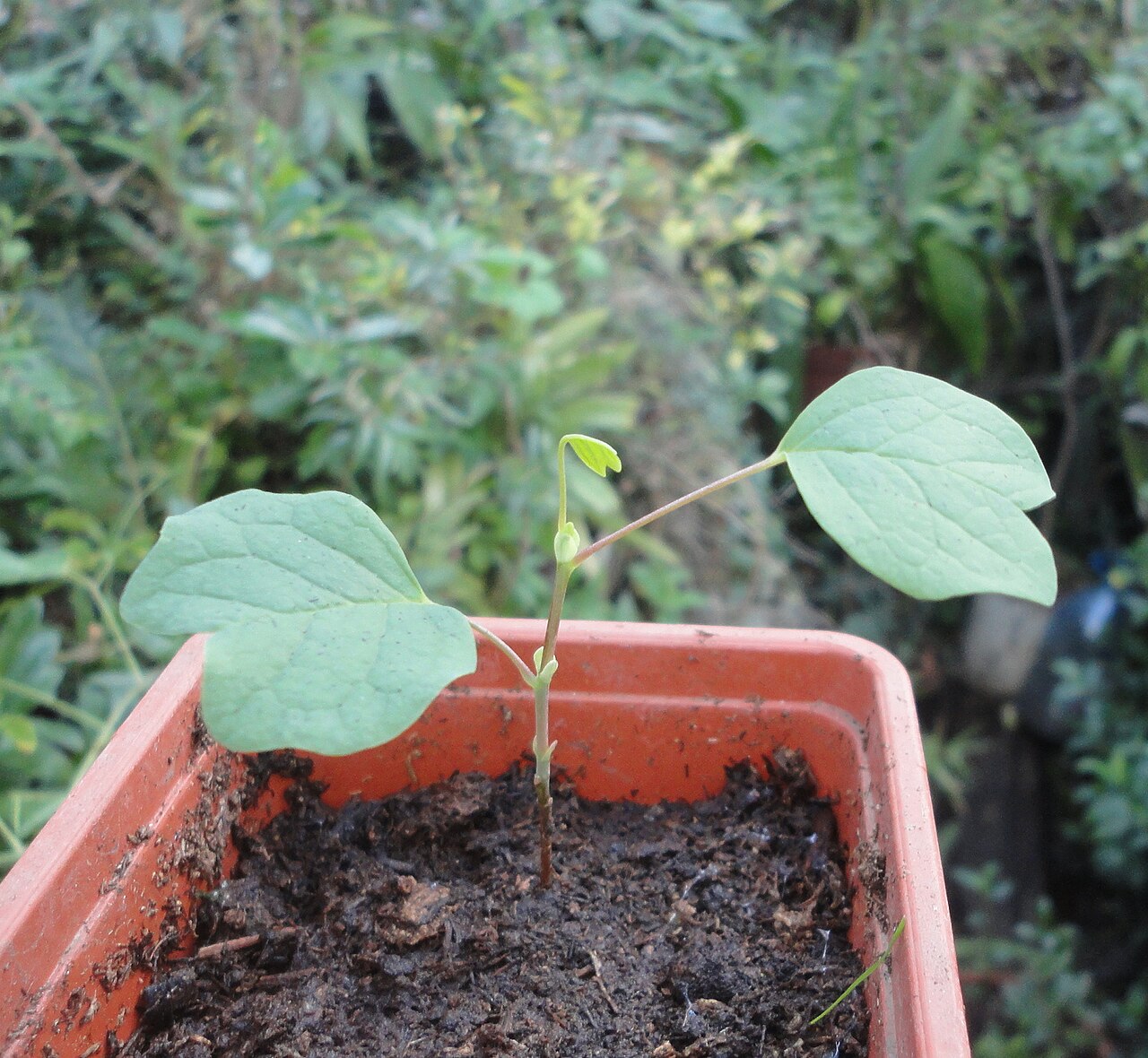
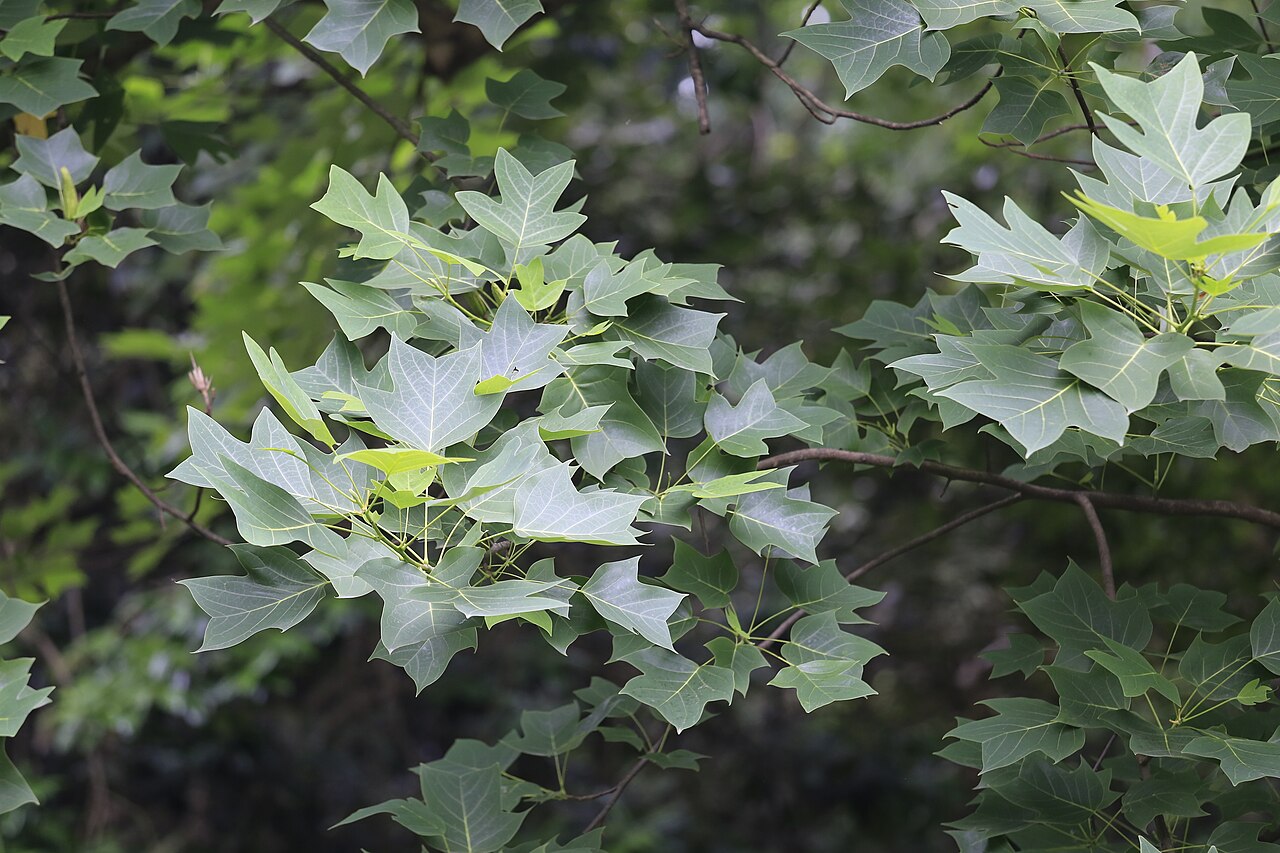
The leaves are easy to identify: they usually have four lobes and a notched or straight tip, ranging from 8 to 22 centimeters long and 6 to 25 centimeters wide. The trees are fully deciduous across their entire range, with no semi-evergreen varieties. Tulip trees are typically tall, from 18 to 60 meters high, with trunks 60 to 120 centimeters in diameter. The stoutest confirmed tulip tree on record was a specimen in North Carolina that measured 8.8 meters (29 feet) in circumference before it fell in 2011. In dense groves, they can reach nearly 58.5 meters, but open-grown trees are shorter. The trunk is usually straight and branch-free for a long stretch, forming a narrow, conical crown. The roots are deep and wide-spreading. *L. chinense* leaves are slightly larger on average, but there is much overlap; leaf stalks are 4 to 18 centimeters long. Young trees have more deeply lobed and larger leaves than older ones. In autumn, the leaves turn yellow or brown and yellow. Both species grow quickly in rich, moist soil in temperate climates and hybridize easily, producing the cultivar *L. × sinoamericanum*.
The flowers are 3 to 10 centimeters across, with nine tepals: three green outer sepals and six inner petals that are yellow-green with an orange base in *L. tulipifera* and the hybrid. They start appearing after about 15 years and are shaped like tulips. *L. tulipifera* flowers have a faint cucumber scent. The stamens and pistils spiral around a central spike; the stamens drop off, and the pistils become samaras.
Quick Facts
- Taxon
- Liriodendron
- Type Species
- Liriodendron tulipifera L.
Facts from the source article.
Lore & Background
Liriodendron trees are easily recognized by their distinctive leaves, which have four lobes in most cases and a cross-cut notched or straight apex. Leaf size varies from 8–22 cm long and 6–25 cm wide. They are fully deciduous across all populations, with no semi-evergreen varieties. The tulip tree is often a large tree, 18–60 m high and 60–120 cm in diameter. The tree is known to reach the height of 191.8 feet (58.5 meters) in groves where they compete for sunlight, somewhat less if growing in an open field.
Reader's Guide
Liriodendron holds significance as a genus of large, fast-growing trees that dominate the canopy in eastern North American forests, particularly in Appalachian cove forests where trees 150 to 165 ft in height are common. The current tallest tulip tree on record has reached 191.9 ft, the tallest native angiosperm tree known in North America. The genus has a rich fossil history, with Liriodendrons reported from the Late Cretaceous and early Tertiary of North America and central Asia, and known widely as Tertiary-age fossils in Europe and well outside their present range in Asia and North America, showing a once-circumpolar northern distribution. Like many 'Arcto-Tertiary' genera, Liriodendron apparently became extinct in Europe due to the east-west orientation of its mountains that blocked southward migration during glaciation. The North American species is commonly used horticulturally, and the Chinese species is increasing in cultivation. Hybrids have been produced between the two species. The wood is readily available and used for furniture, though only moderately rot-resistant. The genus was described by Carl Linnaeus in 1753 with Liriodendron tulipifera L. as the type species.
Did You Know?
- The North American species may reach as much as 58.5 m (192 ft) in height.
- The stoutest well-authenticated tulip tree was a specimen in North Carolina, measuring 8.8 meters (29 feet) in circumference before it fell in 2011.
Anatomy of a Giant: Form and Reproduction
Liriodendron trees command attention through their architecture. The trunk typically rises as a tall, unbranched column before opening into a dense, conical crown of slender limbs, while the root system plunges deep and spreads broadly beneath the soil. In the vast majority of populations both species shed their leaves each autumn, turning them shades of yellow or mottled brown and gold, though semi-evergreen varieties persist at the extreme southern edges of their ranges in Florida and Yunnan. The foliage itself is unmistakable: four-lobed blades with a notched or squared-off tip, measuring roughly eight to twenty-two centimeters in length. In spring, after roughly fifteen years of maturity, the tree produces flowers three to ten centimeters across, built from nine tepals—three pale green outer sepals wrapping six inner petals that flare orange at their base. The North American species carries a faint cucumber scent. After the stamens drop, the remaining pistils develop into a cone-shaped cluster of winged samaras, each bearing a small tetrahedral seed.
Two Living Species and a Shared Name
Carl Linnaeus formally described the genus in 1753, designating Liriodendron tulipifera as the type species. The name itself blends the Greek lirio-, meaning lily, with -dendron, meaning tree, a nod to the flower's shape rather than any true lily kinship. Today only two living species survive: L. tulipifera, rooted in eastern North America, and L. chinense, found across China and Vietnam. Despite their geographic separation, the two cross readily, yielding the cultivated hybrid L. x sinoamericanum. The Chinese species carries a chromosome count of 2n = 38. Beyond these, the fossil record preserves at least two extinct relatives, L. balticum and L. giganteum. In everyday language the trees go by many names—tulip tree, tulip poplar, yellow poplar, canoewood, saddle-leaf tree, white wood—yet none of these poplar labels reflect a genuine relationship with the true poplars. The genus must also not be mistaken for Lepidodendron, a completely separate group of ancient coal-age seed ferns known only from Paleozoic fossils.
A Circumpolar Past and a Narrowed Present
Fossil evidence reveals that Liriodendron once occupied a far broader stage. Remains from the Late Cretaceous and early Tertiary have been identified in North America and central Asia, and the genus is well documented as a Tertiary-age fossil across Europe, far beyond its current range. This pattern points to a once-circumpolar northern distribution, a hallmark of what paleobotanists call Arcto-Tertiary genera. The contraction was not random. In Europe, the east-west orientation of mountain ranges effectively blocked southward migration when successive glacial phases brought harsh cold and aridity, and the genus simply could not retreat far enough south to survive. Today its range is split between eastern North America and the China-Vietnam region, with no continuous European population remaining. Two additional extinct species, L. balticum and L. giganteum, are known only from the fossil record, underscoring how much of the genus's former diversity has been lost to deep time.
Giants of the Appalachian Canopy
In the cove forests of the Appalachian Mountains, Liriodendron tulipifera routinely towers above oaks, maples, and other eastern hardwoods, and trees standing 150 to 165 feet are a common sight, with specimens reaching 166 to nearly 180 feet also documented. The Eastern Native Tree Society has measured more tulip trees exceeding 170 feet than for any other eastern species, and the current record holder stands at 191.9 feet, making it the tallest known native angiosperm in North America. Unconfirmed reports of trees over 200 feet have circulated, but none has been verified, often because of measurement errors when locating the highest crown point. At the base, maximum circumferences at breast height range from 24 to 30 feet, and the Great Smoky Mountains National Park holds the greatest concentration of specimens exceeding 20 feet in girth. The Sag Branch Giant, with a combined trunk-and-limb volume approaching 4,000 cubic feet, remains the largest-volume individual known. The Liberty Tree in Maryland, which measured 21.5 feet around, fell in 1999.
Gallery

More in Trees And Forest Species 1-24
Spotted an error? Know more?
Reader corrections go straight into our review queue. Suggest an edit · How this site is sourced