Maclura pomifera
A tough, thorny tree with a curious fruit and a history entwined with Native American bow-making and American westward expansion.

Raf24~commonswiki · CC BY-SA 4.0
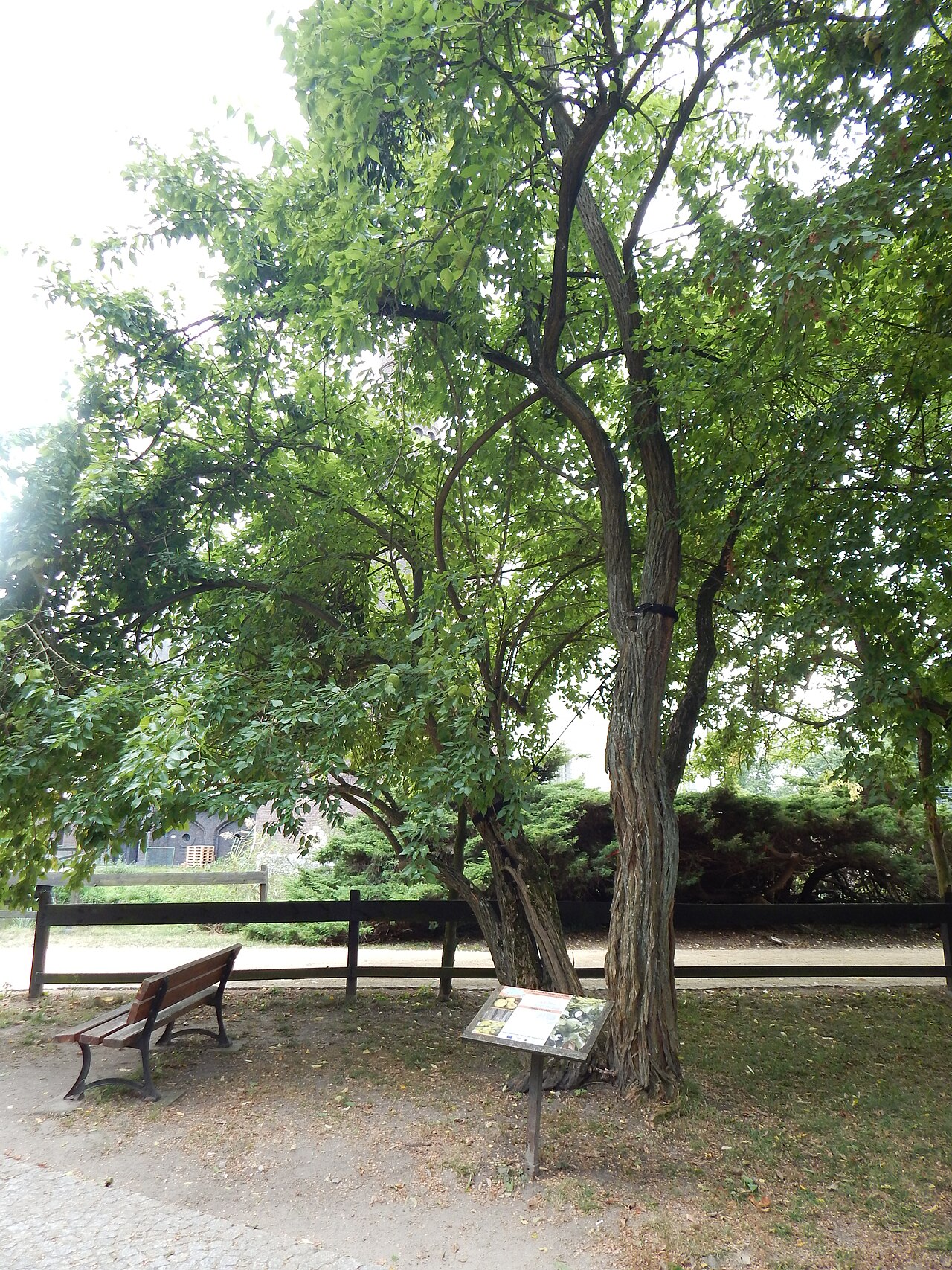
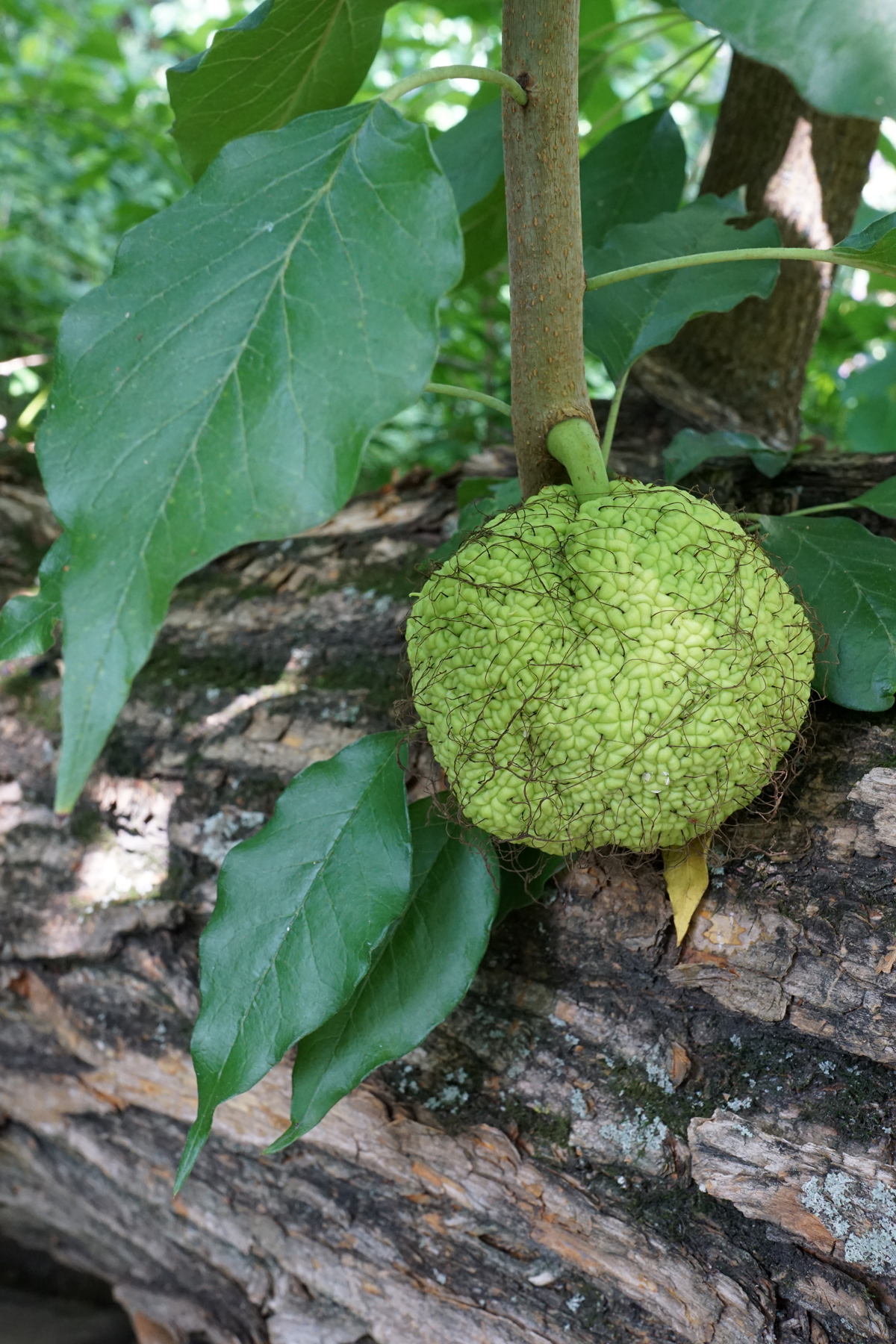
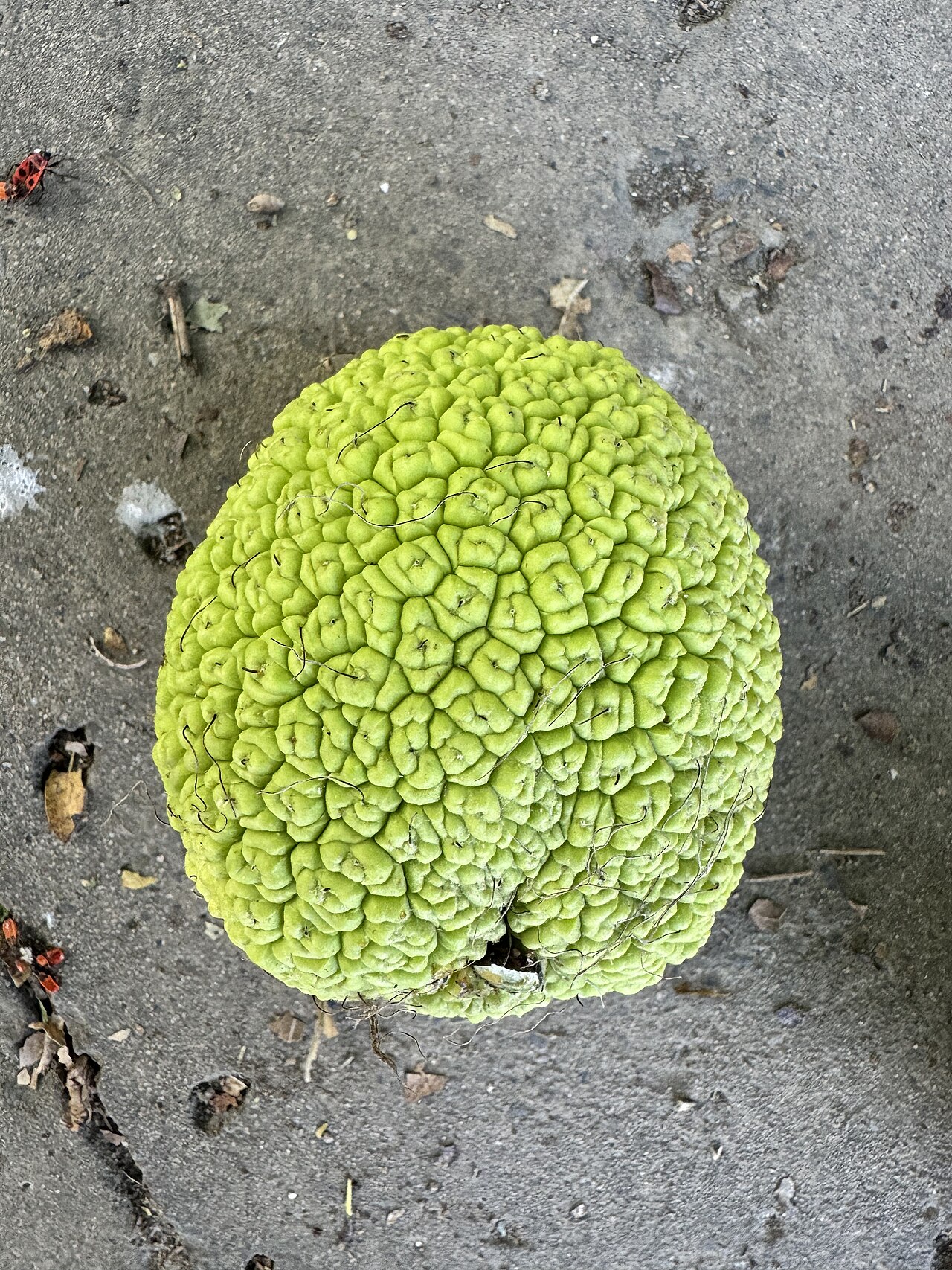
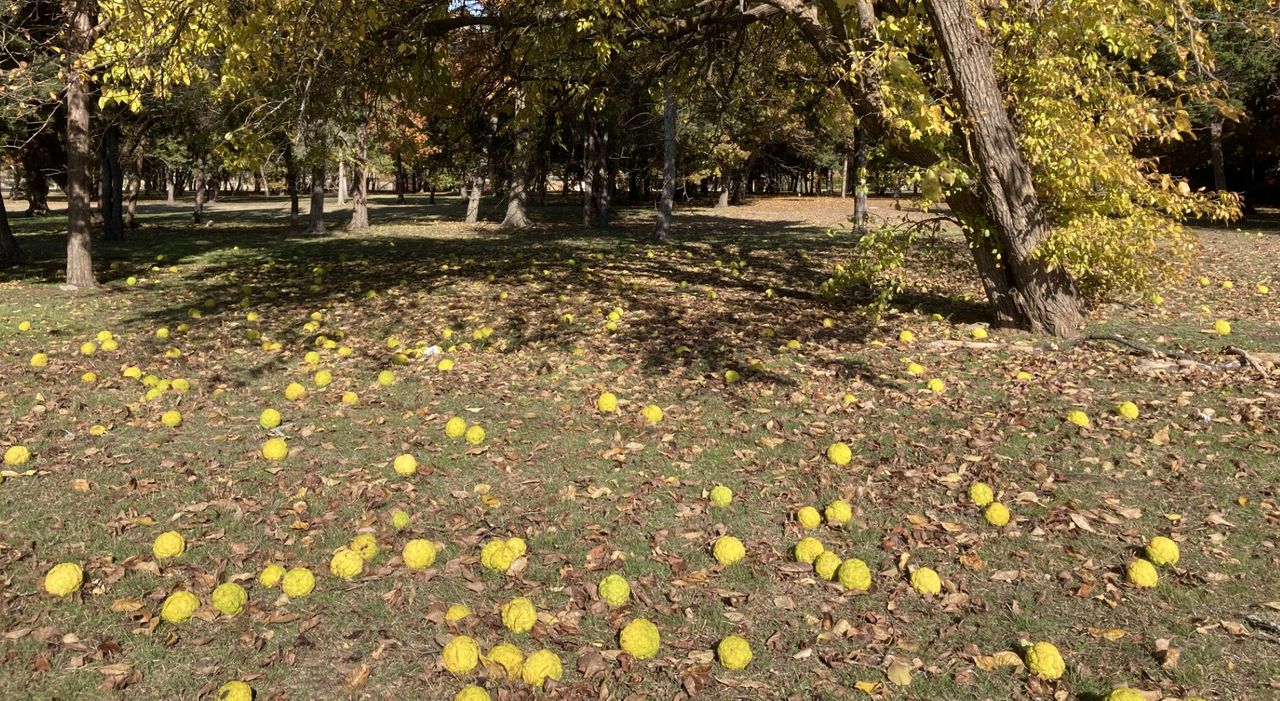
Maclura pomifera, commonly known as the Osage orange, is a small deciduous tree or large shrub, native to the south-central United States. It is a member of the mulberry family, Moraceae. It typically grows about 8 tall. The distinctive multiple fruit resembles an immature orange, is roughly spherical, bumpy, 3 in diameter, and turns bright yellow-green in the fall. The fruit excretes a sticky white latex when cut or damaged. Despite the name "Osage orange", it is not related to the orange.
Quick Facts
- Genus
- Maclura
- Species
- pomifera
Facts from the source article.
Lore & Background
The earliest account of the tree in the English language was given by William Dunbar in his narrative of a journey made in 1804. Meriwether Lewis sent slips and cuttings to President Thomas Jefferson in March 1804, donated by Mr. Peter Choteau, who resided the greater portion of his time for many years with the Osage Nation. Those cuttings did not survive. In 1810, Bradbury relates that he found two M. pomifera trees growing in the garden of Pierre Chouteau, one of the first settlers of Saint Louis. American settlers used the Osage orange as a hedge to exclude free-range livestock. The trees were named bois d'arc by early French settlers who observed the wood being used for war clubs and bow-making by Native Americans. The Comanche also used this wood for their bows.
Reader's Guide
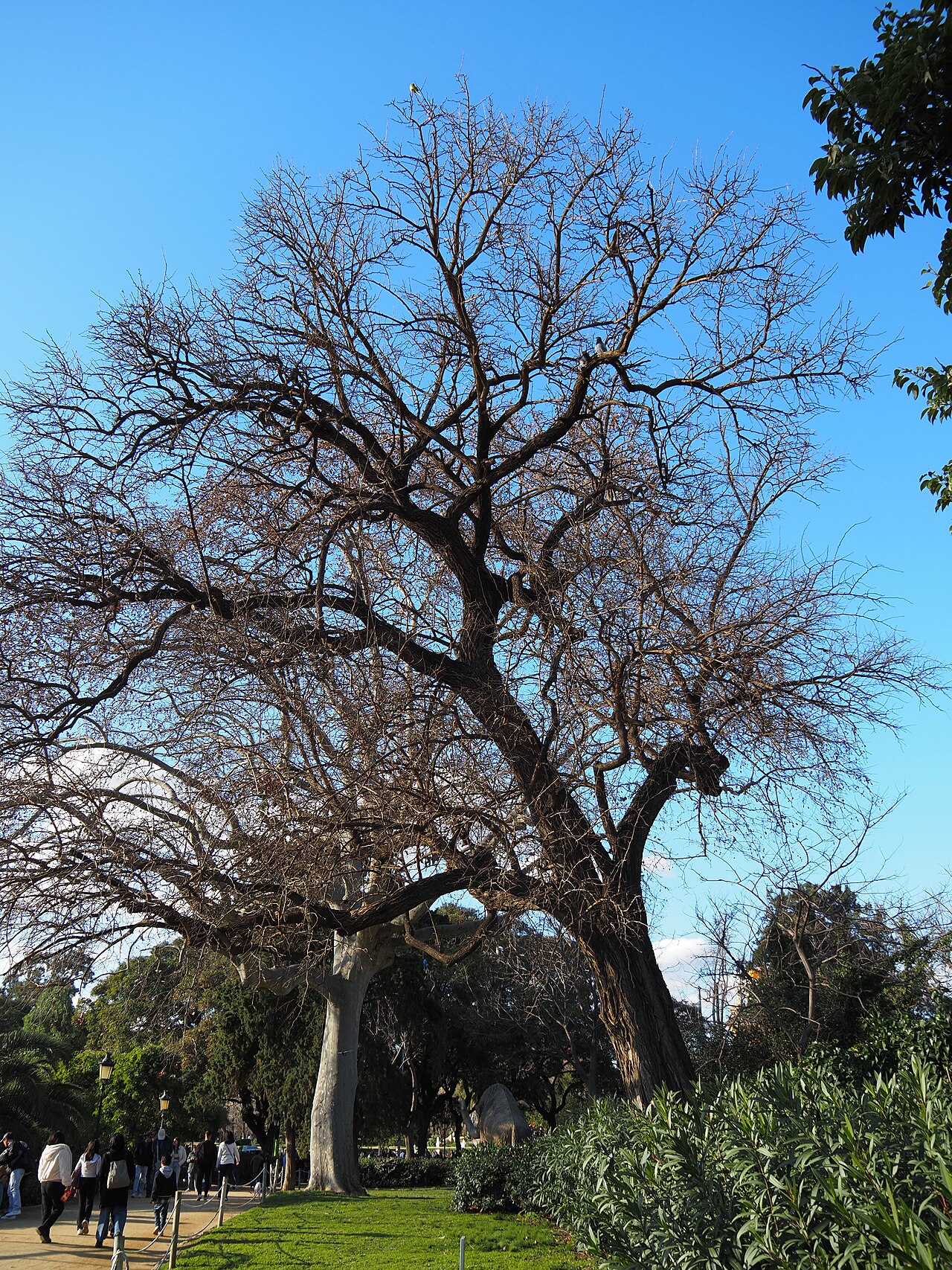
Mature trees range from 40 to 65 ft tall with short trunks and round-topped canopies. The roots are thick, fleshy, and covered with bright orange bark. The tree's mature bark is dark, deeply furrowed, and scaly. Leaves are arranged alternately, 3 long, simple, a long oval terminating in a slender point, 3 long and 2 wide, thick, firm, dark green above, paler green below, turning bright yellow in autumn. Leaf axils contain formidable spines about 1 in long. The wood is golden to bright yellow, heavy, hard, strong, flexible, and very durable in contact with the ground. As a dioecious plant, inconspicuous pistillate and staminate flowers are on different trees. The mature multiple fruit is about 4 in diameter, with a roughened and tuberculated surface, and contains a milky latex. The fruit has a slightly cucumber-like flavor. Falling fruit poses an injury risk to humans under the tree or to passing vehicles.
Did You Know?
- The genus Maclura is named in honor of William Maclure, a Scottish-born American geologist.
- The specific epithet pomifera means 'fruit-bearing'.
- The common name 'Osage' derives from the Osage people, from whom young plants were first obtained.
- The wood has a specific gravity of 0.7736 or 773.6 kg/m3.
- The fruit is not poisonous to humans or livestock, but is mostly inedible due to its large size and hard, dry texture.
The Bow-Wood and Indigenous Heritage
The Osage orange earned its most evocative common name from early French settlers who watched Native Americans shape its timber into weapons and tools. The wood, golden to bright yellow in fresh cut and capable of a fine polish, proved exceptionally strong, flexible, and durable—properties that made it prized across North America. The Osage people valued it so highly for bow-making that, according to Meriwether Lewis's 1804 notes, they would travel hundreds of miles to obtain it. The Comanche similarly favored the material for their bows, finding it abundant along the river bottoms of their homeland, the Comanchería. Some historians have even suggested that the scarcity of the tree's natural range, combined with its enormous cultural value, helped fuel the wealth of the Spiroan Mississippian culture, which controlled the specific territories where these trees grew. Over time, the French term bois d'arc, meaning "bow-wood," was corrupted by English speakers into the now-familiar "bodark" or "bodock," preserving a faint echo of the indigenous trade that once made this unassuming species a highly sought-after resource.
Living Fences and the Push Westward
Before metal wire transformed the American landscape, the Osage orange served as the backbone of agricultural boundary-making across the frontier. Settlers discovered that when the tree was cut back severely, it responded by erupting in a profusion of new shoots from its base. Left to grow, those shoots interlaced into a dense, thorny wall that effectively kept horses, cattle, and pigs out of vegetable patches and cornfields. The resulting hedges were described as "horse-high, bull-strong, and pig-tight," a barrier robust enough to protect crops while livestock grazed freely beyond. Historians have called these living fences a crucial stop-gap that enabled westward expansion for several decades. The era ended in 1874 with the invention of barbed wire, which was cheaper and easier to install. By then, however, the Osage orange had already spread far beyond its native south-central range, becoming widely naturalized across the United States—a botanical legacy of a practical, if temporary, solution to the problem of fencing open prairie.
A Fruit for an Extinct Giant?
The Osage orange's fruit is a peculiar puzzle. Roughly spherical and bumpy, measuring eight to fifteen centimeters across, it turns a vivid yellow-green each autumn and oozes a sticky white latex when broken. Neither humans nor typical foraging animals seem interested in it, making its evolutionary purpose a long-standing question. In 1982, ecologists Daniel H. Janzen and Paul S. Martin offered a bold explanation: the fruit may be an "evolutionary anachronism," a structure that coevolved with a now-extinct large animal—perhaps a megafaunal mammal—that once consumed it and dispersed its seeds. The fruit's size, its tough woody pulp, and its latex exudate all point to a dispersal partner far larger than any creature that now roams the south-central plains. The hypothesis has generated considerable debate and remains controversial, but it reframes the Osage orange not merely as a curiosity of the mulberry family but as a living fossil of a vanished ecological relationship, its fruit a vestigial invitation to an animal that no longer exists.
Architecture of Spine and Pith
The Osage orange is a tree built for defense. Its branches are armed with stout, straight spines emerging from the leaf axils, reaching about two and a half centimeters in length, while the branches themselves contain a core of yellow pith. The leaves—thick, firm, dark green above and paler beneath—are arranged alternately along shoots that can stretch ninety to one hundred twenty centimeters, each leaf a long oval tapering to a slender point. In autumn they blaze bright yellow before dropping. The mature bark is dark, deeply furrowed, and scaly, while the thick, fleshy roots are sheathed in striking orange bark. The tree is dioecious: male and female flowers develop on separate individuals. Male blossoms are small, pale green, and clustered in drooping racemes, while female flowers form a dense spherical head on a short, stout stalk. The resulting fruit is a syncarp—a compound structure of numerous tiny drupes fused into one bumpy, orange-like sphere. Despite its name, the tree belongs to the mulberry family, not the citrus genus.
Gallery
More in Trees And Forest Species 1-24
Spotted an error? Know more?
Reader corrections go straight into our review queue. Suggest an edit · How this site is sourced