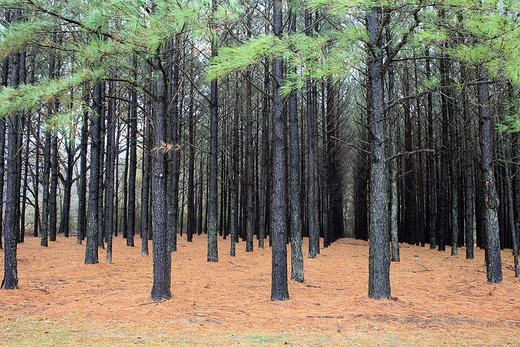
Longleaf pine
Fire-dependent pine of the Southeastern U.S. coastal plain.

Photo (c)2006 Derek Ramsey ( Ram-Man ) · CC BY-SA 2.5
The longleaf pine (Pinus palustris) is a tree native to the Southeastern United States, growing along the coastal plain from East Texas to southern Virginia and into northern and central Florida. Locally, it’s called "yellow pine" or "long leaf yellow pine," though it is only one of several pines grouped under that name. It typically reaches 30–35 meters (98–115 feet) tall and 0.7 meters (28 inches) in diameter; before heavy logging, it reportedly grew to 47 meters (154 feet) with a diameter of 1.2 meters (47 inches). This tree is a cultural emblem of the South, serving as Alabama’s official state tree.
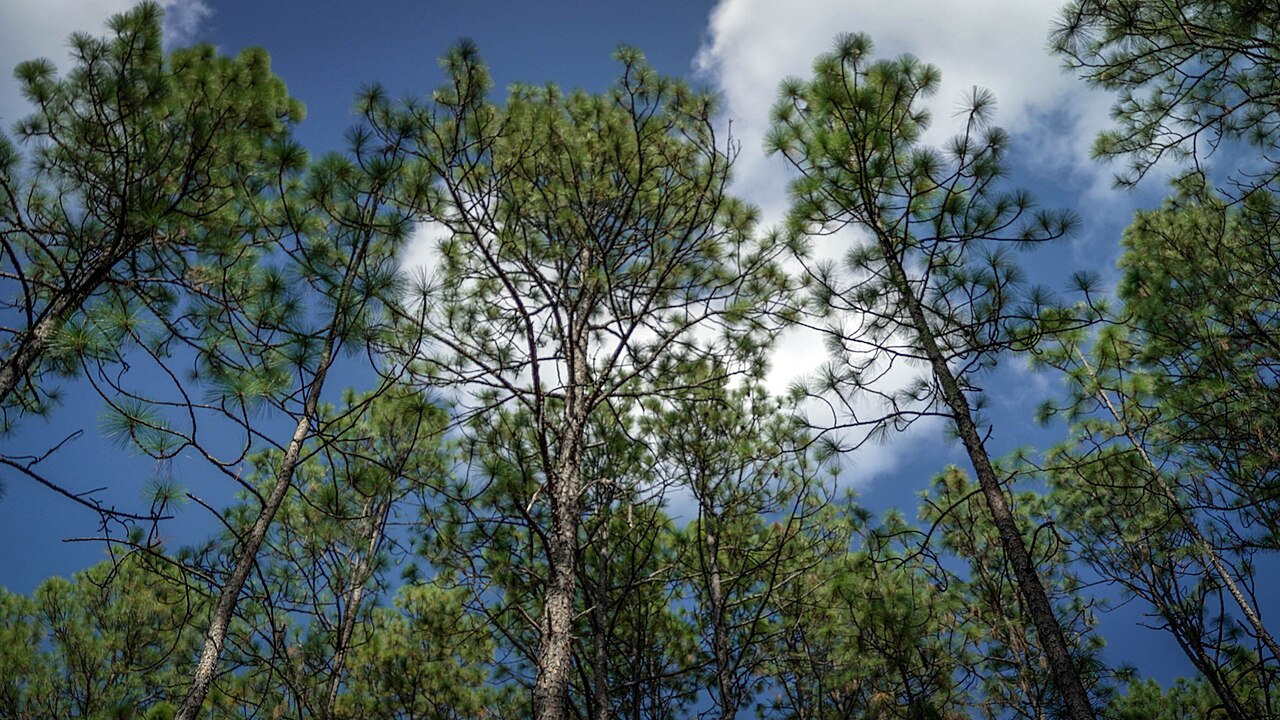
The bark is thick, reddish-brown, and scaly. Its dark green, needle-like leaves grow in bundles of three—bundles of two or four are extremely rare—and are often twisted, measuring 20–45 centimeters (7¾–17¾ inches) long. A local variety near Rockingham, North Carolina, has needles up to 61 centimeters (24 inches). It is one of two Southeastern U.S. pines with long needles, the other being slash pine. Male pollen cones and female seed cones start forming during the growing season before buds emerge: pollen cones develop in late summer to early fall (August–September), and seed conelets begin forming in the same period. Pollination happens early the next spring, with pollen cones 3–8 centimeters (1¼–3¼ inches) long. Seed cones mature about 20 months after pollination, turning yellow-brown, 15–25 centimeters (6–9¾ inches) long and 5–7 centimeters (2–2¾ inches) wide, opening to 12 centimeters (4¾ inches), with a small, sharp, downward-pointing spine on each scale. Seeds are 7–9 millimeters (¼–⅜ inch) long, with a 25–40 millimeter (1–1⅝ inch) wing. The tree takes 100–150 years to reach full size and can live up to 500 years. Young trees grow a long taproot, usually 2–3 meters (6½–10 feet) deep; at maturity, they have a wide-spreading lateral root system with several deep "sinker" roots. They thrive in well-drained, usually sandy soil, often in pure stands. Longleaf pine is one of several species called southern yellow pine or longleaf yellow pine. It was once known as pitch pine, but that name was dropped to avoid confusion with *Pinus rigida*.
The species name *palustris* is Latin for "of the marsh," referring to its common habitat.
Quick Facts
- Genus
- Pinus
- Parent
- Pinus subsect. Australes
- Species
- palustris
Facts from the source article.
Lore & Background
The longleaf pine is highly pyrophytic, with thick bark and growth habits that provide tolerance to wildfire. Periodic natural and anthropogenic fires select for this species by removing competition and exposing bare soil for seed germination. New seedlings enter a 'grass stage' lasting 5–12 years, during which vertical growth is very slow and the terminal bud is protected from low-intensity fires by tightly packed needles. After this stage, the tree undergoes a growth spurt, especially in gaps without canopy cover. The species epithet palustris is Latin for 'of the marsh,' a misunderstanding by Philip Miller, who described the species after seeing longleaf pine forests with temporary winter flooding.
Reader's Guide
Before European settlement, longleaf pine forests dominated as much as 90,000,000 acres (360,000 km²) from Virginia to Florida and west to East Texas. By the 1920s, most virgin stands were gone due to clear-cutting and fire suppression, leaving less than 5% of the presettlement range. The ecosystem is rich in biodiversity, supporting sedges, grasses, carnivorous plants, orchids, gopher tortoises, red-cockaded woodpeckers, and numerous reptiles and amphibians. Efforts to restore longleaf pine ecosystems include the Longleaf Alliance, USDA cost-sharing through the NRCS Longleaf Pine Initiative, and prescribed burning programs in national forests such as the Francis Marion National Forest. Four large core areas—Eglin Air Force Base, Apalachicola National Forest, Okefenokee-Osceola, and De Soto National Forest—offer potential to protect biological diversity and restore wilderness areas east of the Mississippi River.
Did You Know?
- Longleaf pine needles can reach up to 24 inches (61 cm) in a local race near Rockingham, North Carolina.
- The tree's grass stage lasts 5–12 years, during which it is very resistant to low-intensity fires but appealing to feral pigs.
- Longleaf pine seeds are large and nutritious, forming a significant food source for birds, rodents, and game birds such as wild turkeys and northern bobwhite.
- The species epithet palustris means 'of the marsh,' a misunderstanding by Philip Miller after seeing forests with temporary winter flooding.
Physical Form & Growth Timeline
The longleaf pine is a towering conifer of the Southeastern coastal plain, ranging from East Texas through Florida to southern Virginia. Mature specimens typically stand 30 to 35 meters tall with trunks around 0.7 meters in diameter, though pre-logging records describe giants reaching 47 meters and 1.2 meters across. Its bark is thick, scaly, and reddish-brown. Dark green needles grow in bundles of three—occasionally two or four—and twist along their 20-to-45-centimeter length; a local population near Rockingham, North Carolina, produces needles up to 24 inches. The reproductive cycle is slow: pollen cones form in July buds, seed conelets develop in August, and pollination arrives the following spring. Seed cones need roughly 20 months to mature, emerging yellow-brown, 15 to 25 centimeters long, each scale tipped with a sharp downward spine. Seeds carry a 25-to-40-millimeter wing. Full size arrives in 100 to 150 years, and the species may live 500. Young trees sink a 2-to-3-meter taproot before developing a wide lateral system with deep 'sinker' roots. They favor well-drained sandy soils and characteristically form pure stands.
Fire Dependency & the Grass Stage
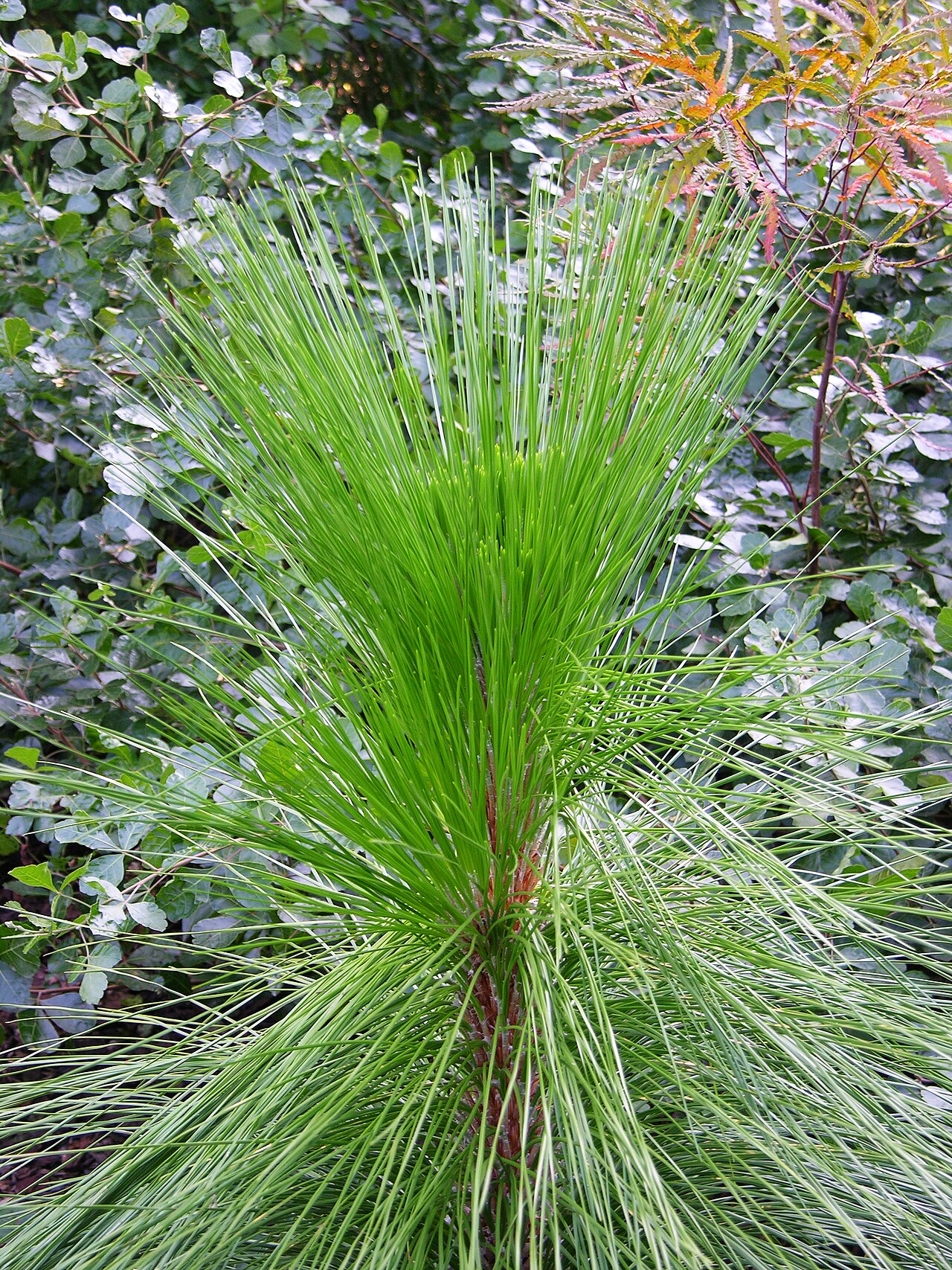
Longleaf pine is profoundly shaped by fire. Its thick bark and growth architecture grant resilience against wildfire, and periodic flames—whether from lightning or human ignition—act as ecological selectors, clearing competing vegetation and exposing bare mineral soil for seed germination. The most remarkable adaptation appears in the seedling phase called the grass stage, lasting five to twelve years. During this period the young plant resembles a fountain-like spray of dark green needles rather than a tree, growing so slowly that it may take years to reach ankle height. Its terminal bud is shielded from lethal heating by tightly packed needles, making it remarkably resistant to low-intensity fire. Once it escapes the grass stage, often triggered by a canopy gap, the tree undergoes a dramatic vertical growth spurt. The absence of a midstory canopy, maintained by regular fire, creates the open park-like longleaf savannas that define this ecosystem. Ironically, while nearly immune to fire at this stage, the seedling is highly vulnerable to feral pigs. Early settlers who released swine into the woodlands for foraging may have inadvertently accelerated the species' decline by destroying seedlings during this critical window.
Biodiversity & Keystone Habitat
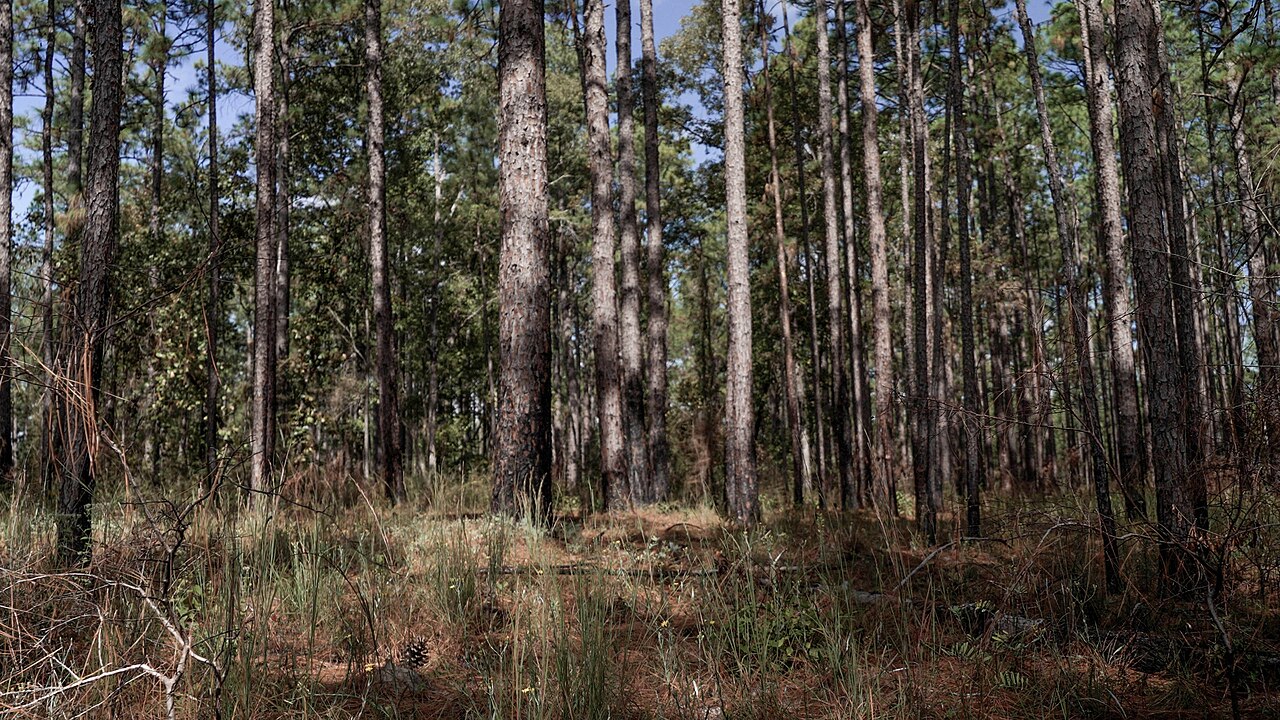
Longleaf pine forests sustain an extraordinary web of life. Plant diversity is exceptionally high, encompassing sedges, grasses, carnivorous plants, and orchids. The gopher tortoise, a keystone species, excavates burrows that shelter hundreds of other animal species. The red-cockaded woodpecker depends entirely on mature pine stands and has become endangered as those stands vanished. Amphibian and reptile communities are equally rich: nine salamander species and 26 frog species characterize pine savannas, alongside 56 reptile species, 13 of which are habitat specialists. The tree's large, nutritious seeds—7 to 9 millimeters long with a broad wing—serve as a critical food source for birds including the brown-headed nuthatch, as well as rodents, wild turkeys, and northern bobwhite quail. White-tailed deer, the sole native large herbivore now found in these pine woodlands, also forage on the pines. The forests provide thermal cover, roosting sites, and predator escape for countless species. In the Red Hills Region of Florida and Georgia, some of the best-preserved stands remain, maintained by decades of regular prescribed burning on private hunting plantations originally established to sustain bobwhite quail populations.
Cultural Legacy & Ecological Decline
Before European contact, longleaf pine forest blanketed as much as 90 million acres across the Southeast, a range defined by the frequent fires—both natural and human-lit—that swept the landscape. The species earned common names like 'yellow pine' and 'long leaf yellow pine,' though it is only one among several pines bearing that label. An earlier name, 'pitch pine,' was eventually dropped to avoid confusion with Pinus rigida. The scientific epithet palustris, meaning 'of the marsh,' reflects a historical misunderstanding by Philip Miller, who described the species after observing forests experiencing temporary winter flooding. In the late 19th century, virgin timber stands became among the most coveted in the nation. The 1890s and early 1900s saw peak timber extraction, during which loggers stripped forests, leaving mounds of flammable debris that fueled catastrophic fires and exposed porous soils to erosion. Fire suppression and clear-cutting have since reduced the ecosystem to less than five percent of its presettlement extent. Today the longleaf pine endures as a cultural symbol of the South, serving as the official state tree of Alabama and one of eight pines under North Carolina's 'Pine' state-tree designation.
Gallery
More in Trees And Forest Species 1-24
Spotted an error? Know more?
Reader corrections go straight into our review queue. Suggest an edit · How this site is sourced