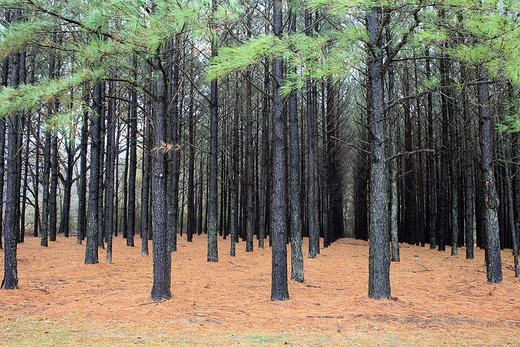
Nothofagus fusca
Endemic New Zealand tree with durable wood and Antarctic fossil pollen.

Szilas · Public domain
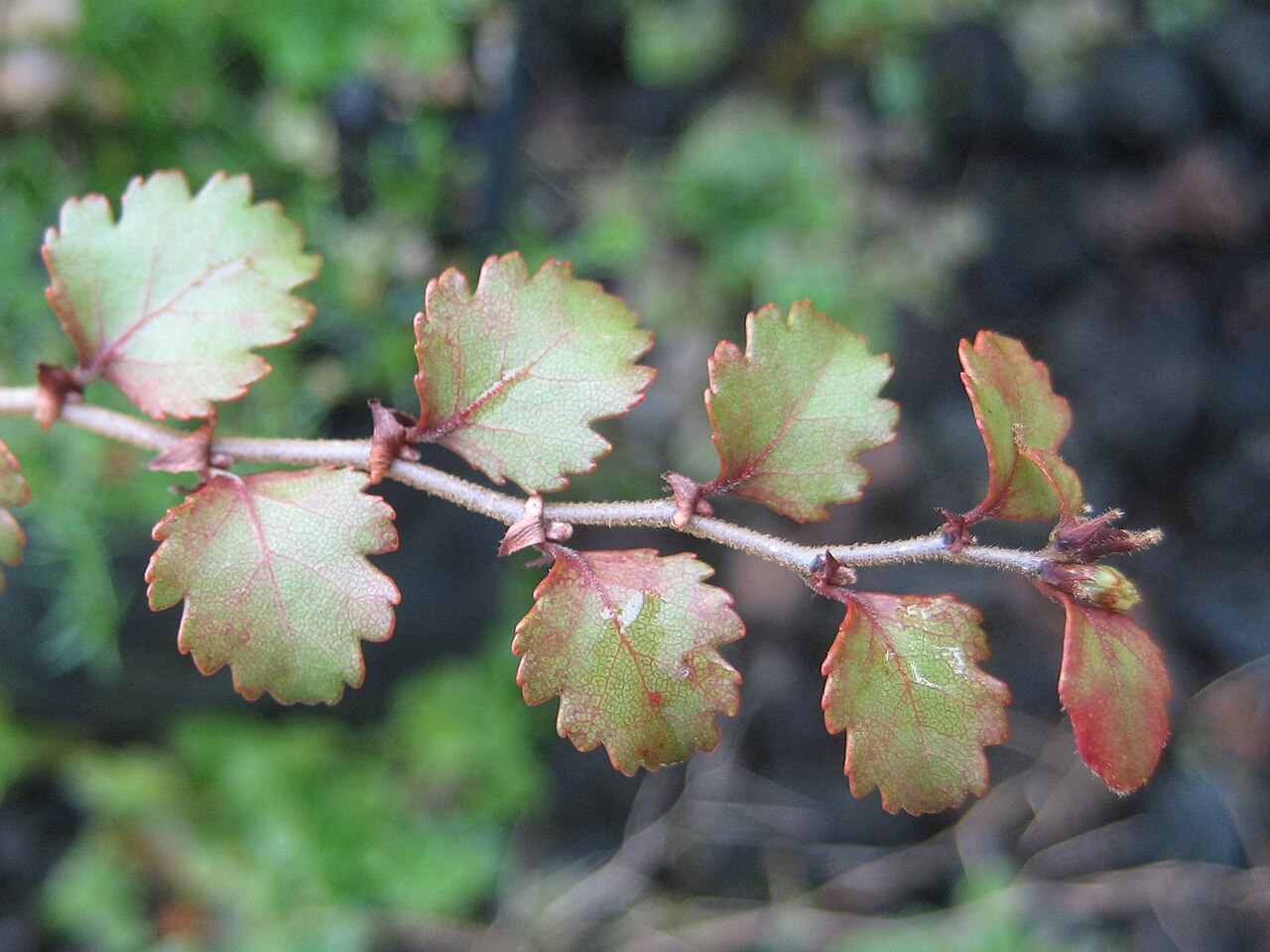
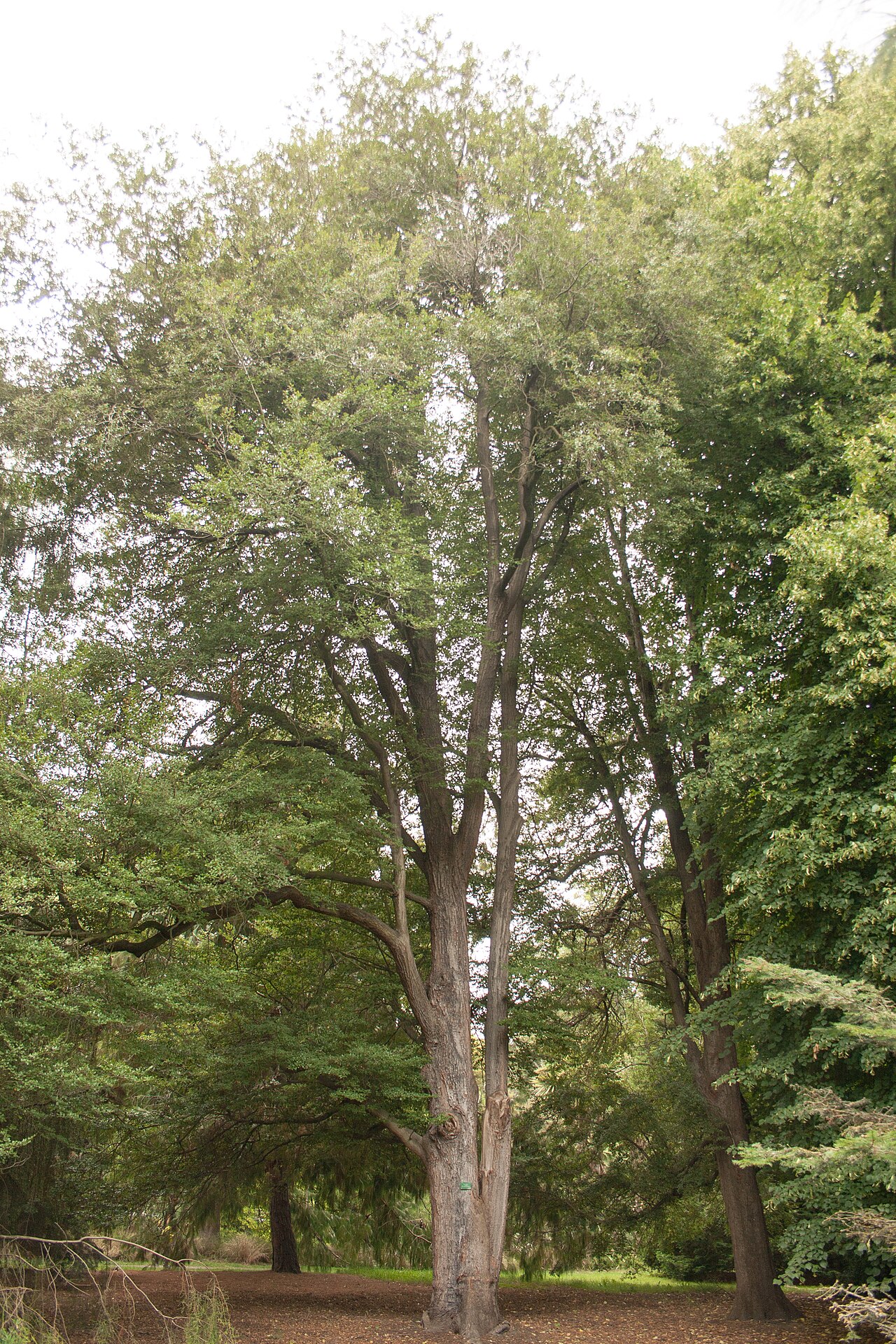
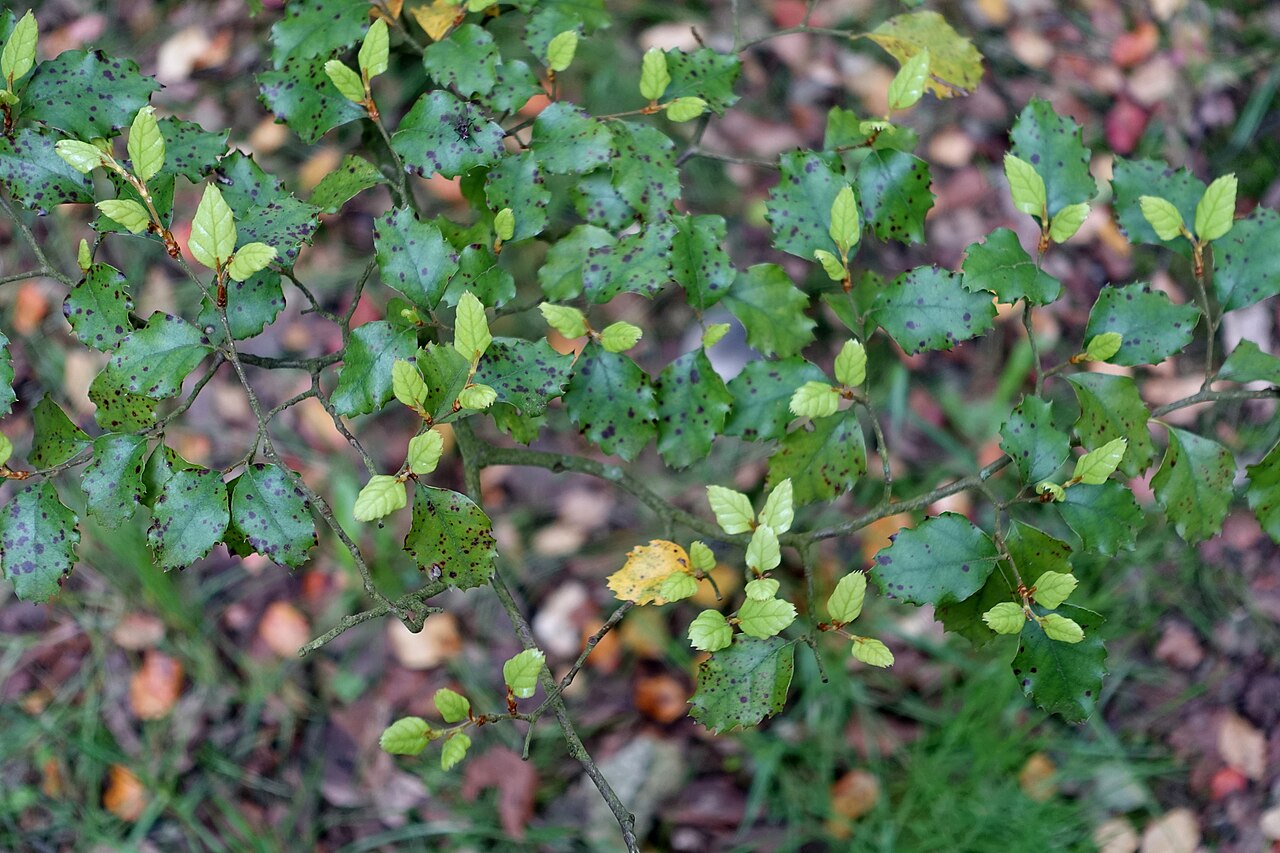
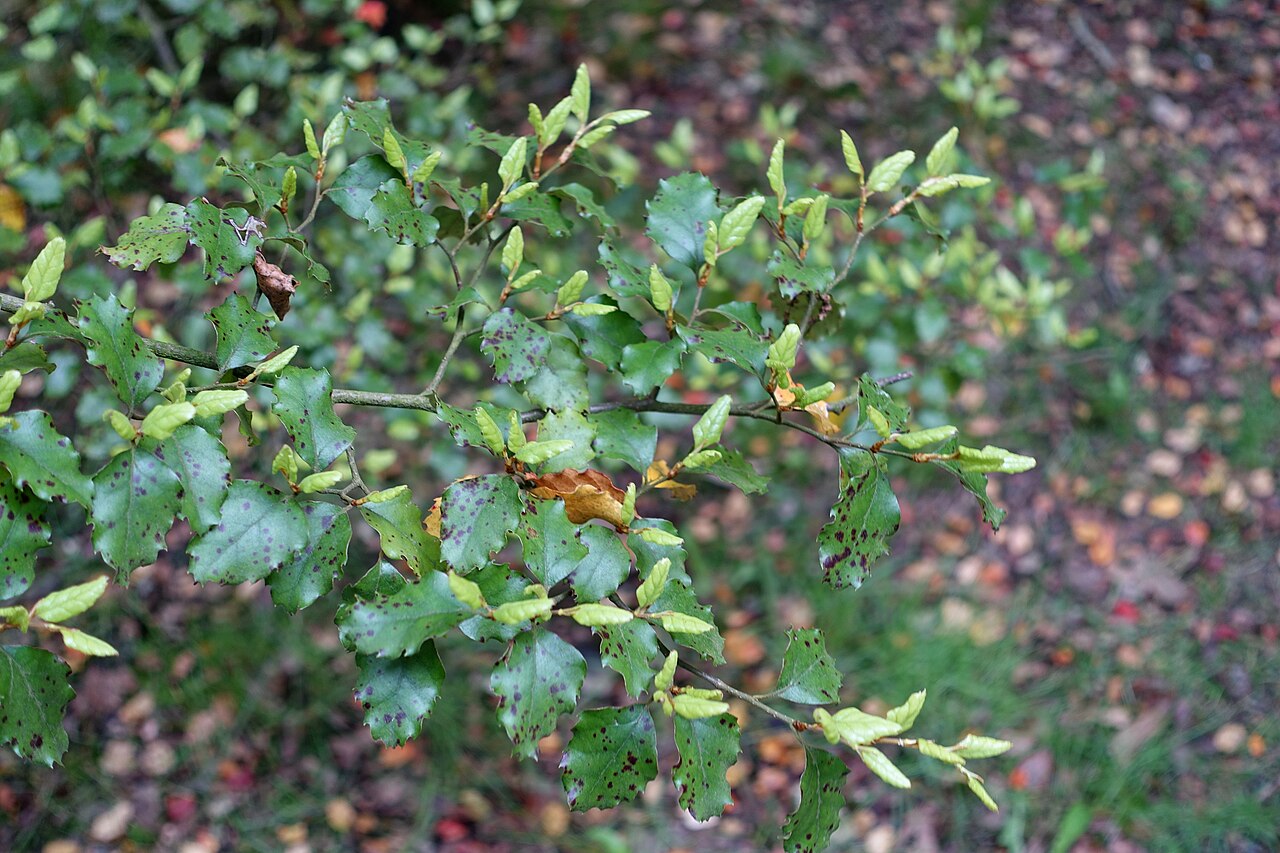
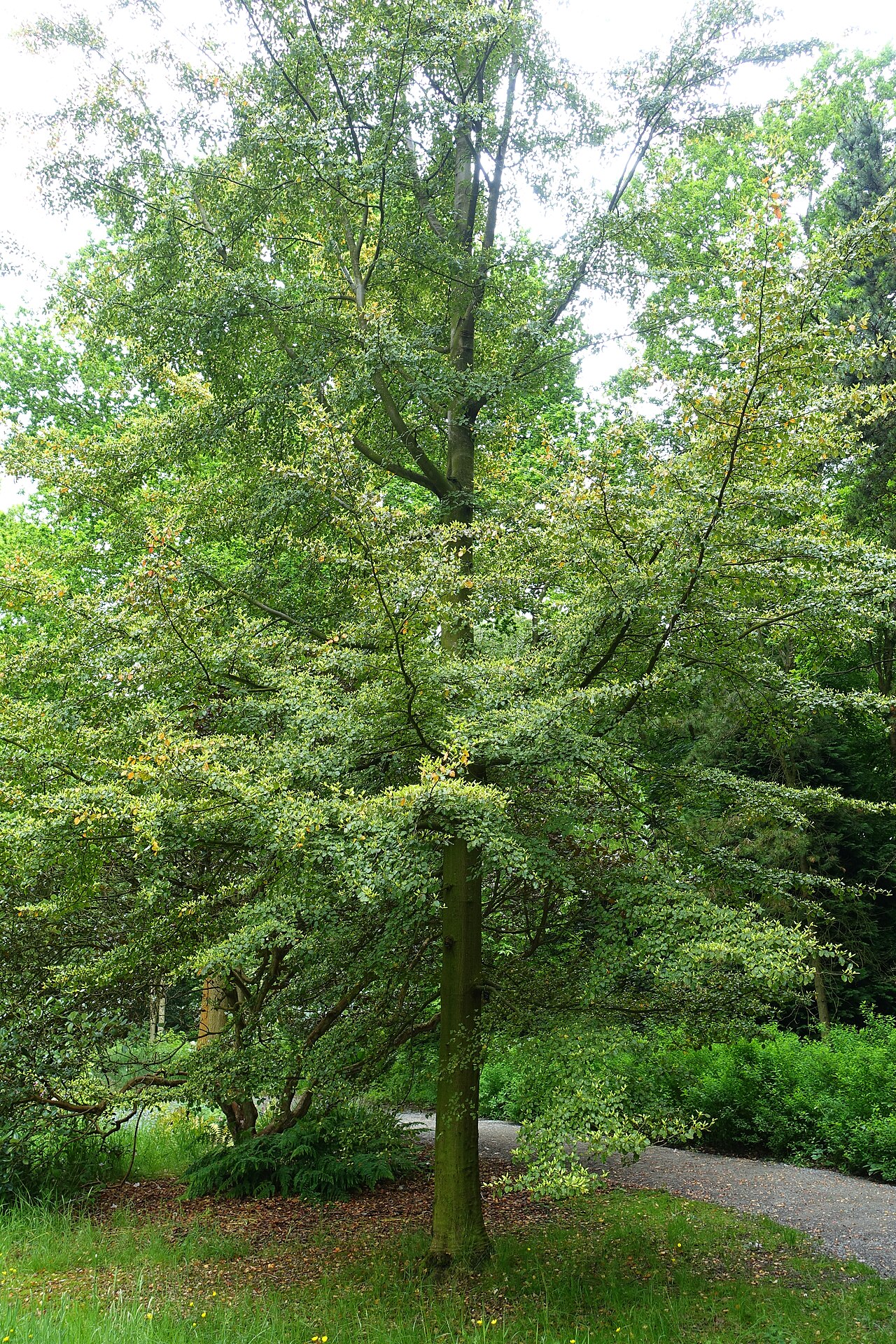
Red beech, known in Māori as tawhai raunui and scientifically as *Nothofagus fusca* (or *Fuscospora fusca* in New Zealand), is a southern beech species found only in New Zealand, on both the North and South Islands. It typically grows on lower hills and in inland valley floors where the soil is fertile and drains well. This evergreen tree reaches about 35 metres tall, with broad, oval leaves arranged alternately along the branches. The leaf edges are double-toothed, meaning each lobe has two teeth. Its fruit is a small cupule that holds three seeds.
Pollen from the genus *Nothofagus* has been discovered near the Antarctic Peninsula, indicating that southern beeches once grew in Antarctica during the Eocene period. The species is not currently considered threatened.
Red beech is the only known plant, besides rooibos, that produces the C-linked dihydrochalcone glycoside nothofagin. It is also grown as an ornamental tree in mild oceanic climates, such as in Scotland and along the Pacific coast of the northern United States, valued for its attractive leaves. Its wood is the most durable of all New Zealand beeches and was commonly used for flooring across the country. The timber remains exceptionally stable when dried to the right moisture levels, with an average density of 630 kilograms per cubic metre at 12 percent moisture content.
Red beech hybridises with mountain beech to form *Nothofagus ×blairii*, with black beech to form *Nothofagus ×dubia*, and with the Chilean roble beech (*Nothofagus obliqua*) to form *Nothofagus ×eugenananus*.
Quick Facts
- Genus
- Nothofagus
- Parent
- Nothofagus subg. Fuscospora
- Species
- fusca
Facts from the source article.
Lore & Background
Red beech is a medium-sized evergreen tree endemic to New Zealand, found on both the North and South Islands. It typically grows on lower hills and inland valley floors where soil is fertile and well drained. The tree reaches up to 35 m tall, with leaves that are alternately arranged, broad ovoid, 2 to 4 cm long and 1.5 to 3 cm broad, with a distinctive double-toothed margin. Its fruit is a small cupule containing three seeds.
Reader's Guide
Red beech holds significance as the only known plant source, apart from rooibos, of the C-linked dihydrochalcone glycoside nothofagin. Its wood is the most durable of all New Zealand beeches, often used in flooring, and is exceptionally stable when dried to appropriate moisture values. Pollen from the tree was found near the Antarctic Peninsula, showing that it formerly grew in Antarctica since the Eocene period. The species is also grown as an ornamental tree in regions with a mild oceanic climate, such as Scotland and the North Coast of the Pacific of the United States, due to its attractive leaf shape. Red beech hybridises with mountain beech, black beech, and the ruil tree from Chile, forming three named hybrid species. It is not currently considered threatened.
Did You Know?
- Pollen from the genus *Nothofagus* was found near the Antarctic Peninsula, indicating that southern beeches grew in Antarctica during the Eocene period.
- The wood of red beech is the most durable of all New Zealand beeches and has an average density of 630 kg/m³ at 12 percent moisture content.
Taxonomy, Distribution & Morphology
Nothofagus fusca, widely recognized as red beech and known in Māori as tawhai raunui, is a southern beech species found exclusively in New Zealand. Within the country it also goes by the name Fuscospora fusca. The tree inhabits both the North and South Islands, favoring lower hill slopes and the floors of inland valleys where soils are fertile and drain well. As a medium-sized evergreen, it can reach heights of around 35 metres. Its foliage is arranged alternately along the branches, with broad ovoid leaves measuring roughly 2 to 4 centimetres in length and 1.5 to 3 centimetres in width. A distinctive feature of the leaf margin is its double-toothed edge, where each lobe carries exactly two teeth. Reproduction takes the form of a small cupule that houses three seeds.
Deep-Time Legacy & Conservation
Perhaps the most remarkable aspect of red beech's story extends far beyond New Zealand's borders. Pollen grains attributed to this species have been recovered from deposits near the Antarctic Peninsula, providing compelling evidence that Nothofagus fusca once thrived on the Antarctic continent during the Eocene period. This paleobotanical discovery underscores how dramatically the species' range has contracted over millions of years, from a vast southern-temperate distribution to its present-day confinement within New Zealand's islands. Despite this dramatic historical range reduction, the species is not currently classified as threatened. Its continued presence on both the North and South Islands, in the fertile, well-drained soils of lower hills and inland valleys, suggests that the populations it maintains today are relatively secure. The Antarctic pollen record, however, serves as a reminder of how much of the tree's ancient history has been lost to geological and climatic upheaval.
Timber & Ornamental Value
Among all the native beeches of New Zealand, red beech produces the most durable timber, a quality that made it a favoured choice for flooring across many regions of the country. The wood is also noted for its exceptional dimensional stability once dried to appropriate moisture levels, making it reliable for structural and decorative applications. At a standard 12 percent moisture content, its average density sits at 630 kilograms per cubic metre, placing it in a practical range for both workability and strength. Beyond its utility as a building material, red beech has earned a place in ornamental horticulture. Its attractive leaf shape appeals to gardeners in regions with mild oceanic climates, and specimens have been established in Scotland as well as along the Pacific North Coast of the United States. In these cooler, maritime settings the tree provides an evergreen presence that mirrors the landscapes of its New Zealand homeland.
Biochemical Uniqueness & Hybridization
Red beech holds a singular position in plant biochemistry: it is the only known plant source, alongside rooibos (Aspalathus linearis), of the C-linked dihydrochalcone glycoside called nothofagin. This rare compound gives the species a distinctive chemical profile that sets it apart from other members of the Nothofagus genus. The tree is also remarkably promiscuous in its reproductive biology, readily crossing with several congeners to produce recognised hybrid species. It hybridises with mountain beech (Nothofagus cliffortioides) to yield Nothofagus ×blairii, and with black beech (Nothofagus solandri) to produce Nothofagus ×dubia. Most strikingly, red beech can also cross with the ruil tree (Nothofagus alessandrii), a species native to Chile, generating the hybrid Nothofagus ×eugenananus. This capacity for inter-specific and even inter-continental hybridisation highlights the genetic flexibility of the genus and the evolutionary connections that persist across the southern continents.
Gallery
More in Trees And Forest Species 1-24
Spotted an error? Know more?
Reader corrections go straight into our review queue. Suggest an edit · How this site is sourced