Kepler-62d
A super-Earth with a scorching 510 K equilibrium temperature.
Kepler-62d is the third innermost and largest exoplanet discovered orbiting the K-type star Kepler-62. It is a super-Earth with a radius roughly twice that of Earth, and its equilibrium temperature of 510 K makes it too hot to sustain life on its surface. The planet was detected via the transit method and is notable for its high stellar flux, receiving about 15 times more sunlight than Earth.
Quick Facts
- Discoverer
- Borucki et al.
- Discovery Site
- Kepler Space Observatory
- Discovered
- 18 April 2013
- Discovery Method
- Transit (Kepler Mission)
- Apsis
- astron
- Semimajor
- 0.120 ± 0.001 AU
- Eccentricity
- ~0
- Period
- 18.16406 ± 0.00002 d
- Inclination
- 89.7 ± 0.3
- Star
- Kepler-62 (KOI-701)
- Single Temperature
- T / eq / : 510 K
Facts from the source article.
Lore & Background
Kepler-62d orbits its host star every 18 days at a distance of about 0.12 AU, much closer than Mercury is to the Sun. Its radius of 1.95 Earth radii places it in the super-Earth category, larger than Earth but smaller than Uranus and Neptune. The planet's mass is not precisely known; estimates place an upper limit of 14 Earth masses, with the true value likely around 5.5 Earth masses based on its composition. Given its size and temperature, it is likely either a super-Venus or a hot mini-Neptune with no solid surface.
The host star Kepler-62 is a K-type star with a mass of 0.69 solar masses and a radius of 0.64 solar radii. It has a temperature of 4925 K and is about 7 billion years old, older than the Sun. The star is somewhat metal-poor, with a metallicity of −0.37, or 42% of the solar amount. Its apparent magnitude is 13.65, making it too dim to be seen with the naked eye. The star hosts a total of five known planets.
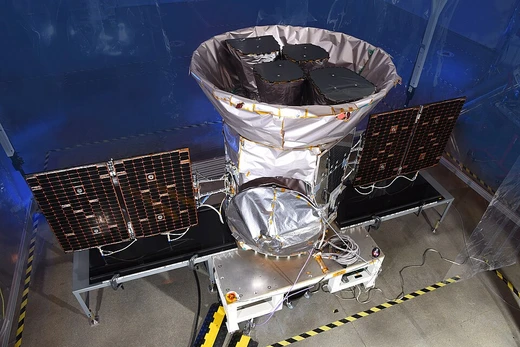
The discovery was made using the Kepler spacecraft, which observed transits of the star between 13 May 2009 and 17 March 2012. The periodic 18-day dimming events led to the conclusion that a planetary body was responsible. The discovery was announced on April 18, 2013.
Reader's Guide
Kepler-62d is significant as one of the larger planets in its system and as an example of a super-Earth with a high equilibrium temperature. Its radius of 1.95 Earth radii and estimated mass around 5.5 Earth masses place it in a category where the composition is uncertain—either a rocky super-Venus or a volatile-rich hot Neptune. The planet's high stellar flux, 15 times Earth's, and close orbit at 0.12 AU make it a target for studying atmospheric escape and the transition between rocky and gaseous planets. The system's age of 7 billion years provides a long-term perspective on planetary evolution. The discovery, announced alongside the Kepler-69 system, contributed to the growing census of small planets in the habitable zone and beyond. Kepler-62d's legacy lies in its role in refining models of planet formation and composition for worlds intermediate in size between Earth and Neptune, and in demonstrating the diversity of planetary environments in multi-planet systems.
Did You Know?
- Kepler-62d receives about 15 times more sunlight than Earth does from the Sun.
- Its equilibrium temperature of 510 K is too hot to sustain life on its surface.
- The planet orbits its star at a distance of 0.12 AU, closer than Mercury's orbit around the Sun.
- The host star Kepler-62 is about 7 billion years old, older than the Sun's 4.6 billion years.
More in Transiting Exoplanets, Part 3 1-24
Spotted an error? Know more?
Reader corrections go straight into our review queue. Suggest an edit · How this site is sourced