TRAPPIST-1g
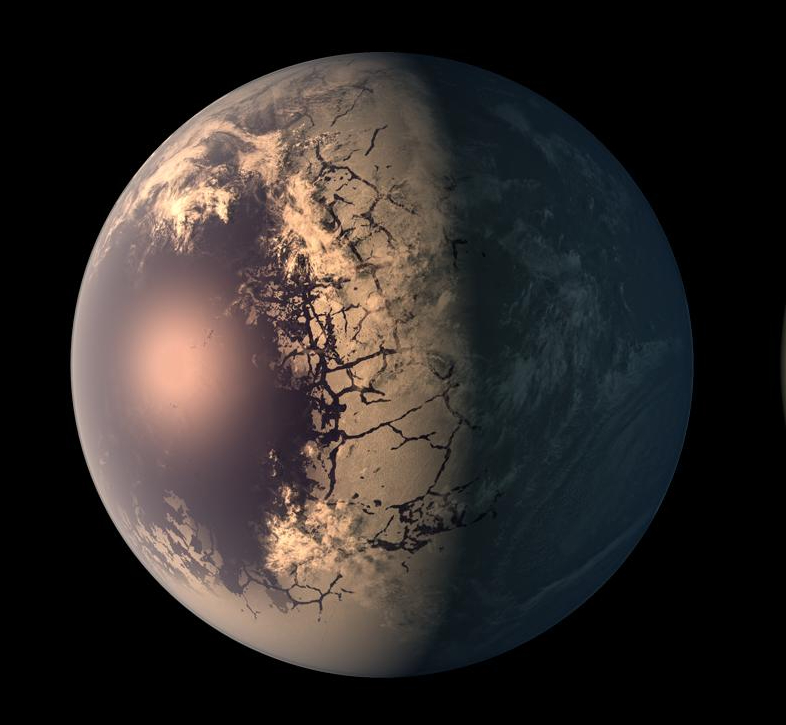
A rocky exoplanet in the habitable zone of an ultracool dwarf.

NASA/JPL-Caltech · Public domain
TRAPPIST-1g is an exoplanet orbiting the ultra-cool red dwarf star TRAPPIST-1, located 40.7 light-years from Earth in the constellation Aquarius. It is one of seven planets discovered around the star using observations from the Spitzer Space Telescope, and it lies within the optimistic habitable zone of its host star. The planet was detected via the transit method, which measures the dimming of starlight as the planet crosses in front of its star.
Quick Facts
- Discoverer
- Michaël Gillon et al.
- Discovery Site
- Spitzer Space Telescope
- Discovered
- 22 February 2017
- Discovery Method
- Transit
- Apsis
- astron
- Eccentricity
- 0.00208 · 0.00058
- Star
- TRAPPIST-1
Facts from the source article.
Lore & Background
TRAPPIST-1g is the second-most-distant-known planet in its system, somewhat larger than Earth and with a similar density, indicating it is likely a rocky planet. Its density is only slightly less than Earth's, though initial estimates suggested a density of 4.186 g/cm³, about 76% of Earth's. Based on mass-radius calculations and its orbital distance of 0.047 AU, the planet receives only 25.2% of the stellar flux that Earth does, which suggests it may be covered by a thick ice envelope if an atmosphere does not exist.
The planet could host a global water ocean or an exceptionally thick steam atmosphere. Simulations of magma ocean-atmosphere interaction indicate TRAPPIST-1g likely retained a large fraction of its primordial steam atmosphere during early evolution, and today may possess a thick ocean covered by an atmosphere containing hundreds of bars of abiotic oxygen. On 31 August 2017, astronomers using the Hubble Space Telescope reported the first evidence of possible water content on the TRAPPIST-1 exoplanets.
TRAPPIST-1g orbits its star every 12.35 days at a distance of 0.0469 AU, placing it in the outer limit of the star's theoretical habitable zone. Its orbit has an eccentricity of 0.00208, the lowest in its system, varying by only about 41,000 kilometers, which likely results in a very stable climate. The planet is in a 3:2 orbital resonance with TRAPPIST-1h and a 4:3 resonance with TRAPPIST-1f.
Reader's Guide
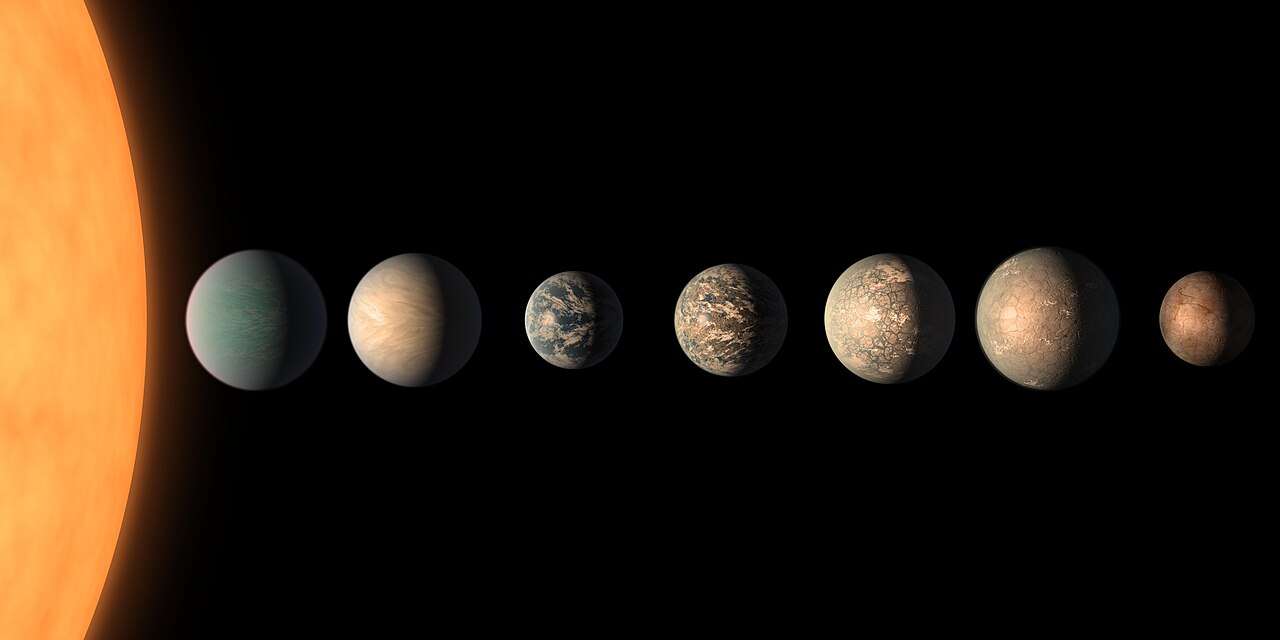
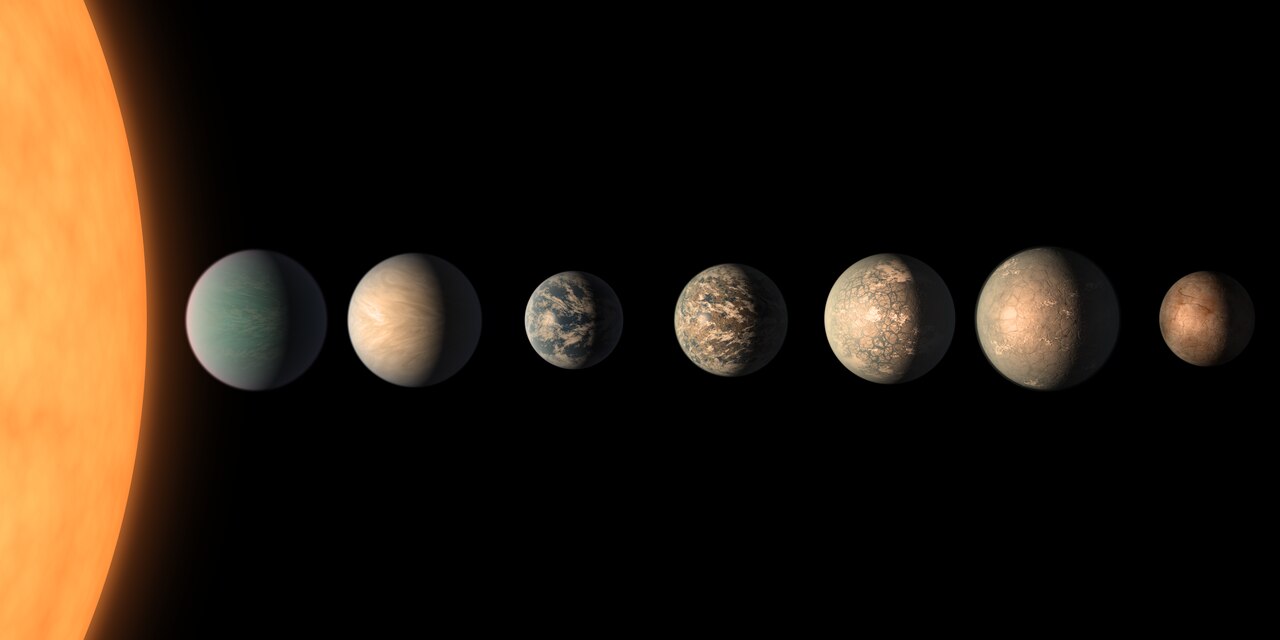
TRAPPIST-1g is notable as one of seven Earth-sized planets discovered around an ultracool dwarf star, a system that has become a key target for studying potentially habitable worlds. Its location within the optimistic habitable zone, combined with its rocky composition and similar density to Earth, makes it a prime candidate for understanding planetary formation and atmospheric evolution around low-mass stars. The possibility that TRAPPIST-1g retains a thick steam atmosphere or a global water ocean, along with evidence of water content from Hubble observations, underscores its significance in the search for exoplanets that could support liquid water. The planet's extremely low orbital eccentricity suggests a remarkably stable climate, which is rare among exoplanets and favorable for potential habitability. Its orbital resonances with neighboring planets also provide insights into the dynamical history and stability of the TRAPPIST-1 system. As one of the most accessible transiting exoplanets in terms of follow-up observations, TRAPPIST-1g continues to inform models of planetary interiors, atmospheres, and the conditions necessary for habitability around ultracool dwarfs.
Discovery Through a Multi-Telescope Effort
The planetary system around TRAPPIST-1 emerged from a collaborative, multi-site observing campaign. In 2016, a team led by Belgian astronomer Michaël Gillon at the University of Liege noticed irregularities in light curves originally recorded in 2015 by the TRAPPIST-South telescope at La Silla Observatory in Chile. Those anomalies were first read as evidence of three worlds, but follow-up work in 2016 showed the third signal actually represented several distinct planets. By 2017, reanalysis of the same original data revealed five additional terrestrial bodies, bringing the confirmed count to seven. The Spitzer Space Telescope, TRAPPIST-North at Oukaïmeden Observatory in Morocco, the South African Astronomical Observatory, and instruments in Spain all contributed to the picture. Detection relied on the transit method: as each planet crosses the stellar disk, the star's apparent brightness dips. Funding came from both NASA and the European Research Council, although some early news coverage mistakenly attributed the discovery to NASA alone.
Compact Orbits and Tidal Locking
All seven worlds in the TRAPPIST-1 system complete a full circuit of their host in a mere 1.5 to 19 days, tracing nearly circular paths. They share a common orbital plane, which is precisely why each one transits the star from our vantage point on Earth. Because they orbit so close to a small, cool star, they are almost certainly tidally locked: one hemisphere is bathed in unbroken daylight while the opposite side is locked in perpetual darkness. Their individual masses are comparable to Earth's, yet their densities are notably low, a signature that points toward substantial quantities of volatile material rather than a purely silicate-rocky makeup. The tight packing, coplanar geometry, and uniform transiting behavior make this system a striking example of a compact, orderly planetary family arranged around a single small star.
Habitability Promise and the Atmospheric Mystery
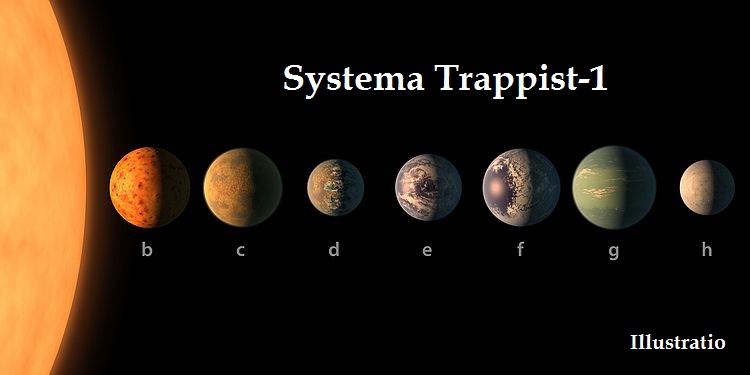
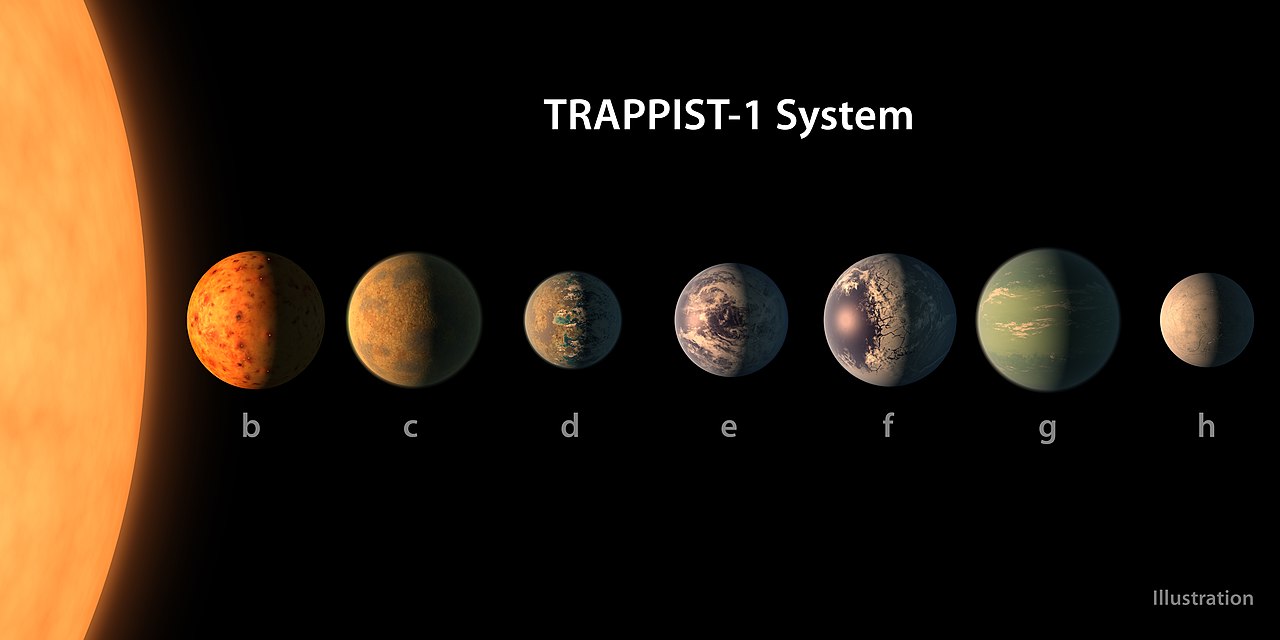
Four of the seven planets—labeled d, e, f, and g—occupy orbital distances where surface temperatures could plausibly allow liquid water to persist, placing them in a range researchers regard as potentially hospitable to life. Yet no atmosphere has been confirmed on any member of the system, and dedicated observations of TRAPPIST-1b have specifically excluded the presence of one. A deeper uncertainty looms: it remains unclear whether the star's radiation output would even permit atmospheres to form or remain stable on these close-in worlds. The planets' low densities hint at volatile-rich interiors that might aid atmospheric retention, but the evidence is far from conclusive. This tension between a promising habitability window and the apparent absence of atmospheres has drawn sustained attention from the research community and made the system a frequent subject in popular culture.
An Ancient, Ultra-Cool Star Built to Last
TRAPPIST-1 is an ultra-cool red dwarf of spectral class M8.0, with a photospheric temperature of roughly 2,566 kelvin, making it the coldest known star to host planets as of 2022. Its radius is only marginally larger than Jupiter's, and its mass—about nine percent of the Sun's—sits at the bare minimum needed to sustain nuclear fusion. Total luminosity is a mere 0.055 percent of the Sun's, radiated overwhelmingly in the infrared. The star is estimated to be around 7.6 billion years old, predating our Solar System by roughly three billion years. Remarkably, it is projected to keep shining for approximately ten trillion years, roughly seven hundred times the current age of the universe, vastly outlasting the Sun. JWST observations suggest cold starspots may blanket up to a quarter of its surface, and no stellar activity cycle has been detected.
Gallery
Frequently Asked Questions
What is TRAPPIST-1g?
TRAPPIST-1g is a rocky world that circles the ultra-cool red dwarf star TRAPPIST-1, sitting roughly 40.7 light-years away in the Aquarius constellation. It is the sixth of seven known planets in that compact system.
How long does it take TRAPPIST-1g to complete one orbit?
A single trip around its host star takes the planet about 12.35 days at a mean distance of roughly 0.0469 AU. Its orbit is nearly perfectly circular, with an eccentricity of just 0.00208.
Could TRAPPIST-1g support liquid water?
The planet sits inside what astronomers call the optimistic habitable zone of TRAPPIST-1, meaning surface conditions could theoretically allow liquid water to persist. No atmosphere or surface composition has been confirmed yet, so its actual habitability remains unknown.
How did scientists find TRAPPIST-1g?
The planet was identified through the transit method, in which Spitzer Space Telescope data revealed tiny periodic dips in the star's brightness as the planet crossed in front of it. This technique allowed researchers to measure its size and orbital period.
Why does TRAPPIST-1g matter to the exoplanet community?
As one of seven closely packed worlds around an ultracool dwarf, it gives scientists a compact, nearby laboratory for studying how planets form and evolve in tight multi-planet systems. Its placement in the habitable zone also makes it a priority target in the search for potentially life-friendly environments.
More in Transiting Exoplanets, Part 3 1-24
Spotted an error? Know more?
Reader corrections go straight into our review queue. Suggest an edit · How this site is sourced