Kepler-9c
A gas giant in a resonant orbit with Kepler-9b.

NASA/Ames/JPL-Caltech · Public domain
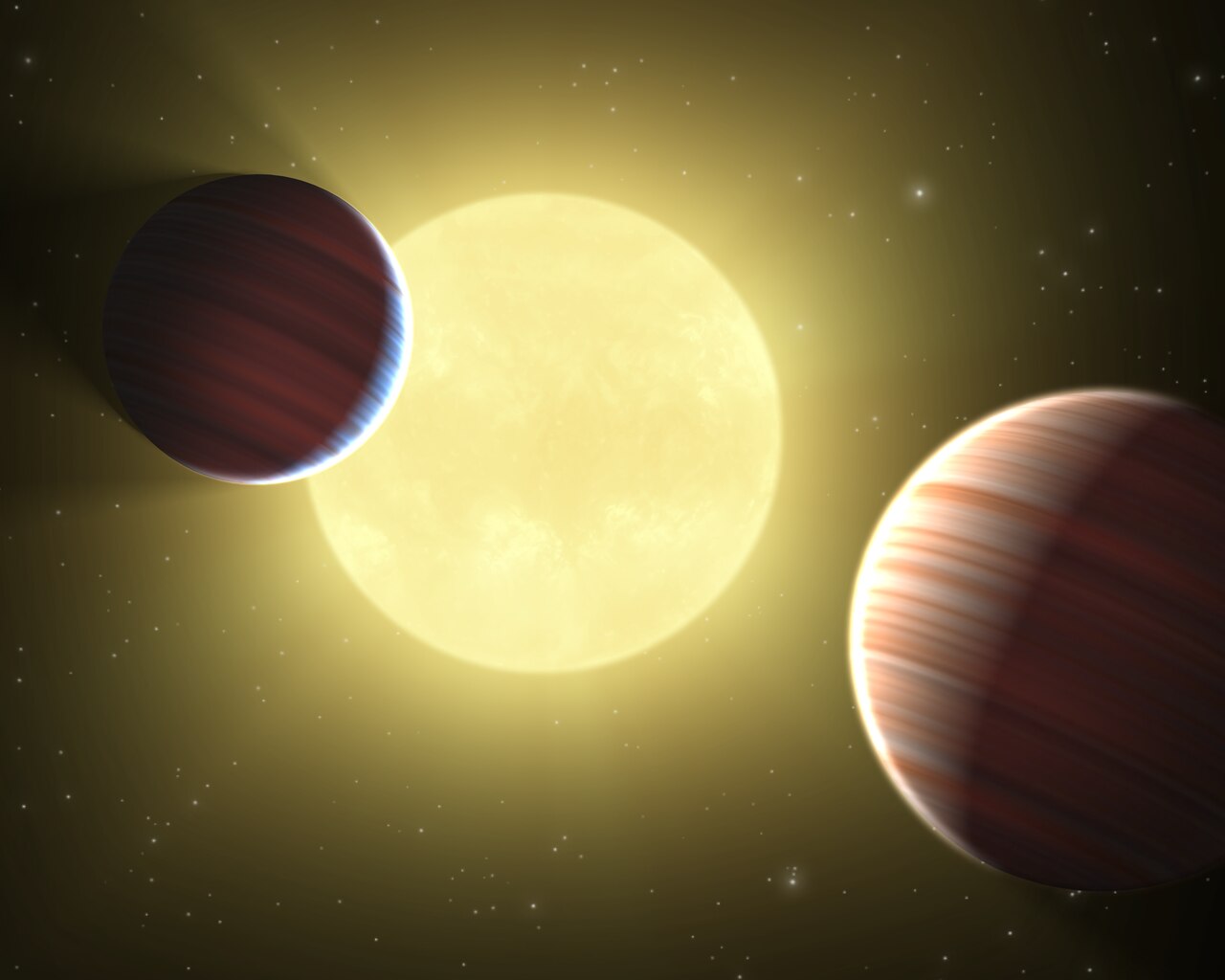
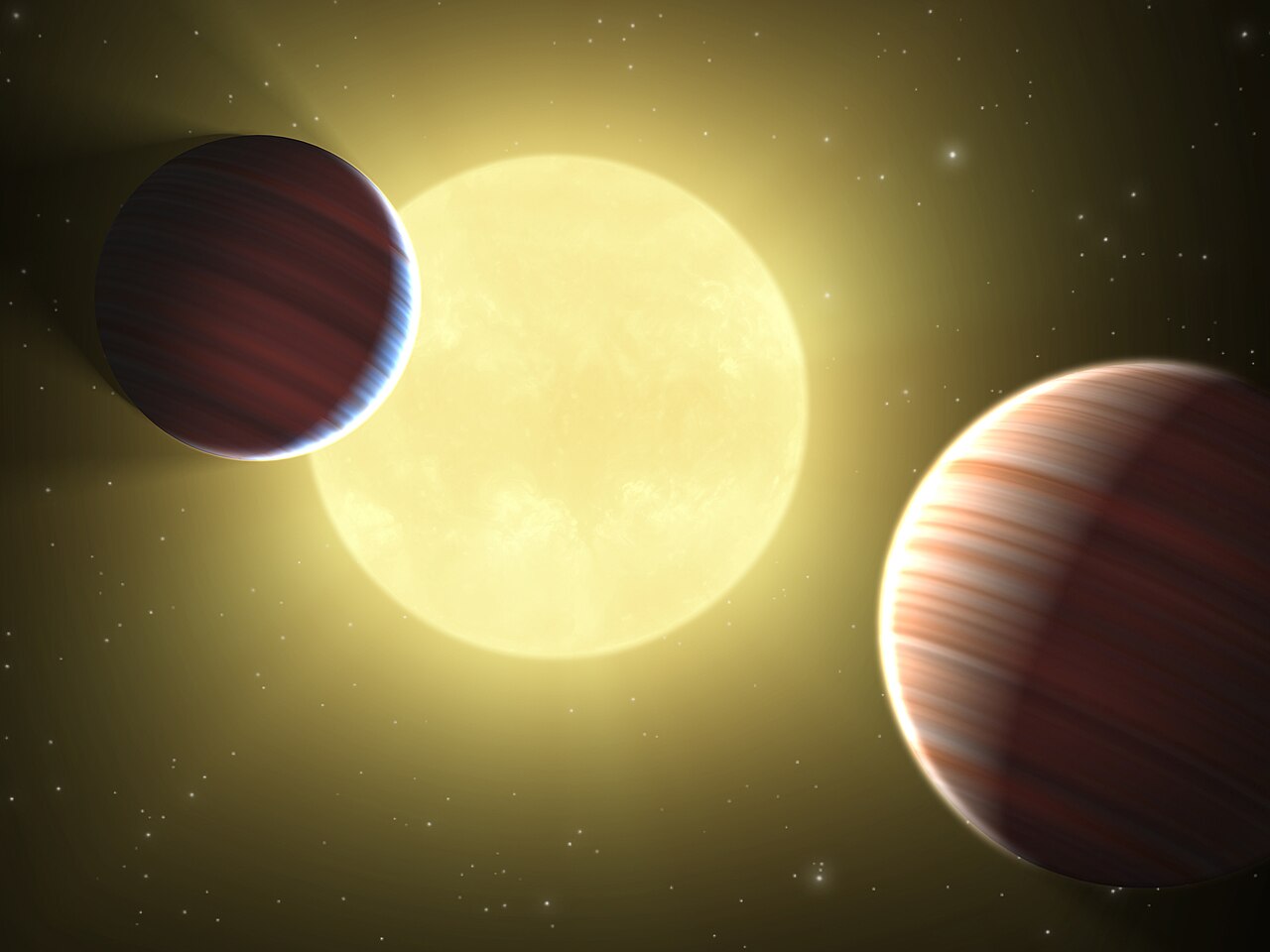
Kepler-9c is a transiting exoplanet discovered by NASA's Kepler Mission, announced on August 26, 2010. It was one of the first seven exoplanets found by Kepler and, along with Kepler-9b, was among the first exoplanets confirmed to be transiting their star. The planet is notable for being part of a system exhibiting orbital resonance, a phenomenon observed for the first time outside the Solar System.
Quick Facts
- Discoverer
- Kepler Mission team
- Discovery Site
- Kepler space telescope
- Discovered
- 26 August 2010
- Discovery Method
- Transit
- Apsis
- astron
- Semimajor
- 0.225 ±
- Eccentricity
- 0
- Period
- 38.91 d
- Inclination
- 88.12
- Star
- Kepler-9
- Single Temperature
- 536K
Facts from the source article.
Lore & Background
Kepler-9c was one of 700 planetary candidates identified during Kepler's first 43 days of operation. It was highlighted as part of one of five star systems that appeared to host multiple transiting planets. The planet's mass was refined through follow-up observations using the Keck 1 Telescope at the W.M. Keck Observatory on Mauna Kea, Hawaii, which confirmed that both Kepler-9c and Kepler-9b are slightly smaller than Saturn.
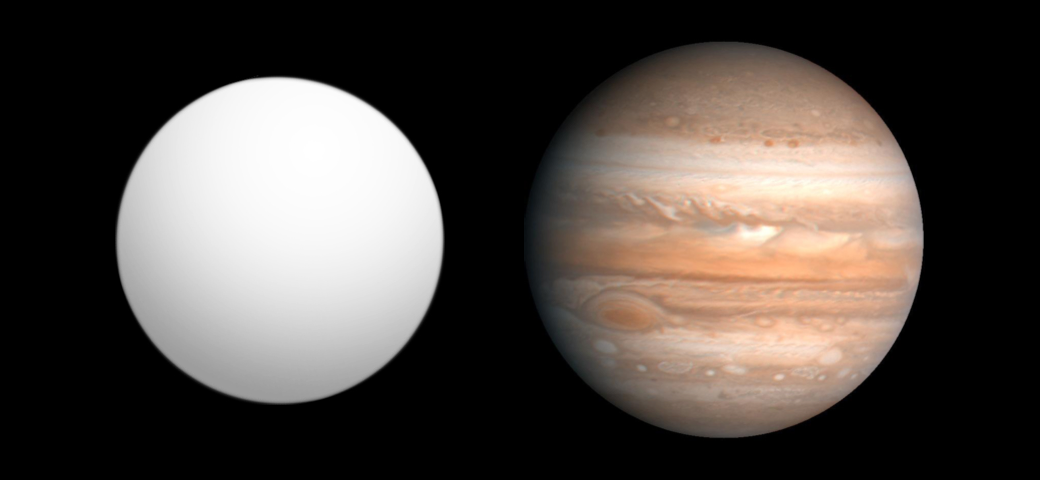
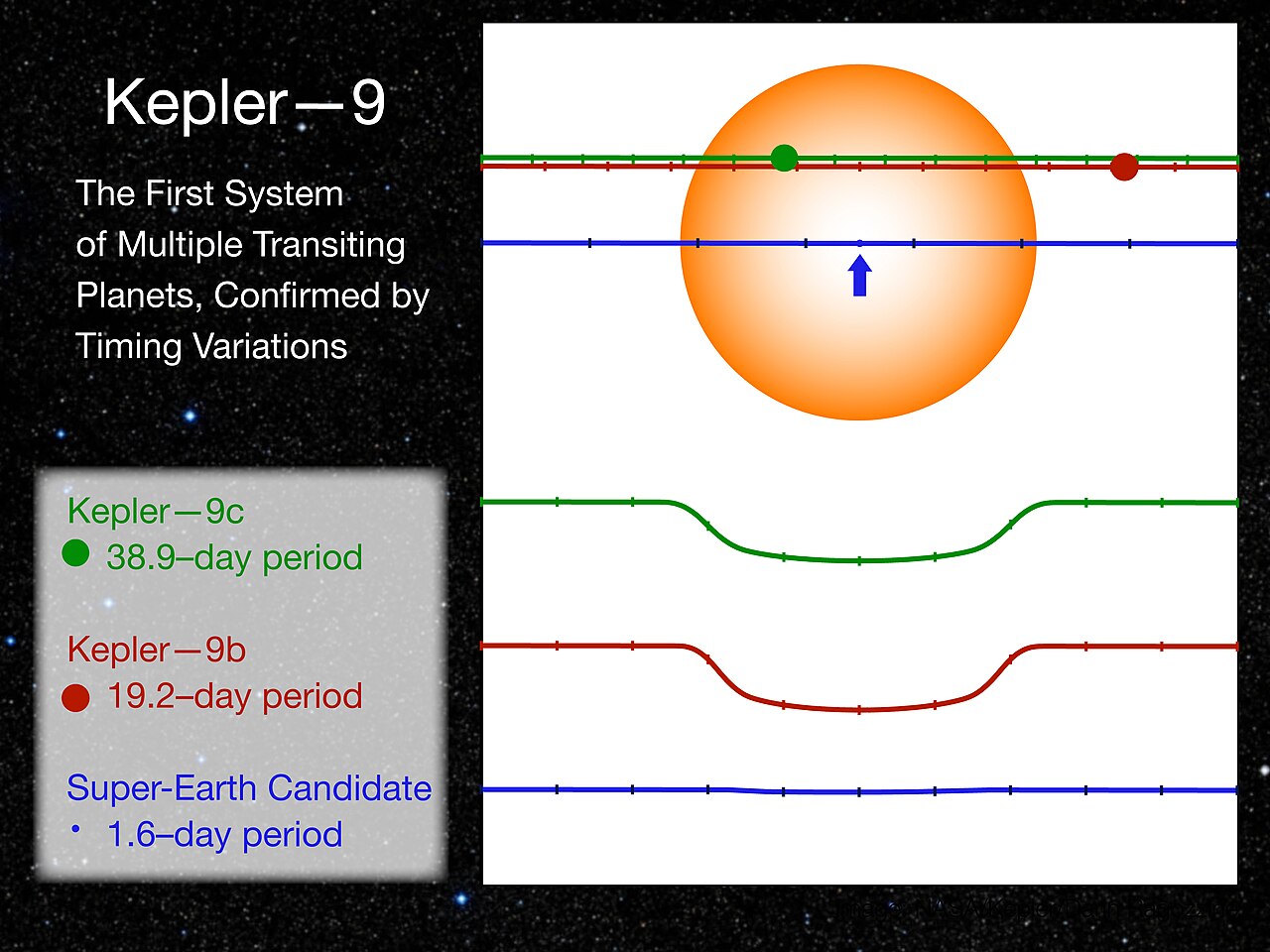
Kepler-9c is a hydrogen–helium gas giant with a mass about 17% that of Jupiter and a radius about 82% of Jupiter's, making it slightly smaller than Saturn. It orbits its star at an average distance of 0.225 AU. The planet orbits on the same plane as Kepler-9b, a larger gas giant. The two planets exhibit a 2:1 orbital resonance, where Kepler-9b completes an orbit every 19 days and Kepler-9c every 38 days. During the observation period, each orbit of Kepler-9c shortened by about 39 minutes, though this trend is expected to reverse over time, causing the orbital period to oscillate slightly above and below the 2:1 ratio.
Reader's Guide
Kepler-9c's significance lies in its role as one of the first exoplanets confirmed to transit its star, a milestone for the Kepler Mission. Its discovery, alongside Kepler-9b, demonstrated that multiple planets could be detected transiting the same star, validating Kepler's ability to find multi-planet systems. The orbital resonance between Kepler-9c and Kepler-9b was the first such phenomenon observed outside the Solar System, providing a real-world example of gravitational interactions that stabilize planetary orbits. The observed shortening of Kepler-9c's orbital period by 39 minutes per orbit, and the predicted oscillation around the 2:1 ratio, offered direct evidence of dynamical interactions between exoplanets. This system helped establish that orbital resonance is not unique to our Solar System and can be studied in distant planetary systems, advancing the understanding of planetary formation and evolution.
Did You Know?
- Kepler-9c was one of the first seven exoplanets discovered by NASA's Kepler Mission.
- Its orbital period shortened by 39 minutes every orbit during the observation period.
- Kepler-9c and Kepler-9b were the first exoplanets confirmed to transit the same star.
- The planet's mass is about 17% that of Jupiter.
The 2025 Discovery Cohort
The year 2025 produced a confirmed catalog of 238 exoplanets that were first reported during that period. This cohort sits within a broader Wikipedia-maintained listing that tracks every confirmed exoplanet by the year of its initial report. The 2025 figure places it in a consistent range with neighboring years—2024 yielded 284, while 2026 has already logged 283—suggesting a steady, productive pace of detection rather than a dramatic spike or lull. These 238 worlds join a cumulative record that stretches back to the 31 planets confirmed before 2000, through the 375 of the 2000–2009 decade, and the massive 1,498 reported in 2016, which remains the single largest annual tally in the dataset. The 2025 list is one entry in a structured, year-by-year archive that allows researchers and enthusiasts to trace the accelerating pace at which planetary systems beyond our own have been identified and confirmed.
Measurement Caveats and the Radial Velocity Limit
A critical note attached to the 2025 exoplanet list addresses how mass is reported for planets detected exclusively through the radial velocity method. For these worlds, the listed mass figure represents a lower limit rather than a definitive value. This distinction matters because radial velocity measurements are sensitive to the component of orbital motion along the line of sight, meaning the true mass can exceed what is tabulated. The list directs readers to a dedicated minimum-mass reference for a fuller explanation of this methodological constraint. This caveat applies specifically to exoplanets whose detection relies solely on the Doppler shift of their host star's spectral lines, distinguishing them from planets identified through transit photometry or direct imaging, where different physical parameters may be more directly accessible. Understanding this lower-limit nature is essential for any comparative analysis of planetary masses across the 238 entries in the 2025 catalog.
Taxonomic Framework and Sub-Categories
The 2025 list is embedded within an extensive taxonomy of exoplanet categories that organizes the field's discoveries by detection method, physical characteristics, and system architecture. Sub-lists cover directly imaged planets, those representing extremes in various properties, and the firsts in detection history. Mission-specific catalogs exist for the Kepler space telescope, its K2 follow-on mission, and the TESS survey. Thematic groupings include candidates for liquid water, terrestrial worlds targeted for atmosphere detection, the hottest and coldest known planets, multiplanetary systems, and circumbinary planets orbiting paired stars. Additional categories track the nearest exoplanets, potentially habitable worlds, properly named planets, and the largest and smallest confirmed bodies. The taxonomy also extends to planetary debris around giant stars and white dwarfs, as well as extrasolar planetary collisions. This multi-dimensional framework allows the 238 planets of 2025 to be cross-referenced across numerous scientific and popular-interest contexts simultaneously.
The Arc of Exoplanet Discovery
The year-by-year exoplanet lists reveal a striking narrative of accelerating discovery. Before 2000, only 31 planets had been confirmed. The 2000–2009 decade added 375, and the 2010s saw annual counts ranging from 86 to 1,498, with 2014 (869) and 2016 (1,498) representing extraordinary bursts of confirmation. The 2020s have maintained a steady cadence: 256 in 2020, 253 in 2021, 312 in 2022, 304 in 2023, 284 in 2024, 238 in 2025, and 283 already recorded for 2026. This progression from a handful of pioneering detections to several hundred confirmations per year illustrates how exoplanet science has matured from a frontier discipline into a prolific, systematic field. The 2025 cohort of 238 planets is not an anomaly but a data point in a consistent upward trajectory that has been building since the first confirmed detections in the late 1990s.
Gallery
Frequently Asked Questions
What is Kepler-9c?
Kepler-9c is a gas-giant exoplanet that orbits the star Kepler-9, identified by NASA's Kepler space telescope and publicly revealed on August 26, 2010. It was one of the very first seven planets the mission catalogued.
What makes Kepler-9c special compared to other exoplanets?
Its roughly 38-day orbit is locked into a gravitational resonance with its sibling planet Kepler-9b, marking the first time such a coupled orbital relationship was detected in a planetary system beyond our own.
How big and heavy is Kepler-9c?
The planet spans about 0.823 Jupiter radii and carries roughly 0.171 Jupiter masses, making it a solid gas giant that is somewhat smaller and lighter than Jupiter itself.
How far is Kepler-9c from its host star?
It circles Kepler-9 at a semi-major axis of approximately 0.225 astronomical units, completing one full orbit in close to 38 Earth days.
Why is Kepler-9c important to exoplanet science?
Together with Kepler-9b, it was among the earliest planets the Kepler mission confirmed as physically transiting their host star, and their resonant pairing gave astronomers a concrete example of orbital mechanics at work outside the Solar System.
More in Transiting Exoplanets, Part 3 1-24
Spotted an error? Know more?
Reader corrections go straight into our review queue. Suggest an edit · How this site is sourced