Kepler-9b
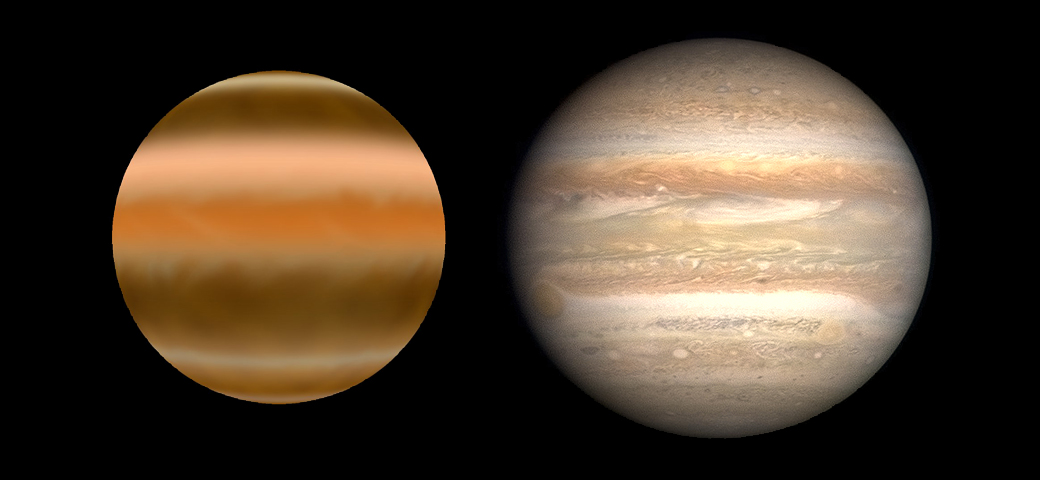
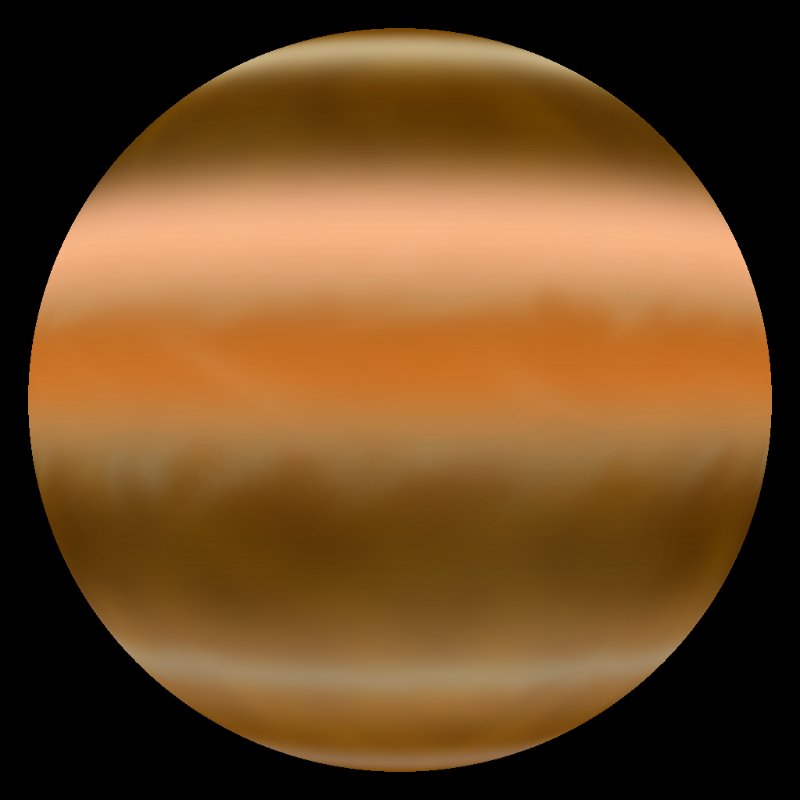
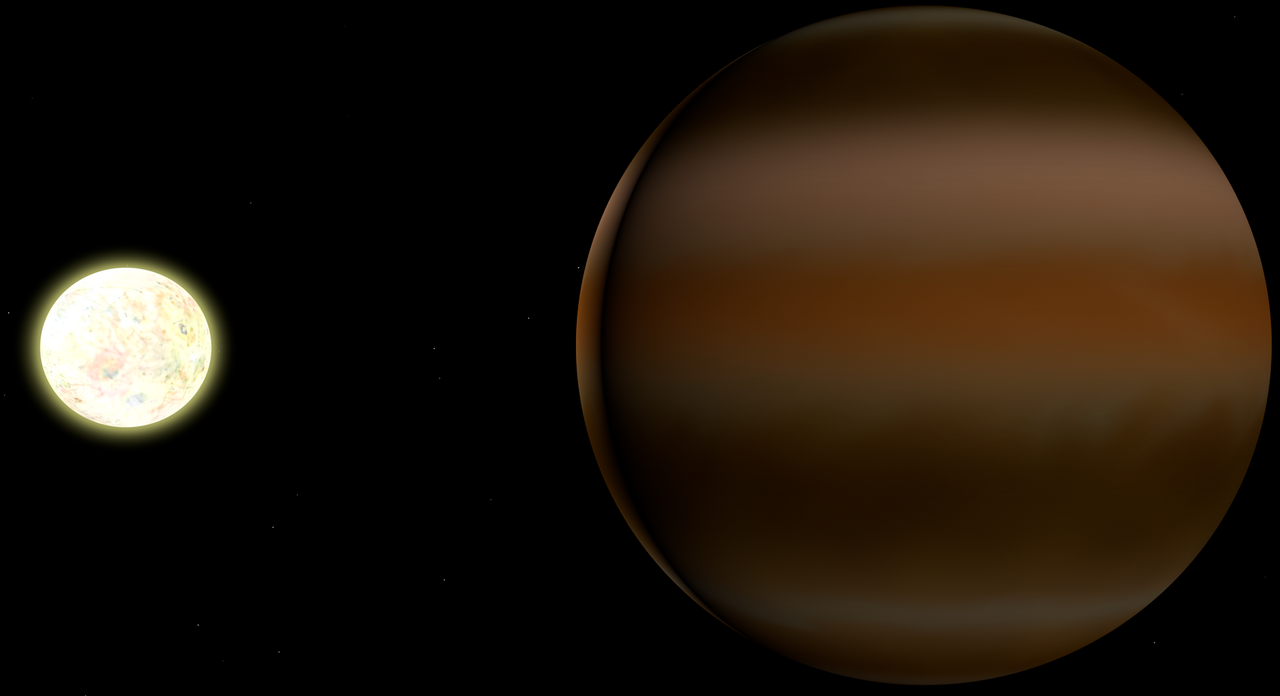
Largest planet in the Kepler-9 system, discovered by the Kepler Mission.

NASA/Ames/JPL-Caltech · Public domain
Kepler-9b is a gas giant exoplanet orbiting the star Kepler-9 in the constellation Lyra. It was among the first exoplanets discovered by NASA's Kepler Mission and is the largest of three known planets in its system. Its discovery was announced on August 26, 2010, as part of the first confirmed star system with multiple transiting planets.
Quick Facts
- Discoverer
- Kepler Mission team
- Discovery Site
- Kepler space telescope
- Discovered
- 26 August 2010
- Discovery Method
- Transit
- Apsis
- astron
- Semimajor
- 0.140 ±
- Eccentricity
- 0
- Period
- 19.24 d
- Inclination
- 88.55
- Star
- Kepler-9
- Density
- 0.4 · 0.1 g cm / −3
Facts from the source article.
Lore & Background
Kepler-9b was confirmed by the Kepler satellite using the transit method, which detects the slight dimming of a star's light as a planet passes in front of it. Initial mass estimates were refined using the W. M. Keck Observatory at Mauna Kea, Hawaii, revealing that Kepler-9b is the larger of the two gas planets in the system but less massive than Saturn. The planet orbits its star every 19.243 days at a distance of 0.14 AU, making it the second-closest planet to Kepler-9 in its system.
Kepler-9b and its sibling Kepler-9c exhibit orbital resonance, a phenomenon where their gravitational pulls stabilize each other's orbits in a roughly 1:2 ratio. Kepler-9b's orbital period grows by about four minutes per orbit on average, a trend that eventually reverses and increases, causing the orbits to oscillate slightly above and below the 1:2 ratio. Alycia Weinberger of the Carnegie Institution suggested that the gas giants likely formed farther from the star and migrated inward, with the orbital resonance providing clues to their migration history.
Reader's Guide
Kepler-9b is notable as one of the first exoplanets discovered by NASA's Kepler Mission and as part of the first confirmed star system with multiple transiting planets. Its discovery, announced on August 26, 2010, helped validate the Kepler mission's ability to detect planetary systems. The planet's orbital resonance with Kepler-9c represents the first known case of such resonance in transiting exoplanets, offering insight into how gravitational interactions can stabilize orbits and influence planetary migration. The resonance, where the two planets' orbits maintain a roughly 1:2 ratio, causes Kepler-9b's orbital period to oscillate over time, a pattern that may reveal how the planets migrated inward from their original formation locations. As the largest planet in its system, Kepler-9b provides a benchmark for understanding gas giant formation and dynamics in multi-planet systems.
Did You Know?
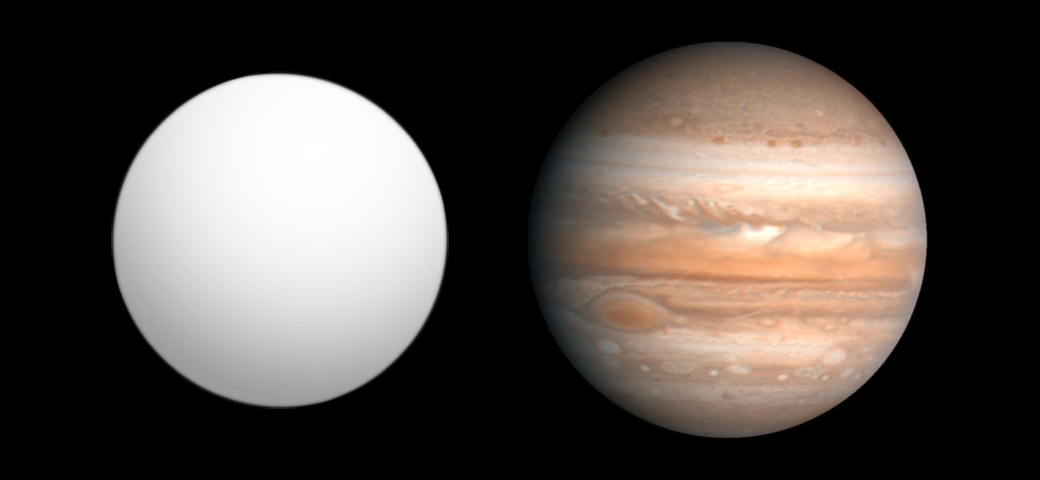
- Kepler-9b is about half the mass of Saturn but has about 80% of Jupiter's radius.
- Kepler-9b and Kepler-9c exhibit the first known case of orbital resonance in transiting exoplanets.
Discovery and Confirmation
Kepler-9b stands as one of the earliest worlds identified beyond our Solar System by NASA's Kepler Mission, a space-based project originally conceived to hunt for Earth-like planets. The star Kepler-9, located in the constellation Lyra, was among 700 planetary candidates flagged during the spacecraft's first 43 days of operations. What set this system apart was that it was one of only five candidates appearing to host more than one transiting planet. On August 26, 2010, the discovery was made public, marking the first confirmed star system in which multiple planets were observed crossing the same stellar disk. The transit method—watching for the tiny dimming of starlight as a planet slips in front of its host—allowed astronomers to extract the planet's size and orbital distance. Mass estimates were later sharpened using observations from the W. M. Keck Observatory atop Mauna Kea in Hawaii, confirming that Kepler-9b is the heavier of the two gas giants in the system, though still lighter than Saturn.
Physical Profile and Orbital Parameters
As a gas giant, Kepler-9b carries roughly 43 times Earth's mass, placing it at approximately half the mass of Saturn. Its radius measures about 0.842 Jupiter radii, meaning it spans roughly 80 percent of Jupiter's diameter. Despite its considerable bulk, the planet hugs its host star at a distance of just 0.14 astronomical units, completing one full orbit in a mere 19.243 days. For perspective, Mercury sits at 0.387 AU from the Sun and needs nearly 88 days to circle it, so Kepler-9b races around Kepler-9 at a fraction of that distance and a fraction of that time. Within the Kepler-9 system, which contains three known planets all detected via the transit method, Kepler-9b holds the distinction of being the largest world, while also ranking as the second-closest planet to the star. Its compact orbit and substantial mass make it a compelling benchmark for comparing the diversity of gas giants found beyond our own neighborhood.
Orbital Resonance with Kepler-9c
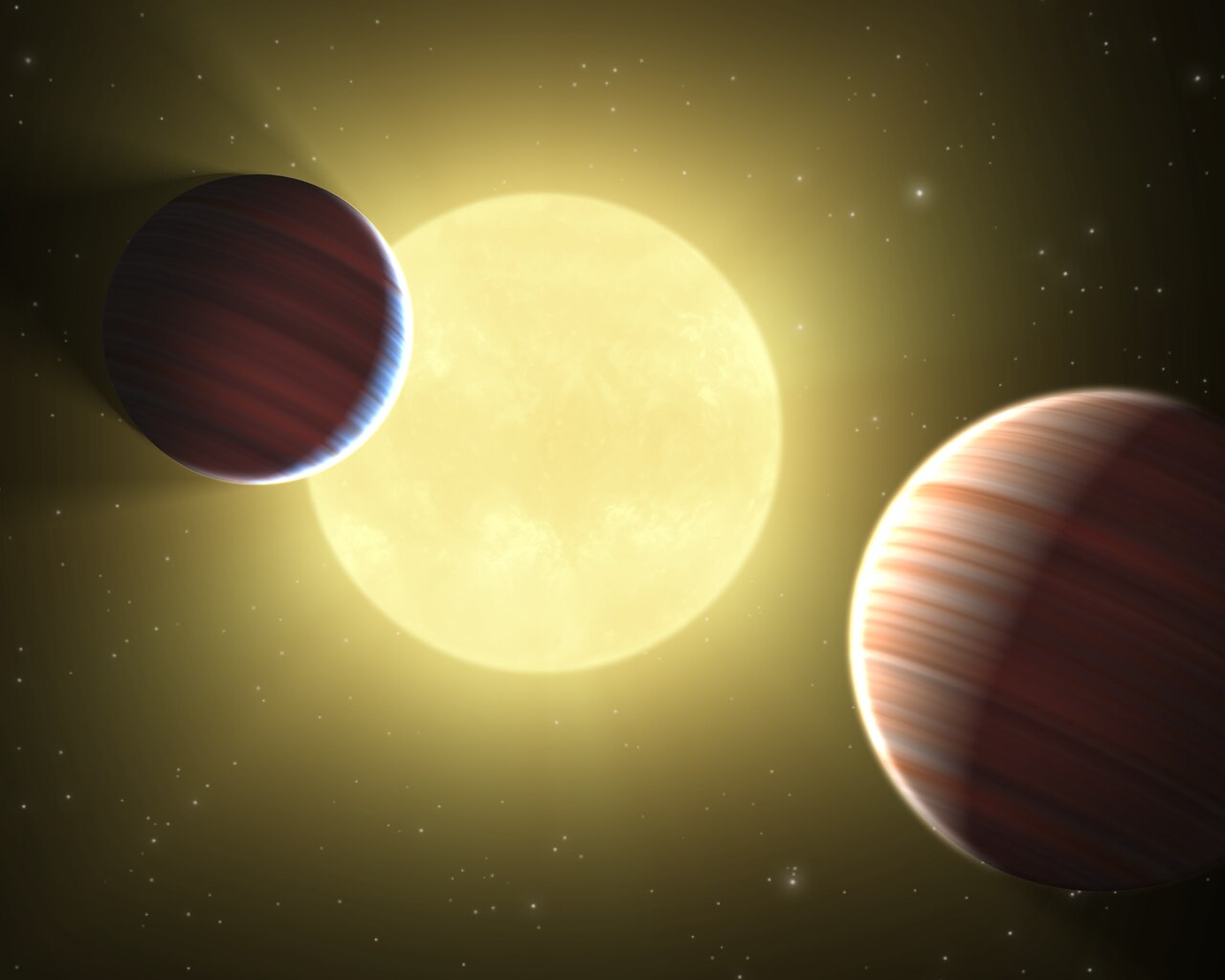
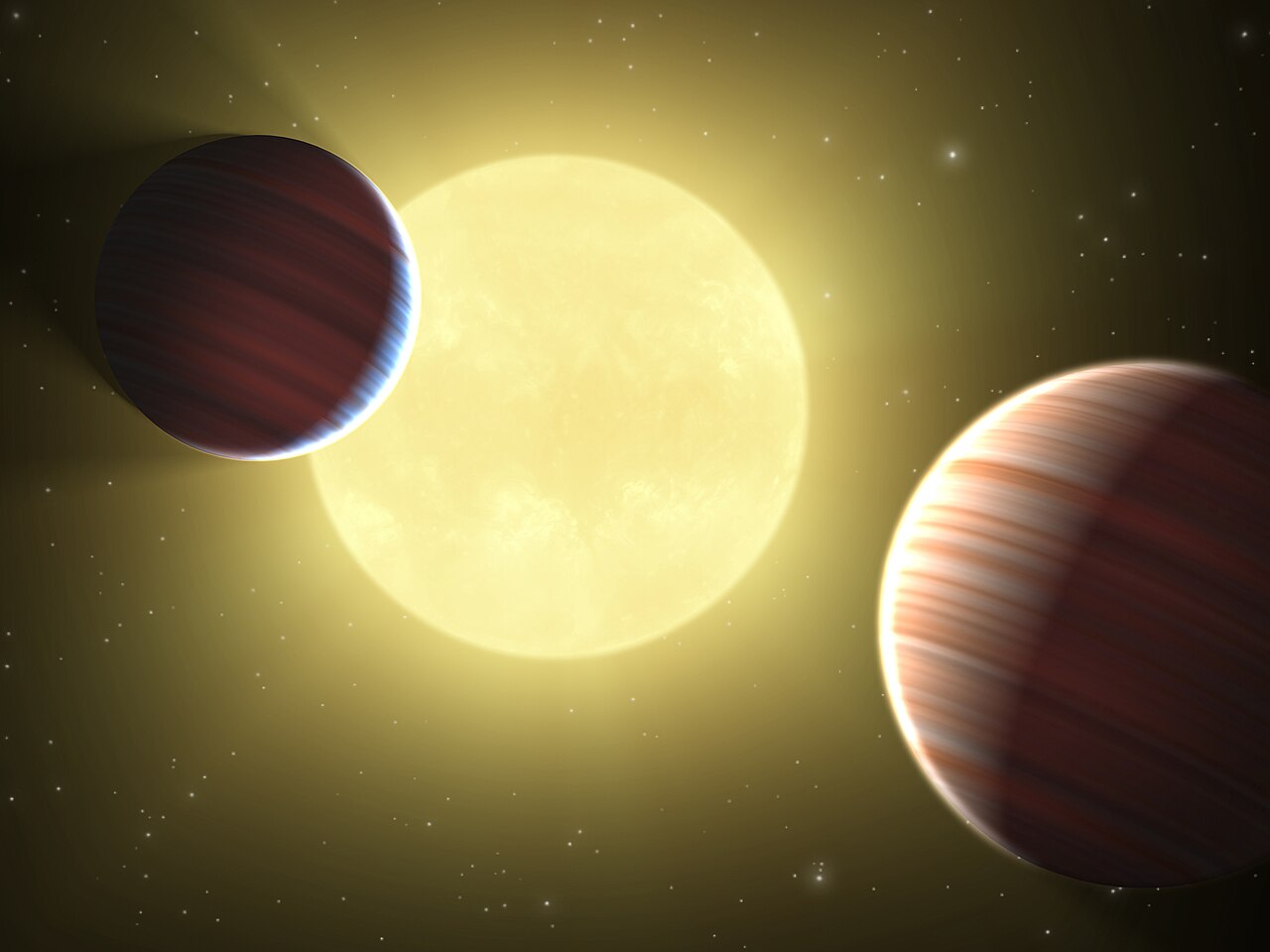
One of the most remarkable findings associated with Kepler-9b is the orbital resonance it shares with its sibling, Kepler-9c. The two planets' orbital periods correspond in an approximate 1:2 ratio, meaning that for every one lap Kepler-9b completes, Kepler-9c finishes roughly two. This gravitational interplay—each planet tugging on the other—serves to stabilize both orbits, and it represents the first confirmed case of such resonance among transiting exoplanets. Observations reveal that Kepler-9b's orbital period lengthens by about four minutes with each successive revolution, a trend that will eventually reverse, causing the period to shorten again. Over longer timescales, the pair's orbits oscillate slightly above and below the ideal 1:2 ratio. Alycia Weinberger of the Carnegie Institution has suggested that these gas giants likely formed farther from their star and migrated inward, with the resonance pattern offering clues about that migration history.
Naming, System Context, and Legacy
The designation "Kepler-9b" encodes a clear lineage: the "b" suffix marks it as the first exoplanet identified in orbit around the star Kepler-9, which itself bears the name of NASA's Kepler Mission. That mission was built with the explicit goal of finding Earth-like worlds, and the Kepler-9 system was one of the earliest fruits of that effort. Three planets—Kepler-9b, Kepler-9c, and Kepler-9d—have been detected in this system, all through the transit method, and Kepler-9b is the largest among them. The system's announcement in August 2010 was particularly significant because it constituted the first confirmed star system in which multiple planets were observed transiting the same star. This milestone validated the transit technique as a reliable tool for uncovering complex planetary architectures. In that sense, Kepler-9b's legacy extends well beyond its own physical properties; it helped establish a new observational paradigm in planetary science, demonstrating that a single star could harbor an entire family of detectable worlds.
Gallery
Frequently Asked Questions
What is Kepler-9b?
Kepler-9b is a gas giant exoplanet that circles the star Kepler-9 in the constellation Lyra. It is the largest of the three confirmed planets in that system and was identified by NASA's Kepler space telescope.
How large is Kepler-9b compared to familiar planets?
At roughly 43 Earth masses, it weighs about half as much as Saturn, while its radius comes in at approximately 80% of Jupiter's. That makes it a solid gas giant but noticeably smaller than Jupiter itself.
When and how was Kepler-9b discovered?
Its existence was confirmed on August 26, 2010, using the transit method, which detects the subtle dip in starlight as the planet crosses in front of its host star. It was announced as part of the first multi-planet system verified by the Kepler Mission.
What makes the Kepler-9 system notable?
The system was the first confirmed case of multiple planets all transiting their star, letting researchers study their orbits simultaneously. Kepler-9b, as the biggest member, anchors the system's overall architecture.
How long is Kepler-9b's orbit?
One full trip around Kepler-9 takes about 19.24 days, with the planet sitting roughly 0.14 AU from its star. That places it in a tight, warm orbit far closer than anything in our own solar system.
More in Transiting Exoplanets, Part 3 1-24
Spotted an error? Know more?
Reader corrections go straight into our review queue. Suggest an edit · How this site is sourced