Kepler-62b
Innermost super-Earth of the Kepler-62 system, hotter than Venus.
Kepler-62b is the innermost and second smallest known exoplanet orbiting the K-type star Kepler-62. Discovered via the transit method, it is a super-Earth with a diameter roughly 30% larger than Earth's and an equilibrium temperature of about 750 K, hot enough to melt some types of metal. Its stellar flux is 70 ± 9 times that of Earth.
Quick Facts
- Discoverer
- Borucki et al.
- Discovery Site
- Kepler Space Observatory
- Discovered
- 18 April 2013
- Discovery Method
- Transit (Kepler Mission)
- Apsis
- astron
- Semimajor
- 0.0553 ± 0.0005 AU
- Eccentricity
- ~0
- Period
- 5.714932 ± 0.000009 d
- Inclination
- 89.2 ± 0.4
- Star
- Kepler-62 (KOI-701)
- Single Temperature
- T / eq / : 750 K
Facts from the source article.
Lore & Background
Kepler-62b orbits its host star every 5 days at a distance of about 0.05 AU, receiving 70 times the sunlight Earth gets from the Sun. Its equilibrium temperature of 750 K is slightly higher than the surface temperature of Venus, sufficient to melt some metals. The planet's radius of 1.3 Earth radii places it below the estimated threshold of ≤1.6 Earth radii where it would otherwise be a mini-Neptune with a volatile composition and no solid surface. Its mass is not known, but an upper limit of <9 Earth masses has been estimated, with the actual mass expected to be significantly lower.
The host star Kepler-62 is a K-type star with a mass of 0.69 solar masses and a radius of 0.64 solar radii. It has a surface temperature of 4925 K and an age of 7 billion years, older than the Sun's 4.6 billion years. The star's apparent magnitude is 13.65, making it too dim to be seen with the naked eye. The system contains five known planets, with Kepler-62f having the longest orbital period.
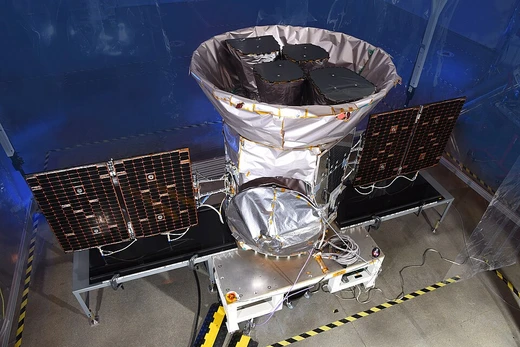
The discovery was made using NASA's Kepler spacecraft, which observed transits of the star between 13 May 2009 and 17 March 2012. The periodic 5-day dimming events led to the conclusion that a planetary body was responsible. The announcement of Kepler-62b and the Kepler-69 system occurred on April 18, 2013.
Reader's Guide
Kepler-62b is notable as the innermost planet in a five-planet system orbiting an older K-type star, providing a comparative example of a hot super-Earth with a radius below the threshold thought to separate rocky planets from volatile-rich mini-Neptunes. Its equilibrium temperature of 750 K, higher than Venus's surface temperature, and stellar flux 70 times Earth's place it firmly in the regime where surface metals could melt, though its actual composition and mass remain unmeasured. The planet's discovery via the transit method, using data collected over nearly three years, exemplifies the Kepler mission's capability to detect small planets around dim stars. The system's architecture—with five planets and a star older than the Sun—offers context for studying planetary system evolution and the diversity of super-Earths. Kepler-62b's radius of 1.3 Earth radii, below the 1.6 Earth radii threshold, suggests it likely retains a solid surface, distinguishing it from larger, volatile-rich worlds. Its short orbital period of 5 days and close proximity to its host star make it a benchmark for understanding the properties of hot, inner planets in multi-planet systems.
Did You Know?
- Kepler-62b has a diameter roughly 30% larger than Earth.
- The planet orbits its star at a distance of about 0.05 AU, closer than Mercury is to the Sun.
- Kepler-62b receives 70 ± 9 times as much sunlight as Earth.
More in Transiting Exoplanets, Part 3 1-24
Spotted an error? Know more?
Reader corrections go straight into our review queue. Suggest an edit · How this site is sourced