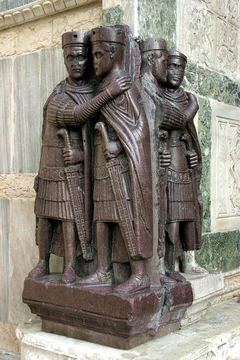
Galerius
Roman emperor who defeated Persia and ended Christian persecution.

Digitalphilologist · CC BY-SA 4.0
Gaius Galerius Valerius Maximianus, who lived from around 258 to May 311, ruled as Roman emperor from 305 until his death. He was a key figure in the Tetrarchy, the system of joint rule, initially serving as caesar under Emperor Diocletian. In this role, Galerius won a major campaign against the Persian Sasanian Empire, crushing King Narseh at the Battle of Satala in 298 and capturing his camp and family. He also fought across the Danube River against the Carpi, beating them in 297 and again in 300. Despite being a fierce enemy of Christianity, Galerius brought the Diocletianic Persecution to a close by issuing an edict of toleration from Nicomedia in 311.
Born in the Danube provinces, Galerius likely came from near Serdica or the site where he later built his mother’s namesake palace, Felix Romuliana (Gamzigrad), in what became Dacia Ripensis. An older villa beneath that palace is sometimes thought to be his actual birthplace. His father was a local Thraco-Roman, and his mother, Romula, was a Daco-Roman who had fled Roman Dacia (modern Romania) for New Dacia south of the Danube due to Carpi raids. Galerius first worked as a herdsman like his father, earning the nickname “Armentarius” (from the Latin for herd). He originally bore the cognomen “Maximinus” but switched to “Maximianus” after becoming caesar.
He served with distinction as a soldier under Emperors Aurelian and Probus. According to several ancient writers—Aurelius Victor, Jerome, Eutropius, the anonymous *Epitome de Caesaribus*, and the *Historia Augusta*—Galerius divorced an earlier wife to marry Diocletian’s daughter Valeria (later called Galeria Valeria), just as Constantius Chlorus supposedly divorced Helena to marry Maximian’s daughter Theodora. This claim likely comes from a shared, now-lost source, but some modern historians question its truth, suggesting it may stem from Constantine’s efforts to prove his mother Helena was a legal wife, not a concubine. The timing of these marriages is also debated. Several ancient sources say both weddings occurred in 293, but scholars like Julia Hillner and Máirín MacCarron point to panegyrics from as early as 289 that imply Chlorus was already a relative of Maximian. They argue both men became sons-in-law of the emperors before being raised to caesar in 293.
In 293, when the Tetrarchy was established, Galerius was named caesa
- known_for
- Victory over the Sasanian Empire at Satala (298), ending the Diocletianic Persecution with the Edict of Nicomedia (311)
Lore & Background
In 295 or 296, the Persian king Narseh declared war on Rome. After an initial Roman defeat near Carrhae, Galerius's army was reinforced and he led an offensive in 298 through Armenia. He defeated Narseh in two successive battles, the second being the Battle of Satala, where Roman forces seized Narseh's camp, treasury, harem, and wife. Galerius advanced into Media and Adiabene. Peace negotiations in 299 resulted in the Treaty of Nisibis, under which Persia ceded territory, making the Tigris the boundary, and Rome gained control over several satrapies. Galerius was promoted to augustus upon Diocletian's abdication in 305, but h
Reader's Guide
Galerius's significance lies in his military successes and his role in the Tetrarchy. His victory over the Sasanian Empire at Satala in 298 secured Rome's eastern frontier for a generation, with the Peace of Nisibis extending Roman influence into Armenia and Mesopotamia. As a key figure in Diocletian's Tetrarchy, he became augustus in 305, but the system's collapse under pressure from usurpers marked the end of a stable imperial college. His legacy is also defined by his religious policy: though a staunch opponent of Christianity, he issued the Edict of Serdica in 311, ending the Diocletianic Persecution. This edict, issued on his deathbed, granted Christians toleration and marked a turning point in the empire's relationship with the faith. The disputed details of his marriage and the uncertainty over whether Ctesiphon was sacked reflect the challenges of reconstructing his life from fragmentary and sometimes contradictory ancient sources.
Did You Know?
- Galerius was nicknamed 'Armentarius' (herdsman) because he originally followed his father's occupation as a herdsman.
- He defeated the Carpi across the Danube in 297 and 300.
- The Edict of Serdica, issued in 311, ended the Diocletianic Persecution of Christians.
- Some historians dispute whether Galerius divorced an earlier wife to marry Diocletian's daughter Valeria.
Galerius's Ascent to the Imperial Apex
Galerius entered the highest echelon of Roman power in March 293, when Diocletian—having already established a diarchy with Maximian—judged that the empire's civic and military demands required additional leadership. With Maximian's consent, Diocletian expanded the imperial college by naming two caesares: Galerius and Constantius I, each attached to one of the senior augusti. The rank carried deliberate mythological weight; the augustus was likened to Jupiter, while his caesar was cast in the mold of Hercules, Jupiter's son. For two years Galerius served in this junior capacity alongside his senior. Then, on 1 May 305, Diocletian and Maximian jointly abdicated and withdrew from public life. In their place, Galerius and Constantius were elevated to the rank of augustus, and two new caesares—Valerius Severus and Maximinus Daza—were appointed to fill the junior seats. Galerius thus stood at the very apex of the system he had helped construct.
Galerius as the Tetrarchy's Last Architect
After Constantius's death in July 306 shattered the neat four-man structure, Galerius found himself the senior augustus in an empire fracturing into rival claims. Maxentius, son of the retired Maximian, seized Rome, styling himself princeps invictus and later receiving the title caesar from his father. Constantine, acclaimed unilaterally by his father's army, broke the chain of succession entirely. Galerius responded not with military force alone but with the same institutional tool he had inherited: in 308 he appointed Licinius as augustus for the western half, and in 310 he elevated Maximinus Daza to augustus in the east. These moves were attempts to reassert the principle that legitimate authority flowed through the college rather than through unilateral acclamation. Yet the framework he was trying to preserve was already beyond repair. By 312, Constantine's victory at the Milvian Bridge had given him the west, and the death of Maximinus Daza left Licinius with the east—two men, not four, and the tetrarchic structure was effectively dead.
A College, Not a Quadruple Kingdom
The Diocletianic arrangement was not, strictly speaking, a tetrarchy in the sense the word carried in antiquity. The Greek term tetrarchia, meaning leadership of four, had described entities like the tetrarchy of Judaea, where four independent rulers each governed a quarter of a kingdom as they saw fit. Pliny the Elder captured this older meaning: each portion was the equivalent of a kingdom and also part of one. The Diocletianic system was fundamentally different. It was a college with a single supreme leader at its head, not four sovereigns in parallel. Ammianus recorded Constantius II reminding Gallus of the submission owed by Diocletian's lesser colleagues, and Julian compared the tetrarchs to a chorus speaking in unison under one conductor. Only Lactantius, a bitter ideological opponent of the regime, reduced it to a mere multiplicity of rulers. The four tetrarchs based themselves in frontier cities—Nicomedia among them—rather than Rome, which retained its nominal status under a unique urban prefect. The very term tetrarchy for this system was a later scholarly coinage, first appearing in print in 1887.
Collapse, Civil War, and the Long Shadow of Collegial Rule
The tetrarchic order endured in name until roughly 324, but its practical life ended in a cascade of mutually destructive civil wars. Constantine and Licinius, the last two surviving claimants, had briefly recognized their sons—Crispus, Constantine II, and Licinius II—as caesares in March 317, a gesture echoing the old system's logic of designated succession. That fragile arrangement crumbled. Licinius ultimately resigned his title as augustus after his defeat at the Battle of Chrysopolis, leaving Constantine master of the entire empire. Yet the ghost of collegiate rule persisted. Constantine himself appointed his son Constantius II as caesar in 324, followed by Constans in 333 and his nephew Dalmatius in 335. When the three surviving sons of Constantine were declared joint augusti in 337, the principle of shared, divided sovereignty was still alive. The concept of dividing the empire among multiple joint emperors endured until the Fall of the Western Roman Empire, and in the East the titles of augustus and caesar continued to be conferred sporadically for centuries.
Gallery

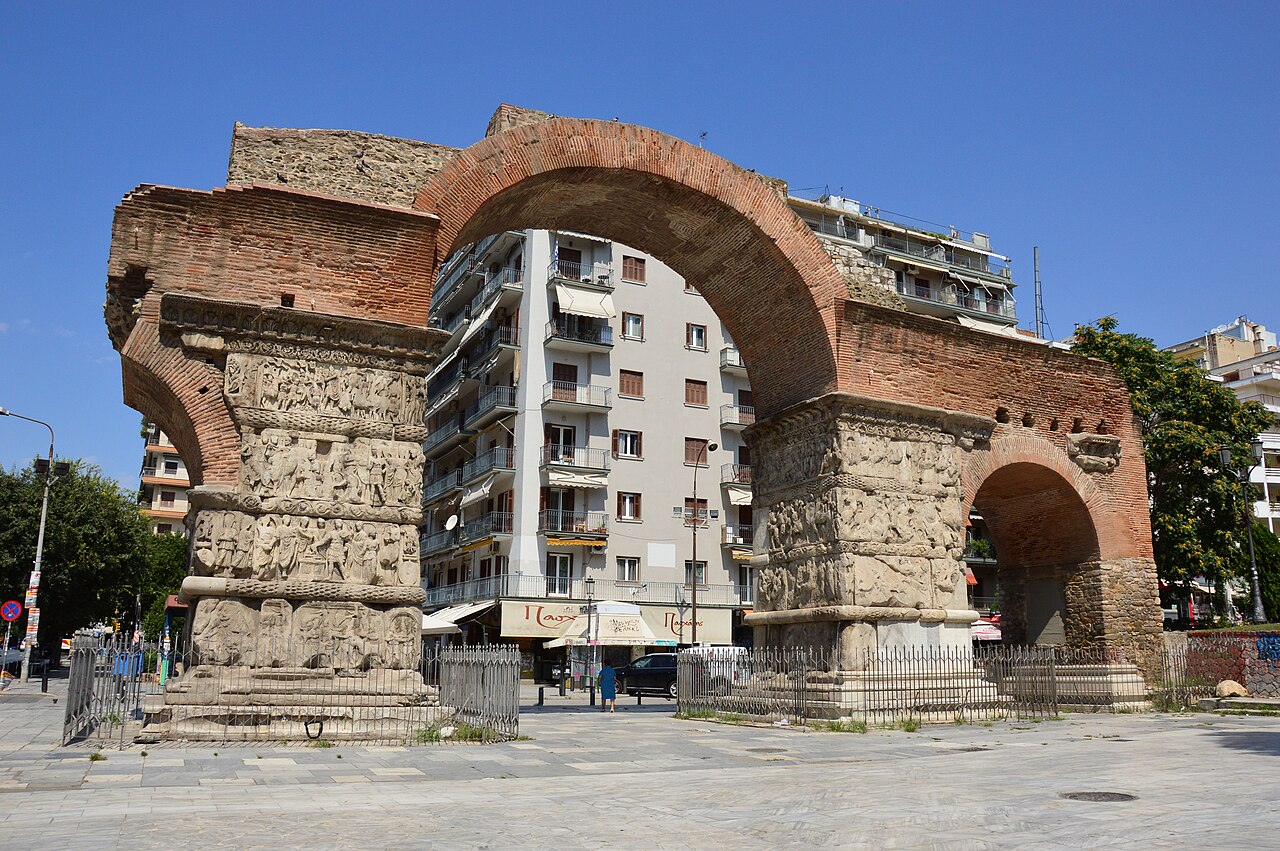

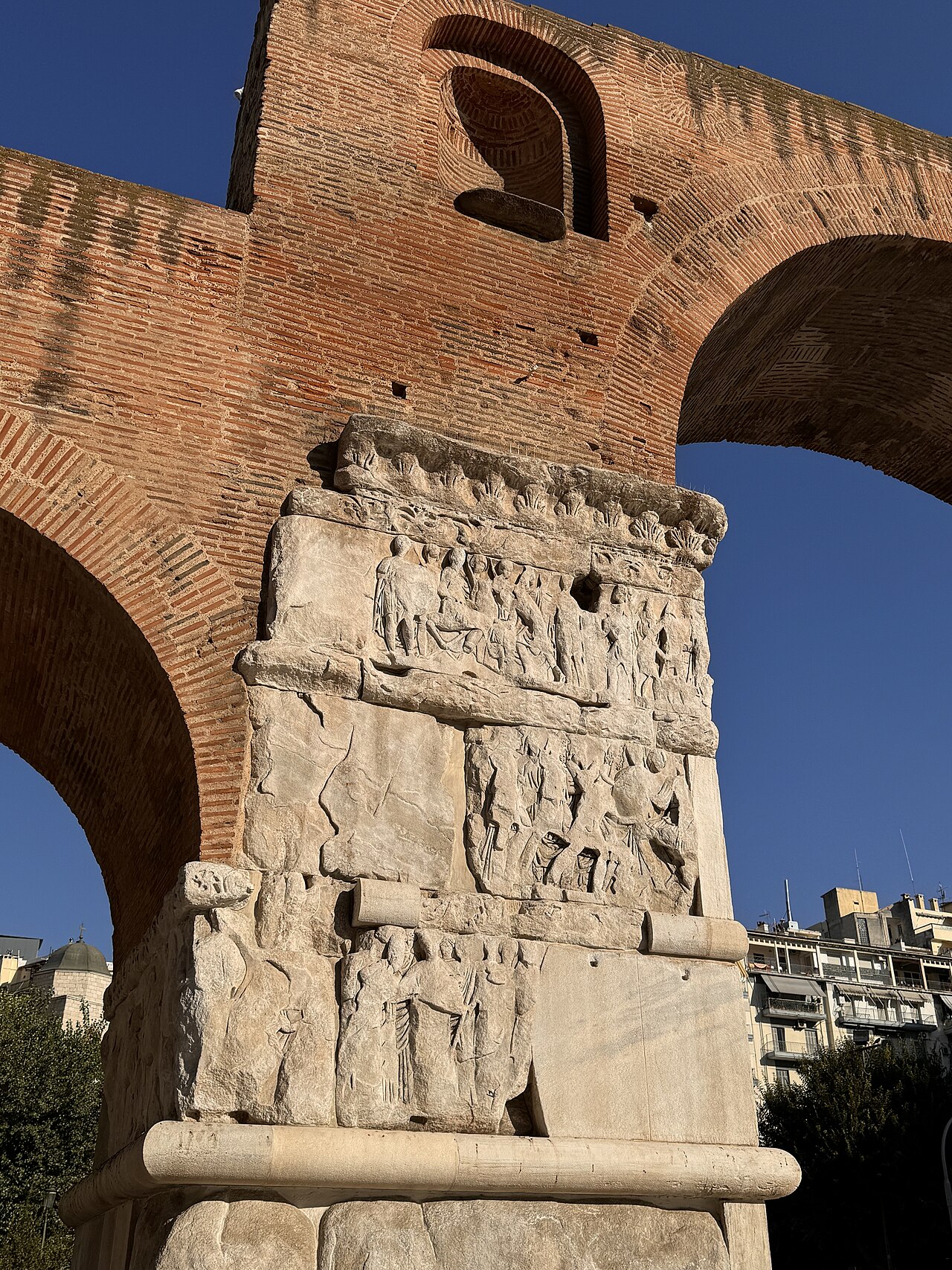
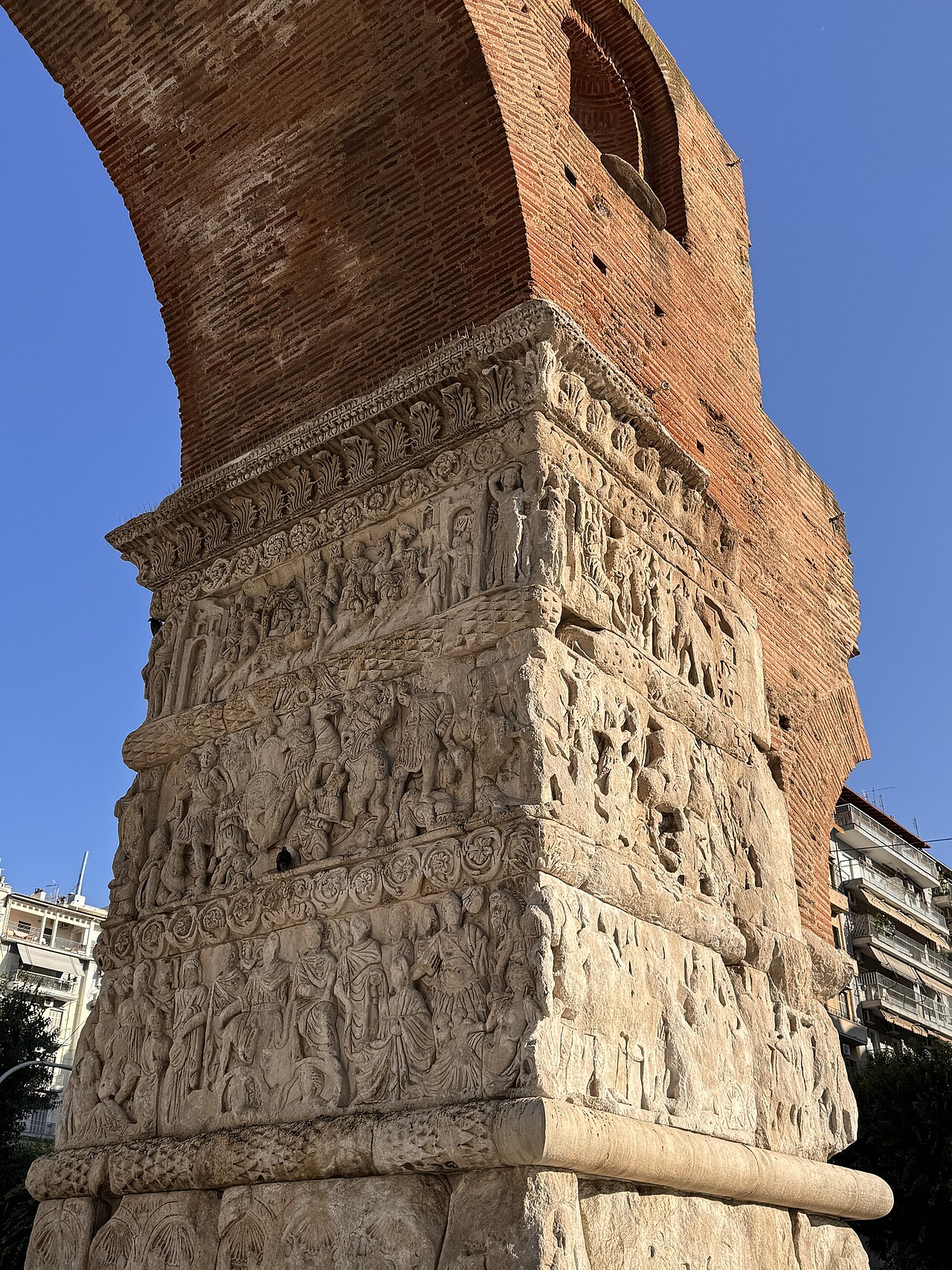
Frequently Asked Questions
Who was Galerius?
Galerius was a Roman emperor who ruled from 305 until his death in 311. He rose through the Tetrarchy as Diocletian's caesar before becoming one of the four joint rulers of the empire.
What was Galerius's role in the Tetrarchy?
He initially served as caesar under Diocletian, handling the eastern and Balkan frontiers. After Diocletian's abdication in 305, Galerius became one of the two senior augusti, governing the eastern provinces.
What was Galerius's most famous military victory?
In 298, he decisively defeated the Sasanian king Narseh at the Battle of Satala, capturing the Persian royal camp and family. This victory ended a long-running conflict between Rome and Persia.
How did Galerius's persecution of Christians end?
Despite being a fierce opponent of Christianity and driving the Diocletianic Persecution, Galerius issued the Edict of Nicomedia in 311. This edict granted Christians freedom of worship, effectively ending the empire-wide campaign against them.
When did Galerius die?
Galerius died in May 311, reportedly after a prolonged and agonizing illness. His death marked the end of his reign as one of the Tetrarchy's senior emperors.
More in Tetrarchy 1-24
Spotted an error? Know more?
This is a living reference — every entry is fact-audited, and reader corrections feed straight into our audit queue. Suggest an edit · See this site's audit record