Constantine II (emperor)
Roman emperor who died invading his brother's territory.

ANS · CC0
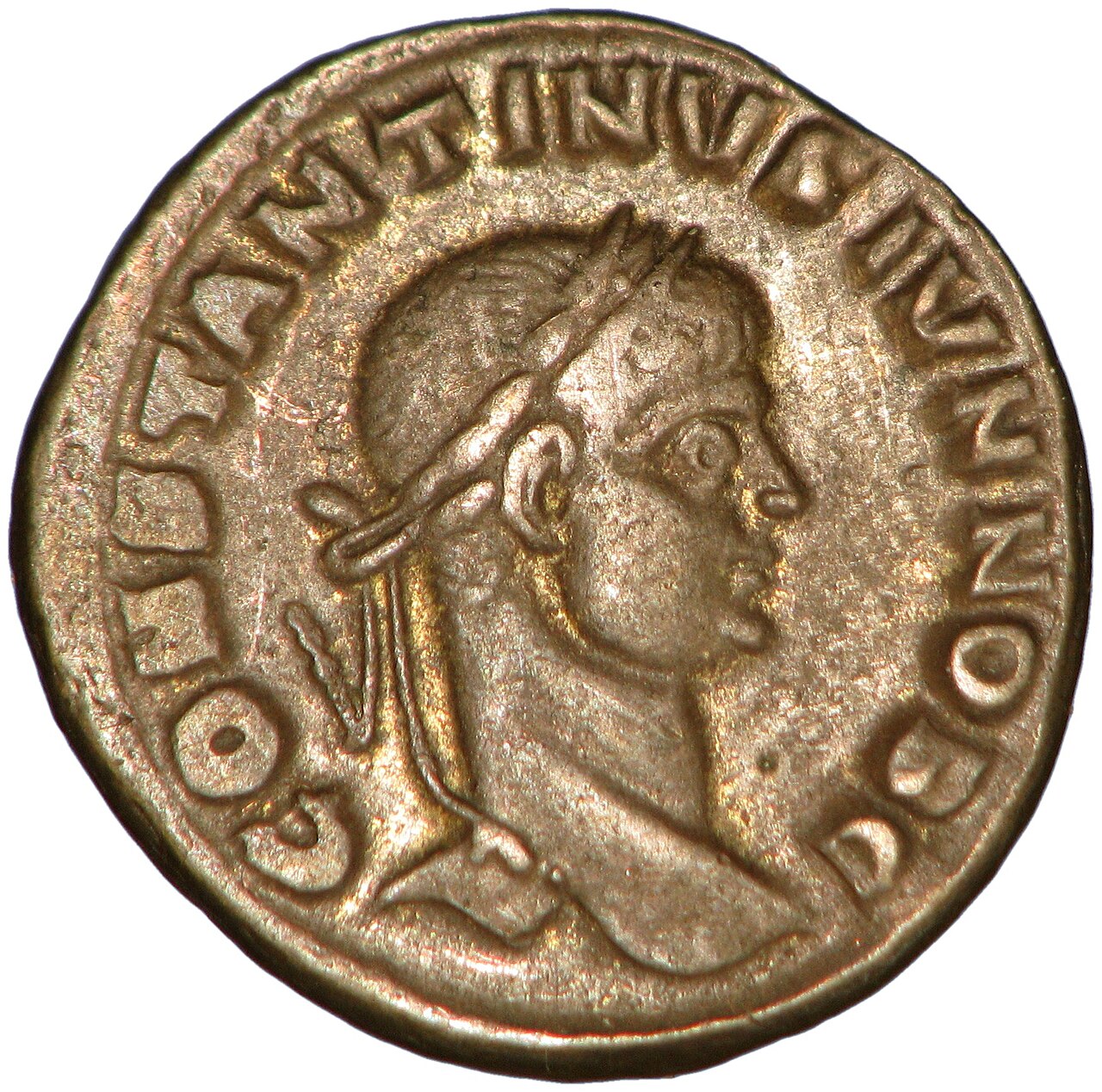
Constantine II (Flavius Claudius Constantinus, 317–340) ruled as Roman emperor from 337 until his death in 340. He was the second son of Constantine I and the eldest child from that emperor’s second marriage to Fausta, daughter of the emperor Maximian. Shortly after his birth, his father named him caesar. Over his career, he was credited with military successes against the Sarmatians, Alamanni, and Goths, earning several victory titles. He served as consul five times, in 320, 321, 324, 329, and 339.
Constantine I had planned for his sons to share power with their cousins Dalmatius and Hannibalianus, but Constantine II and his brothers rejected this arrangement. After their father’s death, the army—acting on the orders of all three brothers collectively—killed many male relatives, including Dalmatius and Hannibalianus, removing any rivals to the succession of Constantine I’s sons. Constantine II then became emperor alongside his two younger brothers, governing Gaul, Hispania, and Britain. However, his conviction that his birthright gave him seniority—and his attempts to assert that authority over his youngest brother, Constans—led to conflict. This ended when he died during a failed invasion of Italy in 340. Constans then took over Constantine’s territories, and Constantine II was subjected to *damnatio memoriae*.
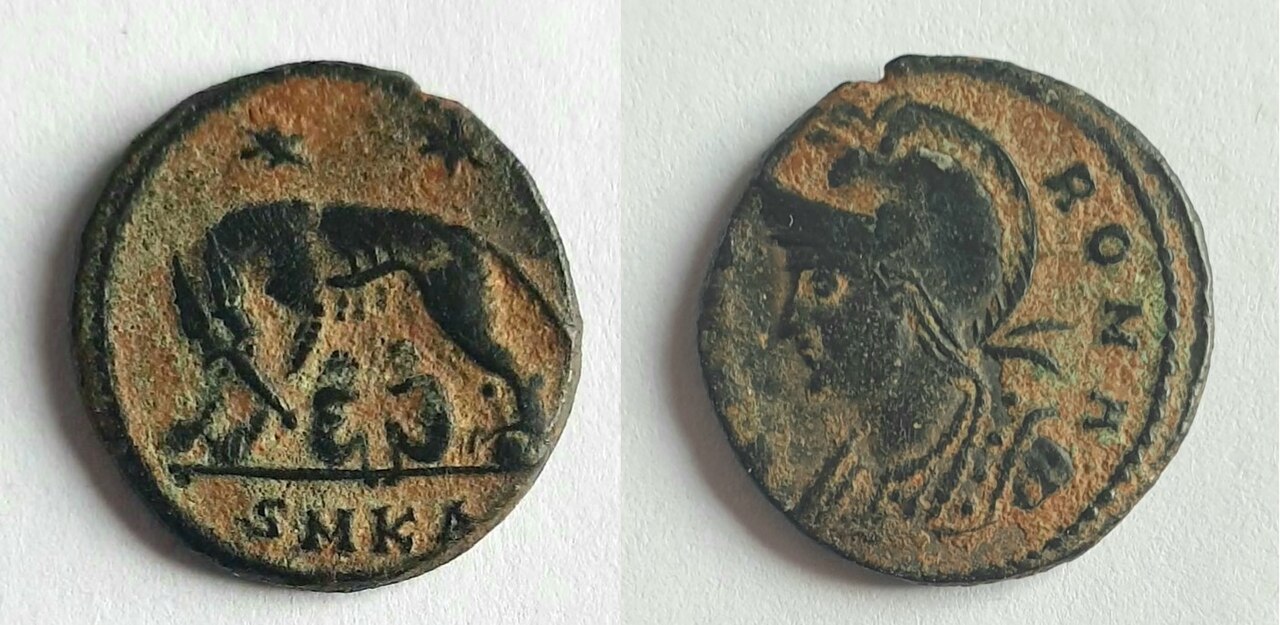
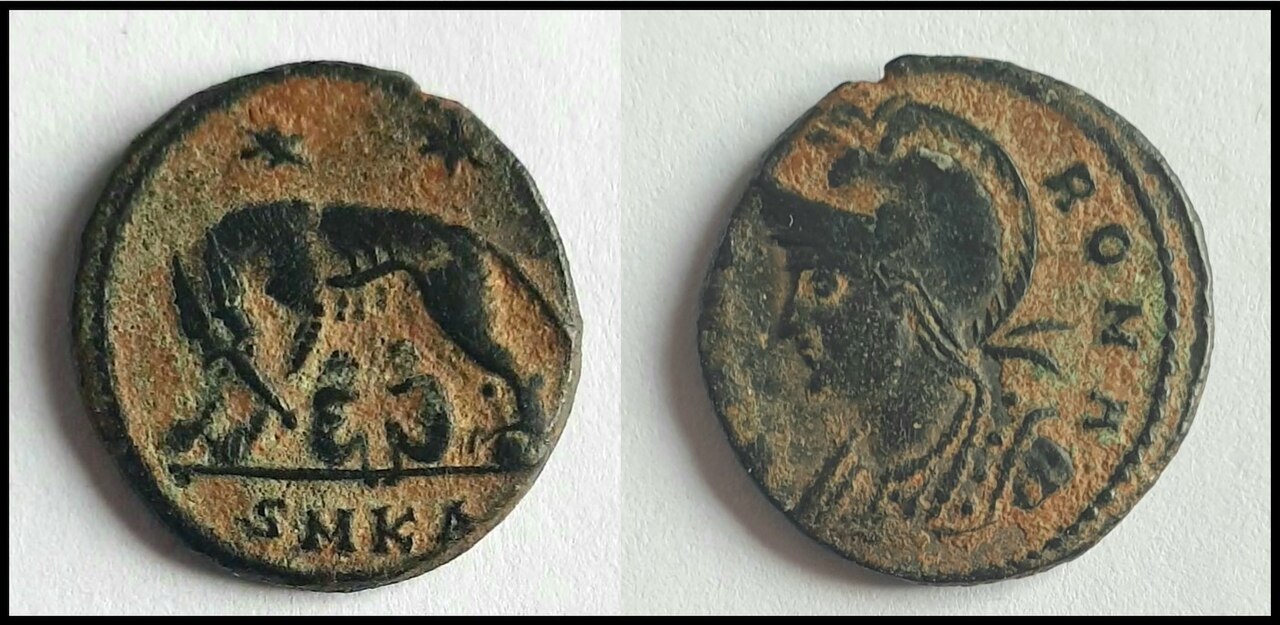
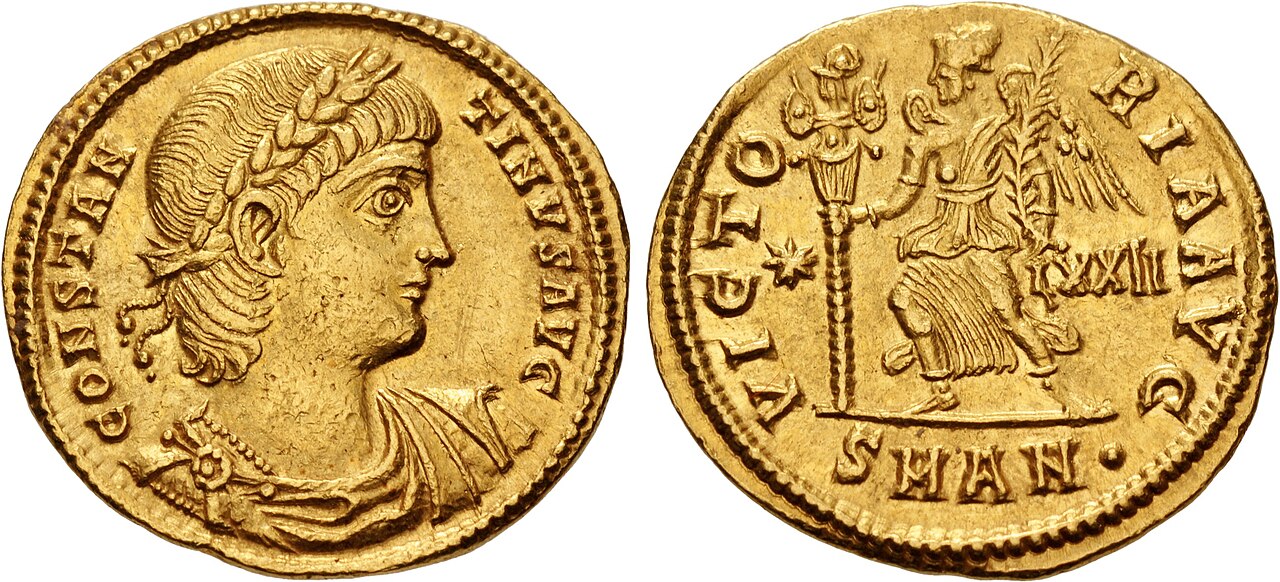
Born in Arles in 317, Constantine II was made caesar at Serdica on 1 March 317. He accompanied his father on a campaign against the Sarmatians in 323, and coins were later minted to commemorate the victory. Until 328, he usually lived with his father, after which his own court was established at Trier. An inscription from 328–330 gives him the title Alamannicus, indicating a victory over the Alamanni by his generals. In 332, Constantine I put him in field command during a winter campaign against the Goths; the operation reportedly killed 100,000 Goths and forced the surrender of their ruler, Ariaric. Festival games in Rome celebrated his role in these campaigns, publicly advertising his fitness to rule. He was married before 336, but his wife’s identity is unknown. David Woods has suggested she may have been a half-cousin, possibly a daughter of Julius Constantius, since Constantine minted coins of his grandfather’s second wife, Flavia Maximiana Theodora. Another theory, from Barnes, is that she could have been a daughter of Flavius Optatus.
Thou
- born
- 317, Arles
- known for
- Conflict with his brother Constans; damnatio memoriae after death
Quick Facts
- Succession
- Roman emperor
- More Text
- in the West
- Reign
- 9 September 337 – April 340 (Gaul, Hispania, and Britain)
- Reign Type
- Augustus
- Predecessor
- Constantine I
- Successor
- Constans
- Regent
- Constantius II (East) / Constans (Italy, Illyricum and Africa)
- Reg Type
- Co-emperors
- Reign1
- 1 March 317 – 9 September 337
- Reign Type1
- Caesar
- Birth Date
- 316
- Birth Place
- Arelate, Viennensis
Facts from the source article.
Lore & Background
Constantine II was born in Arles in 317, the second son of Constantine I and probably the eldest with his wife Fausta. He was made caesar on 1 March 317 at Serdica. He accompanied his father on a campaign against the Sarmatians in 323 and was commemorated on coinage for the victory. By 328 his own court was installed at Trier. An inscription from 328–330 records the title Alamannicus, indicating a victory over the Alamanni. In 332 he served as field commander during a winter campaign against the Goths, which reportedly resulted in 100,000 Goths slain and the surrender of their ruler Ariaric. Festival games were initiated in Rome to celebrate his role. He was married prior to 336, though his wife's identity remains unknown; David Woods theorized she may have been a half-cousin, possibly a daughter of Julius Constantius, while Barnes suggested she could have been a daughter of Flavius Optatus.
Reader's Guide
Constantine II's significance lies in his brief and contentious reign as one of the three sons of Constantine I who divided the empire after their father's death. His belief in his rights of primogeniture led him to assert seniority over his youngest brother Constans, resulting in legislative intervention in Constans's territory and ultimately a failed invasion of Italy in 340, where he was killed in an ambush near Aquileia. After his death, he was subjected to damnatio memoriae: his acts were repealed, and he was branded 'the public enemy and our own enemy.' Later panegyrics omitted him entirely. His legacy is thus one of overreach and erasure, though his early military career and role in the massacre of relatives (ordered by his brother Constantius II) shaped the political landscape of the Constantinian dynasty.
Did You Know?
- Constantine II was made caesar at Serdica on 1 March 317, shortly after his birth.
- He held the consulship four times: in 320, 321, 324, and 329.
- After his death, Constans issued legislation repealing Constantine's acts, branding him 'the public enemy and our own enemy.'
- His wife's identity remains unknown; one theory suggests she may have been a granddaughter of Flavia Maximiana Theodora.
The Architecture of Shared Power
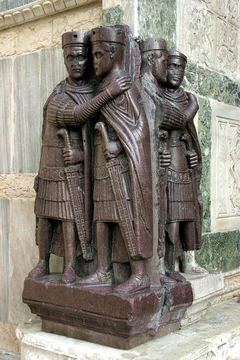
Diocletian's reimagining of imperial governance began not with four rulers but with two. In 285 he named the general Maximian as his caesar, a junior heir-apparent role, and elevated him to co-augustus the following year. The division was geographic: Maximian would oversee the western provinces while Diocletian administered the east. The symbolic language was deliberately mythological—the augustus was compared to Jupiter, his caesar to Hercules, the divine son. By March 293, Diocletian judged that the empire's civic and military pressures demanded more hands, so with Maximian's consent he added two further caesares: Galerius under the eastern augustus and Constantius under the western one. When both senior emperors retired together on 1 May 305, Constantius and Galerius stepped up to the top rank, and two fresh caesares—Valerius Severus in the west and Maximinus Daza in the east—filled the junior slots. For a brief, orderly span, the empire ran on this neat two-by-two grid.
The Unraveling
The carefully calibrated succession plan shattered almost immediately after Constantius's death in July 306. His son Constantine was proclaimed both augustus and caesar by his father's troops, a unilateral act that no one in the existing college had authorized. In the west, Maxentius challenged Severus's claim, took the title princeps invictus, and secured his own caesarship from his retired father Maximian. Severus capitulated to the pair by 307. Meanwhile Galerius, seeking to restore order, installed Licinius as western augustus in 308 and later raised Maximinus Daza to the same rank in 310. The empire now had more claimants than the original design allowed. Constantine's decisive victory over Maxentius at the Milvian Bridge in 312 gave him the west; the death of Maximinus left Licinius with the east. In March 317 the two surviving augusti jointly recognized their sons—Crispus, Constantine II, and Licinius II—as caesares, a gesture that preserved the old terminology even as the old structure was already dissolving. By 324, after the Battle of Chrysopolis, Licinius had resigned, and Constantine stood alone over the entire empire.
The Aftermath and Enduring Collegiate Tradition
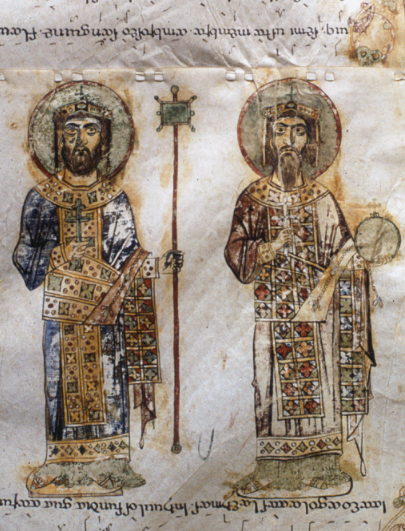
Even after Constantine consolidated sole authority around 324, he did not abandon the language and practice of shared rule. He appointed his son Constantius II as caesar that same year, followed by Constans in 333 and his nephew Dalmatius in 335. When Constantine died in 337, his three surviving sons were declared joint augusti simultaneously, a direct echo of the earlier multi-ruler principle. The broader concept of dividing the empire among several co-emperors persisted for centuries, surviving all the way to the Fall of the Western Roman Empire. In the Eastern Roman Empire, the titles of augustus and caesar continued to be conferred sporadically long after the original four-person college had ceased to exist. The tetrarchic framework thus outlived its creator by many generations, morphing from a rigid two-by-two grid into a flexible tradition of collegiate sovereignty that shaped how the Roman state understood the distribution of supreme power.
What the Word Actually Meant
The label 'tetrarchy,' derived from the Greek for 'leadership of four,' was never actually applied to Diocletian's imperial college by the ancient authors who lived through it. In the classical usage, a tetrarchy described four independent rulers each governing a quarter of a divided kingdom—the most famous example being the post-Herodian tetrarchy of Judaea. Pliny the Elder captured the idea: each portion was 'the equivalent of a kingdom, and also part of one.' That conception of four sovereign, separate states stood in sharp contrast to the Diocletianic arrangement, which was a single college headed by one supreme leader. Ammianus recorded Constantius II invoking Diocletian's subordinates as models of obedience; Julian likened the tetrarchs to a chorus singing in unison under a conductor. Only Lactantius, a bitter ideological foe of the regime, treated them as a simple plurality of rulers. The term did not enter scholarly usage until Hermann Schiller in 1887, and it did not become standard until Otto Seeck adopted it in 1897.
Gallery
Frequently Asked Questions
Who is Constantine II (emperor)?
Constantine II, born Flavius Claudius Constantinus in Arles in 317, was the second son of Constantine I and the eldest child of his second wife Fausta. He held the title of caesar from shortly after his birth and eventually became Roman emperor in 337.
What were Constantine II's powers and role in the tetrarchy?
Constantine I had designed a succession plan in which his sons would divide imperial authority alongside their cousins Dalmatius and Hannibalianus, giving Constantine II a share of governing power. He also served as consul on five separate occasions between 320 and 339, underscoring his senior political standing.
How does Constantine II's story end?
In 340, Constantine II marched his army into the territory of his brother Constans, violating the territorial division they had agreed upon. He was killed in the resulting battle, and his memory was subsequently struck from official records through damnatio memoriae.
Why is Constantine II important to the tetrarchy's history?
His brief reign and violent death illustrated how fragile the power-sharing arrangements Constantine I had crafted truly were, as internal rivalry among the imperial family quickly collapsed the system. His conflict with Constans became a cautionary example of how sibling disputes could destabilize the entire imperial structure.
What military successes is Constantine II credited with?
During his career he led campaigns against the Sarmatians, the Alamanni, and the Goths, earning multiple victory titles from the Senate for those triumphs. These engagements helped cement his reputation as a capable field commander before his political ambitions turned against his own brother.
More in Tetrarchy 1-24
Spotted an error? Know more?
This is a living reference — every entry is fact-audited, and reader corrections feed straight into our audit queue. Suggest an edit · See this site's audit record