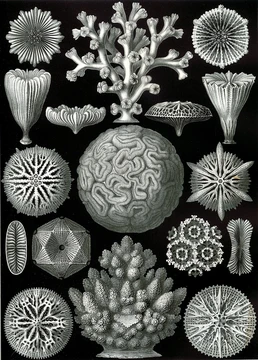
Dactylotrochus
Monotypic deep-sea coral genus from the Red Sea and western Pacific.

Dactylotrochus is a genus of large, stony corals found in the Red Sea and western Pacific. It is monotypic, with the sole species being *Dactylotrochus cervicornis*. This coral lives in deep water and lacks symbiotic algae, making it azooxanthellate.
The solitary coral *D. cervicornis* has a sturdy build, with a short pedicel about 15 millimeters wide and an encrusting base. Its maximum dimensions reach 28 by 19 millimeters in diameter and 37 millimeters in height. The central depression, or fossa, is elongated, and the calyx is deep. As it grows, parts of the corallite wall and septa develop unevenly, forming two or more petal-like lobes that often curve back. The septa are very numerous, narrow except near the wall, and there is no central columella.
Originally placed in the family Caryophylliidae, genetic studies now place it in Agariciidae, a family otherwise composed of shallow-water, colonial corals. The family’s ancestor is thought to have been solitary and azooxanthellate, allowing solitary fossil species like *Trochoseris* to fit better into this group.
*D. cervicornis* is known from the Red Sea and various Indo-Pacific islands, including Guam, Hawaii, Palau, Vanuatu, and Wallis and Futuna, as well as the eastward slope of Bikini Atoll and Baie de Sandal in New Caledonia. It occurs at depths between 73 and 852 meters and is not a reef-building coral.
The polyp secretes calcium carbonate to build its skeleton. It extends tentacles to catch plankton and can also absorb dissolved organic matter from the water. Though assumed to be solitary, new polyps can bud from the base.
Quick Facts
- Taxon
- Dactylotrochus cervicornis
Facts from the source article.
Lore & Background
Dactylotrochus cervicornis is a sturdy solitary coral with a short pedicel and an encrusting base. Its maximum recorded size is 28 by 19 millimeters in diameter and 37 millimeters high. The coral has an elongated fossa and a deep calyx, and as it grows, parts of the corallite wall and septa develop unevenly, forming two or more petal-like lobes that often recurve. The septa are very numerous, narrow except near the corallite wall, and there is no central columella.
Reader's Guide
Originally classified in the family Caryophylliidae, phylogenetic studies have since placed Dactylotrochus in the family Agariciidae, despite other members of that family being shallow-water, colonial corals. This reclassification suggests that the ancestor of Agariciidae was likely solitary and azooxanthellate, and solitary fossil species such as Trochoseris can now be better accommodated in this family. The species is not considered hermatypic (reef-building) and is known from depths of 73 to 852 meters across the Red Sea and various Indo-Pacific islands. The polyp secretes calcium carbonate to build its skeleton, spreads tentacles to catch plankton, and can also absorb dissolved organic matter. Although assumed to be solitary, new polyps can bud from the base.
Did You Know?
- Dactylotrochus is monotypic, with only one species: Dactylotrochus cervicornis.
- It is azooxanthellate, meaning it lacks symbiotic algae.
- Its depth range extends from 73 to 852 meters.
- New polyps can bud from the base, despite being assumed solitary.
More in Stony Corals 1-24
Spotted an error? Know more?
Reader corrections go straight into our review queue. Suggest an edit · How this site is sourced