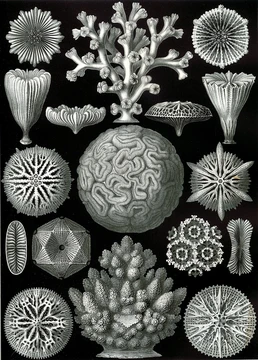
Corals of the World (website)
Open access reference for stony coral taxonomy and identification.

Corals of the World is an open access website focused on the taxonomy, biogeography, and identification of zooxanthellate Scleractinia, also known as stony corals, the main builders of coral reefs. It supersedes and expands the three-volume book of the same name, making its content globally available.
Quick Facts
- Authors
- J. E. N. Veron · M. Stafford-Smith · E. Turak · L.M. DeVantier
- Commercial
- No
- Registration
- Optional
- Language
- English
- Current Status
- Online
Facts from the source article.
Lore & Background
The website was created by J. E. N. Veron, an Australian biologist and pioneer in coral studies, together with Mary Stafford-Smith, and with collaboration from Lyndon DeVantier, Emre Turak, and many contributors worldwide. Its beta version was put online in 2016. It supersedes, expands, and makes globally available the three-volume book Corals of the World by Veron and Stafford-Smith, which was an important reference in academia and the reef aquarism industry. The development is sponsored by the Corals of the World Foundation, a non-profit organization. The Australian Institute of Marine Science includes the website in its Data Repository as a resource for research, conservation, education, and policy-making.
Reader's Guide
Corals of the World is notable as a freely accessible, comprehensive online resource dedicated solely to zooxanthellate Scleractinia. It builds upon the established three-volume book by Veron and Stafford-Smith, expanding its reach to a global audience. The website is hosted in the Australian Institute of Marine Science Data Repository, underscoring its value for research, conservation, education, and policy-making. Its open access nature makes it useful not only for scientists but also for serious reef aquarists seeking deeper knowledge of stony corals. The project is sponsored by the Corals of the World Foundation, a non-profit, and was developed with international collaboration. By providing up-to-date taxonomic and biogeographic information, it serves as a key reference in both academic and hobbyist contexts, continuing the legacy of the print edition while leveraging digital accessibility.
Mission and Taxonomic Focus
Corals of the World Online sets out to become a fully comprehensive, continuously updated digital reference for the study of stony corals. Rather than covering all cnidarians broadly, the project narrows its scope to a single, ecologically pivotal group: the zooxanthellate Scleractinia, the order within Cnidaria recognized as the principal builder of coral reefs. Within that focus, the site addresses three interlocking subjects—coral taxonomy, biogeography, and identification—so that a user can trace a species from its formal classification to its geographic range and learn to recognize it in the field. The open-access model is central to the project's identity: no subscription or institutional login is required, meaning the resource is as available to an independent researcher in a remote country as it is to a faculty member at a well-funded university. By committing to keep its content both comprehensive and current, the site aspires to serve as a single, living reference that evolves alongside coral science rather than becoming a static snapshot of knowledge at the moment of publication.
Founders and Collaborative Community
The project was conceived by J. E. N. Veron, an Australian biologist widely regarded as a pioneer in coral research and commonly known by his nickname "Charlie," together with Mary Stafford-Smith. Their vision, however, was never meant to be a two-person effort. Lyndon DeVantier and Emre Turak joined as key collaborators in shaping the site's development, and the project has drawn contributions from a broad network of contributors working in various parts of the world. This distributed, international model of authorship reflects the global nature of coral science itself, where new species are described and range data is refined by researchers on every continent that borders a reef. The beta version of the website went live in 2016, marking the first time the full breadth of the team's collective knowledge was made available in a single online platform. Since then, the collaborative structure has allowed the resource to grow organically, with new entries and corrections flowing in from the wider community of coral specialists and enthusiasts alike.
Superseding a Landmark Print Reference
Before the website existed, the definitive printed treatment of stony coral taxonomy was the three-volume book Corals of the World, authored by Veron and Stafford-Smith. That work had already established itself as a cornerstone reference, cited and relied upon both within academic marine biology departments and across the reef aquarism industry, where hobbyists and professionals alike needed a reliable guide to species identification. The online project was deliberately designed to go beyond what the book could offer. It supersedes the print edition by making the material globally and instantly accessible, expands it by incorporating new taxonomic revisions, range updates, and identification details that postdate the book's publication, and removes the physical and financial barriers that limited who could consult a three-volume set. In effect, the website carries forward the scholarly authority of the original volumes while unlocking their content for a far wider and more geographically diverse audience than a printed book could ever reach.
Institutional Recognition and Open Access Philosophy
The website's commitment to free, unrestricted access has earned it a place within formal institutional frameworks. The Australian Institute of Marine Science, a governmental research center, has included Corals of the World in its official Data Repository, endorsing it as a resource relevant to research, conservation, education, and policy-making. That endorsement signals that the site is viewed not merely as a hobbyist's guide but as a tool that can inform how governments and agencies approach reef management and protection. Financially, the project is sustained by the Corals of the World Foundation, a non-profit organization that sponsors the site's ongoing development, ensuring that the resource remains free rather than being locked behind a commercial paywall. This combination of governmental recognition and non-profit stewardship means the platform can serve a genuinely global audience, from university students and professional taxonomists to dedicated reef aquarists who want to deepen their understanding of the stony corals they keep and study.
Frequently Asked Questions
Who is behind Corals of the World (website)?
The project was initiated by marine biologist J. E. N. Veron (Charlie Veron) together with Mary Stafford-Smith, with ongoing contributions from Lyndon DeVantier, Emre Turak, and a wider network of collaborators.
What is the role or 'power' of Corals of the World (website)?
It functions as a free, open-access reference covering the taxonomy, biogeography, and identification of zooxanthellate Scleractinia — the stony corals responsible for building most reef structures. In doing so, it supersedes and expands the earlier three-volume printed book of the same name, making that knowledge reachable by anyone with an internet connection.
When did Corals of the World (website) first go live?
A beta version of the site became available in 2016, marking the shift from a print-only resource to a living, globally accessible digital platform.
Who funds and hosts Corals of the World (website)?
The Corals of the World Foundation serves as the project's sponsor, while the Australian Institute of Marine Science Data Repository provides the underlying hosting infrastructure.
Why is Corals of the World (website) important to the stony-coral community?
It consolidates decades of taxonomic and biogeographic research into a single freely accessible online source, removing the paywalls and geographic barriers that once limited the original book. For reef ecologists, aquarists, and hobbyists alike, it has become the go-to identification and classification tool for Scleractinia worldwide.
More in Stony Corals 1-24
Spotted an error? Know more?
Reader corrections go straight into our review queue. Suggest an edit · How this site is sourced