Starfish regeneration
Starfish can regrow arms and, rarely, entire bodies from a limb.

384 · CC BY-SA 4.0
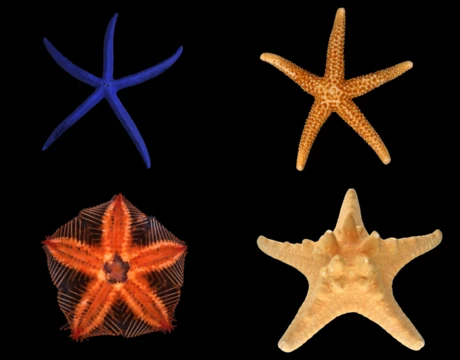
Starfish regeneration is the process by which starfish (sea stars) repair and replace lost or damaged body parts, most notably arms and, in some cases, entire bodies. This ability is a defining characteristic of the class Asteroidea and is notable for its range across species, from simple limb regrowth to the regeneration of a complete organism from a severed limb fragment. Starfish have become model organisms for studying the evolution and diversification of regenerative processes, though the underlying molecular mechanisms remain poorly understood.
- Regeneration phases
- three distinct phases: repair, early regenerative, and advanced regenerative
- Re epithelialization time
- within the first 48 hours post-amputation
- Regeneration duration
- a few months to over a year
- Regeneration categories
- three: unidirectional, disk-dependent bidirectional, disk-independent bidirectional
Lore & Background
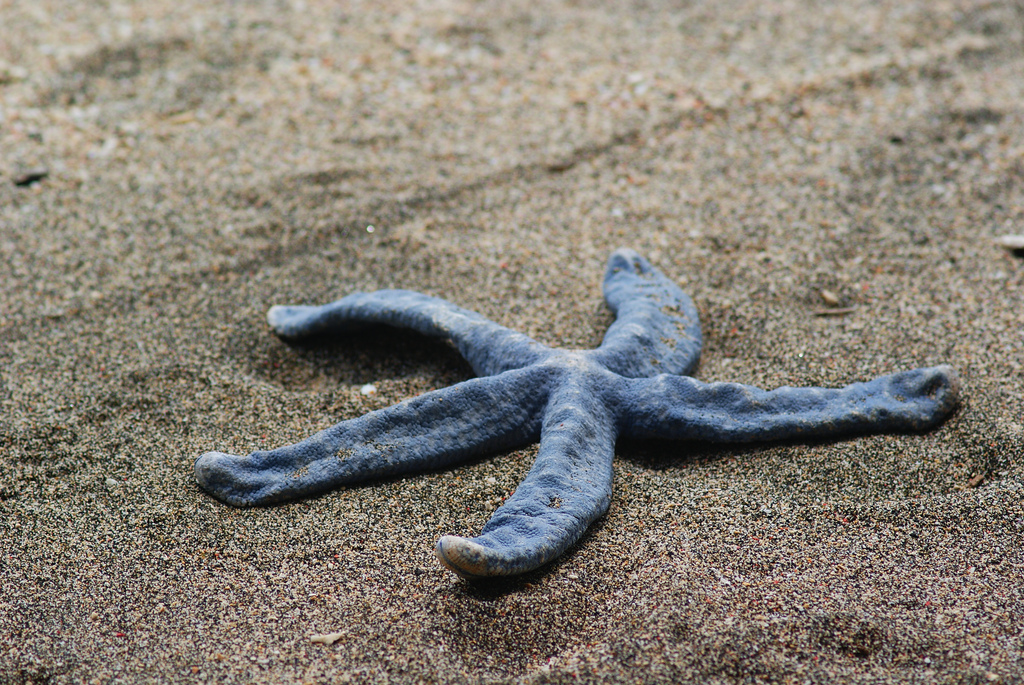
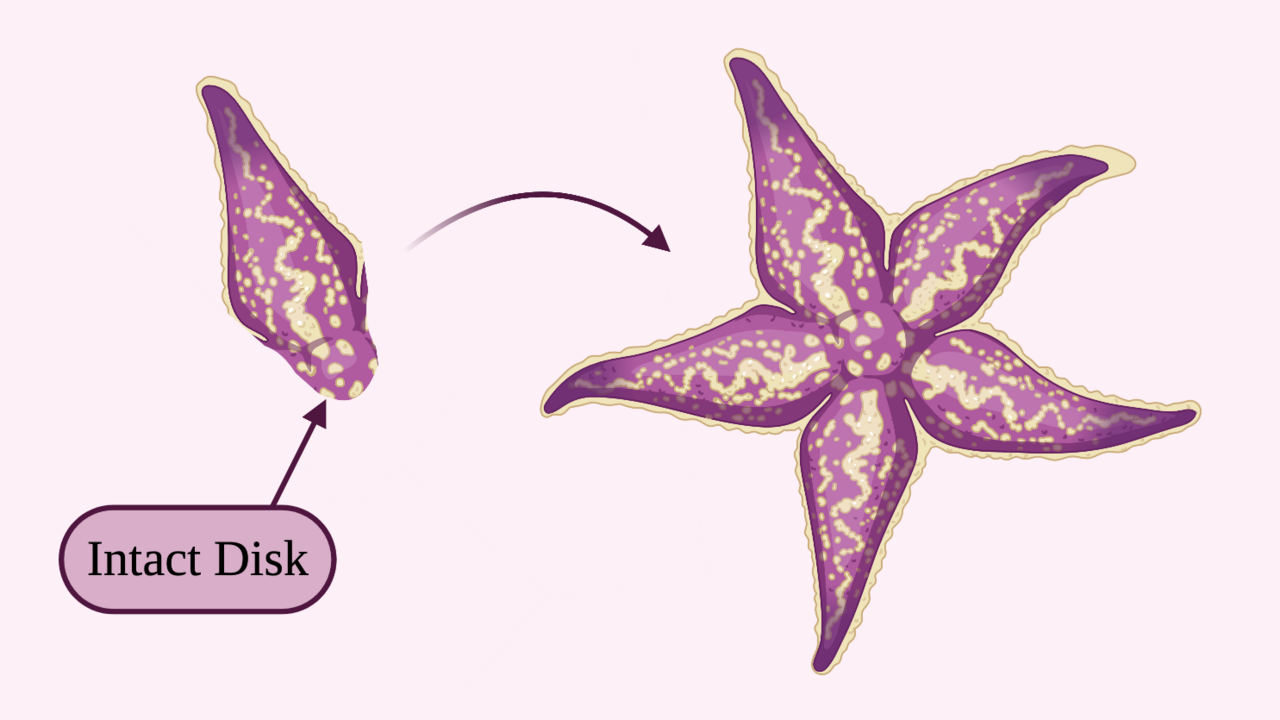
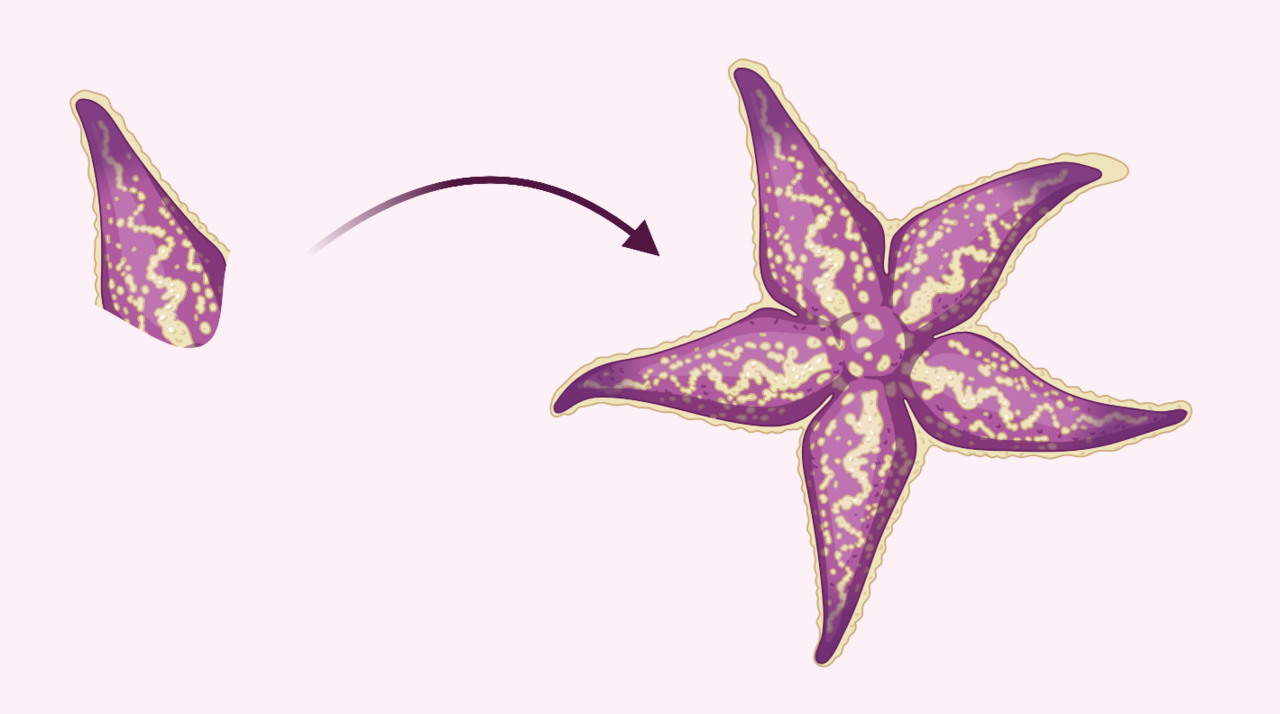
Regenerative ability among starfish species is generally classified into three categories. Unidirectional regeneration, the simplest and most common form, allows regrowth of multiple lost limbs from a disk containing half or more of the original starfish. The crown-of-thorns starfish (Acanthaster planci) is a notable unidirectional regenerator; initial population control efforts in the 1960s that involved sectioning and releasing caught starfish may have inadvertently worsened outbreaks. Disk-dependent bidirectional regeneration enables a full starfish to regrow when less than half of the original is intact, provided part of the central disk remains, giving the detached limb access to its original digestive system. The most extensive form, disk-independent bidirectional regeneration, is rare and occurs when a detached limb with no central disk regenerates a full starfish, surviving on stored nutrients until a new disk forms; this has been identified in Linckia species.
Reader's Guide
Starfish regeneration is significant because it demonstrates a wide range of regenerative capabilities that have made starfish model organisms for studying how regeneration evolves and diversifies. The process follows a common three-phase model across species: repair, early regenerative, and advanced regenerative phases. During the repair phase, starfish seal coelomic cavities via muscle contraction and coelomocyte clotting, then re-epithelialize without immediate cell proliferation—unlike mammals. The early regenerative phase begins after healing. Researchers hope that understanding these mechanisms may one day inspire therapeutics to expand human ability to repair and replace damaged cells or tissues. The replication and delocalization of vital organs in each arm, along with the ability to regenerate neuron cells and repurpose leftover cells, make starfish especially resilient. However, little is known about the underlying molecular mechanisms that mediate regeneration, and the process can take up to a year or longer to complete.
Did You Know?
- A few tropical starfish species can grow an entirely new starfish from just a portion of a severed limb.
- Starfish can autotomize and regenerate limbs to evade predators and reproduce.
- The crown-of-thorns starfish (Acanthaster planci) is a notable unidirectional regenerator that can regrow when half or more of the original starfish is intact.
- Re-epithelialization in starfish occurs without immediate proliferation of epidermal progenitor cells, unlike in most mammals.
Morphology & Body Architecture
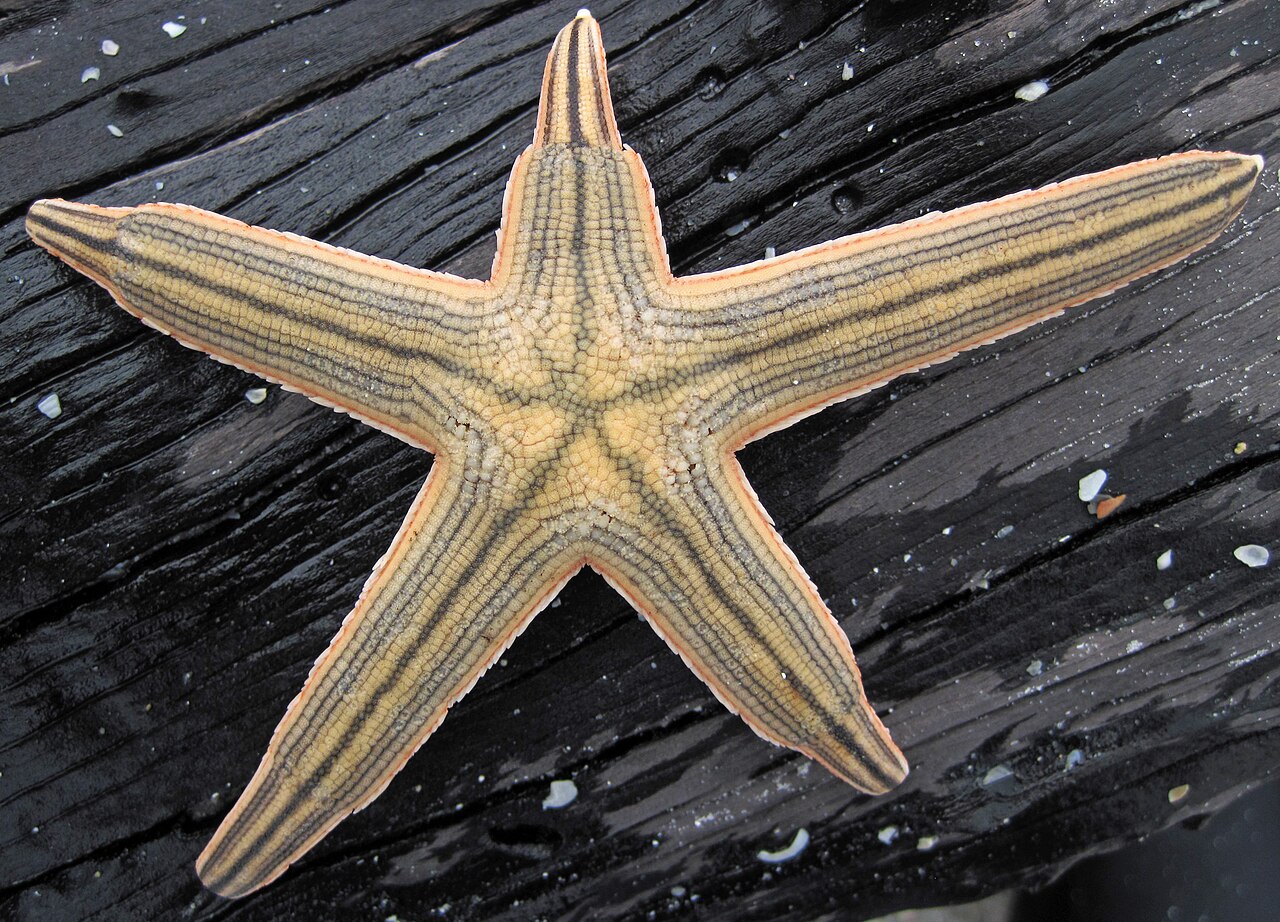
Starfish display remarkable diversity in their physical form. While the classic image of five radiating arms from a central disc is the most common arrangement, the actual number varies enormously across the roughly 1,900 known species. Some carry six or seven arms, others stretch to ten or fifteen, and the Antarctic Labidiaster annulatus can boast more than fifty. Beneath the surface, the body wall is a layered construction: a thin cuticle, a single-cell-thick epidermis, a thick connective-tissue dermis housing the endoskeleton, a muscular coelomic layer, and a peritoneal lining. The dermis contains ossicles—calcium carbonate structures built from calcite microcrystals in a honeycomb lattice. These ossicles range from flat plates to granules to spines and cover the upper surface. Specialized forms include the madreporite, pedicellariae (scissor-like structures that can displace or even capture prey), and paxillae, umbrella-shaped elements found in buried species whose overlapping edges create a protective water cavity shielding the gills and madreporite. The whole framework is reinforced by a three-dimensional collagen web that permits both flexible arm movement and rapid stress-induced rigidity.
The Hydraulic Engine: Water Vascular System
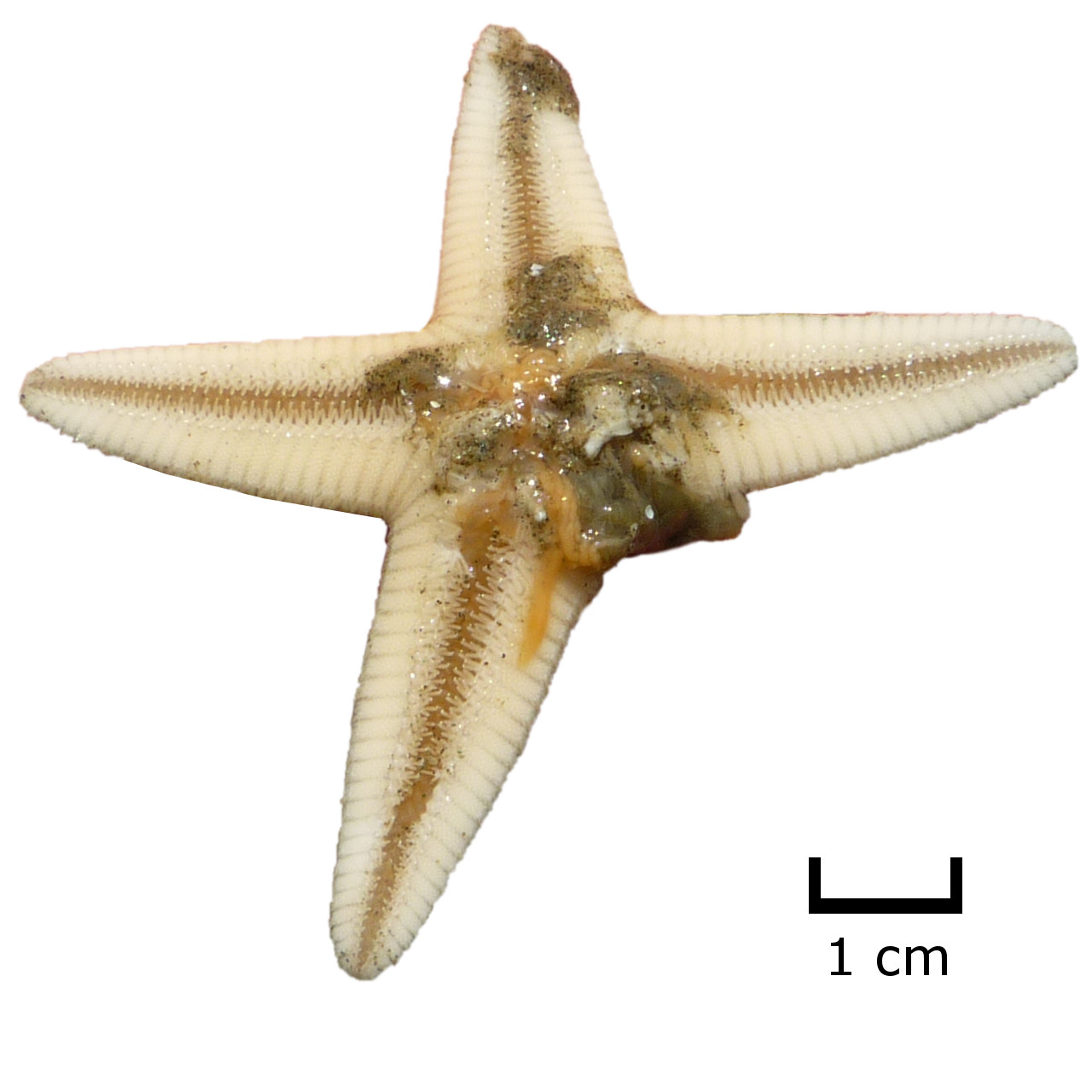
The starfish's most distinctive engineering feat is its water vascular system, a hydraulic network of fluid-filled canals that handles locomotion, adhesion, food manipulation, and gas exchange simultaneously. Water enters through the madreporite, a porous sieve-like ossicle on the upper surface, then travels down a calcareous-lined stone canal to a ring canal encircling the mouth. From there, radial canals extend along the ambulacral groove of each arm, with short lateral canals branching alternately to either side. Each lateral canal terminates in a bulb-shaped ampulla connected to an external tube foot. The entire canal interior is lined with cilia. Movement is achieved when longitudinal muscles in the ampullae contract, forcing water into the tube foot and causing it to stretch and contact the substrate. Contrary to their suction-cup appearance, the actual grip relies on adhesive chemicals rather than vacuum. Release comes through different chemicals and ampullae relaxation. Tube feet move in a coordinated wave, one section attaching as another detaches, and some species even curl their arm tips upward to expose sensory feet and eyespots to the environment.
Ecological Influence & Feeding Strategies
Starfish occupy a range of ecological positions that can reshape entire marine communities. The ochre sea star (Pisaster ochraceus) and the reef sea star (Stichaster australis) are recognized as keystone species, exerting a disproportionately large influence on their surroundings relative to their abundance. At the other extreme, the tropical crown-of-thorns starfish (Acanthaster planci) is a relentless coral predator sweeping across the Indo-Pacific, while the Northern Pacific seastar has been flagged among the Worst Invasive Alien Species. As feeders, most starfish are opportunistic predators of benthic invertebrates, but several have evolved specialized strategies: some evert their stomachs over prey to digest it externally, while others practice suspension feeding. They can be found from the intertidal zone to abyssal depths of 6,000 metres, in waters ranging from tropical warmth to polar cold. Their complex life cycles include both sexual and asexual reproduction, and most species can regenerate lost or damaged arms—a trait that also serves as a defensive mechanism when they deliberately shed an arm to escape a threat.
Deep Time & the Fossil Puzzle
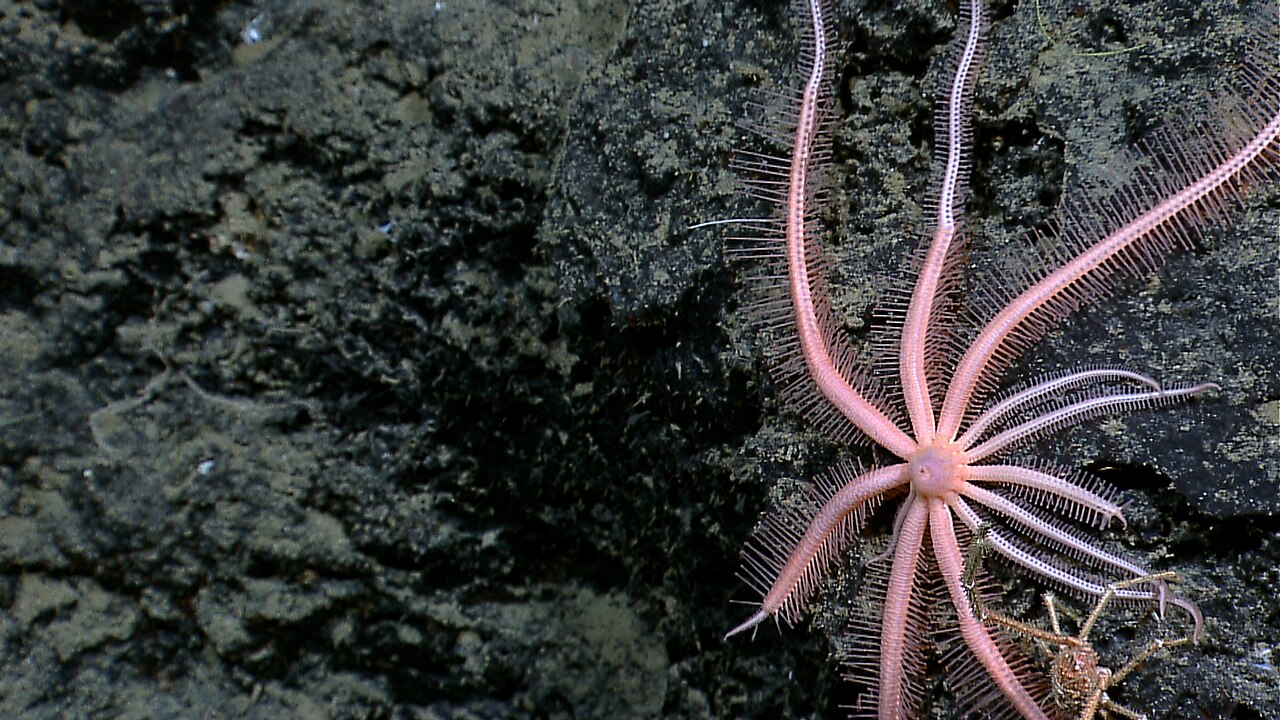
The lineage of starfish stretches back to the Ordovician period, roughly 450 million years ago, making them among the older animal groups on Earth. Yet their fossil record is frustratingly sparse. The reason is biological: starfish tend to fall apart after death, and only the hard ossicles and spines have any realistic chance of being preserved in sediment. This makes locating and identifying starfish remains in rock a genuinely difficult task for paleontologists. Despite this gap in the physical record, the living diversity tells a rich story. About 1,900 species currently inhabit every ocean on the planet, from warm tropical shelves to frigid polar seas. Beyond their scientific significance, starfish have long captivated human imagination. Their appealing radial symmetry has made them a recurring motif in literature, legend, design, and even corporate logos. In some cultures they are collected as curiosities or consumed as food, while the common name "starfish" is also loosely applied to ophiuroids—brittle stars and basket stars—which are a separate group entirely.
Gallery
More in Starfish 1-24
Spotted an error? Know more?
Reader corrections go straight into our review queue. Suggest an edit · How this site is sourced