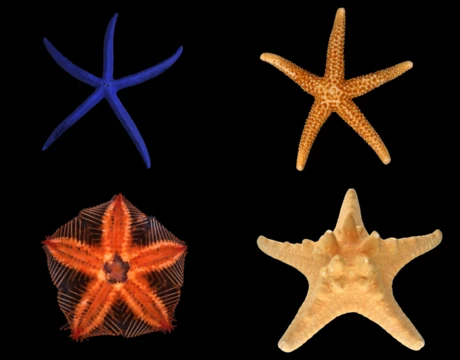
Astropecten
A genus of sea stars requiring careful observation for species identification.

Juraj Ahel · CC BY 4.0
Astropecten is a genus of sea stars in the family Astropectinidae.
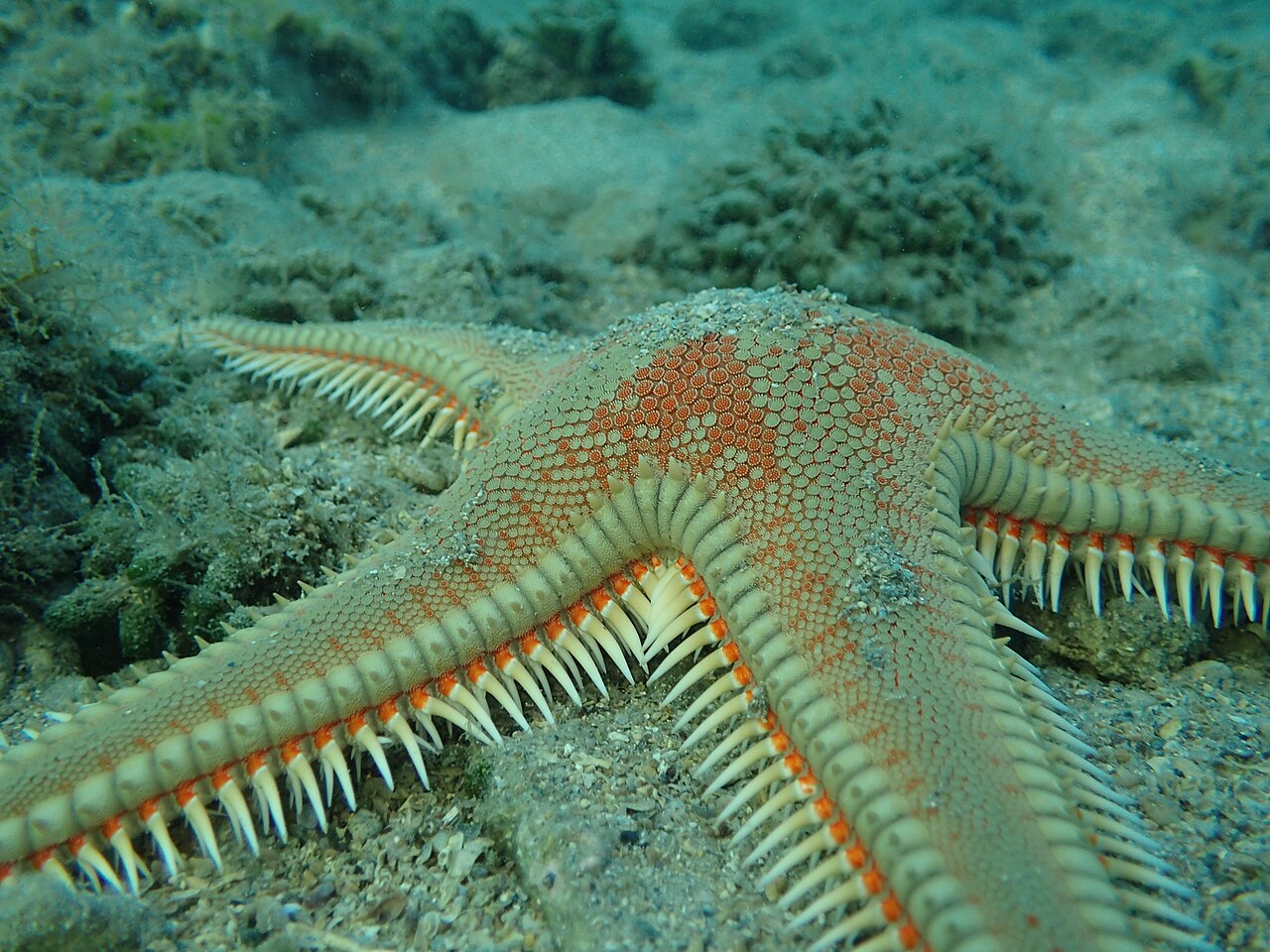
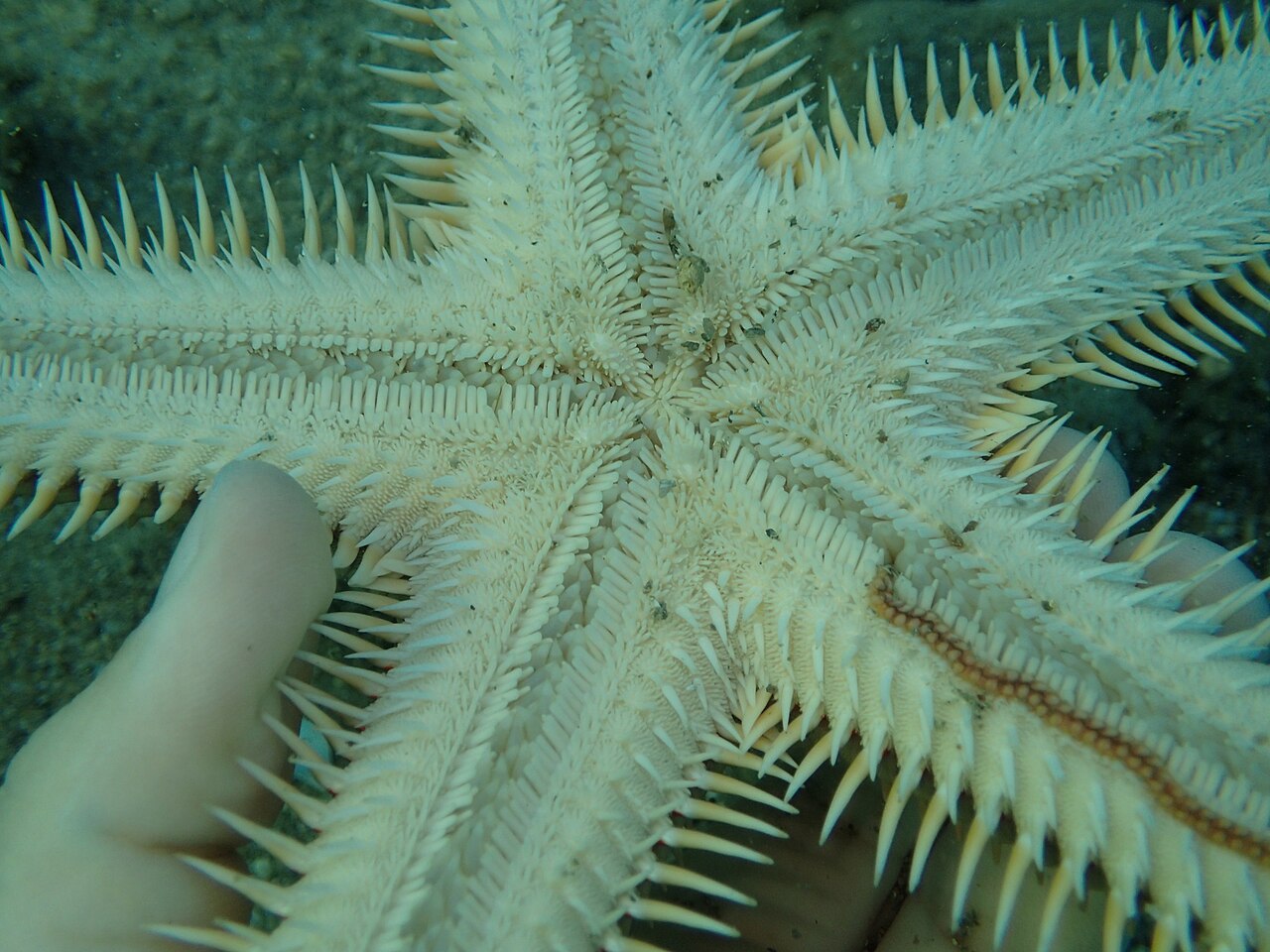
Identifying individual species within this genus is challenging because they closely resemble each other. While a photograph is often insufficient for a definitive identification, it can provide a reasonable determination in many cases. For absolute certainty, laboratory analysis or genetic testing may be necessary, though this is not always feasible. To identify a species from a photo with acceptable accuracy, observers should focus on several key features: the appearance of the dorsal marginal plates and their spines, the overall size of the animal, and the shape of the central disc and arms. A good identification photo should include a complete view of the sea star, a close-up of the marginal plates, and a precise measurement of its diameter. All of this can be done without touching, turning, or disturbing the animal. Sea stars have two sides: the upper, normally visible side is the aboral side, while the lower side that rests on the seabed is the oral side.
Six species of Astropecten currently live in the Mediterranean Sea:
- Astropecten aranciacus (Linnaeus, 1758) - Astropecten bispinosus (Otto, 1823) - Astropecten irregularis (Pennant, 1777) - Astropecten jonstoni (Delle Chiaje, 1825) - Astropecten platyacanthus (Philippi, 1837) - Astropecten spinulosus (Philippi, 1837)
Quick Facts
- Taxon
- Astropecten
Facts from the source article.
Lore & Background
Astropecten species are distinguished by features such as the appearance of dorsal marginal plates and spines, size, and the shape of the disc and arms. For identification from a photograph, a complete image of the subject, a detail of the marginal plates, and a precise measurement of the diameter are needed, all without touching or disturbing the animal. The sea star has an upper aboral side and a bottom oral side.
Reader's Guide
The genus Astropecten is notable for the challenge it presents to field identification. The source article emphasizes that species within this genus are so similar that a photograph often cannot provide certainty; laboratory analysis or genetic testing may be required. However, by observing key features—dorsal marginal plates and spines, size, and disc and arm shape—a reasonable margin of error can be achieved. The article lists six species currently living in the Mediterranean Sea, each with its own taxonomic authority and year of description. This genus thus serves as an example of the careful methodology needed in marine taxonomy, relying on both external morphology and, when necessary, more advanced techniques.
Did You Know?
- Species identification may require laboratory analysis or genetic testing.
- Key identification features include dorsal marginal plates, spines, size, and disc and arm shape.
Taxonomic Placement and Geographic Prevalence
Astropecten latespinosus occupies a specific position within the broader classification of echinoderms, belonging to the family Astropectinidae, a group of starfish that share certain structural and evolutionary traits. As a species, it represents one particular branch of that family's diversity. What sets it apart in terms of ecological presence is its remarkable abundance in the marine environments surrounding Japan. Among the various starfish inhabiting those waters, A. latespinosus ranks as one of the most commonly encountered, suggesting it has found a particularly well-suited niche in the Japanese coastal and offshore ecosystems. Its prevalence implies a degree of adaptability to local conditions—temperature, substrate, food availability—that allows it to thrive in numbers that outpace many of its relatives. For marine biologists and casual observers alike, encountering this species in Japanese seas is not a rare event but rather a frequent one, making it a familiar silhouette on the seafloor and a useful reference point when studying the broader starfish communities of the region.
Physical Form and Structural Details
The adult body plan of Astropecten latespinosus is defined by a distinctly flattened, brownish central disc from which five arms radiate outward. These arms are notably short and taper toward their tips, giving the entire organism a compact, broad impression rather than the elongated, spindly silhouette seen in some other starfish. Along the outer margins of each arm, a fringe of pale-coloured spines is arranged, creating a contrasting border against the darker body. The combination of the flattened profile, the brownish hue, and the pale marginal spines gives the animal a textured, layered appearance when viewed from above. The five-armed symmetry is consistent with the typical starfish body plan, yet the proportions—short arms, broad disc, and the particular arrangement of spines—distinguish it visually from many of its congeners. The overall effect is one of a low-slung, almost disc-like creature, with the spiny fringe adding a delicate, almost ornamental quality to its otherwise robust form.
Cultural Naming and the Maple Leaf Connection
In Japanese, Astropecten latespinosus is known as hira momiji, a name that carries both descriptive and poetic weight. The word hira translates to flattened, directly referencing the animal's low, broad body profile. Momiji, meanwhile, evokes maple leaves in their vivid autumnal red, a deeply resonant image in Japanese culture. This name is not unique to A. latespinosus alone; it is a term applied to certain starfish whose overall shape and appearance recall the lobed, spreading form of maple leaves. The resemblance is one of form—the five-armed, flattened, somewhat irregular outline of the starfish mirrors the way a maple leaf's lobes radiate from a central point. By assigning this name, Japanese speakers embedded a visual metaphor into the creature's identity, linking a marine invertebrate to one of the most celebrated seasonal symbols in their cultural landscape. The name thus serves as both a practical descriptor of morphology and a cultural bridge between the sea and the forest canopy.
Larval Development and a Genus-Level Exception
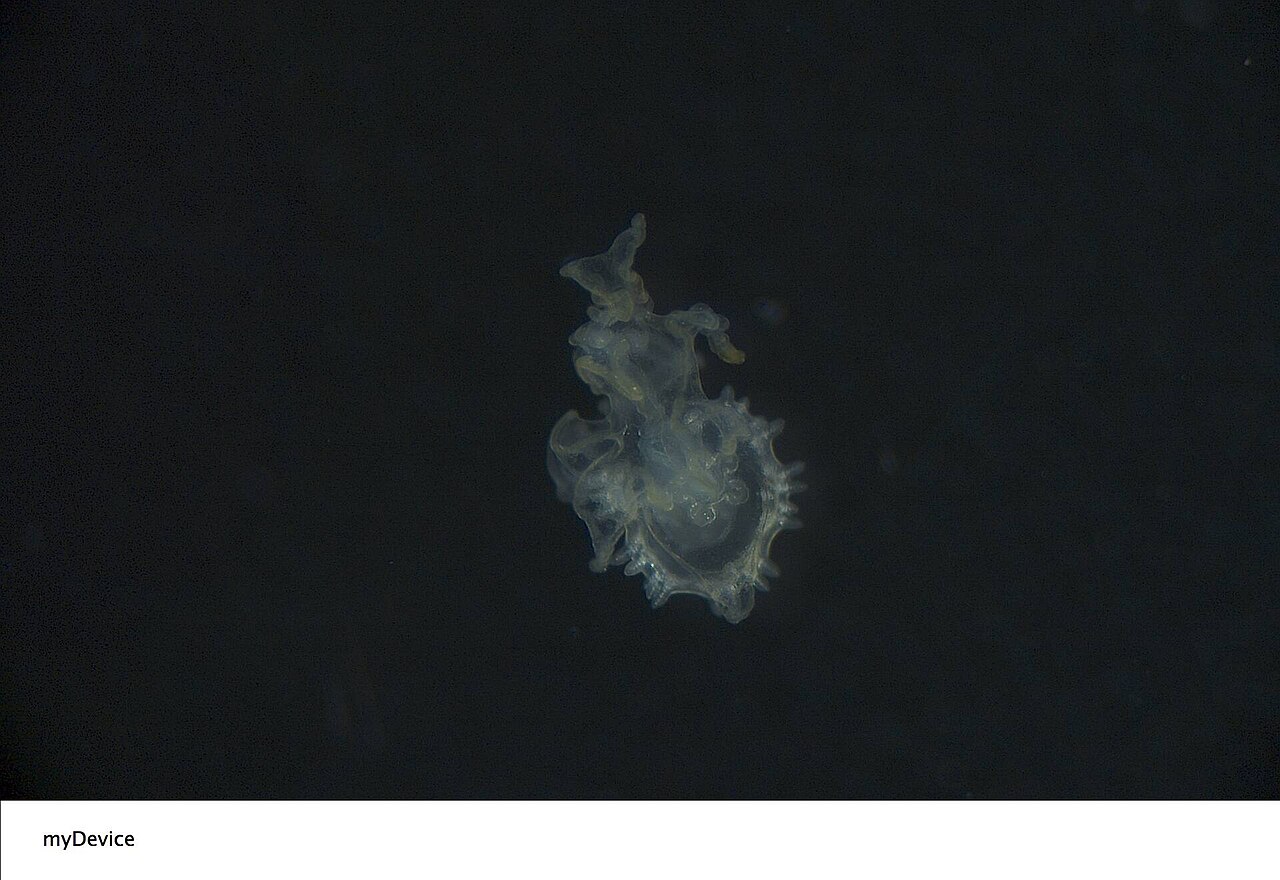
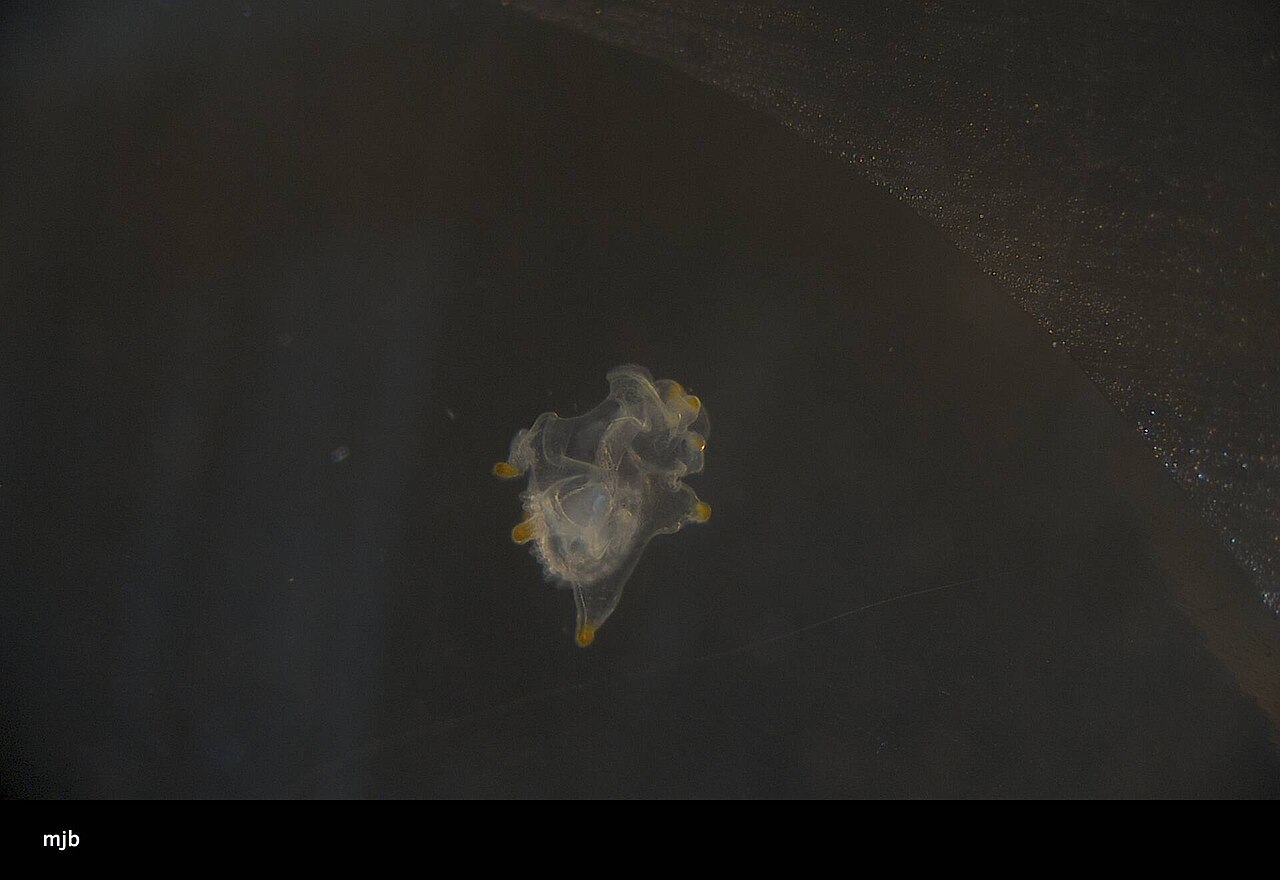
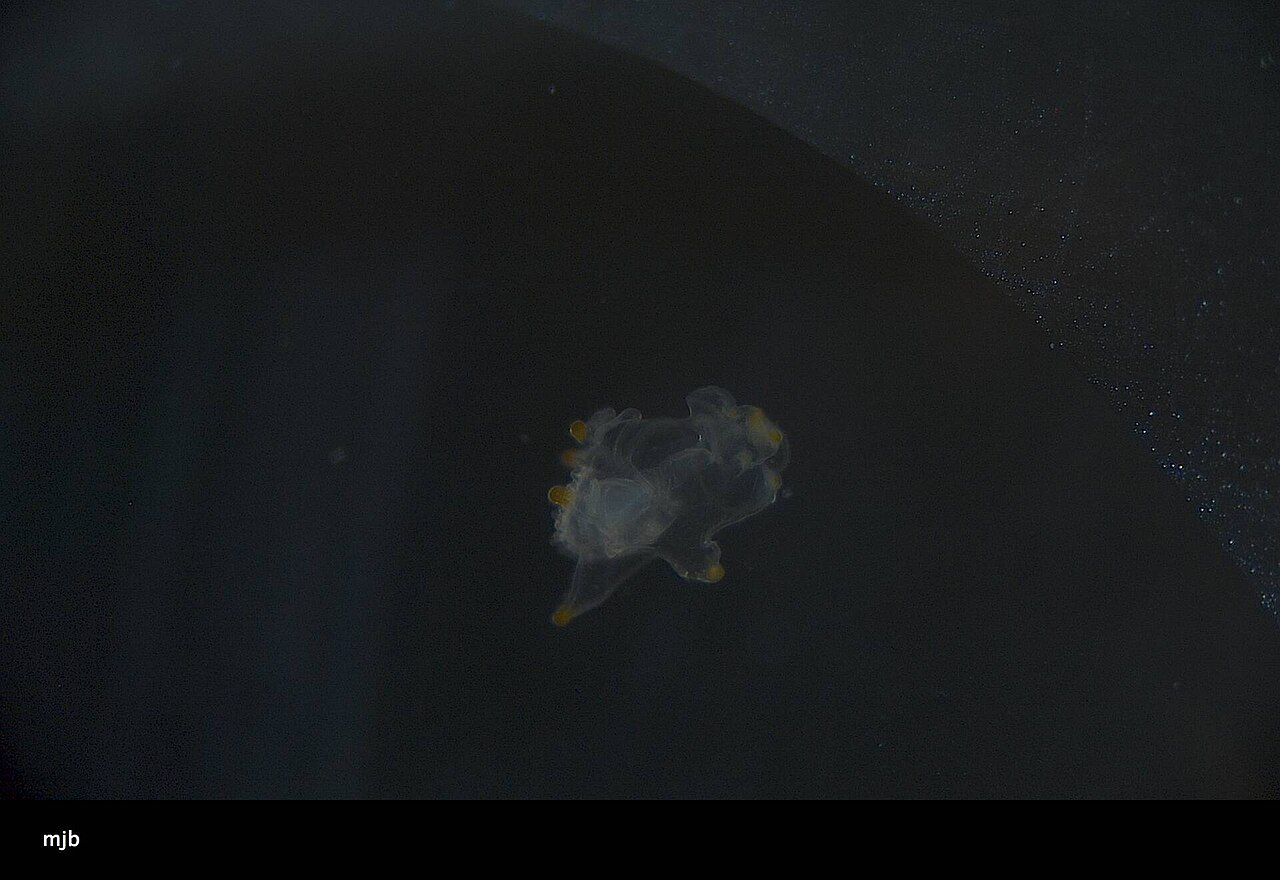
One of the most biologically notable aspects of Astropecten latespinosus lies in its larval stage, where it departs from the pattern seen in many of its close relatives within the same genus. In numerous Astropecten species, the larval form takes the shape of a brachiolaria, a specific developmental morphology common among certain echinoderms. A. latespinosus, however, does not follow this trajectory. Instead, its larva is barrel-shaped, a distinctly different body plan that signals a different developmental pathway. Furthermore, this barrel-shaped larva undergoes its metamorphosis into the juvenile starfish form at a remarkably early point in its developmental sequence. This early transition means the larval phase is comparatively brief, and the organism reaches its recognizable starfish configuration sooner than its brachiolaria-bearing congeners. This deviation from the genus norm makes A. latespinosus a point of interest for developmental biologists studying the diversity of echinoderm life cycles and the evolutionary flexibility of larval morphology.
Gallery
More in Starfish 1-24
Spotted an error? Know more?
Reader corrections go straight into our review queue. Suggest an edit · How this site is sourced