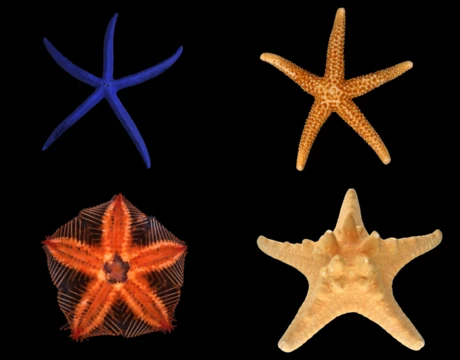
Alloceramaster
A genus of sea stars in the family Goniasteridae.

Mah · CC BY 3.0
Alloceramaster is a genus of sea stars belonging to the family Goniasteridae. It was established by Mah in 2025 for species resembling *Ceramaster* but with distinct heteromorphic granules near the radial areas and a bare patch on the surface of the superomarginal plates. The body is pentagonal or weakly star-shaped, with adults rarely exceeding 5 cm. Arm tips are blunt, and the interradial arcs range from weakly curved to straight. Two kinds of granules cover the abactinal surface: rectangular to rhombic ones around the periphery of papular plates, and round to polygonal ones elsewhere. Marginal plates number 6 to 18 per interradius, each with an elevated, bald area that may be bare or sparsely granulated. Actinal plates are square to polygonal and granulated. Furrow spines are blunt, numbering 2 to 9, while subambulacral spines number 3 to 4. The genus includes seven species: *Alloceramaster affinis*, *A. grenadensis*, *A. irritatus*, *A. leios*, *A. maui*, *A. minus*, and *A. pointsurae*.
Quick Facts
- Taxon
- Alloceramaster
Facts from the source article.
Lore & Background
The genus Alloceramaster was described by Mah in 2025 to include Ceramaster-like taxa characterized by the presence of heteromorphic granules around the radial regions, specifically those with elongate to angular peripheral granules and more rounded to polygonal central granules on triangular or polygonal shaped plates, along with a bare spot on the superomarginal plate surface. It also differs from Sphaeriodiscus by lacking enlarged penultimate or antipenultimate superomarginal plates and by having fewer marginal plates per interradius with a bald or sparsely granular superomarginal surface.
The genus diagnosis describes an overall body form that is pentagonal or weakly stellate, with few known adults larger than 5 cm. Arm tips are blunt, and interradial arcs are weakly curved to straight. Two distinct types of abactinal accessories are present: rectangular to rhombic shaped granules forming a periphery around papular, radially positioned plates, and round to polygonal granules around the remainder of the plates. Marginal plates per interradius (arm tip to arm tip) number 6–18, with an elevated bald region on the plate surface that may be bare or covered with widely spaced granules. Actinal plates are quadrate to polygonal and covered by granules. Furrow spines number 2 to 9 and are blunt. Subambulacral spines number 3 to 4.
The genus includes seven species: Alloceramaster affinis, Alloceramaster grenadensis, Alloceramaster irritatus, Alloceramaster leios, Alloceramaster maui, Alloceramaster minus, and Alloceramaster pointsurae.
Reader's Guide
Alloceramaster is notable as a genus described in 2025, representing a taxonomic refinement within the Goniasteridae family. Its distinction from related genera such as Ceramaster and Sphaeriodiscus rests on specific morphological features, including heteromorphic granules around radial regions and a bare spot on the superomarginal plate surface. The genus includes seven species, some of which were originally described under other genera in the late 19th and early 21st centuries, indicating a reclassification of existing material. The description provides a detailed diagnosis of body form, plate structure, and spine counts, which aids in identification and further study of sea star diversity. The genus is characterized by a pentagonal or weakly stellate body, blunt arm tips, and a limited adult size, with few known specimens exceeding 5 cm. These traits contribute to the understanding of morphological variation within Goniasteridae and highlight the ongoing refinement of taxonomic boundaries in echinoderm systematics.
Did You Know?
- The genus includes seven species, such as Alloceramaster affinis and Alloceramaster leios.
- Furrow spines in Alloceramaster number 2 to 9 and are blunt.
- Marginal plates per interradius range from 6 to 18.
Taxonomy and the 2025 Genus Description
The genus Alloceramaster was formally erected by Mah in 2025, carving out a distinct group within the sea star family Goniasteridae. The defining criterion centers on a particular arrangement of heteromorphic granules concentrated around the radial regions of the body. Specifically, the peripheral granules tend toward elongate or angular shapes, while the central granules are more rounded or polygonal. These granules sit atop plates that are themselves triangular or polygonal in outline. Another diagnostic hallmark is a bare spot on the surface of the superomarginal plate. By isolating these traits, Mah created a taxonomic home for species that had previously been lumped with Ceramaster-like taxa but did not quite fit the classical definition of that genus. The description thus represents a refinement of how researchers sort the granule-bearing, small-bodied sea stars of the Goniasteridae into coherent groups, offering a clearer framework for identifying and comparing specimens collected from the field.
Body Form and Surface Architecture
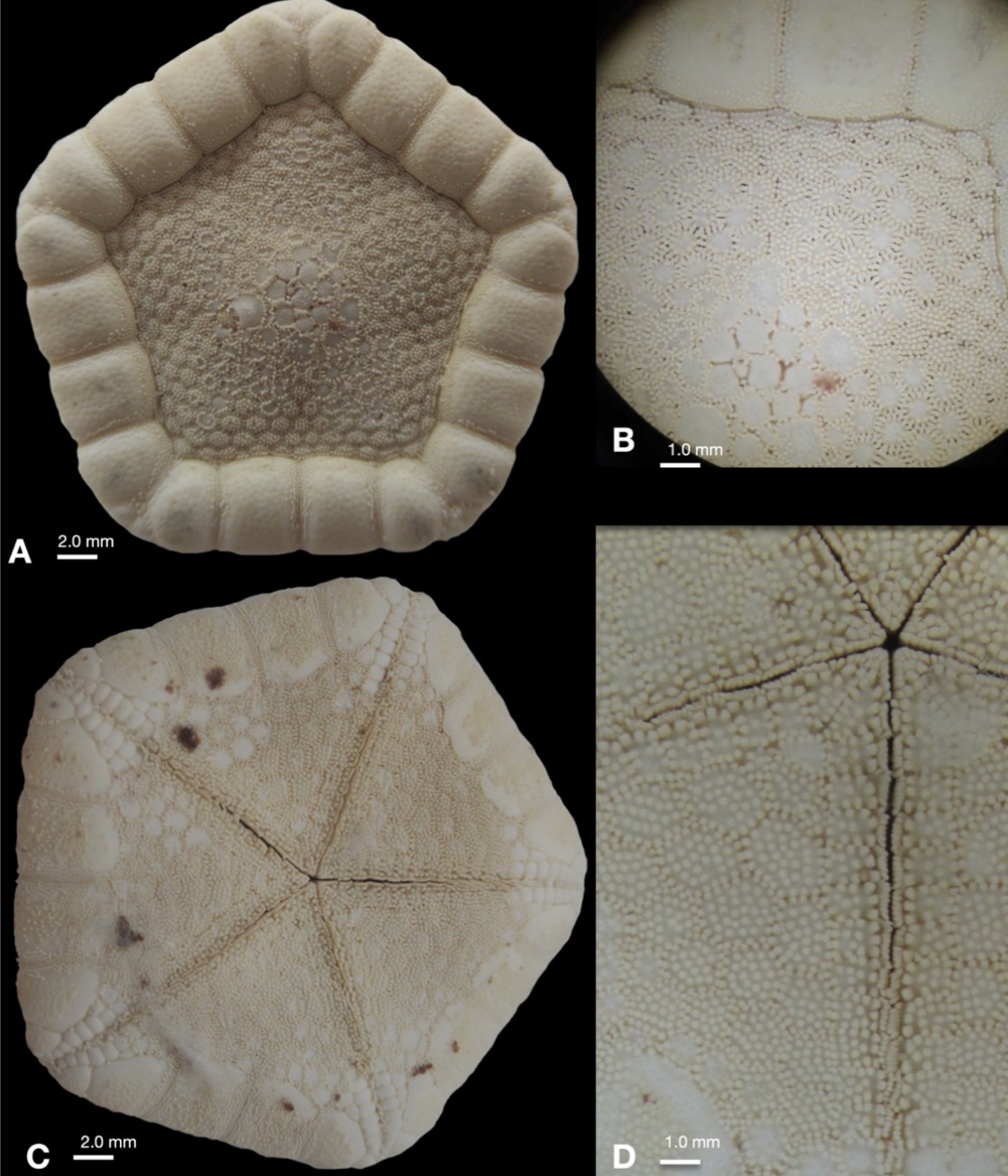
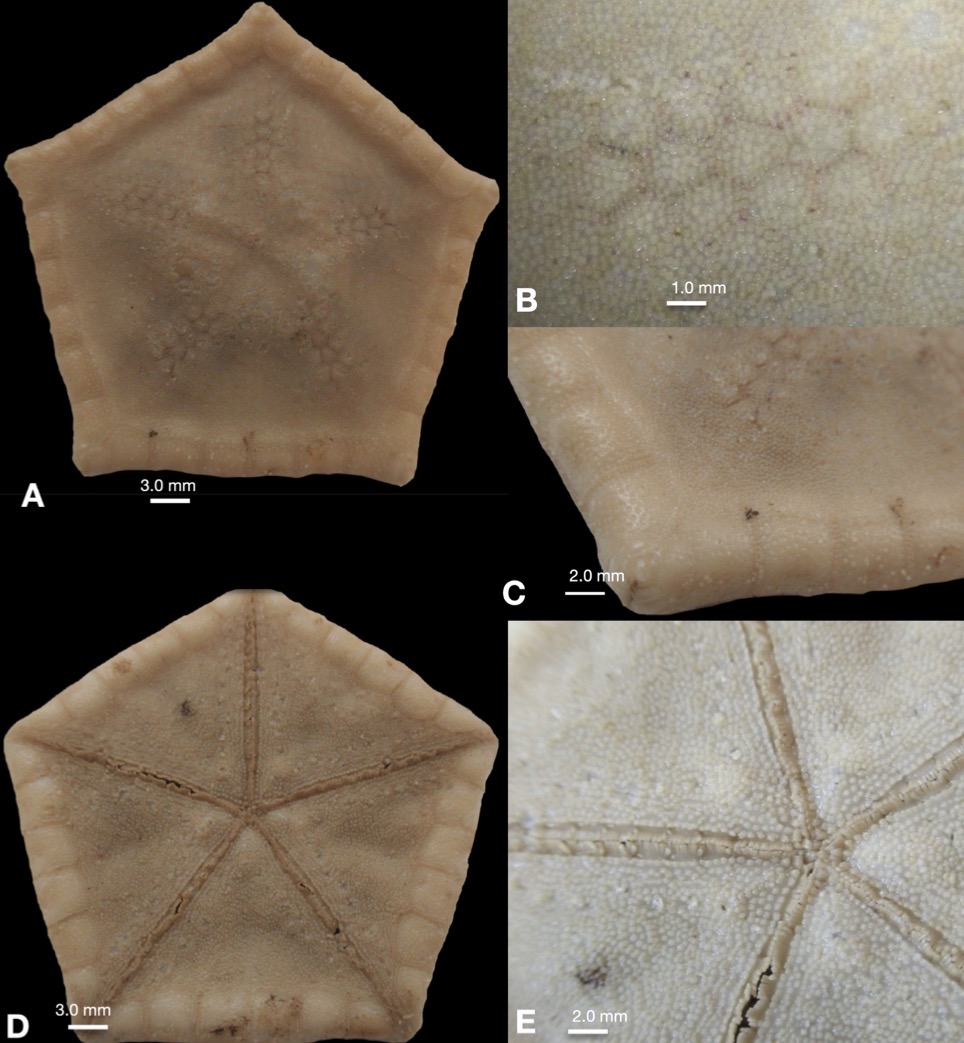
Alloceramaster species present a compact, pentagonal or only weakly stellate silhouette, with very few known adults exceeding five centimeters in diameter. The arm tips are notably blunt rather than pointed, and the interradial arcs between arms range from gently curved to essentially straight, giving the overall outline a subdued, almost geometric quality. The abactinal surface displays two clearly distinct types of accessory structures. Around the radially positioned papular plates, rectangular to rhombic granules form a peripheral ring, while the remaining plates are encircled by rounder, polygonal granules. Between one arm tip and the next, the count of marginal plates falls between six and eighteen. A striking feature is the elevated bald region on the superomarginal plate surface, which may be entirely bare or dotted with widely spaced granules. The actinal plates are quadrate to polygonal and bear granules, while the furrow spines number two to nine and are blunt, and subambulacral spines total three to four.
The Seven Species and Their Discovery Timeline
The genus Alloceramaster currently encompasses seven described species, spanning a remarkable range of discovery eras. The oldest members, Alloceramaster grenadensis and Alloceramaster affinis, were originally described by Perrier in 1881 and 1884 respectively, meaning they had been known to science for well over a century before being reassigned to this newly named genus. In 1973, McKnight described Alloceramaster maui, and in 2001, Clark and McKnight added Alloceramaster irritatus. Mah himself contributed three species over a decade: Alloceramaster pointsurae in 2016, followed by Alloceramaster leios and Alloceramaster minus, both described in 2025 alongside the genus itself. This timeline illustrates how taxonomic understanding of small Goniasteridae sea stars has evolved incrementally, with older species being reorganized as morphological criteria sharpened, while genuinely new species continued to be recognized from field collections. The 2025 additions suggest that even in the modern era, undescribed diversity in this group persists.
How Alloceramaster Differs from Its Neighbors
Distinguishing Alloceramaster from closely related genera is a matter of subtle but consistent morphological details. Compared with Sphaeroidiscus, the key differences are the absence of enlarged penultimate or antipenultimate superomarginal plates, a reduced number of marginal plates per interradius, and a superomarginal surface that is bald or only sparsely granular rather than densely ornamented. Against the broader Ceramaster-like group, Alloceramaster is set apart by its heteromorphic granule pattern: the peripheral granules are elongate to angular while central ones are rounded to polygonal, a contrast not seen in the same configuration in those other taxa. The bare spot on the superomarginal plate surface further reinforces the separation. These distinctions, while individually small, collectively form a reliable diagnostic suite that allows echinoderm specialists to separate Alloceramaster specimens from look-alikes in museum drawers and field surveys, ensuring that species-level identifications rest on consistent anatomical evidence rather than general resemblance.
Gallery
More in Starfish 1-24
Spotted an error? Know more?
Reader corrections go straight into our review queue. Suggest an edit · How this site is sourced