Aquilonastra
A genus of small sea stars with over 20 species.

Kobayashi et al. (2025). · CC BY 4.0
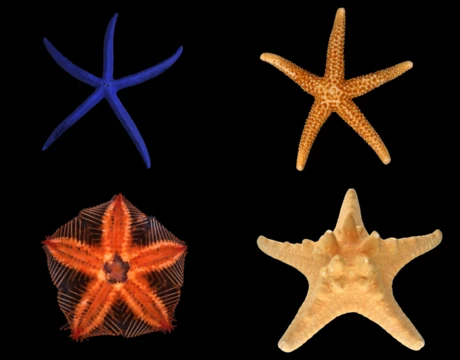
Aquilonastra is a genus of small starfish belonging to the family Asterinidae. The group contains more than 20 recognized species. These sea stars typically have five arms, though fissiparous (splitting) species can have between five and eight arms. Their bodies are distinctly star-shaped, with deeply curved margins between the arms.
Quick Facts
- Taxon
- Aquilonastra
- Type Species
- Asteriscus cepheus Müller and Troschel, 1842.
Facts from the source article.
Lore & Background
Aquilonastra is a genus within the family Asterinidae, comprising small sea stars. The genus has over 20 described species, as listed by the World Register of Marine Species and O'Loughlin & Rowe 2006. Morphologically, Aquilonastra generally has five rays, but fissiparous species exhibit five to eight rays. The body shape resembles a star due to deeply incurved inter-radial margins.
Reader's Guide
The significance of Aquilonastra lies in its representation of small sea stars within the Asterinidae family, with over 20 described species. The genus is characterized by a typical five-rayed body plan, though fissiparous species show variation with five to eight rays. The deeply incurved inter-radial margins give it a star-like appearance. The species list, compiled from the World Register of Marine Species and O'Loughlin & Rowe 2006, includes numerous named species such as Aquilonastra anomala, Aquilonastra batheri, and Aquilonastra burtoni, among others. This diversity underscores the genus's role in marine biodiversity, though the article provides no further details on its ecological or evolutionary legacy.
Did You Know?
- Aquilonastra belongs to the family Asterinidae.
- It has over 20 described species.
- Most species have five rays, but fissiparous species have five to eight.
- The inter-radial margins are deeply incurved, giving a star-like shape.
Physical Form and Camouflage
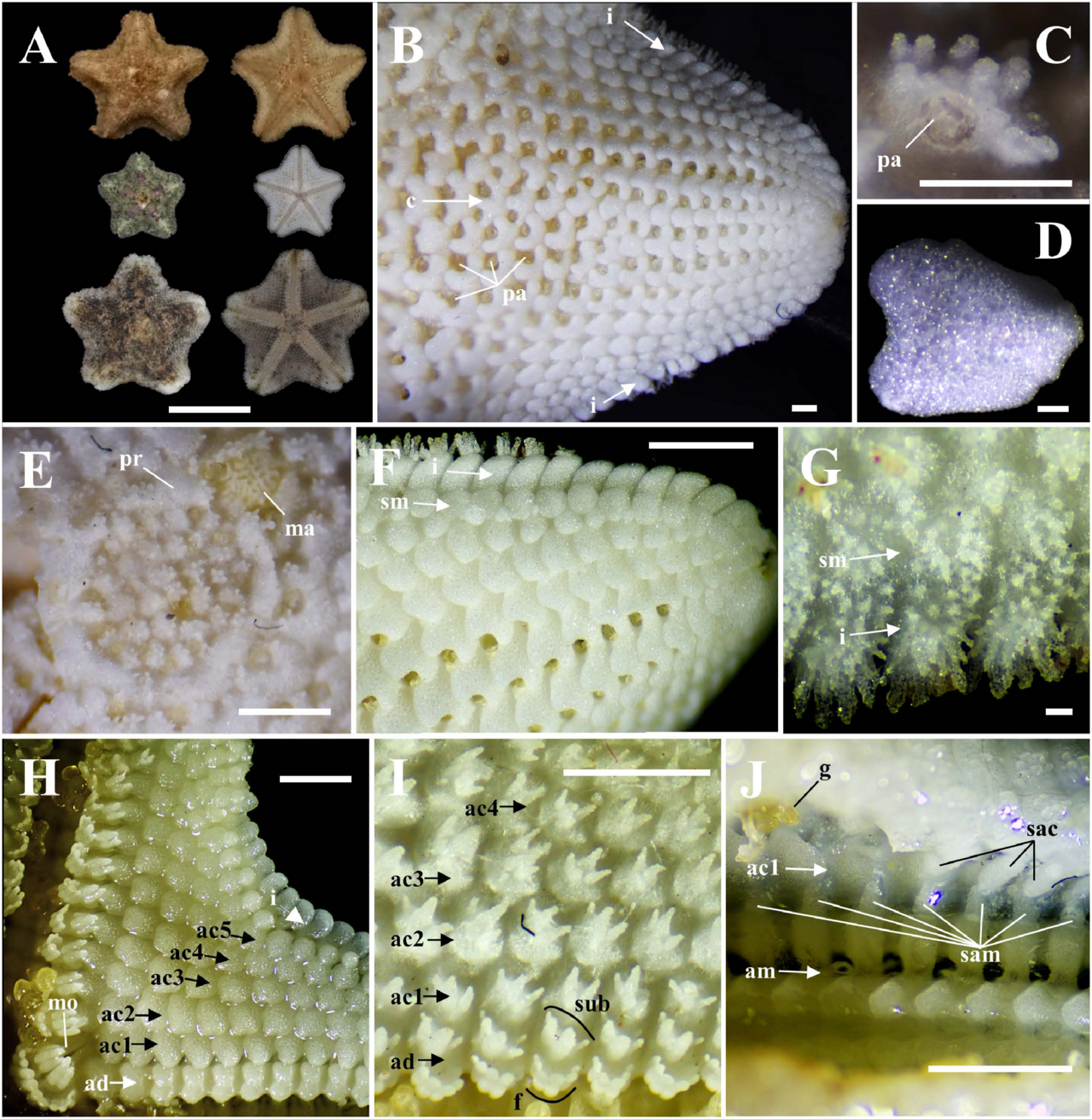
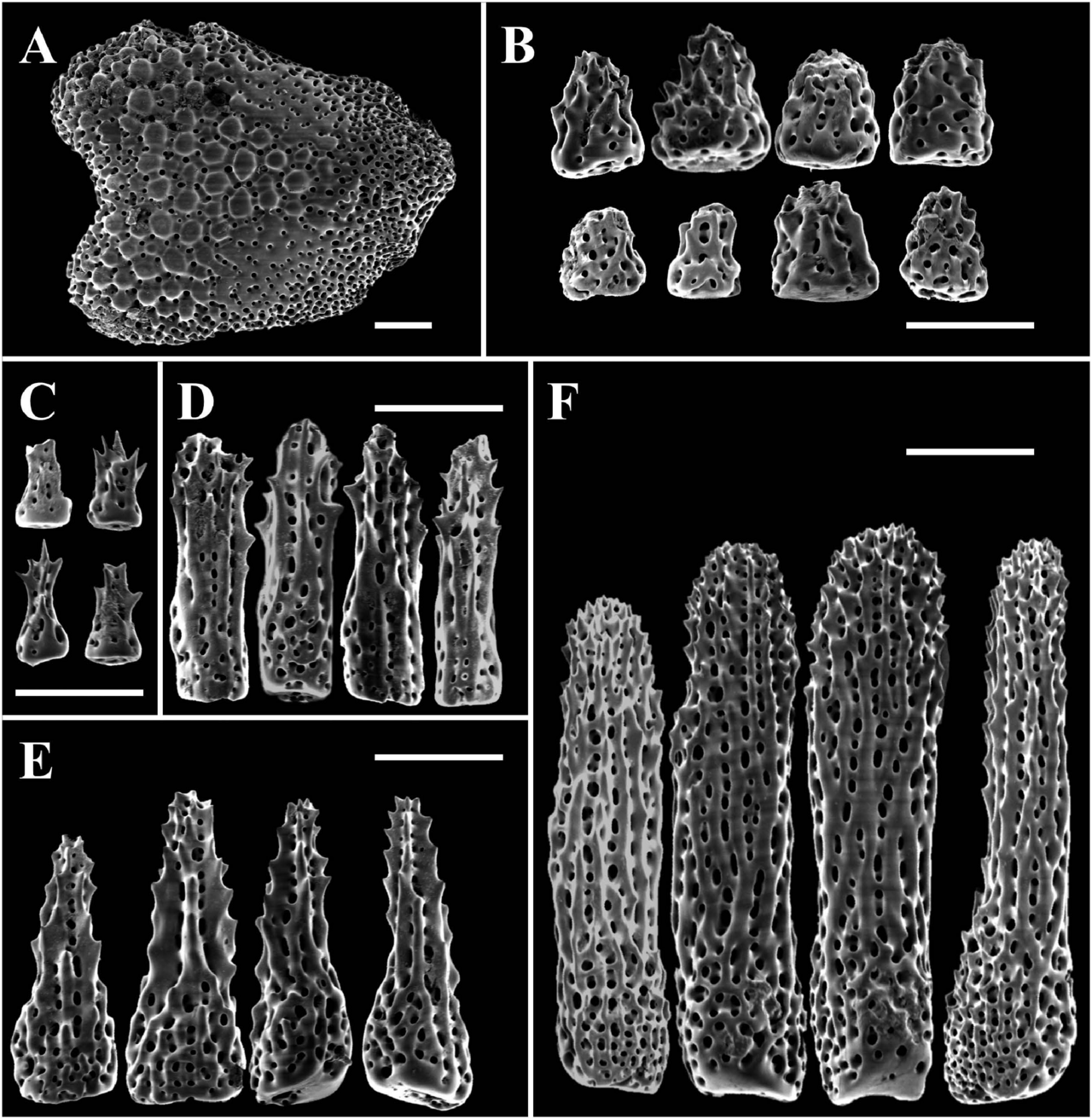
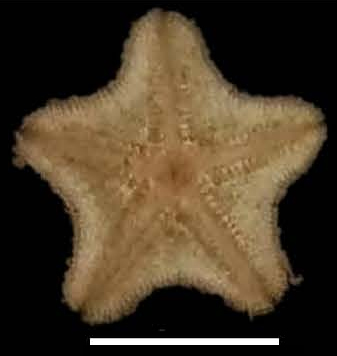
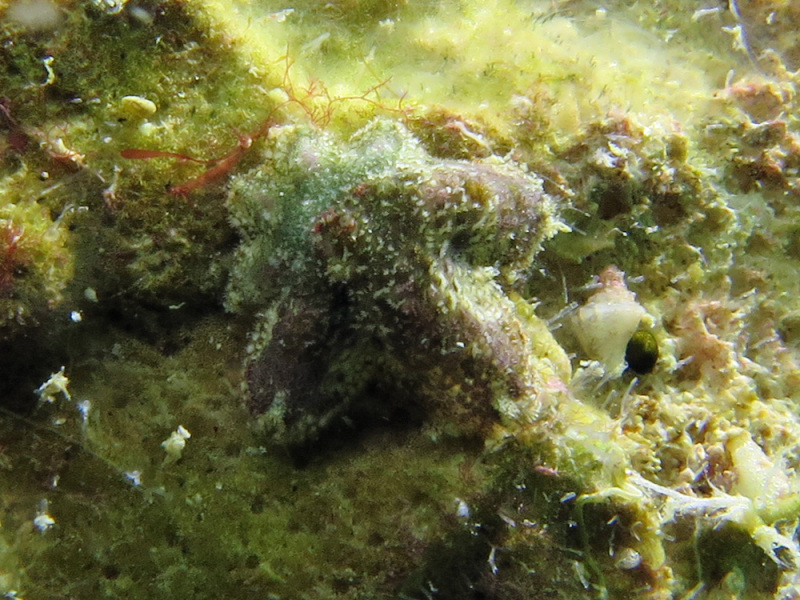
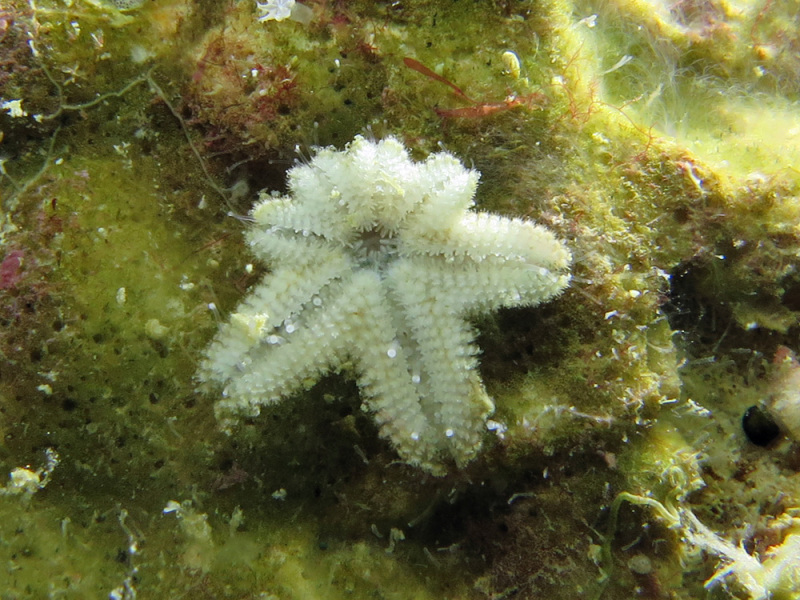
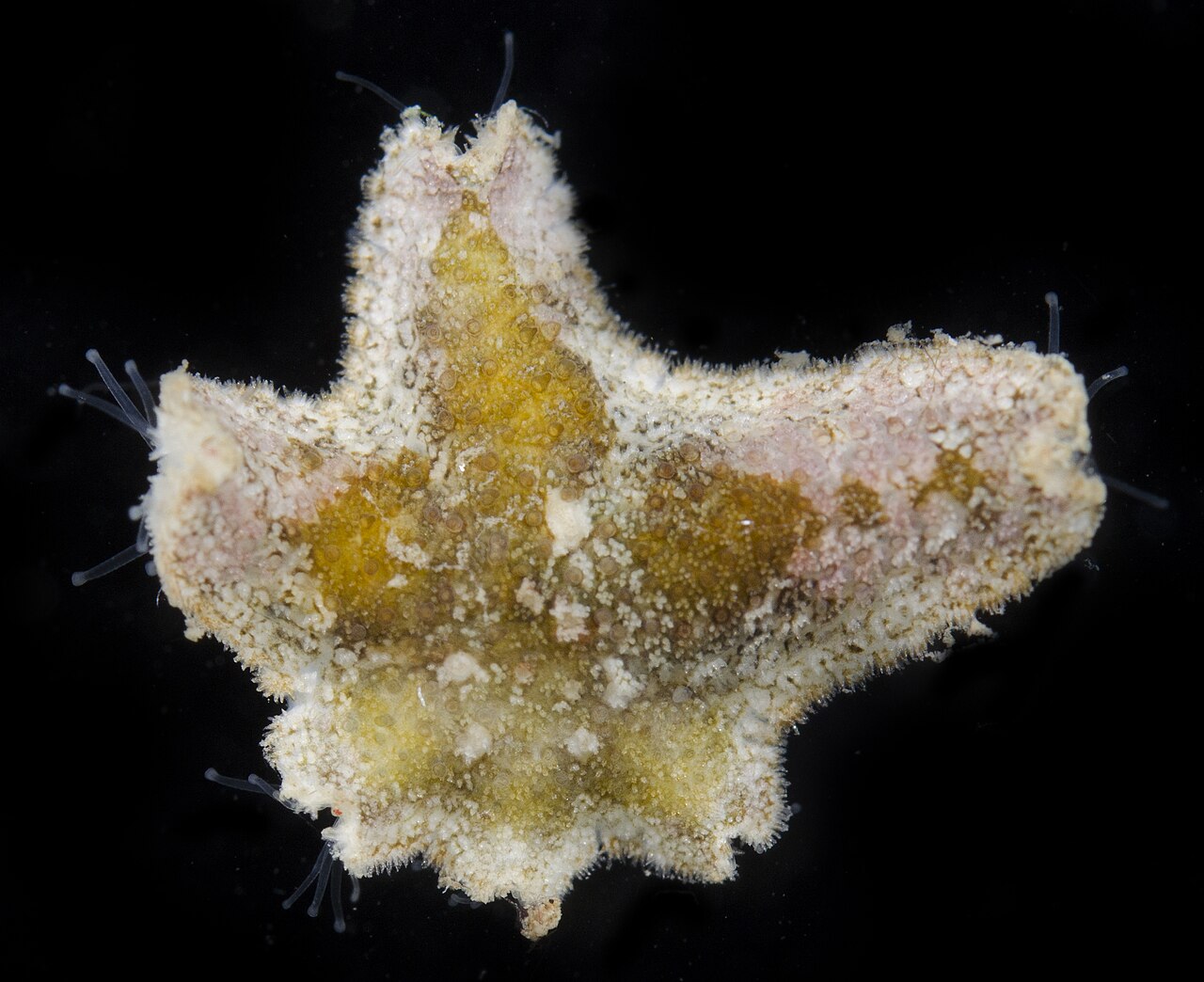
Aquilonastra conandae is a remarkably tiny starfish, measuring less than two centimeters across, with a body plan built for concealment rather than display. It bears seven or eight short, rounded arms that are frequently uneven in length—a trait attributable both to its capacity for regeneration and to its habit of splitting itself to reproduce. Each arm stretches roughly five millimeters, and the animal's upper surface is studded with solitary papules alongside multiple madreporites. A single spine sits on each interradial plate, while the arms themselves carry prominent conical spikes that feel rough, granular, and almost crystalline to the touch. Coloration is deliberately unremarkable: a grey-beige base overlaid with mottled granular patches of reddish or greenish tones, creating an irregular pattern that helps the animal blend seamlessly into the rocky and coral substrate of its wave-battered habitat. This discrete, camouflaged appearance makes it easy to overlook even when it is abundant.
Reproduction and Life Cycle
One of the most striking biological features of Aquilonastra conandae is its dual reproductive strategy. In addition to conventional sexual reproduction, this starfish is fissiparous, meaning it can split its body to produce new individuals asexually. The sexual phase is seasonal, occurring at the onset of summer, and the gonopores—its genital openings—are positioned on the upper surface of the body. Population surveys have revealed a sex ratio of roughly 52 males for every 93 females, indicating a noticeable female bias. Perhaps most unusually, some individuals are hermaphrodites, carrying both male and female reproductive capability within a single body. The irregular arm lengths frequently observed in living specimens are a direct consequence of both the fission process and the animal's regenerative ability, as arms can be lost and regrown or divided during splitting. This combination of asexual and sexual reproduction, along with the presence of hermaphroditism, makes the species a fascinating subject for understanding reproductive flexibility in marine invertebrates.
Habitat and Geographic Range
Aquilonastra conandae is a specialist of the Mascarene Islands in the south-tropical Indian Ocean, where it thrives in the high-energy surf zone of coral reefs battered by large waves. Its type locality is a section of breakers on a coral reef at Réunion Island known locally as the "Watering Hole," situated south of La Saline les Bains, where the species is notably abundant. Subsequent surveys confirmed its presence across all the Mascarenes, including Mauritius and Rodrigues. Within its range, the starfish occupies depths from the surface down to about ten meters, though it is most commonly encountered on the reef front and along rocky cliffs. It also inhabits volcanic flow surfaces, suggesting a tolerance for a variety of hard substrates. The combination of its small size, camouflaged coloration, and preference for exposed, wave-impacted habitats makes it a creature of the intertidal and shallow subtidal margins, where constant water movement likely plays a role in its ecology.
Discovery and Taxonomic Identity
The species was formally described in 2006 by two Australian marine biologists, P. Mark O'Loughlin and Francis Winston Edric Rowe, based on specimens that Chantal Conand had collected at Réunion Island. In recognition of her contribution, the species epithet conandae honors her name. The type specimen, gathered at Trou d'Eau, is held in the National Museum of Natural History in France under the registration number IE-2013-2489. The genus name Aquilonastra is a Latin construction combining aquilonis, meaning "northern," with astra, meaning "star," a reference to the fact that members of this genus occur in the northern portion of the Indo-Pacific region. The taxonomic picture has continued to expand: in 2013, a closely related fissiparous species was identified on Europa Island in the Mozambique Channel and described as Aquilonastra chantalae, further underscoring the diversity of this small but distinctive genus of starfishes in the western Indian Ocean.
Gallery
More in Starfish 1-24
Spotted an error? Know more?
Reader corrections go straight into our review queue. Suggest an edit · How this site is sourced