Astrometis
Monotypic genus of colorful sea star with unique feeding method.

Alex Heyman · CC0
Astrometis is a monotypic genus of sea star, containing only the species Astrometis sertulifera, known as the fragile rainbow star. It is notable for its often brilliant coloration and a unique feeding method among sea stars.
Quick Facts
- Genus
- Astrometis
- Species
- sertulifera
Facts from the source article.
Lore & Background
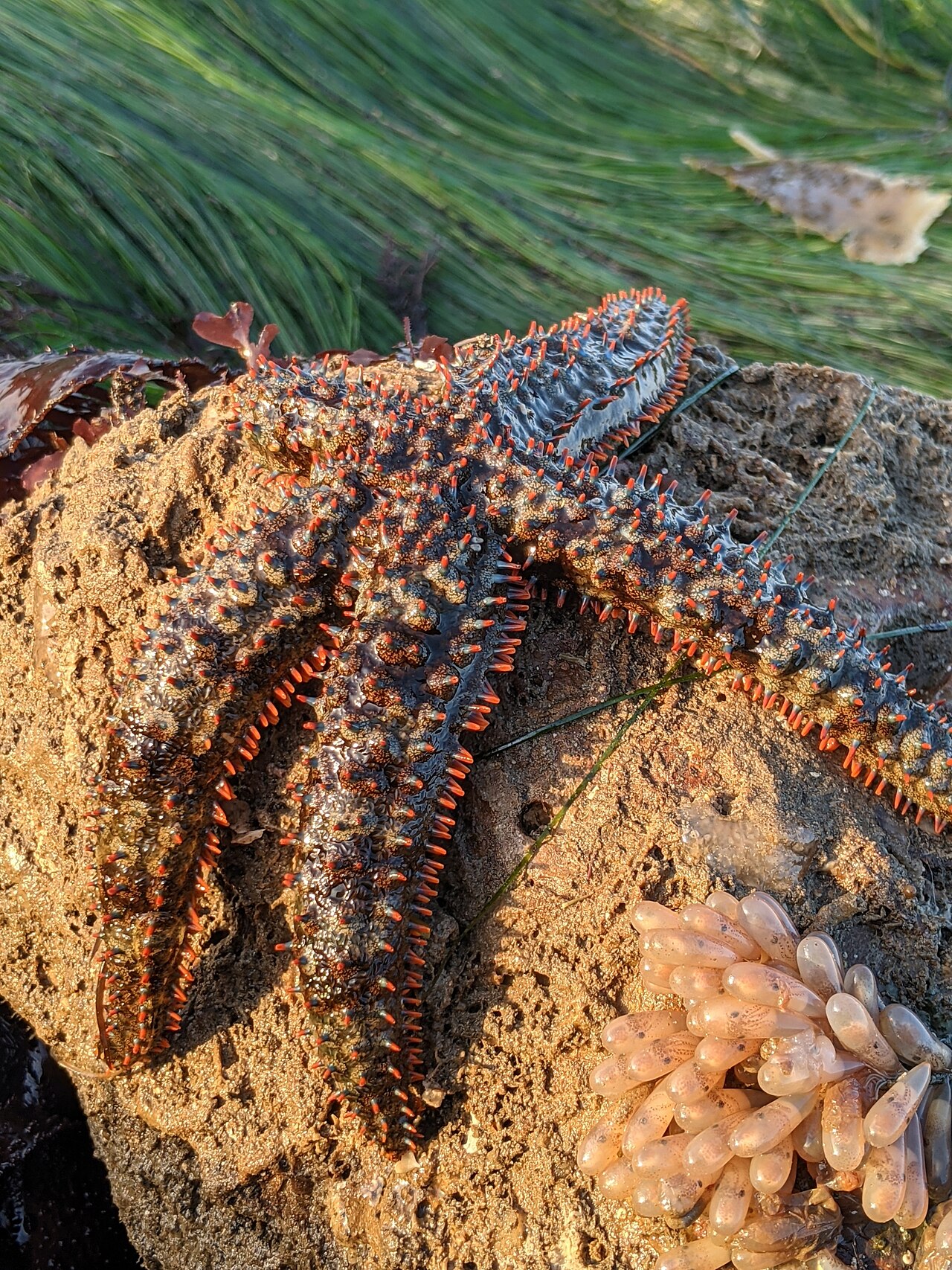
The fragile rainbow star is the only species in the genus Astrometis. Its common name derives from its often brilliant coloration: spines on the top side can be purple, orange, or blue with red tips, and the tube feet often have several colors. The species grows to 8.1 cm and almost always has five symmetric arms.
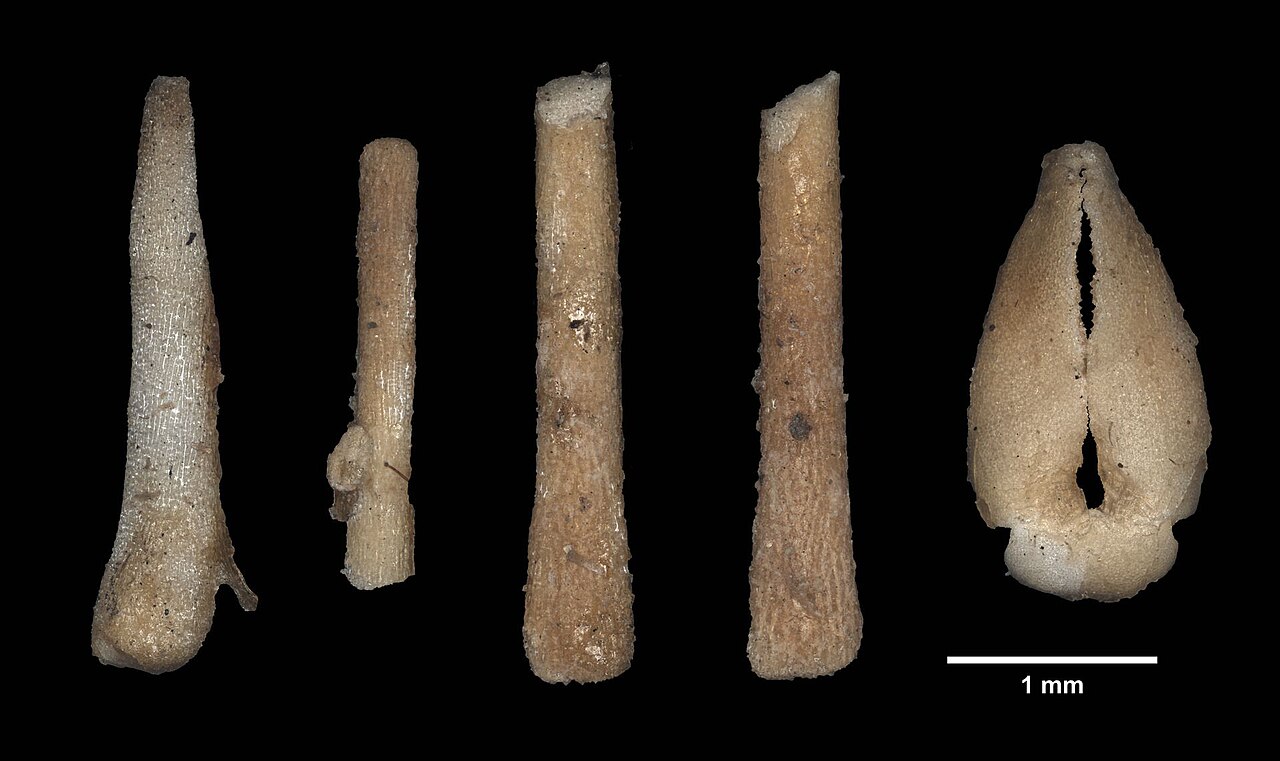
Like all sea stars, it can occasionally break off and later regrow an arm, but it has less tendency to discard limbs than most sea stars in California. Its feeding method is unique among sea stars: rather than grasping prey from below with tube feet, it captures prey on its top surface using pedicellariae—parrot-beak-like appendages set into cushions surrounding the larger multi-colored spines. When prey is sensed, the cushion is raised above the spines, and the jaws clamp shut, holding prey immobile before it is transferred under the animal and eaten.
Fragile rainbow stars feed primarily on small crabs, though chitons, snails, clams, barnacles, brittle stars, and urchins have also been found in their diet. They are eaten by sunstars in the genus Heliaster.
Reader's Guide
The fragile rainbow star is significant as the sole representative of the genus Astrometis, making it a distinct lineage among sea stars. Its unique feeding method—capturing prey on its top surface using pedicellariae rather than tube feet—sets it apart from other sea stars and highlights the diversity of feeding strategies within the group. The species' brilliant coloration, with spines in purple, orange, or blue with red tips, contributes to its common name and makes it visually notable. Its geographic range from Santa Barbara to the Gulf of California defines its distribution. The species' tendency to break off and regrow arms, though less pronounced than in other California sea stars, is a typical regenerative ability. Its diet includes small crabs and various other invertebrates, and it is preyed upon by sunstars in the genus Heliaster. These ecological relationships underscore its role in the marine food web. The species' monotypic status and unique feeding behavior make it a subject of interest for understanding evolutionary specialization among sea stars.
Taxonomy & Geographic Range
Astrometis sertulifera, commonly called the fragile rainbow star, holds a unique place in marine taxonomy as the sole species within the monotypic genus Astrometis. No other sea star shares this genus, making the fragile rainbow star a taxonomic one-of-a-kind in the starfish world. The species is documented across a stretch of the eastern Pacific, ranging from the coastal waters near Santa Barbara, California, down to the Gulf of California. Its common name elegantly bundles two of its most recognizable qualities: the word "fragile" alludes to its delicate build, while "rainbow" evokes the dazzling, multicolored display that characterizes its body. Because the genus contains only this single species, every individual carries the entirety of Astrometis's biological identity, with no sibling species to share the lineage. The genus was established by Fisher in 1923, and the species has since been formally catalogued in authoritative marine databases such as the World Register of Marine Species, cementing its status as a distinct and well-recognized member of the intertidal fauna along this Pacific coastline.
Appearance & Coloration
The fragile rainbow star earns its colorful nickname through a display that is genuinely striking among marine invertebrates. The spines adorning its upper surface can appear in shades of purple, orange, or blue, and these spines are frequently tipped with a vivid red, creating a layered chromatic effect. The tube feet, which line the underside, are often multi-colored as well, adding yet another dimension of visual complexity to the animal's overall appearance. In terms of size, the species reaches a maximum of approximately 8.1 centimeters, making it a modest but visually commanding presence in its habitat. Morphologically, the fragile rainbow star almost always presents with five symmetrically arranged arms, a configuration that is consistent across the population. The combination of its relatively small stature, the regular five-armed symmetry, and the brilliant coloration of both its dorsal spines and ventral tube feet gives this sea star a jewel-like quality that sets it apart from the more uniformly colored starfish typically encountered along the California coast.
A Unique Feeding Strategy
What distinguishes the fragile rainbow star from its sea star relatives is its remarkably unconventional method of capturing and consuming prey. While most starfish grasp their food from below using tube feet, this species instead captures prey on its upper surface, employing a set of specialized appendages called pedicellariae. These structures resemble tiny parrot beaks and are embedded in fleshy cushions that sit among the larger, multicolored spines on the animal's dorsal side. When the star senses prey nearby, the cushion elevates above the surrounding spines, and the beak-like jaws snap shut, clamping the victim in place. The captured animal can be held motionless for a period before being transferred beneath the star's body for consumption. Its primary dietary target is small crabs, though its menu also extends to chitons, snails, clams, barnacles, brittle stars, and sea urchins. This top-surface predation strategy is genuinely singular among sea stars, representing a fascinating adaptation that allows the fragile rainbow star to exploit prey in a manner no other member of its class typically employs.
Regeneration & Predation
Like all sea stars, the fragile rainbow star possesses the capacity to break off an arm and subsequently regrow a replacement, a survival mechanism that aids in escaping predators or recovering from physical damage. Yet compared to most other California sea stars, this species displays a noticeably lower propensity to voluntarily discard its limbs, indicating it leans less heavily on autotomy as a defensive tactic. At the other end of the food chain, the fragile rainbow star itself is not immune to predation. Sunstars in the genus Heliaster are documented consumers of this species, placing the small, vividly colored star in a position where it is both an active predator of small invertebrates and a food source for a larger starfish. This dual ecological role highlights the layered interactions within the intertidal and subtidal communities of the eastern Pacific. The combination of its relatively conservative arm-shedding behavior and its vulnerability to being consumed by a Heliaster sunstar suggests a species that has not evolved the dramatic limb-discard reflex seen in many of its coastal neighbors, instead relying on other strategies to navigate the competitive and predatory pressures of its habitat.
Gallery


More in Starfish 1-24
Spotted an error? Know more?
Reader corrections go straight into our review queue. Suggest an edit · How this site is sourced