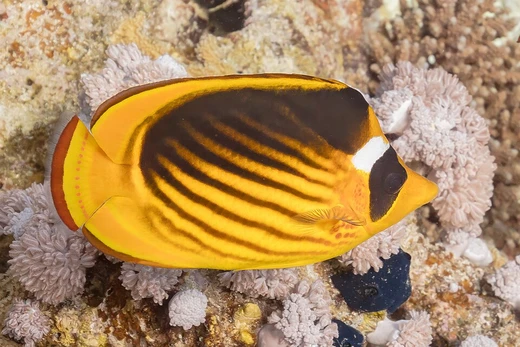
Symphysodon aequifasciatus
A jewel of the Amazon that demands the water of its slow, dark rivers to thrive.

Symphysodon aequifasciatus, commonly known as the discus fish, is a large, laterally compressed freshwater cichlid native to the slow-moving, tannin-stained blackwater tributaries of the Amazon River basin in South America. First described by Johann Jakob Heckel in 1840, it is one of the most iconic and demanding species in the freshwater aquarium hobby, often called the 'king of the aquarium' for its striking coloration, graceful movement, and exacting husbandry requirements.
In the aquarium trade, the discus occupies a unique niche: it is simultaneously a centerpiece showpiece and a litmus test for a keeper's ability to maintain stable, soft, warm, and clean water over the long term. Its sensitivity to nitrate spikes, parameter swings, and poor water quality makes it a species that rewards meticulous husbandry and punishes neglect, which is precisely why it has become a rite of passage for serious freshwater aquarists.
- Common name
- Discus fish
- Family
- Cichlidae
- Origin
- Amazon River basin, South America (blackwater tributaries)
- Body form
- Laterally compressed, disc-shaped
- Reproduction
- Egg-layer; both parents guard the nest
- Typical adult size
- 15–20 cm (6–8 in)
- Sexual system
- Protandrous hermaphrodite (can change sex)
Lore & Background
In the wild, Symphysodon aequifasciatus inhabits the sluggish, oxygen-poor, tannin-rich side channels and oxbow lakes of the upper and middle Amazon. These blackwater habitats are warm (often 28–30 °C), acidic (pH 5.5–6.5), and soft, with light filtered through dense canopy into a dim, amber glow. The discus is a mid-water, schooling feeder that picks insects, small crustaceans, and plant matter from the surface and mid-column, often following the slow drift of organic detritus. Its broad, disc-shaped body is an adaptation to maneuvering in dense, vegetated water with little open swimming space.
The species is a protandrous hermaphrodite: individuals typically mature as males first and may later transition to females, a strategy that allows a pair to adjust their sex ratio in response to the number of offspring they can successfully raise. Breeding pairs select a flat substrate—often a broad leaf, a piece of wood, or a smooth rock—on which the female deposits a single layer of eggs. Both parents fan the eggs, remove dead ones, and guard the fry for several weeks. In the wild, the fry feed on mucus secreted by the parents' skin, a form of parental investment that is well documented in cichlid biology.
In the aquarium trade, the discus has been selectively bred into a remarkable array of color morphs—turquoise, brown, marbled, snailshell, and numerous hybrid lines—yet the underlying biology remains that of a riverine cichlid. Keepers who replicate the stable, warm, soft, acidic conditions of its native blackwater channels report the most vibrant coloration, the most active behavior, and the longest lifespans, which can exceed fifteen years under optimal care.
Reader's Guide
Temperature: Maintain 28–30 °C (82–86 °F) with minimal daily fluctuation. Sudden shifts of more than 1–2 °C can trigger stress, immune suppression, and disease. Use a reliable heater with an external thermostat backup. (Experienced keeper consensus; consistent with general aquaculture literature on Amazonian cichlids.)
Water chemistry: Target pH 5.5–7.0, general hardness below 10 dGH, and nitrate below 20 ppm. Perform weekly water changes of 25–40 % using dechlorinated, softened water matched to the tank's temperature. Tannin sources (leaf litter, Indian almond, or commercial blackwater products) help replicate the acidic, soft conditions of the native habitat. (Keeper consensus; widely recommended in published discus husbandry guides.)
Feeding: Offer a varied diet of high-quality pellets, frozen brine shrimp, bloodworms, and occasional live or frozen insect larvae. Feed small amounts 2–3 times daily. Overfeeding is the most common mistake and a primary driver of nitrate spikes and digestive issues. (Published aquaculture literature and keeper consensus.)
Common mistakes: (1) Introducing discus into a newly cycled or unstable tank; (2) mixing them with aggressive or fast-swimming tankmates; (3) ignoring early signs of stress (pale color, clamped fins, surface breathing); (4) using hard, alkaline tap water without conditioning. Keep discus in groups of at least six to reduce stress and encourage natural schooling behavior. (Keeper consensus.)
Did You Know?
- Discus are protandrous hermaphrodites: they typically mature as males first and can later change to females, allowing a breeding pair to adjust its sex ratio based on how many fry it can successfully raise.
- In the wild, discus fry feed on mucus secreted from the parents' skin for the first several weeks, a form of parental nutrition well documented across cichlid families.
- The species was described by Johann Jakob Heckel in 1840 from specimens collected in the Amazon basin, making it one of the earlier large cichlids formally named in Western science.
- The broad, disc-shaped body of the discus is an adaptation to maneuvering in the dense, slow-moving, vegetated blackwater channels of the upper Amazon, not an open-water habitat.
More in Aquarium Keeping
Elsewhere in Diagonal butterflyfish
Spotted an error? Know more?
Reader corrections go straight into our review queue. Suggest an edit · How this site is sourced