Backreef
The calm, shallow nursery behind the reef crest where the ocean raises its young.

The backreef is the shoreward (leeward) zone of a coral reef system, extending from the reef crest or reef flat to the adjacent beach, mangrove fringe, or seagrass meadow. It is the calmest, shallowest band of the reef and is distinguished from the fore-reef by its markedly reduced wave energy, higher sediment loading, and a mosaic of patch reefs, rubble fields, and soft-bottom habitats rather than the continuous hard-substrate framework found on the seaward slope.
Ecologically, the backreef functions as a critical nursery and foraging ground for a wide range of reef-associated fish, crustaceans, and invertebrates. Its sheltered conditions and structural heterogeneity support high juvenile survival, while its proximity to terrestrial inputs (mangrove leaf litter, seagrass detritus) makes it a key node in the reef's nutrient and energy budgets.
- Type
- Reef habitat zone (leeward / shoreward)
- Position relative to reef crest
- Behind (shoreward of) the reef crest and reef flat
- Typical depth range
- 0 – ~5 m (varies by locale and tide)
- Wave exposure
- Low; energy attenuated by crest and flat
- Dominant substrates
- Sand, rubble, patch reefs, seagrass, mangrove prop roots (where present)
- Primary ecological role
- Nursery habitat; juvenile refugia; detritus-processing zone
Lore & Background
In reef-ecology literature the backreef is consistently described as the transitional band where marine and terrestrial productivity overlap. Where mangroves fringe the shore, leaf litter and fine organic detritus wash into the backreef lagoon, feeding a detritivore community of detritivorous fish (e.g., certain wrasses, parrotfish, and mullets), crustaceans, and benthic invertebrates. This input supplements the photosynthetically driven food web of the fore-reef and is considered a major pathway of carbon and nutrient transfer into the reef system.
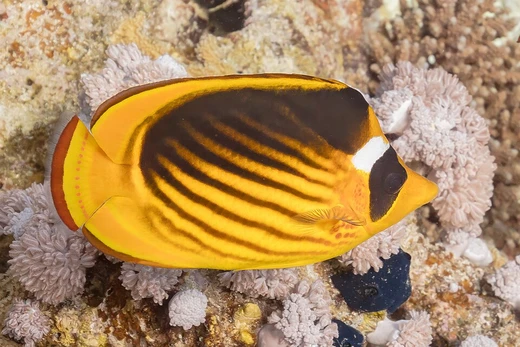
The structural complexity of the backreef—scattered patch reefs of Acropora, Porites, and other genera set within sand or rubble—creates a patchy mosaic of microhabitats. Juvenile reef fish, particularly species of damselfishes, butterflyfishes, and wrasses, exploit these patches as refugia from predators that dominate the more open fore-reef. The reduced current speeds (typically well under 0.1 m/s in the lagoon) also favour suspension-feeding and benthic-feeding strategies that would be energetically costly on the exposed seaward slope.
Sediment resuspension is a recurring stressor in backreef habitats, especially in atolls and barrier-reef lagoons where the water column is shallow and easily agitated by wind or vessel traffic. Turbidity can smother coral recruits and reduce light penetration for seagrass beds, making the backreef one of the most vulnerable zones in the reef system to coastal development and land-based runoff.
Reader's Guide
Shallow lagoon / backreef flat (0–3 m, sand and rubble) → Juvenile damselfishes, butterflyfishes, and wrasses use scattered patch reefs and rubble as predator refugia; the low current allows benthic foraging on microalgae and invertebrates. Documented in atoll lagoons worldwide; local absence of patch reefs (e.g., heavily dredged or sediment-choked lagoons) correlates with reduced juvenile fish density.
Seagrass meadow adjacent to backreef (1–4 m, sandy substrate with Halophila or Thalassia beds) → Detritivorous mullets, parrotfish, and crustaceans process seagrass detritus; seagrass also stabilises sediment and provides spawning substrate for some flatfish. Range extension noted in some Caribbean and Indo-Pacific sites where seagrass has recolonised formerly bare sand.
Mangrove fringe / prop-root zone (intertidal to ~2 m) → Juvenile snappers, groupers, and a diversity of shrimp and crabs shelter among prop roots; leaf-litter detritus enters the water column and feeds the benthic community. Absent in high-energy or non-tropical settings; present in most tropical backreef systems.
Backreef patch reefs (1–5 m, hard substrate within sand) → Adult and sub-adult reef fish, cleaner shrimp, and a high density of invertebrate recruits; these patches act as stepping-stone habitats linking the nursery lagoon to the fore-reef. Local absences reported where sedimentation exceeds ~10 mg/L for sustained periods, smothering living coral.
Did You Know?
- The backreef is the zone where terrestrial organic input (mangrove litter, seagrass detritus) is most directly coupled to the reef food web, making it a key carbon-transfer pathway in tropical coastal systems.
- Juvenile survival rates for many reef fish species are significantly higher in backreef patch-reef habitats than on the open fore-reef slope, owing to reduced predation pressure and lower current speeds.
- In atoll systems, the backreef lagoon can be the only habitat available for some endemic invertebrate species, making it irreplaceable even though it is the most exposed to sedimentation and coastal development.
- The backreef's calm conditions mean that many species found there—particularly benthic-feeding and detritivorous fish—would be energetically unable to sustain themselves on the wave-battered fore-reef.
More in Distribution & Habitat
Elsewhere in Diagonal butterflyfish
Spotted an error? Know more?
Reader corrections go straight into our review queue. Suggest an edit · How this site is sourced