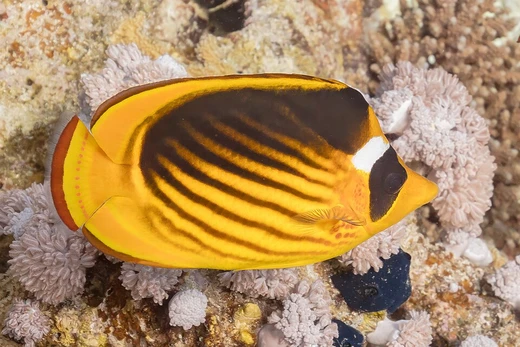
Carassius auratus
A thousand years of selective breeding distilled into the world's most iconic ornamental fish.

Carassius auratus, universally known as the goldfish, is a freshwater cyprinid native to East Asia and the most widely kept ornamental fish in the world. Domesticated from the Prussian carp (Carassius gibelio) in China over a millennium ago, it has since been selectively bred into an extraordinary diversity of body shapes, fin morphologies, and colour patterns—from the streamlined common (or 'feeder') goldfish to the double-bodied Oranda, Ryukin, and Bubble-eye varieties.
In the aquarium and pond-keeping world, Carassius auratus occupies a unique position: it is simultaneously one of the most accessible species for beginners and one of the most demanding in terms of space, filtration, and water-quality management. Its reputation as a 'bowl fish' is a persistent misconception that contradicts published aquaculture guidance and the consensus of experienced keepers alike.
- Common name
- Goldfish
- Scientific name
- Carassius auratus
- Family
- Cyprinidae
- Native range
- East Asia (China, Korean Peninsula, Japan)
- Habitat type
- Freshwater – lakes, slow-flowing rivers, ponds
- Domestication ancestor
- Prussian carp (Carassius gibelio)
- Body form
- Highly variable (single-tailed, double-tailed, bubble-eye, etc.)
Lore & Background
The domestication of the goldfish is traditionally traced to the Jin and Song dynasties in China, where selective breeding of golden and white morphs of the Prussian carp in temple ponds and imperial collections gave rise to the first recognisably 'fancy' forms. Historical records and poetry from the 10th–13th centuries reference ornamental carp in garden ponds, and by the Ming dynasty the variety of colour and fin morphology had expanded considerably. The species reached Europe in the 16th–17th centuries via trade routes, and Dutch, English, and German breeders subsequently developed the modern fancy varieties—Oranda, Ryukin, Fantail, Bubble-eye, and others—through centuries of deliberate selection.
In the wild, the undomesticated ancestor, Carassius gibelio, is a hardy, schooling cyprinid of slow-moving freshwater bodies across northern and eastern Asia. It is an opportunistic omnivore, feeding on benthic invertebrates, detritus, algae, and plant matter. The domesticated goldfish retains these behavioural and dietary traits, which is why it thrives in well-established ponds and large, planted aquariums where it can forage across multiple water columns.
The species has also become an important model in developmental biology and genetics, particularly for studies of scale pigmentation, fin morphogenesis, and the genetic basis of body-shape variation. Its relatively short generation time and high fecundity make it a practical laboratory organism, while the extreme phenotypic diversity among cultivated strains provides a natural 'genetic toolkit' for researchers studying developmental plasticity.
Reader's Guide
Temperature and acclimatisation: Carassius auratus is a cold-water species. Published aquaculture literature and experienced keeper consensus place the optimal range at roughly 18–24 °C (64–75 °F). They tolerate brief excursions below 10 °C in outdoor ponds but should not be kept in tropical-temperature setups (26 °C+) long-term, as this accelerates metabolism, increases bioload, and shortens lifespan. Acclimacimise new fish by floating the bag 15–20 min, then adding small increments of tank water every 5 min over 30–40 min before netting them in.
Filtration and tank volume: Goldfish produce a high bioload relative to their size. Keeper consensus and published guidance both stress that a single adult common goldfish needs a minimum of 100–150 L (25–40 US gal) of well-filtered water, with additional volume per additional fish. Fancy (double-bodied) forms are less active but still need robust mechanical and biological filtration. A common mistake is the 'goldfish bowl'—a small, unfiltered container that leads to ammonia and nitrite toxicity within days. Use a canister or sump filter sized at 4–6× the tank volume per hour.
Diet and feeding: Goldfish are omnivorous. A varied diet of quality flake or pellet, supplemented with blanched vegetables (zucchini, spinach), frozen brine shrimp, and occasional live or frozen invertebrates, mirrors their natural foraging behaviour. Feed 1–2 small portions daily; remove uneaten food after 2–3 min to prevent fouling. Overfeeding is the single most common keeper error and is a primary driver of poor water quality and swim-bladder issues.
Water parameters and maintenance: They are hardy but prefer stable, well-oxygenated water. Weekly 20–30% partial water changes, dechlorinated and temperature-matched, are standard practice. Monitor ammonia, nitrite, and nitrate regularly, especially in new or heavily stocked systems. Avoid sudden pH swings; a range of 7.0–8.4 is within normal tolerance. (Source: published aquaculture literature; experienced keeper consensus.)
Did You Know?
- The goldfish is the oldest continuously domesticated ornamental fish, with selective breeding in China documented for well over a thousand years, predating the domestication of most other ornamental species.
- Despite the popular 'three-second memory' myth, behavioural studies have demonstrated that goldfish can learn mazes, associate sounds with feeding, and recognise individual keepers over periods of weeks to months.
More in Aquarium Keeping
Elsewhere in Diagonal butterflyfish
Spotted an error? Know more?
Reader corrections go straight into our review queue. Suggest an edit · How this site is sourced