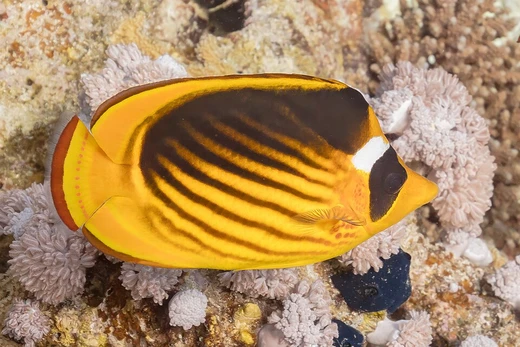
Pterophyllum scalare
Sail-finned elegance from the Amazon's blackwater rivers.

Pterophyllum scalare, commonly known as the freshwater angelfish, is a species of cichlid native to the slow-moving, tannin-stained tributaries of the Amazon River basin in South America. First described by Carl Linnaeus in 1758, it is one of the most iconic freshwater species in the ornamental aquarium trade, prized for its laterally compressed body and the dramatic, sail-like extensions of its dorsal and anal fins.
The species occupies a mid-water position in its natural habitat, foraging among submerged vegetation and leaf litter for small invertebrates, crustaceans, and plant detritus. In captivity it has been the subject of extensive selective breeding, producing a wide array of color morphs and fin variants that have made it a cornerstone of community and planted freshwater aquariums worldwide.
- Common name
- Freshwater Angelfish
- Taxonomic family
- Cichlidae
- Native range
- Amazon River basin (Brazil, Peru, Colombia, Venezuela, Guyana)
- Typical adult length
- 15–20 cm (body plus fin span)
- Habitat type
- Freshwater, blackwater, slow-flowing rivers
- Originally described
- 1758 (Linnaeus)
- Temperament
- Semi-aggressive, territorial
Lore & Background
In the wild, Pterophyllum scalare favours the quieter backwaters and oxbow lakes of the lower Amazon and its tributaries, where water is often stained a deep amber by dissolved tannins and the dissolved-oxygen profile is modest. The fish forages in small groups or as a mated pair, picking small crustaceans, insect larvae, and soft plant matter from submerged roots and the leaf-litter floor. Its laterally compressed, disc-like body and the long, trailing dorsal and anal fins give it a silhouette unlike any other cichlid, an adaptation thought to aid manoeuvrability in dense, root-tangled cover.
Reproduction in the wild is tied to the seasonal rise and fall of water levels. A mated pair selects a flat surface—a broad leaf, a slab of clay, or a smooth stone—and the female deposits a clutch of adhesive eggs in a spiral pattern while the male fertilises. Both parents fan the eggs and guard the site aggressively for the first several days; the young hatch as free-swimming fry after roughly two to three days and remain under parental protection for a further week or more. This biparental care is characteristic of many Neotropical cichlids but is expressed here with a conspicuous territorial ferocity that can drive even larger fish away from the spawning site.
The genus Pterophyllum contains only a handful of recognised species, and P. scalare is by far the most widely distributed and the one that has entered the global aquarium trade in the greatest numbers. Its close relatives, such as P. leopoldi and P. altum, occupy more restricted ranges and are considerably rarer in commerce, but all share the same fundamental body plan and ecological niche within the Amazon system.
Reader's Guide
Tank size and stocking: Pterophyllum scalare is a mid-to-large cichlid that needs vertical space. Published aquaculture references and experienced keeper consensus recommend a minimum of 75 US gal (≈280 L) for a breeding pair or a small group, with a tall tank (≥ 36 in / 90 cm) to accommodate the full fin span. Avoid housing with small, nippy tetras or dwarf cichlids; compatible tankmates include larger characins, catfish (Corydoras, Hypancistrus), and other mid-sized cichlids of similar temperament.
Water parameters: Source literature for Amazonian blackwater species consistently cites a pH range of roughly 6.0–7.0, general hardness in the soft-to-moderate band, and a temperature window of about 24–29 °C (75–84 °F). A gentle, diffuse flow and a dark substrate with leaf litter (catappa or Indian almond leaves) replicate the tannin-stained, low-mineral conditions of the wild and reduce stress. Common mistake: running the tank at high hardness and alkaline pH, which can impair colouration and increase susceptibility to ich.
Feeding: Omnivorous in the wild. A varied diet of high-quality flake or pellet as a base, supplemented 2–3× weekly with frozen or live brine shrimp, daphnia, and small pieces of blanched zucchini or spinach, matches published dietary recommendations. Overfeeding is the most frequent keeper error and leads to water-quality crashes.
Breeding (keeper consensus): Provide a flat spawning surface (tile, glass pane, or broad leaf). A well-conditioned pair will spawn after a courtship display; both parents guard the clutch. Remove the pair from a community tank to reduce aggression toward non-breeding fish. Hatch in roughly 48–72 h; fry feed on infusoria initially, then microworms or finely crushed flake.
Note: All parameters above reflect widely cited ranges in ornamental-aquarium literature and long-standing keeper consensus rather than a single proprietary protocol. Adjust to your local water chemistry and observed fish behaviour.
Did You Know?
- Despite the shared common name, the freshwater angelfish (Cichlidae) is not related to the marine angelfishes (family Pomacanthidae); the resemblance is a case of convergent evolution in body shape.
- Linnaeus described the species in 1758, making it one of the earliest ornamental fish species formally named in the scientific literature.
- In the wild the species inhabits blackwater waters with dissolved mineral content often below 50 ppm TDS, a condition that is difficult to replicate in hard-water regions and a common source of keeper frustration.
More in Aquarium Keeping
Elsewhere in Diagonal butterflyfish
Spotted an error? Know more?
Reader corrections go straight into our review queue. Suggest an edit · How this site is sourced