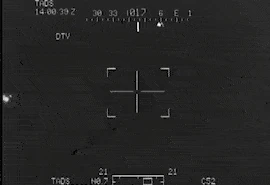
VSS Enterprise crash
First SpaceShipTwo test vehicle destroyed in 2014 crash.

VSS Enterprise was a SpaceShipTwo experimental spaceflight test vehicle operated by Virgin Galactic. It was the first of five SpaceShipTwo craft planned by Virgin Galactic and was the sole Scaled Composites Model 339 SpaceShipTwo test vehicle. On October 31, 2014, during a test flight, it suffered a catastrophic in-flight breakup and crashed in the Mojave Desert near Cantil, California, resulting in the first fatality on a spacecraft in flight since the Space Shuttle Columbia disaster in 2003.
Quick Facts
- Occurrence Type
- Accident
- Date
- 2014-10-31
- Summary
- In-flight break-up caused by design flaw and pilot error
- Site
- Mojave Desert, California, United States
- Aircraft Type
- Scaled Composites Model 339 SpaceShipTwo
- Aircraft Name
- VSS Enterprise
- Operator
- Virgin Galactic
- Tail Number
- N339SS
- Origin
- Mojave Air and Space Port, California, United States
- Destination
- Mojave Air and Space Port
- Occupants
- 2
- Fatalities
- 1
Facts from the source article.
Lore & Background
VSS Enterprise was the first SpaceShipTwo test vehicle, built by Scaled Composites. It had flown 20 captive flights, 31 unpowered glide tests, and three rocket-powered test flights before the accident. On the day of the crash, it was performing its fourth powered flight (PF04) after a nine-month hiatus, testing a new hybrid rocket engine with a nylon-based fuel grain. The flight was its 55th overall and 35th free flight. The vehicle broke apart about eleven seconds after engine ignition, creating a 35-mile-long debris field. Co-pilot Michael Alsbury was killed; pilot Peter Siebold survived with serious injuries.
Reader's Guide
The VSS Enterprise crash marked a significant setback for commercial spaceflight, highlighting the dangers of test piloting and the need for robust safety systems. The National Transportation Safety Board investigation concluded that the breakup was caused by co-pilot Michael Alsbury's premature unlocking of the feathering air brake device at Mach 0.92, well below the designed minimum speed of Mach 1.4. The NTSB cited inadequate design safeguards, poor pilot training, and lack of rigorous FAA oversight as contributing factors. Scaled Composites had assumed that highly trained pilots would not make errors that could cause failures, and did not include fail-safe systems to guard against premature feather deployment. The accident led to the rollout of a second SpaceShipTwo vehicle, VSS Unity, in February 2016, and prompted changes in training and design to prevent similar incidents.
Did You Know?
- The feathering system was unlocked by co-pilot Michael Alsbury at Mach 0.92, but the feathering control was not moved, indicating an uncommanded feathering.
- Pilot Peter Siebold survived the breakup by releasing his seat straps and parachuting from about 50,000 feet; he was not wearing a pressure suit.
- The engine and propellant tanks were recovered intact, disproving initial speculation that the new hybrid rocket engine caused an explosion.
- The NTSB found that Scaled Composites 'put all their eggs in the basket of the pilots doing it correctly' without a fail-safe system.
More in Space program fatalities 1-24
Spotted an error? Know more?
Reader corrections go straight into our review queue. Suggest an edit · How this site is sourced