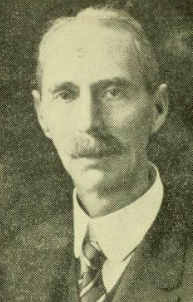
Charles Bassett
NASA astronaut who died before his first spaceflight.

War Department. The Adjutant General's Office. 3/4/1907-9/18/1947 · Public domain
Charles Arthur Bassett II (December 30, 1931 – February 28, 1966) was an American electrical engineer, United States Air Force test pilot, and NASA astronaut. He was selected as an astronaut in 1963 and assigned as pilot of Gemini 9, but died in a training accident before his first spaceflight. He is memorialized on the Space Mirror Memorial, the Astronaut Monument, and the Fallen Astronaut plaque on the Moon.
Quick Facts
- Birth Name
- Charles Arthur Bassett II
- Birth Date
- 1931-12-30
- Birth Place
- Dayton, Ohio, U.S.
- Death Date
- 1966-02-28
- Death Place
- St. Louis, Missouri, U.S.
- Resting Place
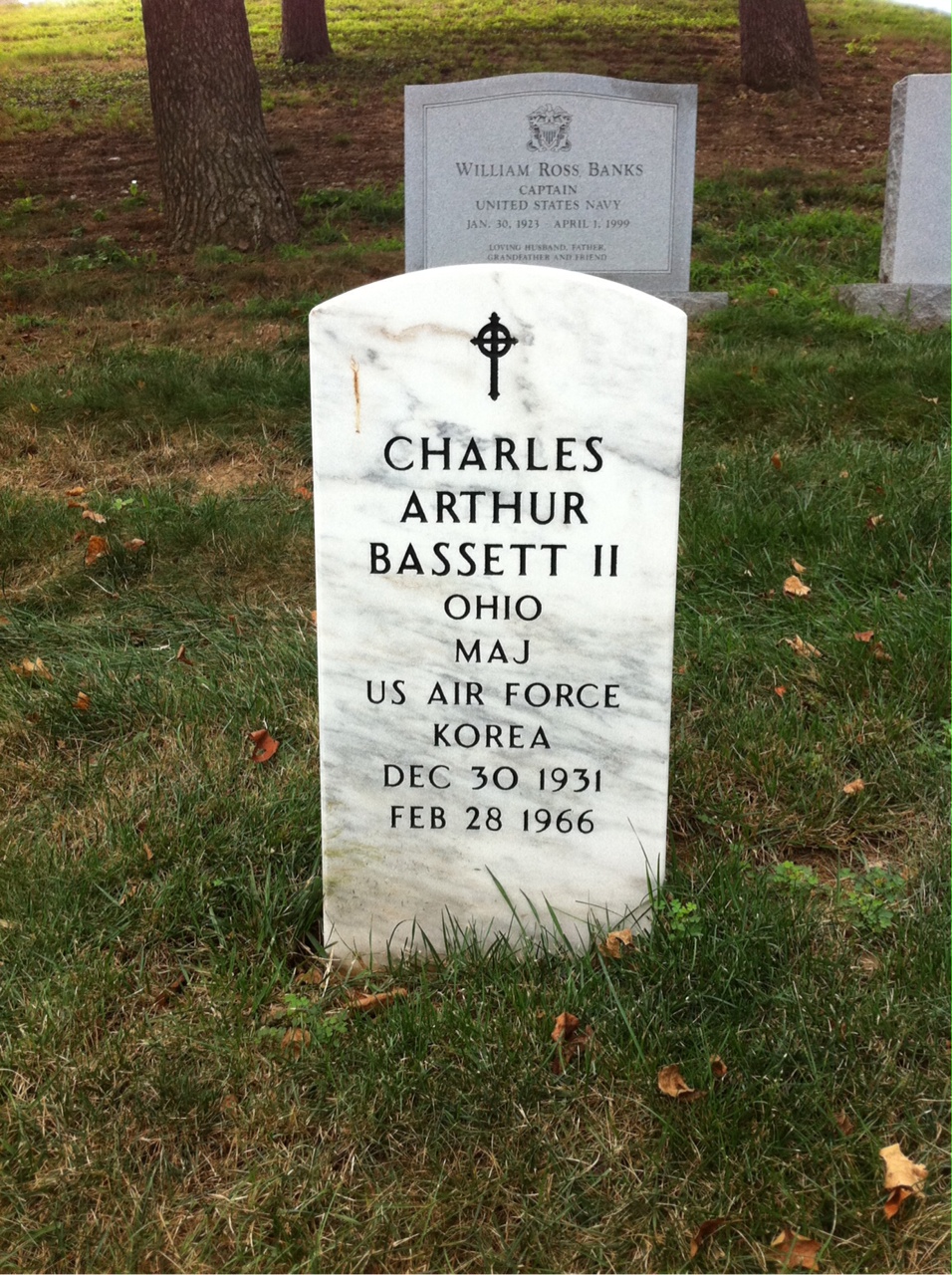
- Arlington National Cemetery
- Education
- Ohio State University / Texas Tech University (BS) / University of Southern California
- Rank
- Major, USAF
- Selection
- NASA Group 3 (1963)
Facts from the source article.
Lore & Background
Bassett was born in Dayton, Ohio, to Charles Arthur Bassett and Fannie Belle Milby Bassett. He was active in the Boy Scouts, achieving Life Scout, and built model airplanes in high school. He soloed at age 16 and earned a private pilot license at 17. After graduating from Berea High School in 1950, he attended Ohio State University from 1950 to 1952, then entered the Air Force as an aviation cadet. He later earned a Bachelor of Science with honors in electrical engineering from Texas Technological College (now Texas Tech University) and did graduate work at the University of Southern California.
Bassett served as a pilot in the 8th Fighter Bomber Group in Korea, flying the F-86 Sabre, though he arrived too late for combat missions. He later flew F-86D, F-102, and C-119 aircraft. He graduated from the Air Force Experimental Flight Test Pilot School and the Aerospace Research Pilot School, and worked as an experimental test pilot at Edwards Air Force Base. He logged over 3,600 flying hours, including over 2,900 in jets.
Selected as a NASA astronaut in October 1963, Bassett was assigned to Gemini 9 with command pilot Elliot See. He was scheduled to perform a ninety-minute untethered spacewalk. On February 28, 1966, See and Bassett died when their T-38 jet crashed into McDonnell Building 101 near Lambert Field. Official reports state Bassett died of multiple injuries from the impact. Both were buried at Arlington National Cemetery.
Reader's Guide
Charles Bassett's significance lies in his role as a member of NASA's third astronaut group and his assignment to Gemini 9, a mission that would have included the first untethered spacewalk. His death, along with Elliot See, highlighted the dangers of training for spaceflight and contributed to NASA's emphasis on safety procedures. The crash, attributed to pilot error in poor visibility, occurred within 500 feet of the Gemini spacecraft being built. Bassett is remembered on multiple memorials, including the Fallen Astronaut plaque placed on the Moon during Apollo 15, symbolizing the sacrifice of those who died in the pursuit of space exploration. His legacy also includes an electrical engineering research building named in his honor at Texas Tech University.
Did You Know?
- Bassett earned his private pilot license at age 17.
- He was a Life Scout in the Boy Scouts of America.
- Official reports state Bassett died of multiple injuries in the crash that killed him and Elliot See.
- His name appears on the Fallen Astronaut plaque on the Moon.
Aviation Roots and Academic Foundation
Charles Arthur Bassett II entered the world on December 30, 1931, in Dayton, Ohio, the son of Charles "Pete" Bassett and Fannie Belle Milby Bassett. His fascination with flight took shape early: as a Boy Scout who earned the Life Scout rank, he also became deeply involved in a high school club that constructed gasoline-powered model airplanes and flew them inside the school gymnasium. That hands-on tinkering with scale aircraft naturally evolved into a hunger for real flight. At sixteen, he made his first solo flight, having scraped together money for lessons by taking odd jobs at a local airport. By seventeen, he held a private pilot license. After graduating from Berea High School in 1950, he enrolled at Ohio State University, where he studied for two years before joining Air Force ROTC in 1952. He later completed a Bachelor of Science in electrical engineering with honors at Texas Tech University in 1960 and pursued additional graduate coursework at the University of Southern California.
Test Pilot and Combat-Ready Aviator
After commissioning as a second lieutenant in December 1953 following training at Stallings Air Base in North Carolina and Bryan Air Force Base in Texas, Bassett moved quickly through a demanding sequence of assignments. At Nellis Air Force Base in Nevada, he logged time in trainer aircraft including the T-6, T-28, and T-33, and flew the F-86 Sabre jet fighter in 1954. He then deployed to Korea with the 8th Fighter Bomber Group, though he arrived too late to fly combat missions—a fact he met with characteristic pragmatism, noting that without a real challenge one never truly learns one's limits. Promoted to first lieutenant in May 1955, he returned to the states and flew the F-86D, F-102, and C-119 from Suffolk County Air Force Base in New York. By November 1960 he was at Maxwell Air Force Base for Squadron Officer School. He went on to graduate from both the Air Force Experimental Flight Test Pilot School and the Aerospace Research Pilot School, earning the rank of captain. As an experimental and engineering test pilot in the Fighter Projects Office at Edwards Air Force Base, he accumulated more than 3,600 total flying hours, over 2,900 of them in jet aircraft.
NASA Selection and the Gemini 9 Assignment
In October 1963, Bassett was named as part of NASA's third group of astronauts, a cohort that would go on to fly the Gemini program. Beyond the standard astronaut training curriculum, he took on specific duties related to training procedures and simulator work. On November 8, 1965, he received what would have been his first spaceflight: selection as pilot of the Gemini 9 mission, with Elliot See serving as command pilot. Bassett was slated to perform an untethered ninety-minute spacewalk outside the spacecraft—a task that, after the original mission was lost, was eventually carried out by Gene Cernan on the follow-on Gemini 9A flight. Chief astronaut Deke Slayton explained his reasoning for pairing the two men, stating that Bassett was "strong enough to carry" both himself and See during the EVA. Slayton had also placed Bassett as command module pilot on the second backup Apollo crew, alongside Frank Borman and William Anders, indicating the confidence NASA leadership placed in his capabilities well before his scheduled flight.
A Tragic Monday and a Lasting Memorial
On the morning of February 28, 1966, Bassett and Elliot See were aboard a T-38 trainer jet, piloted by See, heading to the McDonnell Space Center in St. Louis, Missouri, where they had planned two weeks of simulator training for Gemini 9. The aircraft crashed into McDonnell Aircraft Building 101—the very facility where their Gemini spacecraft was being assembled—just one thousand feet from Lambert Field airport. Both men perished instantly from trauma; they died within five hundred feet of the spacecraft they were meant to fly. See was ejected and found in the parking lot still strapped to his seat with the parachute partially deployed, while Bassett's remains were recovered inside the damaged building. They were buried at Arlington National Cemetery on March 4. NASA's investigative panel attributed the crash to pilot error compounded by poor visibility in bad weather. Bassett's name endures on the Space Mirror Memorial at Kennedy Space Center, the Fallen Astronaut plaque left at Hadley Rille on the Moon by Apollo 15 in 1971, and a dedicated electrical engineering research building at Texas Tech.
Gallery
Frequently Asked Questions
Who was Charles Bassett?
Charles Arthur Bassett II (1931–1966) was an American electrical engineer, U.S. Air Force test pilot, and NASA astronaut. He was born in Dayton, Ohio, and selected into the astronaut corps in 1963.
What mission was Charles Bassett assigned to?
NASA designated him as the pilot for the Gemini 9 flight, a mission focused on testing docking and reentry procedures in the mid-1960s. He never had the chance to fly it because of his death in training.
How did Charles Bassett die?
On February 28, 1966, the T-38 jet he was piloting crashed during a routine training exercise near St. Louis, Missouri. He was 34 years old and had not yet completed a single spaceflight.
Where is Charles Bassett memorialized?
His name is inscribed on NASA's Space Mirror Memorial and the Astronaut Monument at Kennedy Space Center. He is also honored on the Fallen Astronaut sculpture that the Apollo 15 crew left on the lunar surface.
Why is Charles Bassett significant in space history?
He is one of the small number of astronauts who lost their lives on the ground before ever reaching orbit, underscoring the dangers inherent even in pre-flight training. His planned role as Gemini 9 pilot keeps his name tied to a key milestone in early U.S. spaceflight.
More in Space program fatalities 1-24
Spotted an error? Know more?
Reader corrections go straight into our review queue. Suggest an edit · How this site is sourced