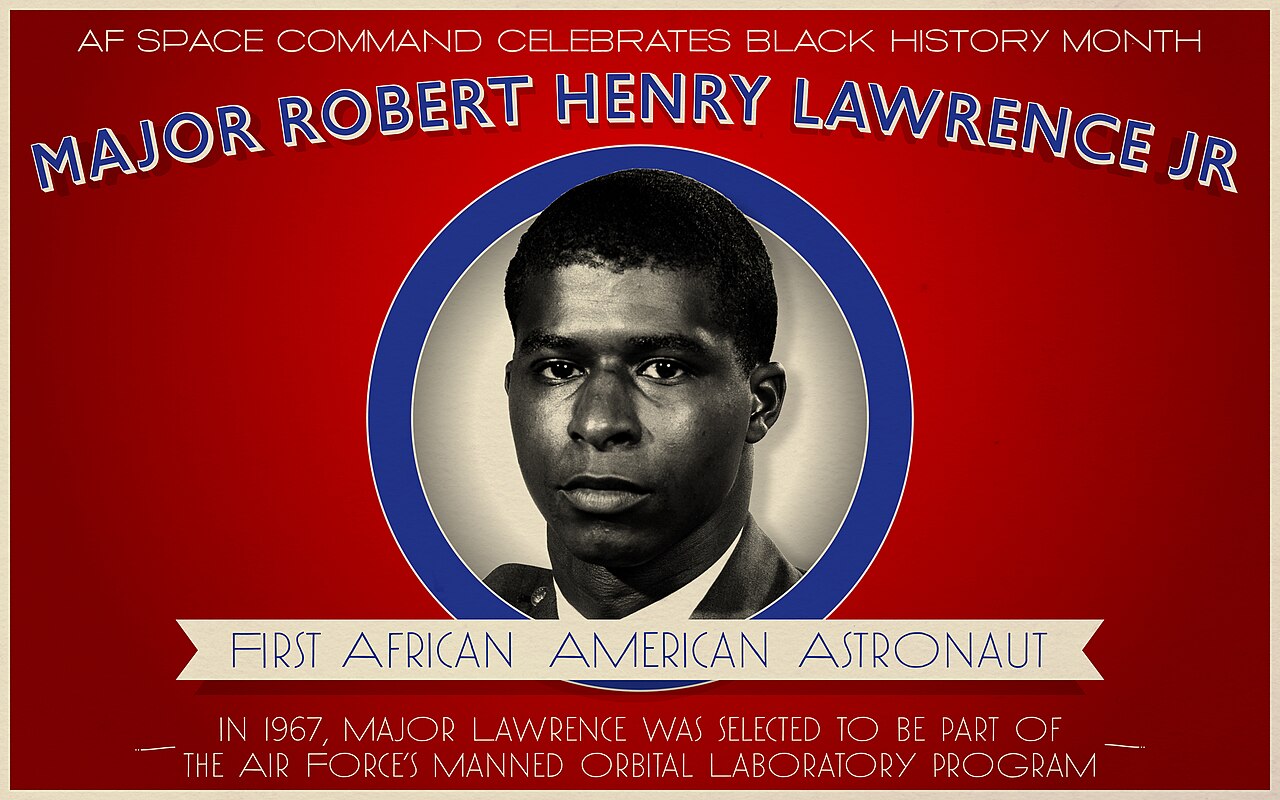
Robert Henry Lawrence Jr.
First African-American selected as an astronaut by the U.S. Air Force.

Immanuel Giel · CC0
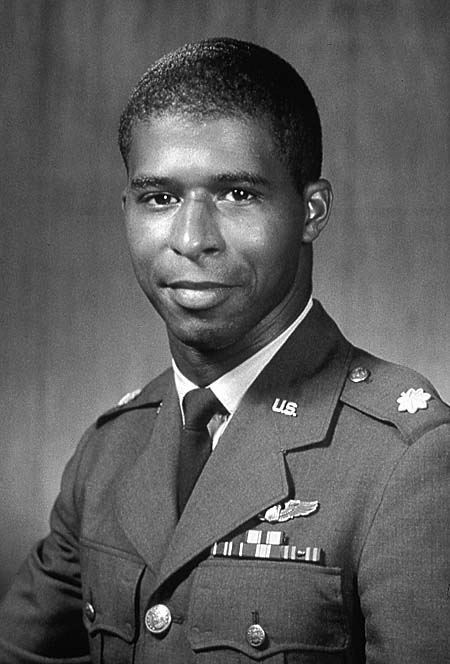
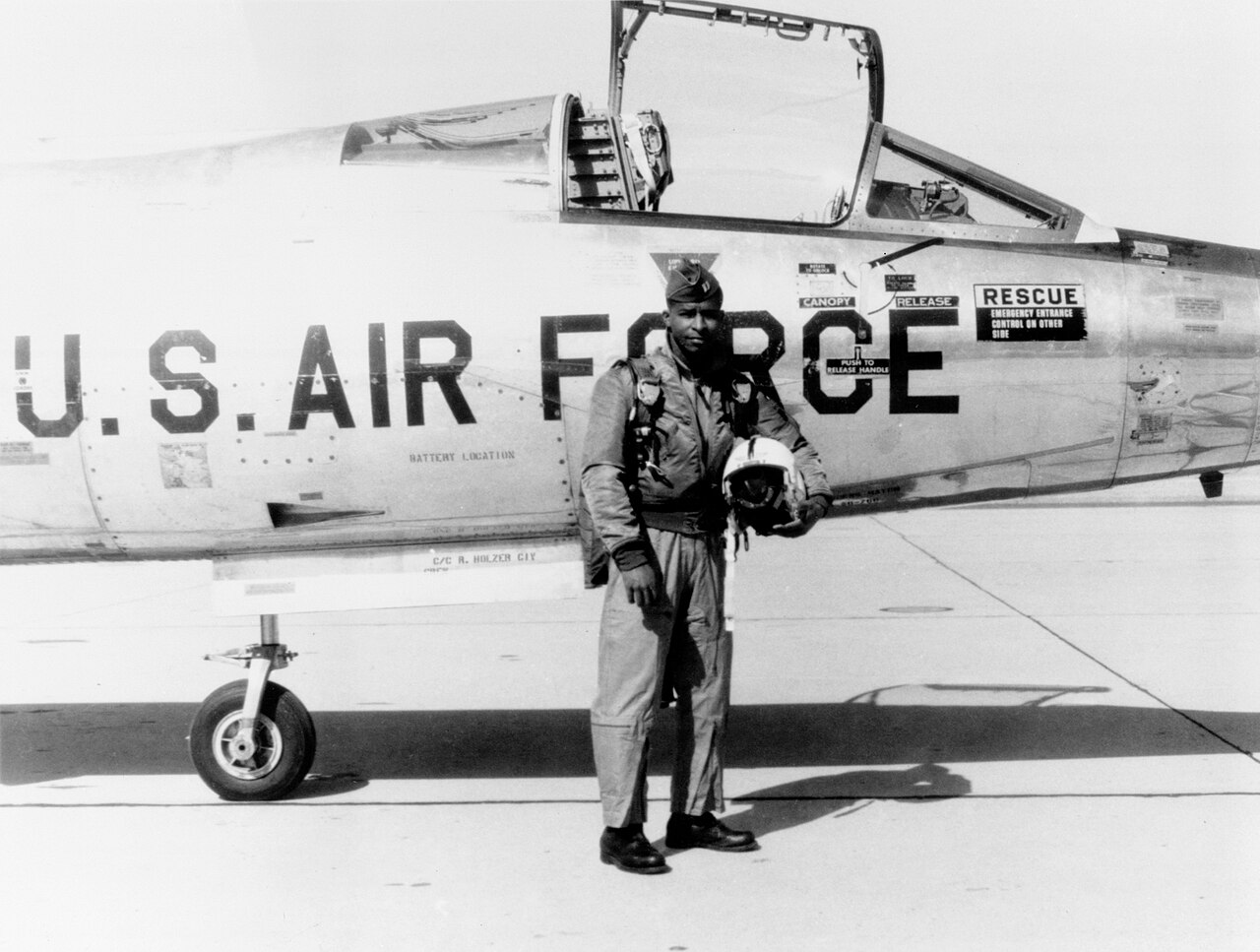
Robert Henry Lawrence Jr. was a United States Air Force officer and the first African-American selected to be an astronaut. He was born and raised in Chicago, Illinois, and earned a PhD in chemistry before being chosen for the Air Force's Manned Orbital Laboratory program in 1967.
Quick Facts
- Honorific Prefix
- Major
- Birth Date
- 1935-10-02
- Birth Place
- Chicago, Illinois, U.S.
- Death Date
- 1967-12-08
- Death Place
- Edwards Air Force Base, California, U.S.
- Education
- Bradley University, BS 1956 · Ohio State University, PhD 1965
- Occupation
- Test pilot
- Rank
- USAFO4 · 25 Major, U.S. Air Force
- Time
- None
- Selection
- 1967 USAF MOL Group 3
Facts from the source article.
Lore & Background
Lawrence graduated from Englewood High School in Chicago at age sixteen, ranking in the top 10 percent. He earned a Bachelor of Science in chemistry from Bradley University in 1956, where he was a member of Omega Psi Phi fraternity and served as Cadet Commander in the Air Force ROTC. He received a commission as second lieutenant in the Air Force Reserve Program. At age 21, he completed flight training at Malden Air Force Base, Missouri, and was designated a U.S. Air Force pilot. He married Barbara Cress at age 22. By 25, he had served as an instructor pilot in the T-33 at Malden Air Force Base for the U.S. Air Force. In 1965, he earned a PhD in chemistry from Ohio State University, with a thesis titled 'The Mechanism of the Tritium Beta-Ray Induced Exchange Reaction of Deuterium with Methane'. He accumulated over 2,500 flight hours, 2,000 in jets, and flew tests in the F-104 Starfighter for unpowered spacecraft gliding flight, contributing data cited by NASA for Space Shuttle development.
Reader's Guide
Lawrence's selection in June 1967 as an astronaut in the Air Force's Manned Orbital Laboratory program made him the first black astronaut in the United States. His response to questions about the historic nature of his selection was measured, calling it 'normal progression' in civil rights. He acknowledged facing problems like other black people but considered himself fortunate in opportunities. His death in a plane crash at Edwards Air Force Base on December 8, 1967, cut short a career that likely would have led to NASA Astronaut Group 7 and Space Shuttle flights after MOL's cancellation. Posthumous honors include inscription on the Space Mirror Memorial in 1997, a sidewalk plaque in Chicago, the naming of the Cygnus spacecraft S.S. Robert H. Lawrence in 2020, and an asteroid named Robertlawrence 92892 in 2020. His legacy as a pioneer in aerospace remains significant, symbolizing the breaking of racial barriers in the astronaut corps.
Did You Know?
- Lawrence graduated from high school at age sixteen in the top 10 percent of his class.
- He was killed in an F-104 crash at Edwards AFB on December 8, 1967, while serving as an instructor pilot.
- The asteroid Robertlawrence 92892 was named after him in 2000.
Roots in Chicago: Education and Early Ambition
Robert Henry Lawrence Jr. entered the world on October 2, 1935, in Chicago, Illinois, where he grew up and completed his early schooling at Haines Elementary. His academic promise showed early: at just sixteen, he finished Englewood High School in 1952, placing in the top ten percent of his class. He then pursued higher education at Bradley University, earning a Bachelor of Science in chemistry in 1956. During those four years at Bradley, Lawrence immersed himself in both intellectual and military life. He joined the Omega Psi Phi fraternity and took on the role of Cadet Commander within the Air Force ROTC program. That commitment to service led to his commission as a second lieutenant in the Air Force Reserve. By the mid-1950s, a young Chicagoan had already charted a path that wove together scientific curiosity, fraternal brotherhood, and a deepening dedication to aviation and the nation's defense establishment.
Pilot, Scientist, and Shuttle Contributor
By twenty-one, Lawrence had completed flight training at Malden Air Force Base in Missouri and been designated a U.S. Air Force pilot. Two years later he married Barbara Cress, the daughter of Chicago's Dr. and Mrs. Henry Cress, and by twenty-five he was serving as an instructor pilot in the T-33 training aircraft for the German Air Force. His scientific ambitions never wavered. In 1965 he earned a doctorate in physical chemistry from Ohio State University, with a dissertation examining the tritium beta-ray-induced exchange reaction of deuterium with methane and ethane in the gas phase. As a senior USAF pilot he accumulated more than 2,500 flight hours, roughly 2,000 of them in jets. Much of that jet time was spent in the Lockheed F-104 Starfighter, conducting test flights that investigated how unpowered spacecraft would glide during reentry from orbit, including work related to the North American X-15 rocket-plane. NASA later acknowledged that his flight maneuver data and accomplishments played a major role in the eventual development of the Space Shuttle.
Breaking the Barrier and Reframing History
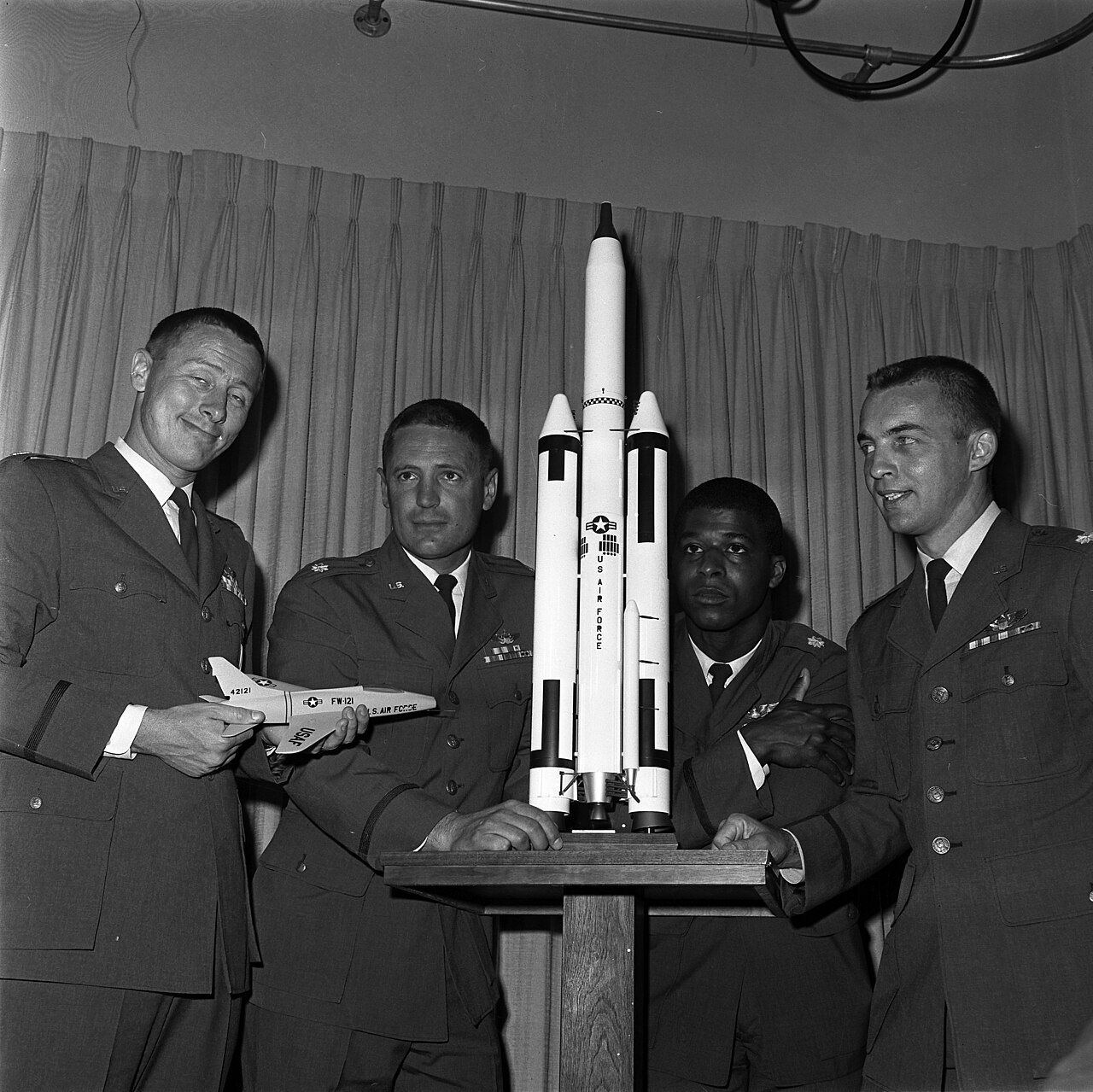
In June 1967, Lawrence graduated from the U.S. Air Force Test Pilot School, Class 66B, at Edwards Air Force Base in California. That very month the Air Force selected him as an astronaut for its Manned Orbital Laboratory program, making him the first African-American chosen for that role in the United States. When reporters asked at the announcement whether he would have to sit in the back seat of the capsule, Lawrence and his fellow MOL astronauts laughed it off. Pressed on whether his selection was historic for race relations, he demurred, calling it "another one of those things that we look forward to in civil rights—normal progression." He acknowledged facing the same problems other Black Americans did but added that he had perhaps been "more fortunate than the others in the opportunities." Fellow MOL astronaut Donald H. Peterson, while careful not to speak for everyone in Mississippi, said he was not reluctant to work alongside a Black colleague.
A Tragic End and a Lasting Mark
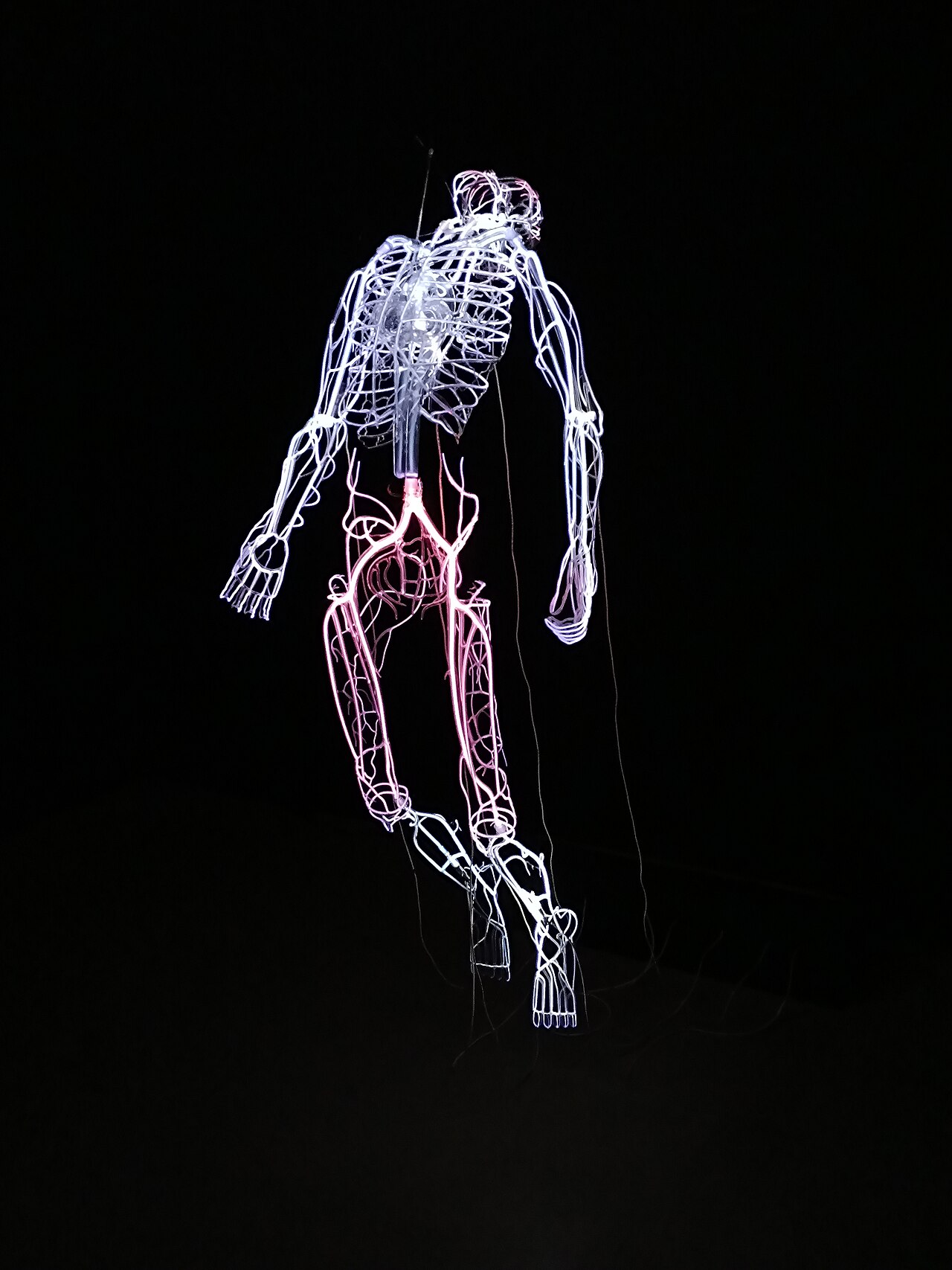
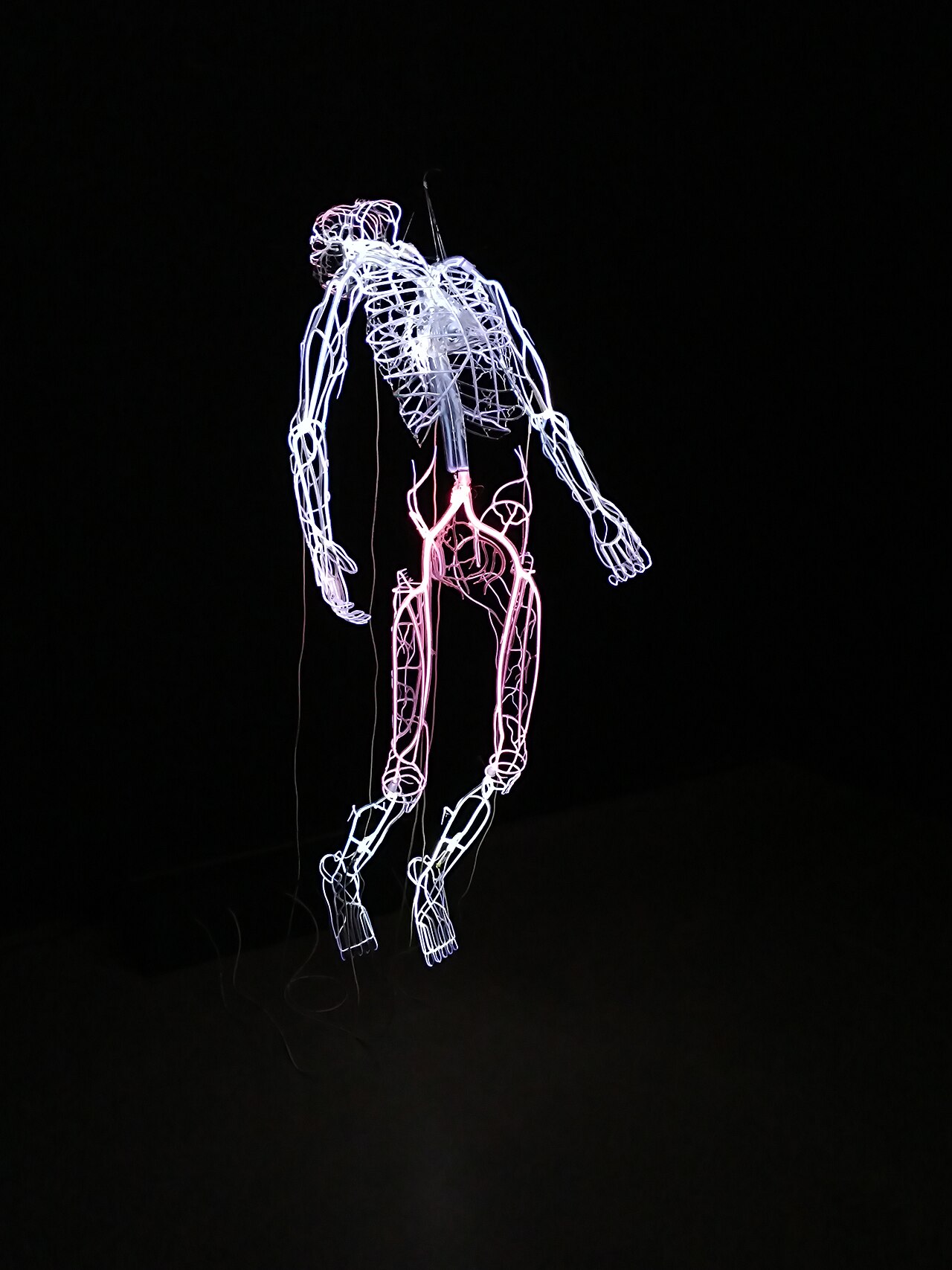
On December 8, 1967, at the age of thirty-two, Lawrence perished in a crash at Edwards AFB. He was seated in the back of an F-104, serving as instructor pilot for trainee Major Harvey Royer, who was practicing a steep-descent glide. Royer flared too late; the aircraft struck the ground hard, its main gear failed, it caught fire, and it rolled. The canopy shattered, and the plane bounced and skidded along the runway for roughly 2,000 feet. Royer ejected upward and survived with serious injuries. Lawrence's back-seat ejection, which delays a moment to clear the front seat, fired sideways and killed him instantly. He remained strapped to his ejector seat; his parachute never opened and was dragged about 75 feet from the wreckage. Had he survived, he would likely have joined the cohort of former MOL astronauts who became NASA's Astronaut Group 7 and all flew the Space Shuttle. His legacy endures through the Space Mirror Memorial inscription at Kennedy Space Center (1997), a Bronzeville Walk of Fame plaque in Chicago, the S.S. Robert H. Lawrence Cygnus spacecraft (2020), the asteroid 92892 Robertlawrence, Tavares Strachan's ENOCH satellite sculpture, and a 2025 art installation at Bradley University.
Gallery
Frequently Asked Questions
Who is Robert Henry Lawrence Jr.?
He was a U.S. Air Force officer and chemist who became the first African-American chosen to serve as an astronaut. Born in Chicago in 1935, he earned a doctorate in chemistry before entering spaceflight selection.
What program was Robert Henry Lawrence Jr. selected for?
In 1967, the Air Force picked him as a pilot-candidate for the Manned Orbital Laboratory (MOL) program, a military space mission. He was the first person of African descent to be chosen for any U.S. astronaut corps.
How did Robert Henry Lawrence Jr.'s life end?
On December 8, 1967, he was killed when his T-38 jet crashed during a training flight in Texas. He was only 32 years old and never got the chance to fly in space.
Why is Robert Henry Lawrence Jr. considered important in space history?
His selection broke a racial barrier in American astronautics, making him a landmark figure for diversity in the space program. He is remembered as a pioneer who opened the door for future astronauts of color.
What was Robert Henry Lawrence Jr.'s educational background?
He completed a PhD in chemistry, which gave him a strong scientific foundation alongside his military aviation training. His dual expertise in physical chemistry and piloting made him a strong candidate for the MOL pilot role.
More in Space program fatalities 1-24
Spotted an error? Know more?
Reader corrections go straight into our review queue. Suggest an edit · How this site is sourced