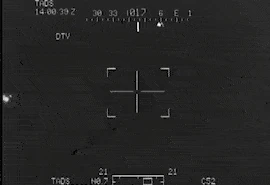
Vladimir Komarov
One of the first humans to die in a space flight incident.

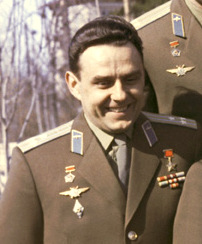
Почта России · Public domain
Vladimir Mikhaylovich Komarov was a Soviet test pilot, aerospace engineer, and cosmonaut. He commanded Voskhod 1, the first spaceflight to carry more than one crew member, and became the first Soviet cosmonaut to fly in space twice when he was selected as the solo pilot of Soyuz 1, its first crewed test flight. A parachute failure caused his Soyuz capsule to crash after re-entry on 24 April 1967, making him one of the first humans to die in a space flight incident, though the Apollo 1 astronauts had died earlier in a ground test.
Quick Facts
- Birth Date
- 1927-03-16
- Death Date
- 1967-04-24
- Birth Place
- Moscow, Soviet Union
- Death Place
- Orenburg Oblast, Soviet Union
- Spouse
- Valentina Kiselyova · 1950
- Children
- 2
- Occupation
- Engineer
- Rank
- Polkovnik (equiv. Colonel), Soviet Air Force
- Selection
- Air Force Group 1
- Space Time
- 2d 03h 04m
- Missions
- Voskhod 1, Soyuz 1
- Awards
- Hero of the Soviet Union (twice)
Facts from the source article.
Lore & Background
Komarov was born on 16 March 1927 in Moscow. He showed an early interest in aeronautics, collecting magazines and pictures about aviation and making model aircraft. At fifteen in 1942, he entered the 1st Moscow Special Air Force School, which was moved to Siberia due to the German invasion. He graduated with honors in 1945. After completing training at the Chkalov Higher Air Force School and the A.K. Serov Military Aviation College, he received his pilot's wings and commission as a lieutenant in 1949. He served as a fighter pilot and later enrolled in an engineering course at the Zhukovsky Air Force Engineering Academy, becoming a test pilot in 1959.
In September 1959, Komarov was invited to participate in cosmonaut selection and was one of twenty candidates chosen for Air Force Group One. Although eminently qualified, he was not in the top six due to age, height, and weight restrictions. He was the second oldest of the pilots chosen and one of only two members of the first group who were graduates of the Soviet Air Force Academy. He also had experience as a flight test engineer. During training, he was hospitalized for a minor operation in May 1960, leaving him medically unfit for about six months, but he was allowed to remain due to his engineering qualifications. He later had a heart irregularity detected and was pulled from the program, but after persistent lobbying he was readmitted.
Reader's Guide
Vladimir Komarov's significance lies in his role as a pioneering cosmonaut who pushed the boundaries of human spaceflight under challenging conditions. He commanded Voskhod 1 in October 1964, the first spaceflight to carry more than one crew member, demonstrating the Soviet Union's capability to launch multi-person crews. His selection as the solo pilot of Soyuz 1, the first crewed test flight of a new spacecraft, placed him at the forefront of Soviet space ambitions. His death on 24 April 1967 due to a parachute failure made him the first human to die in a space flight incident, highlighting the risks inherent in space exploration. Despite being declared medically unfit twice, Komarov continued to play an active role in the program, contributing to space vehicle design, cosmonaut training, evaluation, and public relations. His legacy is that of a skilled engineer and pilot who sacrificed his life in the pursuit of space advancement, serving as a sobering reminder of the dangers faced by early astronauts and cosmonauts.
Did You Know?
- He was declared medically unfit for training or spaceflight twice while in the program but continued playing an active role.
- He earned 528 rubles a month, making him the third-highest-paid cosmonaut after Yuri Gagarin and Gherman Titov.
- His father was killed in an 'unknown war action' during World War II.
From Factory Floor to Flight Test Bench
Komarov's path to the cosmos was anything but preordained. Born in Moscow in 1927, he grew up in a household where his father scraped by on low-paid labor. His early education at a local elementary school revealed a natural gift for mathematics, but the German invasion in 1941 forced him to drop out and work on a collective farm. Even so, his fascination with flight never wavered—he collected aviation magazines, built model aircraft, and fashioned his own propeller. At fifteen, he enrolled in a Special Air Force School, which was relocated to Siberia for the duration of the war. He graduated with honors in 1945, completed further training at the Chkalov Higher Air Force School and the A.K. Serov Military Aviation College, and received his commission as a lieutenant in 1949. By 1954 he had already served as chief pilot of a fighter regiment, and in 1959 he achieved his long-held ambition of becoming a test pilot at the Central Scientific Research Institute in Chkalovsky. His engineering credentials, earned at the Zhukovsky Air Force Engineering Academy, set him apart from most of his peers.
The Professor Who Shaped the Machines
Within the cosmonaut training program, Komarov occupied a unique niche. He was one of only two members of the original selection group who held a Soviet Air Force Academy degree, and the sole candidate with hands-on experience as a flight test engineer on new aircraft. Trainer Mark Gallai later remarked that Komarov's intelligence and Air Force background meant he would have been in the top group had the selection criteria been different. Rather than being sidelined by his exclusion from the initial six, Komarov channeled his engineering expertise into the program's core work: contributing to the design of both the Vostok and Voskhod spacecraft, helping structure cosmonaut training, evaluating candidates, and handling public relations. His peers, impressed by his willingness to tutor younger trainees through their academic coursework, gave him the informal title "The Professor," a nickname he shared with the slightly older Pavel Belyayev. By 1962, his combined qualifications, rank, and experience made him the third-highest-paid cosmonaut in the program, behind only Gagarin and Titov.
Twice Grounded, Twice Back
Komarov's journey through the cosmonaut corps was punctuated by two separate medical disqualifications that threatened to end his career. In May 1960, a minor hospitalization for surgery left him unable to participate in physical training for roughly six months. Under the program's rigid standards, any physical imperfection meant instant removal, yet his existing engineering credentials and a personal assurance to administrators that he would recover allowed him to stay. He returned to full training in October, faster than medical staff had projected. A second crisis came in 1962, when routine ECG testing uncovered a heart irregularity while he was serving as backup for Pavel Popovich's Vostok 4 mission. He was pulled from the program and replaced by Boris Volynov. The same condition would later ground American astronaut Deke Slayton. Komarov, however, persistently lobbied medical and military officials until they permitted his return to active training, a determination that ultimately placed him in the seat for missions that would define—and end—his life.
Two Flights, One Final Descent
Komarov's space career compressed into a remarkably short span. In October 1964, he commanded Voskhod 1, the first spacecraft ever to carry more than one crew member—a milestone that underscored the program's rapid progression from solo flights to crewed operations. His selection as the solo pilot of Soyuz 1, the first crewed test flight of that new vehicle, made him the first Soviet cosmonaut to fly in space twice. The mission, however, ended in catastrophe. On 24 April 1967, after re-entry, a parachute failure prevented the capsule from slowing its descent, and it struck the ground. Komarov became the first human to lose his life in a spaceflight incident. His death cast a long shadow over the Soviet space program and marked a somber turning point in the early era of human spaceflight, reminding the world that the machines carrying people beyond the atmosphere remained, in 1967, still dangerously unproven.
Gallery

Frequently Asked Questions
Who was Vladimir Komarov?
He was a Soviet test pilot, aerospace engineer, and cosmonaut who became the first Soviet to fly in space on two separate missions. He is best known for commanding Voskhod 1, the first crewed flight carrying more than one person.
What is Vladimir Komarov known for?
He is recognized as one of the earliest humans to die in a spaceflight accident. He also holds the distinction of leading the first multi-crew space mission and being the first Soviet cosmonaut to fly twice.
How did Vladimir Komarov die?
During re-entry on 24 April 1967, the parachute system on his Soyuz 1 capsule failed to deploy properly, causing the vehicle to crash into the ground. As the sole occupant, he perished in the impact.
Why is Vladimir Komarov significant in space history?
His death made him one of the first people to lose their life during an actual orbital flight, though the Apollo 1 crew had perished earlier in a ground-based test. His story underscores the extreme dangers faced by early space explorers.
What happened on the Soyuz 1 mission?
Soyuz 1 was the first crewed test of the Soyuz spacecraft, with Komarov serving as its lone pilot. A parachute failure during descent led to a fatal crash, ending both the mission and his life.
More in Space program fatalities 1-24
Spotted an error? Know more?
Reader corrections go straight into our review queue. Suggest an edit · How this site is sourced