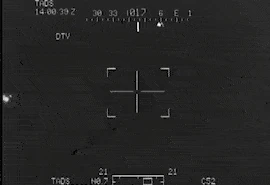
STS-51-L
25th Shuttle mission; destroyed 73 seconds after launch.

STS-51-L was the 25th mission of NASA's Space Shuttle program, planned as the first Teacher in Space Project flight. The mission ended in disaster 73 seconds after launch on January 28, 1986, when a structural failure destroyed the orbiter Challenger and killed all seven crew members.
Quick Facts
- Names List
- Space Transportation System-25
- Mission Type
- Satellite deployment
- Operator
- NASA
- Mission Duration
- 6 days and 34 minutes (planned) / 1 minute and 13 seconds (achieved)
- Distance Travelled
- 29 km
- Orbits Completed
- Failed to achieve orbit (96 planned)
- Spacecraft
- 099
- Launch Mass
- 1217990 kg
- Landing Mass
- 90584 kg (planned)
- Payload Mass
- 21937 kg
- Crew Size
- 7
- Crew Members
- Francis R. "Dick" Scobee · Michael J. Smith · Ellison S. Onizuka · Judith A. Resnik · Ronald E. McNair · Gregory B. Jarvis · S. Christa McAuliffe
Facts from the source article.
Lore & Background
STS-51-L was the tenth flight of Challenger and was scheduled to deploy the TDRS-B satellite, observe Halley's Comet using the SPARTAN-203 platform, and conduct lessons from space as part of the Teacher in Space Project. The crew included Commander Francis R. 'Dick' Scobee, Pilot Michael J. Smith, Mission Specialists Ellison S. Onizuka, Judith A. Resnik, and Ronald E. McNair, and Payload Specialists Gregory B. Jarvis and S. Christa McAuliffe. Gregory Jarvis had been reassigned from the previous shuttle flight, replacing Congressman Clarence W. 'Bill' Nelson.
The launch was approved despite a predicted ambient temperature of 27 °F, well below the qualification limit of 40 °F for the Solid Rocket Boosters. Morton-Thiokol engineer Bob Ebeling recalled stating, 'we're only qualified to 40 degrees. I said what business does anyone even have thinking about 27 degrees, we're in no man's land, we're in a big grey area.' At 73 seconds after liftoff, a failure of primary and secondary O-ring seals on the right SRB allowed a flame to impinge on an aft attach strut, causing the booster to pivot and strike the external tank, leading to vehicle breakup.
Evidence from the recovered crew cabin showed that three of four Personal Egress Air Packs had been manually activated, indicating that at least three crew members survived the initial breakup and were conscious for a period before impact with the ocean. No official cause of death was determined. Media reports of a tape recording of the crew after the explosion were likely fabricated; no such recording exists.
Reader's Guide
The loss of Challenger and its crew on STS-51-L was a pivotal event in the history of human spaceflight. It was the first American orbital mission to involve in-flight fatalities and the first American human spaceflight mission to launch and fail to reach space. The disaster led to a 32-month suspension of Space Shuttle flights while the O-ring seals and other hazards were addressed. President Ronald Reagan convened the Rogers Commission, which determined the cause to be the failure of an O-ring seal on the starboard Solid Rocket Booster. The mission's planned objectives—including the first Teacher in Space Project flight and observation of Halley's Comet—were never realized. The tragedy prompted major safety reforms within NASA and reshaped public perception of the risks of space exploration. Shuttle missions resumed in September 1988 with STS-26.
Did You Know?
- The launch was approved despite a temperature of 27 °F, below the 40 °F qualification limit for the Solid Rocket Boosters.
- Three of four recovered Personal Egress Air Packs had been manually activated, suggesting some crew survived the breakup.
- Gregory Jarvis was originally scheduled on the previous shuttle flight (STS-61-C) but was reassigned to STS-51-L.
More in Space program fatalities 1-24
Spotted an error? Know more?
Reader corrections go straight into our review queue. Suggest an edit · How this site is sourced