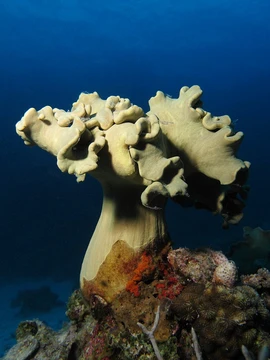
Sarcophyton (coral)
A soft coral genus known for its toxic chemical defenses.

Sarcophyton is a genus of soft corals belonging to the family Alcyoniidae, often found in reef aquariums. These corals are known for generating a toxic compound called sarcophytoxide, a terpene macrolide. This chemical acts as a deterrent to predators and gives Sarcophyton an edge over other corals—it can hinder the photosynthesis of the symbiotic algae living within the coral *Acropora formosa*. Despite this defense, the false cowry *Ovula ovum* preys on Sarcophyton, likely because it can neutralize sarcophytoxide in its digestive system.
Quick Facts
- Taxon
- Sarcophyton
Facts from the source article.
Lore & Background
Sarcophyton is a genus of soft corals in the family Alcyoniidae. It produces the toxic terpene macrolide sarcophytoxide, which functions as an antifeedant and also gives it a competitive edge over other corals. Specifically, sarcophytoxide reduces photosynthesis of the coral Acropora formosa's endosymbionts. The false cowry Ovula ovum is a predator of Sarcophyton and has a probable ability to detoxify sarcophytoxide in its intestines. The genus includes many species, such as Sarcophyton aalbersbergi, Sarcophyton acutangulum, Sarcophyton acutum, and many others listed in the source article.
Reader's Guide
Sarcophyton is significant in reef aquaria as a commonly kept soft coral. Its production of sarcophytoxide is a key characteristic, providing both chemical defense against predators and a competitive mechanism against other corals, notably by impairing photosynthesis in Acropora formosa's endosymbionts. This chemical warfare highlights its ecological role in coral reef communities. The presence of a specific predator, the false cowry Ovula ovum, which may detoxify the toxin, indicates a co-evolutionary relationship. The extensive list of species within the genus underscores its diversity and widespread occurrence. In aquarium contexts, its hardiness and chemical defenses make it a popular choice, though its toxicity requires consideration in mixed-species tanks.
Did You Know?
- Sarcophytoxide reduces photosynthesis of Acropora formosa's endosymbionts.
- Sarcophyton is a genus in the family Alcyoniidae commonly kept in reef aquaria.
More in Soft Corals and Leathers 1-24
Spotted an error? Know more?
Reader corrections go straight into our review queue. Suggest an edit · How this site is sourced