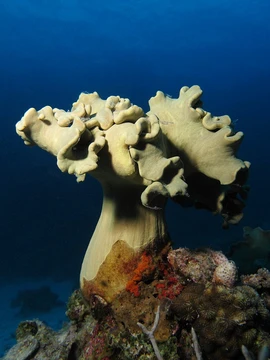
Heteroxenia fuscescens
A pulsing soft coral from the Red Sea to the Indian Ocean.

Heteroxenia fuscescens is a soft coral belonging to the family Xeniidae. It forms large clumping colonies that can reach up to 60 centimeters across. Each polyp has a stalk about 5 centimeters long, topped with a ring of eight feathery, pinnate tentacles, typical of octocorals. The polyps pulse rhythmically around 40 times per minute, moving their tentacles in a pumping motion. The purpose of this pulsing is not fully understood, though it may help with feeding, respiration, or waste removal. The coral contains zooxanthellae and gets most of its energy from these symbiotic algae.
This species lives on hard substrates in lagoons, bays, and slopes with gentle water movement. Its range extends from the Red Sea to the Indian Ocean.
In the aquarium trade, Heteroxenia fuscescens and other xeniids are valued for their rhythmic pulsing and ease of reproduction. However, they can grow aggressively and quickly overrun a tank under favorable conditions. In captivity, they may stop pulsing for long periods without other signs of stress, then resume suddenly, possibly due to unstable water conditions. Some hobbyists believe adding iodide helps, but evidence is only circumstantial. Heteroxenia species are very similar to other Xenia corals and require an expert to distinguish them. Mature specimens develop smaller tentacles between the larger ones.
Quick Facts
- Genus
- Heteroxenia
- Species
- fuscescens
Facts from the source article.
Lore & Background
Heteroxenia fuscescens was first described in 1834 by Christian Gottfried Ehrenberg as Xenia fuscescens. The polyps form large clumping colonies up to 60 centimeters across, with stalks about 5 centimeters long, each ending in a ring of eight feathery pinnate tentacles, typical of octocorals. The polyps pulsate rhythmically around 40 times per minute, moving their tentacles in a pumping fashion. The function of this pulsing is not fully understood; hypotheses include creating a current to assist feeding, respiration, and helping to dispose of waste and detritus. The coral contains zooxanthellae and draws most of its energy from these symbiotes. Heteroxenia are very closely related to other Xenia species and take an expert eye to identify; mature specimens grow smaller tentacles between the larger tentacles.
Reader's Guide
In the aquarium hobby, Heteroxenia fuscescens is prized for the rhythmic pumping of its polyps and its ease of reproduction. However, it tends to grow like weeds in the right environment and can quickly cover a tank. In some captive environments, the polyps may stop pulsing for long periods with no other signs of stress and suddenly start pulsing again later, possibly due to instability in water conditions. Some hobbyists claim that the addition of iodide may help this species, but there is only circumstantial evidence to suggest that. The species occurs on hard bottoms of lagoons and bays, and slopes with little current, from the Red Sea to the Indian Ocean. Its pulsing behavior remains a subject of ongoing interest and uncertainty.
Did You Know?
- The function of the pulsing is not fully understood; hypotheses include aiding feeding, respiration, and waste disposal.
- Mature specimens have smaller tentacles between the larger tentacles, helping distinguish them from closely related Xenia species.
More in Soft Corals and Leathers 1-24
Spotted an error? Know more?
Reader corrections go straight into our review queue. Suggest an edit · How this site is sourced