Melithaea
A genus of jointed fan corals from the tropical Indo-Pacific.

Melithaea is a genus of octocorals belonging to the family Melithaeidae. These fan corals are native to the tropical Indo-Pacific, and the type species is *Melithaea ochracea*.
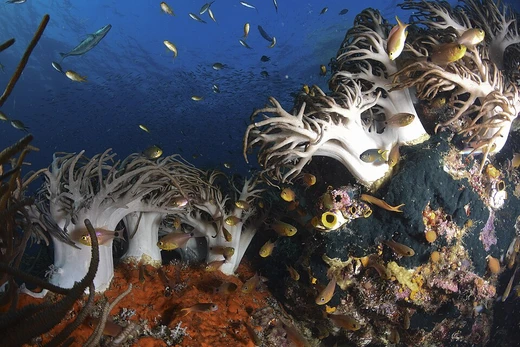
These colonial corals grow in arborescent forms, resembling fans, bushes, or trees. Their main skeletal trunk is jointed, with flexible, horny nodes separating hard, calcareous internodes. Branches typically emerge from the nodes, which are often swollen. The skeleton is covered by a flexible membrane called the mesoglea, which contains tiny calcareous spicules known as sclerites. The shape of these sclerites is key for identification; in this genus, they are mostly double discs and small disc-spindles, though plain spindles, capstans, and small clubs also occur. Unlike many other corals, members of *Melithaea* do not host the symbiotic algae Zooxanthellae in their tissues. Colony colors vary, typically appearing in shades of yellow, orange, red, and brown.
Ecologically, these sea fans are among the genera that serve as hosts for Denise's pygmy seahorse (*Hippocampus denise*).
The World Register of Marine Species lists numerous species within this genus, including *Melithaea acuta*, *Melithaea africana*, *Melithaea ochracea*, and many others.
Quick Facts
- Taxon
- Melithaea
Facts from the source article.
Lore & Background
Members of the genus Melithaea are arborescent colonial corals forming fan, bush or tree shapes. The axis or main skeletal 'trunk' is jointed, there being nodes, flexible horny joints, separated by internodes composed of hard, calcareous material. The branches divide off at the nodes which are often swollen. The minute calcareous spicules in the flexible membrane called the mesoglea that covers the skeleton are called sclerites. The identity of these spicules is important for identification purposes and in this genus they are predominantly double discs and small disc-spindles, but also include plain spindles, capstans and small clubs. Members of this genus do not have the unicellular symbiotic algae Zooxanthellae in their tissues that many other corals do. Colonies vary in colour but tend to be shades of yellow, orange, red and brown.
Reader's Guide
Melithaea corals are notable for their jointed skeletal structure and lack of symbiotic Zooxanthellae, distinguishing them from many other corals. Their sclerite composition—predominantly double discs and disc-spindles—is key for species identification. These corals are one of several genera of sea fan that can be hosts to a species of pygmy seahorse, the Denise's pygmy seahorse (Hippocampus denise). The genus includes a very large number of species, as listed by the World Register of Marine Species, reflecting its diversity across the tropical Indo-Pacific. Their ecological role as hosts for pygmy seahorses highlights their significance in marine biodiversity. The type species, Melithaea ochracea, anchors the taxonomy of the group. The absence of Zooxanthellae suggests a reliance on other nutritional strategies, though the article does not specify them.
Did You Know?
- Melithaea corals do not have the symbiotic algae Zooxanthellae in their tissues.
- The genus includes over 100 species according to the World Register of Marine Species.
- These corals can host Denise's pygmy seahorse (Hippocampus denise).
- The skeletal trunk is jointed with flexible horny nodes and hard calcareous internodes.
More in Soft Corals and Leathers, Part 2 1-24
Spotted an error? Know more?
Reader corrections go straight into our review queue. Suggest an edit · How this site is sourced