Apsilus
A small genus of Atlantic snappers with scaled caudal fins.

Apsilus is a small genus of marine ray-finned fish in the snapper family, Lutjanidae. Its two species are found in the Atlantic Ocean.
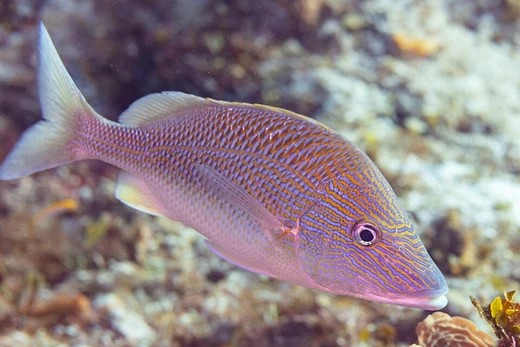
These are medium-sized snappers with a fusiform body shape, which may be either slender or relatively deep, but are always robust. Their jaws contain bands of moderately sized teeth—conical or bristle-shaped—with the outer row enlarged. The dorsal fin is continuous, without a notch between its spiny and soft-rayed sections, and has 10 spines and 9 or 10 soft rays. The anal fin has 3 spines and 8 soft rays. The dorsal and anal fins lack scales, while the caudal fin is scaled and may be forked or emarginate.
Apsilus species inhabit waters between 30 and 300 meters deep, typically over rocky substrates. They can be solitary or form aggregations, feeding on small fish, squid, benthic crustaceans, and larger zooplankton.
The recognized species are *Apsilus dentatus* (black snapper) and *Apsilus fuscus* (African forktail snapper). The African forktail snapper has been reported from the Indian Ocean, but these records are questionable.
The genus was created in 1830 by French zoologist Achille Valenciennes when he described *A. fuscus* from the Cape Verde Islands. In 1980, G. David Johnson designated the subfamily Apsilinae within Lutjanidae, using *Apsilus* as its type genus. The name *Apsilus* combines the Greek *a* ("not") and *psilos* ("naked" or "bald"); Valenciennes did not explain the allusion, though these fish have scales only on the caudal fin, not on the other fins.
Quick Facts
- Taxon
- Apsilus
- Type Species
- Apsilus fuscus
- Type Species Authority
- Valenciennes, 1830
Facts from the source article.
Lore & Background
The genus Apsilus was created in 1830 when the French zoologist Achille Valenciennes described A. fuscus from the Cape Verde Islands. The name Apsilus is formed from the word a meaning 'not' and psilos meaning naked or bald; Valenciennes did not explain what this name alludes to, but these fishes have scales on the caudal fin, while none of the other fins are scaled. In 1980, G. David Johnson designated the subfamily Apsilinae within the Lutjanidae, using Apsilus as its type genus.
The two species within the genus are medium-sized snappers with fusiform bodies; the body can be slender or relatively deep, but these are robust fishes. The jaws are equipped with moderately sized teeth which are conical or bristle shaped and arranged in bands with the outer row enlarged. They have a continuous dorsal fin which is not notched where the spiny and soft-rayed parts meet. The dorsal fin has 10 spines and 9 or 10 soft rays, while the anal fin has 3 spines and 8 soft rays. The dorsal and anal fins lack scales, while the caudal fin is scaled and may be forked or emarginate.
Apsilus fishes are found in the Atlantic Ocean; the African forktail snapper has been reported from the Indian Ocean, but these reports are questionable. They inhabit waters with depths between 30 and 300 m, typically over rocky substrates. They may be encountered as solitary fish or in aggregations and feed on small fish, squid, benthic crustaceans and more sizeable zooplankton.
Reader's Guide
The genus Apsilus represents a small but distinctive lineage within the snapper family Lutjanidae, notable for its scaled caudal fin in contrast to the scaleless dorsal and anal fins. This characteristic is reflected in its name, though Valenciennes did not explain the allusion. The two recognized species, Apsilus dentatus (black snapper) and Apsilus fuscus (African forktail snapper), are medium-sized, robust fishes found in the Atlantic Ocean, with questionable reports of the latter from the Indian Ocean. Their habitat preferences—rocky substrates at depths of 30 to 300 m—and their diet of small fish, squid, benthic crustaceans, and sizeable zooplankton place them as mid-level predators in Atlantic reef ecosystems. The genus also holds taxonomic significance: in 1980, G. David Johnson designated Apsilus as the type genus for the subfamily Apsilinae within Lutjanidae, underscoring its role in the classification of snappers. Despite its limited species count, Apsilus contributes to the understanding of snapper diversity and distribution in the Atlantic.
Did You Know?
- The genus name Apsilus combines a meaning 'not' and psilos meaning 'naked or bald', referring to the scaled caudal fin while other fins lack scales.
- Apsilus snappers have a continuous dorsal fin that is not notched where the spiny and soft-rayed parts meet.
Frequently Asked Questions
What is Apsilus?
Apsilus is a small genus of marine snappers belonging to the family Lutjanidae. It comprises just two species, both native to the Atlantic Ocean.
What do Apsilus species look like?
They are medium-sized, robust snappers with a fusiform body that can range from slender to relatively deep. Their dorsal fin is a single continuous unit bearing 10 spines and 9 or 10 soft rays, while the anal fin carries 3 spines and 8 soft rays. Unlike the dorsal and anal fins, the caudal fin is covered in scales.
At what depths are Apsilus found?
These snappers inhabit the Atlantic Ocean at depths spanning roughly 30 to 300 meters (about 98 to 984 feet).
What kind of teeth do Apsilus have?
Their jaws hold bands of moderately sized teeth that are either conical or bristle-shaped in form. The outer row of teeth is noticeably enlarged compared to the inner rows.
How does Apsilus differ from other snapper genera?
A key distinguishing trait is its scaled caudal fin, which sets it apart from many close relatives that lack caudal scales. Combined with its small two-species range confined to the Atlantic, Apsilus occupies a fairly narrow niche within the Lutjanidae.
More in Snappers and Grunts 1-24
Spotted an error? Know more?
Reader corrections go straight into our review queue. Suggest an edit · How this site is sourced