Berkelium
Last updated
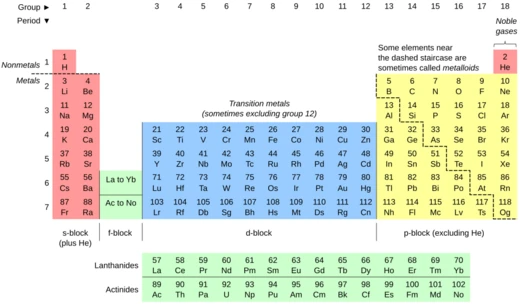
In the periodic table, it sits to the right of curium and to the left of californium, below the lanthanide terbium.[1] Its density of 14.78 g/cm³ and melting point of 986 °C lie between those of curium and californium.[1] Berkelium is an actinide metal that is radioactive, soft, and has a silvery-white appearance.[1]
Quick Facts
- Atomic number
- 97
- Discovered
- December 1949
- Named after
- Berkeley, California
- Primary isotope for study
- 249Bk
Facts from the source article.
Key facts and history
Berkelium was first intentionally synthesized in December 1949 by Glenn T. Seaborg, Albert Ghiorso, Stanley Gerald Thompson, and Kenneth Street Jr. using the 60-inch cyclotron at the University of California, Berkeley.[2] The name berkelium was chosen after the city of Berkeley, following the tradition of naming an actinide after its lanthanide homologue terbium, which was named after Ytterby, Sweden.[3] The most stable isotope is berkelium-247 with a half-life of 1,380 years, but berkelium-249 (half-life 327.2 days) is the easiest to produce and most accessible for study.[4][5] Only about 0.66 grams of berkelium-249 were produced in the US between 1967 and 1983.[5]
At ambient conditions, berkelium assumes a hexagonal α form with a double-hexagonal close packing structure.[6] Under pressure, it transforms to β-berkelium at 7 GPa and to γ-berkelium at 25 GPa.[7] In 1971, the first metallic sample of berkelium, with a mass of 1.7 micrograms, was produced through the reduction of berkelium fluoride using lithium vapor.[8] The +3 oxidation state (trivalent) exhibits the greatest stability, particularly when in aqueous solutions.[9]
What the research sources say
The 2011 book "Nature's Building Blocks" by Emsley reports that transuranic elements up to fermium, including berkelium, should have been present in the natural nuclear fission reactor at Oklo, but any quantities produced would have long since decayed away.[10][11] The 1992 book "Exploring Chemical Elements and their Compounds" by Heiserman describes the naming tradition for element 97, quoting the discovery report that suggested the name berkelium after Berkeley.[3][12]
References
- Wikipedia, "Berkelium" (CC BY-SA 4.0), which cites: Hammond C. R. "The elements" in; Benedict, "Study of actinide metals and actinide compounds under high pressures", Journal of the Less Common Metals, 1984, p. 153–170 (original not read by us) en.wikipedia.org
- Wikipedia, "Berkelium" (CC BY-SA 4.0), which cites: Thompson, "Chemical properties of berkelium", Lawrence Berkeley National Lab, 1950; Thompson, "Element 97", Physical Review, 1950, p. 838; Thompson, "The New Element Berkelium (Atomic Number 97)", Physical Review, 1950, p. 781; Thompson, "Chemical Properties of Berkelium", Journal of the American Chemical Society, 1950, p. 2798; "Comment", April 1950 (original not read by us) en.wikipedia.org
- Wikipedia, "Berkelium" (CC BY-SA 4.0), which cites: Thompson, "The New Element Berkelium (Atomic Number 97)", Physical Review, 1950, p. 781; Heiserman, "Exploring Chemical Elements and their Compounds", TAB Books, 1992, p. 347 (we also read that source) en.wikipedia.org
- Wikipedia, "Berkelium" (CC BY-SA 4.0), which cites: ; B. Myasoedov, "Analytical chemistry of transplutonium elements", Nauka, 1972 (we also read that source) en.wikipedia.org
- Wikipedia, "Berkelium" (CC BY-SA 4.0), which cites: ; Peterson Hobart 1984, p. 45; Hammond C. R. "The elements" in; Trabesinger, "Peaceful berkelium", Nature Chemistry, 2017, p. 924 (original not read by us) en.wikipedia.org
- Wikipedia, "Berkelium" (CC BY-SA 4.0), which cites: Peterson, "The crystal structures and lattice parameters of berkelium metal", J. Inorg. Nucl. Chem., 1971, p. 3345–51 (original not read by us) en.wikipedia.org
- Wikipedia, "Berkelium" (CC BY-SA 4.0), which cites: Peterson Hobart 1984, p. 45 (original not read by us) en.wikipedia.org
- Wikipedia, "Berkelium" (CC BY-SA 4.0), which cites: Peterson, "The crystal structures and lattice parameters of berkelium metal", J. Inorg. Nucl. Chem., 1971, p. 3345–51; Peterson Hobart 1984, p. 45 (original not read by us) en.wikipedia.org
- Wikipedia, "Berkelium" (CC BY-SA 4.0), which cites: Deblonde, "Spectroscopic and Computational Characterization of Diethylenetriaminepentaacetic Acid/Transplutonium Chelates: Evidencing Heterogeneity in the Heavy Actinide(III) Series", Angewandte Chemie International Edit; Kelley, "Bond Covalency and Oxidation State of Actinide Ions Complexed with Therapeutic Chelating Agent 3,4,3-LI(1,2-HOPO)", Inorganic Chemistry, 2018-05-07, p. 5352–5363; Deblonde, "Chelation and stabilization of berkelium in oxidation state +IV", Nature Chemistry, 2017, p. 843–849; "Pentavalent Curium, Berkelium, and Calif en.wikipedia.org
- Wikipedia, "Berkelium" (CC BY-SA 4.0), which cites: Emsley, "Nature's Building Blocks: An A-Z Guide to the Elements", Oxford University Press, 2011 (we also read that source) en.wikipedia.org
- Open Library record, ISBN 9780199605637 ("Nature's building blocks"). CC0 (metadata); book content not read. openlibrary.org
- Open Library record, ISBN 9780830630189 ("Exploring chemical elements and their compounds"). CC0 (metadata); book content not read. openlibrary.org
Each numbered sentence above was checked against the source it cites before publication. Sentences citing Wikipedia adapt text from the English Wikipedia article Berkelium (contributors), used under CC BY-SA 4.0; this entry is available under the same licence. Other sources were used for facts only; no text or images are copied from them.
More in Periodic Table & Elements
Sources
Compiled from Wikipedia and the sources listed below. Text from Wikipedia is available under CC BY-SA 4.0; this entry is adapted from it.
- Wikipedia: Berkelium (CC BY-SA 4.0).
- Word definitions: the Codexery glossary, each quoted from its Wikipedia article.
Spotted an error? Know more?
Reader corrections go straight into our review queue. Suggest an edit · How this site is sourced